Quick Verdict: The 2008 Toyota Hybrid SUV That Still Holds Up
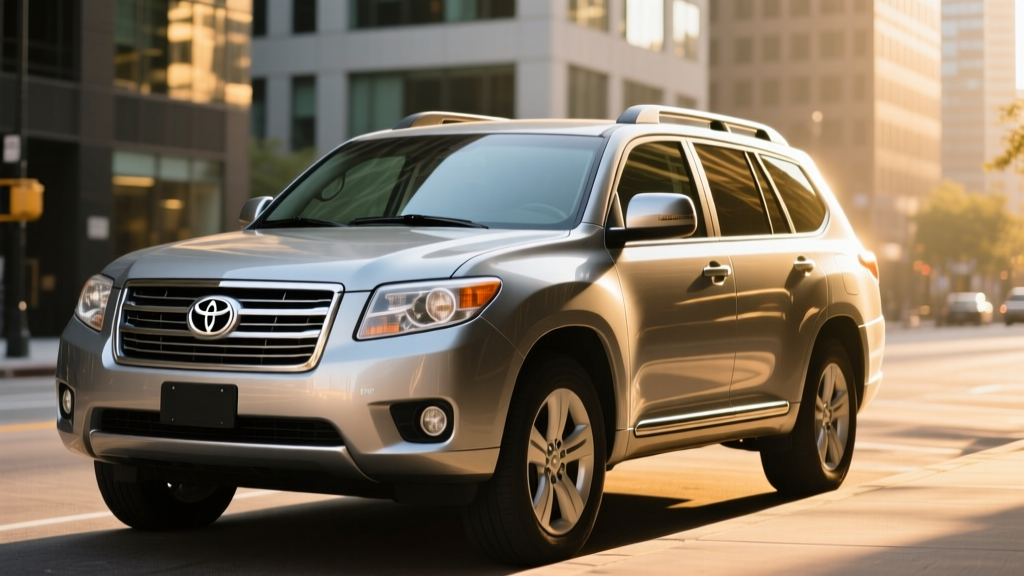
If you're searching for a 2008 Toyota hybrid SUV, you're looking at one vehicle: the second-generation Toyota Highlander Hybrid. Built on Toyota's Synergy Drive system (the same architecture that powered the Prius), this three-row midsize SUV was one of the earliest hybrid crossovers on the market. In 2026, it remains a popular used-car target for buyers who want Toyota reliability, all-wheel drive, and better fuel economy than a gas-only SUV — without ever plugging in.
The 2008 Highlander Hybrid is a conventional hybrid (HEV), not a plug-in hybrid (PHEV). It charges its own battery through regenerative braking and the gasoline engine. There is no plug, no electric-only driving range, and no home charger required. That simplicity is both its greatest advantage and its limitation in an era of plug-in hybrids and full EVs.
HEV vs PHEV: What the 2008 Highlander Hybrid Actually Is
Before diving into specs, it's critical to understand what you're buying. The used market is full of confused listings, so let's clarify:
| Feature | 2008 Highlander Hybrid (HEV) | Modern PHEV (e.g., 2026 RAV4 Prime) | Full EV (e.g., 2026 bZ4X) |
|---|---|---|---|
| Plug-in charging? | No — self-charging | Yes — plug in at home/public | Yes — plug in required |
| Electric-only range | None (motor assists engine) | ~42 miles | ~252 miles (EPA) |
| Battery size | ~2.4 kWh NiMH | 18.1 kWh lithium-ion | 72.8 kWh lithium-ion |
| Fuel required | Yes — regular unleaded | Yes — regular unleaded | No — electricity only |
| Federal tax credit (new) | Expired long ago | Up to $7,500 (§30D) | Up to $7,500 (§30D) |
The 2008 Highlander Hybrid generates its own electricity. You fuel it like any gas car, and the hybrid system recaptures energy during braking and deceleration to recharge the small nickel-metal hydride (NiMH) battery pack. Toyota did not offer a plug-in hybrid SUV until the 2016 Prius Prime and later the RAV4 Prime.
Fuel Economy: EPA MPG and Real-World Numbers
The headline number for any hybrid buyer is fuel economy. Here's what the EPA rated the 2008 Highlander Hybrid at, per fueleconomy.gov:
| Driving Cycle | EPA Rating | Real-World Expectation |
|---|---|---|
| City | 27 MPG | 26–29 MPG (hybrids often beat EPA city) |
| Highway | 25 MPG | 22–25 MPG (less hybrid benefit at sustained speed) |
| Combined | 26 MPG | 24–27 MPG depending on driving mix |
Why the real-world range matters: Hybrids excel in stop-and-go city driving where regenerative braking frequently recaptures energy. On long highway cruises, the electric motor provides minimal assistance and the 3.3L V6 does most of the work. If your commute is mostly urban, expect to see numbers at or above the EPA city rating. Highway-heavy drivers will see figures closer to 22–24 MPG.
For context, the gas-only 2008 Highlander V6 AWD was EPA-rated at 17 city / 23 highway / 19 combined. The hybrid's 26 MPG combined represents a roughly 37% improvement — significant for a 4,500-pound three-row SUV.
Powertrain and Performance Specs
| Specification | 2008 Toyota Highlander Hybrid |
|---|---|
| Engine | 3.3L V6 (3MZ-FE) |
| Engine output | 208 HP @ 5,600 RPM |
| Electric motors | Front motor (123 kW) + Rear motor (50 kW) |
| Net combined system HP | 270 HP |
| Transmission | eCVT (electronically controlled) |
| Drivetrain | AWD (eFour — electric rear axle, no mechanical driveshaft) |
| 0–60 MPH | ~7.5 seconds |
| Towing capacity | 3,500 lbs (when properly equipped) |
| Curb weight | ~4,500 lbs |
| Seating | 7 passengers (3 rows) |
The Synergy Drive system in the 2008 Highlander Hybrid is notable for its eFour AWD system. Unlike traditional AWD that uses a mechanical driveshaft to the rear wheels, the Highlander Hybrid uses a separate 50 kW electric motor powering the rear axle. This means instant torque to the rear wheels when slip is detected, with no parasitic drivetrain loss during normal driving. It's a clever system that contributes to the hybrid's efficiency advantage over the gas AWD model.
The eCVT transmission is not a belt-and-pulley CVT like those found in some competitors. Toyota's eCVT uses a planetary gearset to seamlessly blend power from the engine and electric motors. It's one of the most durable transmissions Toyota has ever built, with no belts, chains, or friction clutches to wear out.
Battery Life, Warranty, and Replacement Cost
Hybrid Battery Warranty (Original)
When new, Toyota warranted the 2008 Highlander Hybrid battery for 8 years / 100,000 miles (10 years / 150,000 miles in CARB states including California, New York, Massachusetts, and others that follow California emissions standards). That original warranty has expired for all 2008 models as of 2018 at the latest.
How long does the 2008 Highlander Hybrid battery actually last? The NiMH battery pack in this generation has proven remarkably durable. Owner reports and mechanic surveys indicate most original batteries last between 120,000 and 180,000 miles before significant degradation or failure. Some have exceeded 200,000 miles with proper care. The key factor is use: hybrid batteries degrade faster when vehicles sit unused for extended periods. Regular driving keeps the cells balanced and healthy.
Battery replacement costs in 2026:
- Refurbished/remanufactured NiMH pack: $1,500–$2,500 (parts + labor at independent hybrid specialist)
- New OEM Toyota pack: $3,000–$4,200 (dealer parts + labor)
- Individual cell/module replacement: $500–$1,200 (if only a few modules have failed — requires a shop with hybrid diagnostic capability)
Before purchasing any 2008 Highlander Hybrid, request a hybrid battery health check. A qualified shop can read the individual module voltages and internal resistance using Toyota's Techstream diagnostic software. Modules showing more than 0.3V variance under load are approaching end-of-life. Budget $2,000–$3,500 as a contingency if the battery hasn't been replaced and the vehicle has over 130,000 miles.
Who Should Buy the 2008 Highlander Hybrid vs Alternatives
Reasons to Buy
- 26 MPG combined in a 7-passenger AWD SUV — still competitive in 2026
- Proven Toyota hybrid reliability with massive service network
- eFour electric AWD is excellent in snow and rain
- No charging infrastructure needed — fuel and go
- eCVT transmission is virtually bulletproof
- Lower used-car price vs newer hybrids ($5,000–$9,000 typical in 2026)
Reasons to Pass
- NiMH battery is aging — replacement likely if not already done
- No electric-only driving; not a PHEV
- Dated interior tech (no Apple CarPlay, basic infotainment)
- No federal or state tax credits available for used 2008 models
- Safety tech is 2008-era: no automatic emergency braking, no lane-keeping
- Fuel economy is eclipsed by modern PHEVs (RAV4 Prime: 94 MPGe)
Choose the 2008 Highlander Hybrid if:
You need a budget-friendly, three-row AWD SUV for family duty, school runs, and grocery hauling. Your driving is mostly suburban/city where the hybrid system shines. You have no ability to charge a PHEV or EV at home. You want Toyota's hybrid reliability without the new-car price tag.
Choose a newer PHEV (e.g., 2026 RAV4 Prime) if:
You can install a Level 2 home charger and want 40+ miles of electric-only commuting. You want modern safety tech (Toyota Safety Sense 2.5+), current infotainment, and eligibility for the §30D federal tax credit (up to $7,500 for qualifying new PHEVs, subject to MSRP caps, buyer income limits, and battery sourcing requirements — consult a tax professional).
Choose a full EV (e.g., 2026 Toyota bZ4X or Hyundai Ioniq 5) if:
You have reliable home charging, drive under 250 miles daily, and want to eliminate gasoline entirely. EVs offer 100+ MPGe equivalent, zero tailpipe emissions, minimal maintenance (no oil changes, no transmission fluid), and the lowest per-mile fuel cost. The trade-off is higher upfront cost and the need for charging infrastructure.
Pricing and Tax Credit Eligibility in 2026
The 2008 Highlander Hybrid is only available on the used market. Original MSRP was approximately $33,700–$39,000 depending on trim (Base, Limited). In 2026, typical used pricing ranges:
- 130,000–170,000 miles: $4,500–$6,500
- 90,000–130,000 miles: $6,500–$8,500
- Under 90,000 miles (rare): $8,500–$11,000
Tax credit reality: The 2008 Highlander Hybrid does not qualify for any current federal tax credit. The §30D new clean vehicle credit applies only to new qualifying vehicles. The used clean vehicle credit (§25E, up to $4,000) applies only to used EVs and fuel cell vehicles — conventional hybrids are excluded. Some states may offer minimal used hybrid incentives, but these are rare and vary by jurisdiction. Check your state's energy or DMV website for specifics.
Ownership Costs: What to Budget Annually
Beyond the purchase price, here's what 2026 ownership looks like for a 2008 Highlander Hybrid with ~140,000 miles:
- Fuel: ~$1,800–$2,200/year (12,000 miles at 25 MPG, $3.50/gal national average)
- Insurance: $900–$1,400/year (varies by state, driver, coverage level)
- Maintenance: $600–$1,000/year (standard Toyota maintenance; slightly higher due to age)
- Hybrid battery reserve: Set aside $2,000–$3,500 if battery hasn't been replaced
- Registration/taxes: $150–$400/year (state-dependent)
Total estimated annual operating cost: $3,500–$5,000, excluding the hybrid battery contingency. For comparison, a gas-only 2008 Highlander V6 AWD at 19 MPG combined would cost roughly $2,400/year in fuel alone — the hybrid saves approximately $400–$600 annually at the pump.
Frequently Asked Questions
How many MPG does the 2008 Toyota Highlander Hybrid get?
The EPA rates it at 27 city / 25 highway / 26 combined MPG. In real-world driving, city-heavy commuters often see 27–29 MPG thanks to regenerative braking, while highway-heavy drivers should expect 22–25 MPG. The combined real-world average is 24–27 MPG.
Can I plug in the 2008 Highlander Hybrid to charge it?
No. The 2008 Highlander Hybrid is a conventional hybrid (HEV), not a plug-in hybrid (PHEV). It has no charging port. The battery is recharged automatically through regenerative braking and the gasoline engine. You never need to plug it in.
How far can the 2008 Highlander Hybrid drive on electric power alone?
Essentially zero miles. The electric motor assists the gasoline engine during acceleration and low-speed maneuvers, but the vehicle cannot sustain electric-only driving. The battery is too small (~2.4 kWh NiMH) and the system is designed for engine-motor blending, not EV mode. If you want electric-only range, look at a PHEV like the RAV4 Prime (42 miles electric) or a full EV.
Is the 2008 Highlander Hybrid reliable, and what does a battery replacement cost?
Yes — the Synergy Drive system and eCVT transmission are among the most reliable powertrains Toyota has ever produced. The main risk is the aging NiMH hybrid battery. Most original batteries last 120,000–180,000 miles. Replacement costs $1,500–$2,500 for a refurbished pack or $3,000–$4,200 for a new OEM pack. Get a hybrid battery health check before purchasing.
Does the 2008 Highlander Hybrid qualify for any tax credit in 2026?
No. The federal §30D new clean vehicle credit and the §25E used clean vehicle credit do not apply to the 2008 Highlander Hybrid. The §30D credit is for new qualifying EVs and PHEVs only. The §25E used credit applies only to used battery electric and fuel cell vehicles, not conventional hybrids. Always verify current rules at IRS.gov and consult a tax professional.
How does the 2008 Highlander Hybrid compare to the gas-only 2008 Highlander?
The hybrid gains 7 MPG combined (26 vs 19) and adds the eFour electric AWD system for better traction. It also produces 270 net HP vs 230 HP for the gas V6. The trade-offs are a higher original purchase price, a NiMH battery that may need replacement, and slightly less cargo space due to battery placement. Over 150,000 miles, the fuel savings (~$3,000–$4,000) typically offset the battery replacement cost.
What should I check before buying a used 2008 Highlander Hybrid?
Prioritize these inspections: (1) Hybrid battery health check via Techstream — check individual module voltage variance. (2) Inverter coolant pump operation — a known failure point that can overheat the inverter. (3) Brake actuator recall status — Toyota issued recalls for the brake actuator on this generation. (4) Standard pre-purchase inspection for suspension, transmission, and body condition. Verify whether the hybrid battery has already been replaced and whether documentation exists.