Quick Verdict: Lexus's Plug-In Strategy for 2026
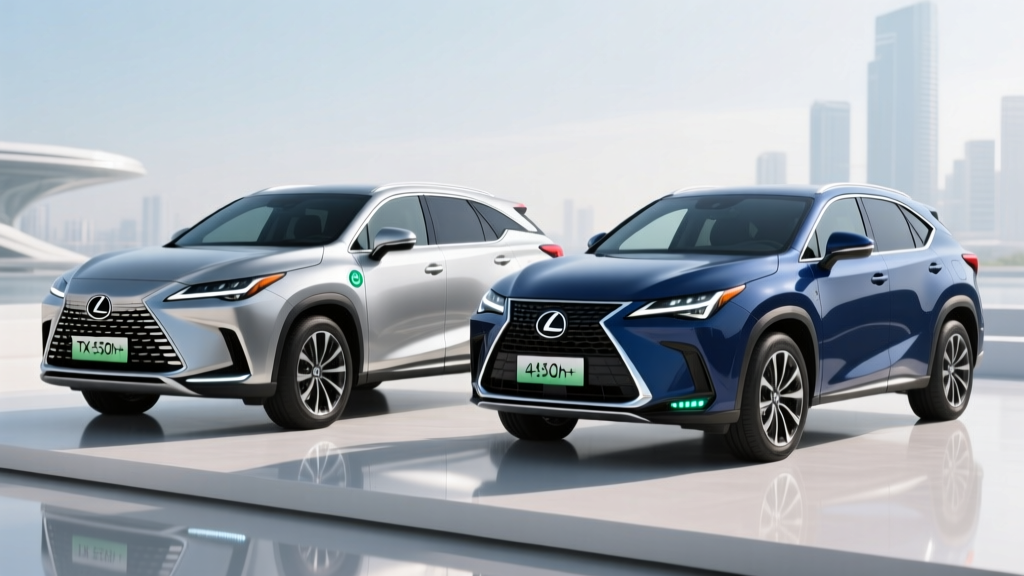
Lexus has carved a deliberate middle path in the electrification landscape. Rather than rushing to full battery-electric vehicles, the brand offers two plug-in hybrid electric vehicles (PHEVs) for the 2026 model year: the compact luxury NX 450h+ and the new three-row TX 550h+. Both pair Toyota's proven hybrid synergy drive with a sizable lithium-ion battery pack capable of over 30 miles of electric-only driving — enough for most daily commutes without burning a drop of gasoline.
If you're evaluating Lexus PHEV models against full EVs or conventional hybrids, the calculus comes down to one question: Can you charge at home? If yes, these PHEVs reward you with EV-like daily driving and gas-engine freedom on road trips. If no, you're better served by Lexus's extensive conventional hybrid (HEV) lineup, which requires no plug-in infrastructure.
HEV vs. PHEV — Know the Difference Before You Buy
Conventional Hybrid (HEV): A small battery (typically 1-2 kWh) recharges through regenerative braking and the engine. You never plug it in. Examples: Lexus RX 350h, ES 300h. Expect 35-44 MPG combined with no electric-only range.
Plug-In Hybrid (PHEV): A larger battery (18-23 kWh) that you plug in to recharge. Delivers 30-37 miles of electric-only driving before the gas engine kicks in. Examples: NX 450h+, TX 550h+. Requires home or workplace charging to maximize value.
2026 Lexus NX 450h+: Compact Luxury PHEV Benchmark
The NX 450h+ remains Lexus's entry point into plug-in ownership. Built on the TNGA-K platform shared with the Toyota RAV4 Prime, it leverages one of the most efficient PHEV powertrains in production. For 2026, the NX 450h+ continues with a 2.5-liter inline-four engine paired with dual electric motors producing a combined 302 horsepower.
| Spec | Value |
|---|---|
| Combined Horsepower | 302 hp |
| Engine | 2.5L I-4 + front/rear electric motors (eAWD) |
| Battery Capacity | 18.1 kWh (gross), lithium-ion |
| EPA Electric-Only Range | 37 miles |
| EPA Combined Range (gas + electric) | 516 miles |
| EPA MPGe (electric mode) | 84 MPGe combined |
| EPA MPG (hybrid mode, battery depleted) | 36 city / 33 highway / 35 combined |
| Level 2 Charging Time (0-100%) | ~5.5 hours at 3.3 kW |
| DC Fast Charging | Not available |
| 0-60 mph | 6.0 seconds |
| Base MSRP | $59,950 (Premium trim) |
2026 Lexus TX 550h+: Three-Row Plug-In Family Hauler
The TX 550h+ is Lexus's largest PHEV offering — a three-row, six- or seven-passenger crossover that fills a gap Toyota left when it discontinued the Sienna-based PHEV concept. For families who need serious cargo space but still want electric commuting capability, the TX 550h+ is currently the only luxury-brand answer in this segment.
| Spec | Value |
|---|---|
| Combined Horsepower | 406 hp |
| Engine | 3.5L V6 + front/rear electric motors (eAWD) |
| Battery Capacity | 22.0 kWh (gross), lithium-ion |
| EPA Electric-Only Range | 33 miles |
| EPA Combined Range (gas + electric) | 478 miles |
| EPA MPGe (electric mode) | 76 MPGe combined |
| EPA MPG (hybrid mode, battery depleted) | 30 city / 28 highway / 29 combined |
| Level 2 Charging Time (0-100%) | ~6.5 hours at 3.3 kW |
| DC Fast Charging | Not available |
| 0-60 mph | 5.7 seconds |
| Base MSRP | $73,500 (Premium trim) |
The TX 550h+ uses a fundamentally different powertrain than the NX — a 3.5-liter V6 replaces the four-cylinder, and the battery pack grows to 22.0 kWh to compensate for the vehicle's substantially higher curb weight (~5,300 lbs). The trade-off is clear: you gain space and power but sacrifice some electric range and efficiency. Still, 33 miles of electric driving covers the average American's daily commute, and 29 MPG in hybrid mode is genuinely impressive for a vehicle this size.
Fuel Economy Deep Dive: Real-World MPG vs. EPA Stickers
Lexus PHEV models behave differently depending on whether the battery is charged or depleted. Here's the fuel-economy picture broken down by scenario, sourced from fueleconomy.gov and real-world testing patterns:
| Model | Electric-Only (MPGe) | City MPG (hybrid) | Highway MPG (hybrid) | Combined MPG |
|---|---|---|---|---|
| NX 450h+ EPA | 84 MPGe | 36 | 33 | 35 |
| NX 450h+ Real-World | 78-86 MPGe | 38-40 | 30-32 | 34-37 |
| TX 550h+ EPA | 76 MPGe | 30 | 28 | 29 |
| TX 550h+ Real-World | 70-78 MPGe | 31-33 | 26-28 | 28-30 |
Why hybrids often beat EPA in the city: Conventional and plug-in hybrids recapture kinetic energy during braking, which means stop-and-go traffic — normally the worst-case scenario for gas cars — actually improves hybrid efficiency. Highway driving is where these PHEVs fall slightly short of their stickers, because sustained high speeds favor the engine alone without regenerative opportunities.
The critical efficiency caveat: A PHEV only delivers its best fuel economy if you charge it regularly. If you never plug in the NX 450h+, you're carrying 400+ pounds of battery dead weight and getting 35 MPG instead of the 42+ MPG a conventional NX 350h would deliver. Only buy a PHEV if you have reliable access to Level 2 charging.
Charging: What You Need to Know About Lexus PHEV Batteries
Neither Lexus PHEV model supports DC fast charging. This is a deliberate engineering choice shared with the RAV4 Prime platform — the battery packs are sized for overnight Level 2 replenishment, not road-trip rapid top-ups. Here's what charging looks like in practice:
| Method | Power (kW) | NX 450h+ Time | TX 550h+ Time | Miles of EV Range/Hour |
|---|---|---|---|---|
| Level 1 (120V outlet) | ~1.4 kW | ~13 hours | ~16 hours | ~2-3 mi/hr |
| Level 2 (240V, 16A) | 3.3 kW | ~5.5 hours | ~6.5 hours | ~6-7 mi/hr |
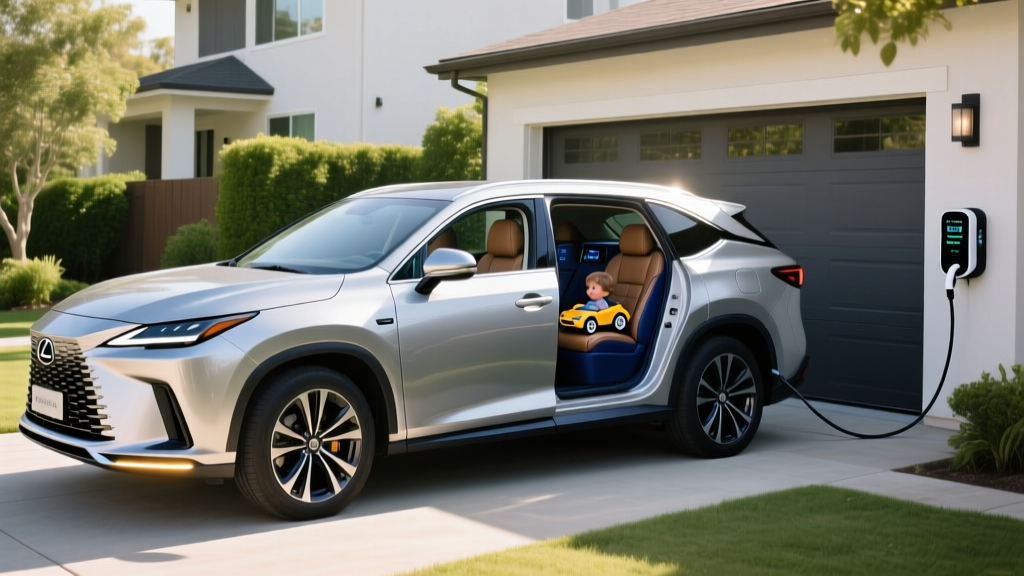
For most PHEV owners, a standard Level 2 home charger installed on a 240V circuit is the sweet spot. A full overnight charge restores the entire battery — no mid-day charging stops needed. The onboard charger in both models is limited to 3.3 kW, meaning even if you connect to a 7.2 kW or 11.5 kW home charger, the car will only accept 3.3 kW. This is perfectly adequate for the battery size but worth understanding if you're investing in charging hardware.
Home charging cost estimate: At the national average electricity rate of $0.17/kWh, fully charging the NX 450h+ costs roughly $3.07, and the TX 550h+ costs about $3.74. Compare that to $12-18 in gasoline for equivalent miles in a conventional SUV — the per-mile savings are substantial when you're running on electrons.
Battery Longevity, Warranty, and Replacement Costs
Lexus Hybrid Battery Warranty
Coverage: 10 years or 150,000 miles (whichever comes first) for the high-voltage hybrid battery, per Lexus's official hybrid warranty.
What's covered: Battery capacity loss below a defined threshold, cell failures, and hybrid system components including the inverter and electric motors.
Real-world degradation: Toyota/Lexus hybrid batteries have demonstrated exceptional longevity. Data from fleet operators and long-term owners shows typical capacity retention of 85-90% after 100,000 miles. The PHEV batteries use a conservative state-of-charge buffer (never charging to true 100% or discharging to true 0%), which significantly reduces cell stress.
The battery replacement question looms large for hybrid buyers. For Lexus PHEV models, out-of-warranty replacement for the high-voltage battery pack runs approximately $8,000-$12,000 including labor — a significant sum, but one that very few owners ever face. Toyota's hybrid battery track record is among the best in the industry, with many Prius batteries lasting 200,000+ miles with minimal degradation.
Additionally, Lexus's hybrid system warranty covers the power control unit, electric motors, and related electronics for the same 10-year/150,000-mile period. This is one of the most comprehensive hybrid warranties available and a meaningful ownership advantage over European luxury PHEV competitors, which typically offer 8 years/100,000 miles.
Tax Credit Eligibility: Do Lexus PHEV Models Qualify?
Under the current IRS §30D Clean Vehicle Credit rules, plug-in hybrids with battery capacities of at least 7 kWh are potentially eligible for federal tax credits up to $7,500. Both the NX 450h+ (18.1 kWh) and TX 550h+ (22.0 kWh) exceed the battery-capacity threshold.
§30D Tax Credit Eligibility Checklist
- MSRP Cap: SUVs must have an MSRP below $80,000. The NX 450h+ ($59,950 base) qualifies; the TX 550h+ ($73,500 base) qualifies at base trim but higher trims may exceed the cap.
- Buyer Income Limits: Modified AGI must not exceed $150,000 (single), $225,000 (head of household), or $300,000 (joint filers).
- Battery Sourcing Requirements: A percentage of critical minerals and battery components must be sourced from the US or free-trade-agreement countries. Lexus has been working to meet these thresholds, but eligibility can shift annually. Verify current-year status on fueleconomy.gov before purchasing.
- Point-of-Sale Transfer: As of 2024, eligible buyers can transfer the credit to the dealer for an upfront price reduction rather than waiting to claim it on their tax return.
- Assembly Requirement: Final assembly must occur in North America. Both Lexus PHEVs are assembled in Japan, which disqualifies them from the new-vehicle §30D credit.
Bottom line: Because Lexus PHEV models are assembled in Japan, they do not qualify for the federal §30D new clean vehicle credit. However, check your state's incentive programs — states like California, Colorado, New York, and others offer their own PHEV rebates that are independent of federal assembly requirements. Consult a tax professional for your specific situation.
Hybrid vs. PHEV vs. Full EV: Which Lexus Is Right for You?
Choose a Lexus PHEV (NX 450h+ or TX 550h+) If:
- You can install a Level 2 charger at home or have reliable workplace charging
- Your daily commute is under 35 miles round-trip
- You regularly take road trips exceeding 200 miles and don't want to plan around charging stations
- You want electric daily driving but live in an area with sparse DC fast-charging infrastructure
- You want a luxury badge with Toyota-grade reliability and a 10-year battery warranty
Choose a Lexus HEV (NX 350h, RX 350h, TX 500h) If:
- You cannot install home charging (apartment, street parking, no garage)
- You want maximum MPG with zero behavioral changes — no plugging in required
- You drive more than 40 miles daily and want consistent efficiency without managing battery state
- Your budget is $5,000-$10,000 lower than PHEV pricing
Choose a Full EV (Lexus RZ 450e or competitor) If:
- You want zero tailpipe emissions and the lowest per-mile fuel cost
- You have home charging and your daily driving is under 200 miles
- You want access to HOV lane incentives and potential federal tax credits (for US-assembled EVs)
- You're ready to plan longer road trips around DC fast-charging stops
Pricing and Trims: What You'll Actually Pay
| Model & Trim | MSRP | Key Features |
|---|---|---|
| NX 450h+ Premium | $59,950 | eAWD, 14" touchscreen, Lexus Safety System+ 3.0 |
| NX 450h+ Luxury | $65,500 | Mark Levinson audio, panoramic roof, semi-aniline leather |
| NX 450h+ F SPORT Handling | $63,800 | Adaptive suspension, F SPORT seats, 20" wheels |
| TX 550h+ Premium | $73,500 | 3-row seating, eAWD, 14" touchscreen |
| TX 550h+ Luxury | $78,900 | Executive rear seating, Mark Levinson, head-up display |
Destination charges add approximately $1,350 to all trims. With options and packages, a fully loaded NX 450h+ can reach $70,000, and a TX 550h+ Luxury can approach $85,000 — at which point the TX exceeds the §30D MSRP cap (though assembly disqualification is the primary barrier regardless).
Reliability and Long-Term Ownership
Lexus consistently ranks at or near the top of IIHS safety ratings and J.D. Power dependability studies. The PHEV powertrain benefits from decades of Toyota hybrid engineering — the planetary gearset e-CVT transmission has no traditional gears or clutch packs to wear out, and the electric motors have far fewer moving parts than any internal combustion component.
Long-term ownership costs favor the PHEV if you charge regularly. Over five years and 75,000 miles, an NX 450h+ owner who charges nightly and drives 30 electric miles per weekday could use roughly 350 gallons of gasoline (for weekend and longer trips) versus 1,500+ gallons for a comparable gas-only luxury SUV. At $3.50/gallon, that's a fuel savings of over $4,000 — partially offset by the PHEV's higher purchase price and insurance premiums, which run 10-15% above the conventional NX 350h.
Pros
- 37 miles electric range (NX) covers most commutes gas-free
- 516-mile total range eliminates road-trip range anxiety
- 10-year/150,000-mile hybrid battery warranty
- Proven Toyota hybrid reliability with minimal degradation
- Strong city MPG that often exceeds EPA estimates
- 302-406 hp provides confident acceleration
- Lexus Safety System+ 3.0 standard on all trims
Cons
- No DC fast charging — Level 2 only
- 3.3 kW onboard charger limits charge speed even on faster circuits
- Japan assembly disqualifies from federal §30D tax credit
- Premium pricing ($60K-$79K) vs. non-luxury PHEV alternatives
- Electric range drops to 25-28 miles in cold weather
- Higher insurance premiums vs. conventional hybrid siblings
- TX 550h+ at 29 MPG hybrid mode trails smaller PHEVs significantly
Frequently Asked Questions
How many MPG does the Lexus NX 450h+ get?
The EPA rates the NX 450h+ at 36 city / 33 highway / 35 combined MPG when operating in hybrid mode (battery depleted). In electric mode, it achieves 84 MPGe combined. Real-world city driving often yields 38-40 MPG thanks to regenerative braking, while sustained highway driving at 75+ mph may return 30-32 MPG.
How far can the Lexus TX 550h+ go on electric only?
The EPA rates the TX 550h+ at 33 miles of electric-only range. In real-world conditions, expect 28-30 miles at highway speeds and 25-27 miles in freezing temperatures. For city driving under 45 mph in moderate weather, you may achieve the full 33 miles or slightly more.
Do Lexus PHEV models qualify for the $7,500 federal tax credit?
No. Although both PHEVs meet the battery capacity and MSRP requirements, they are assembled in Japan, which disqualifies them from the §30D federal clean vehicle credit under current IRS rules. Check your state's incentive programs — several states offer PHEV rebates regardless of assembly location. Always verify current rules on irs.gov and consult a tax professional.
Is the Lexus PHEV battery reliable, and what does replacement cost?
Lexus/Toyota hybrid batteries have an outstanding reliability record, with many exceeding 200,000 miles with minimal degradation. The battery is warranted for 10 years/150,000 miles. Out-of-warranty replacement costs approximately $8,000-$12,000, though very few owners ever need this service. The PHEV battery uses conservative charge buffers (never truly full or empty) to maximize cell lifespan.
Should I buy a Lexus PHEV or a full EV like the RZ 450e?
Choose the PHEV if you regularly drive more than 200 miles in a day, lack reliable DC fast-charging infrastructure near your home, or want zero behavioral changes on road trips. Choose the Lexus RZ 450e (or another full EV) if your daily driving stays under 200 miles, you have home charging, and you want the lowest per-mile operating cost and zero tailpipe emissions. The PHEV is the safer bet for one-car households that need maximum flexibility.
Can I charge a Lexus PHEV at a public DC fast charger?
No. Neither the NX 450h+ nor the TX 550h+ has a DC fast-charging port. They use a J1772 connector for Level 1 and Level 2 AC charging only. This means public charging infrastructure is limited to Level 2 stations — which is fine for workplace or destination charging but means you cannot rapid-charge on road trips. Once the battery depletes, the gas engine takes over seamlessly.
What's the difference between the NX 450h+ and the NX 350h?
The NX 350h is a conventional hybrid (HEV) — no plug, smaller battery (~1.6 kWh), zero electric-only range, but a lower starting price (~$43,000) and 39 MPG combined. The NX 450h+ is the plug-in variant with an 18.1 kWh battery, 37 miles of electric range, and 302 hp versus the 350h's 240 hp. If you can charge at home, the 450h+ delivers dramatically lower fuel costs for daily driving. If you can't, the 350h is the smarter buy.