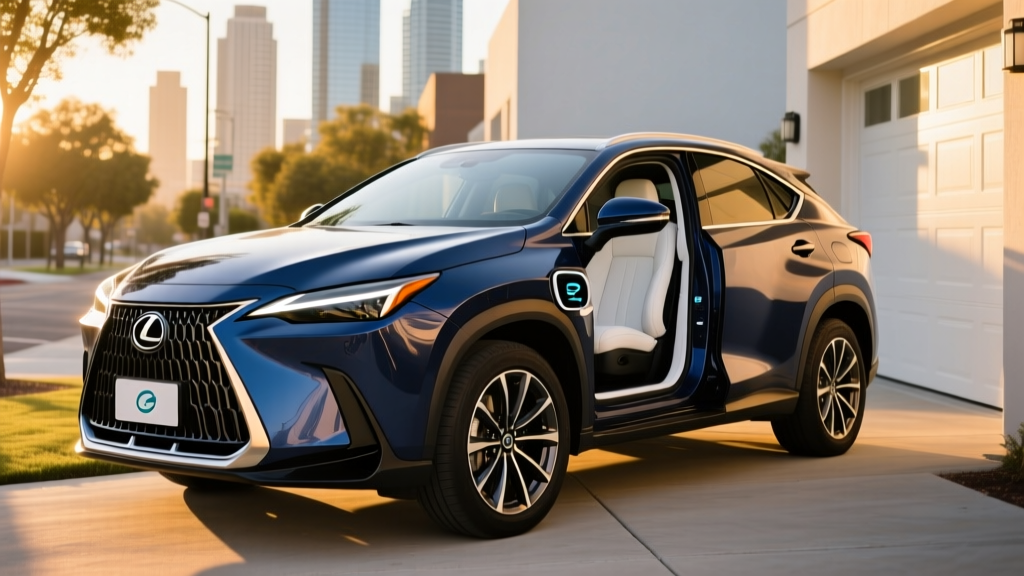
The 2026 Lexus NX 350h occupies a specific niche: a luxury compact SUV that delivers genuine fuel savings without requiring a plug, a charger, or any change in daily habits. For buyers who want electrified efficiency but lack home charging access — or who simply don't want to think about it — the NX 350h's conventional hybrid (HEV) powertrain remains one of the most practical choices in the premium segment.
This review covers the NX 350h's real-world fuel economy, powertrain specs, pricing across trims, battery longevity, and how it stacks up against both the plug-in NX 450h+ and full battery-electric competitors. All figures reflect the 2026 model year.
HEV vs. PHEV: What the NX 350h Actually Is
Before evaluating specs, it's critical to distinguish the two electrified NX variants Lexus offers:
| Attribute | NX 350h (HEV) | NX 450h+ (PHEV) |
|---|---|---|
| Type | Conventional Hybrid | Plug-in Hybrid |
| Needs to be plugged in? | No — self-charging via regen & engine | Yes — for electric-only driving |
| Electric-only range | None (EV assist only at low speed) | ~37 miles (EPA) |
| Battery capacity | ~1.6 kWh (small buffer) | 18.1 kWh usable |
| Federal tax credit (§30D) | Not eligible | Up to $7,500 (eligibility varies) |
| Starting MSRP (2026) | $42,665 | $60,765 |
The NX 350h is a conventional hybrid. It recovers energy through regenerative braking and uses its gasoline engine to keep the small battery charged. You never plug it in. The NX 450h+ is the plug-in variant with a larger battery, an electric-only driving mode, and potential tax credit eligibility. This review focuses on the 350h.
Fuel Economy: EPA Ratings and Real-World MPG
The headline number for the NX 350h is its EPA-estimated fuel economy, which remains competitive among luxury compact crossovers with standard all-wheel drive:
| Driving Cycle | EPA Estimate | Real-World Expectation |
|---|---|---|
| City | 41 MPG | 40–44 MPG (hybrids often beat EPA in stop-and-go) |
| Highway | 37 MPG | 33–37 MPG (sustained 75+ mph reduces regen benefit) |
| Combined | 39 MPG | 36–41 MPG depending on driving mix |
Why real-world city MPG can exceed the EPA sticker: Conventional hybrids like the NX 350h thrive in stop-and-go traffic. Every braking event sends energy back into the battery via regenerative braking, and the electric motor handles low-speed launches where gasoline engines are least efficient. Owners who commute in urban congestion frequently report 42–44 MPG on the EPA's fuel economy database and owner forums.
Highway reality check: At sustained 70–80 mph, the hybrid system's advantages diminish. The gasoline engine does most of the work, and aerodynamic drag dominates. Expect 33–36 MPG on long interstate trips, especially in cold weather where the engine runs more frequently for cabin heat.
Annual fuel cost estimate: At 39 MPG combined and 12,000 miles/year with premium gasoline at $4.10/gallon, the NX 350h costs roughly $1,262/year in fuel. A comparable non-hybrid luxury AWD crossover at 25 MPG combined would cost about $1,968/year — a savings of approximately $700 annually with the hybrid.
Powertrain Specs: Engine, Motors, and Performance
The 2026 NX 350h pairs a 2.5-liter inline-four Atkinson-cycle engine with Lexus's fourth-generation hybrid system and electronic all-wheel drive (e-AWD). Here's the full breakdown:
| Specification | 2026 Lexus NX 350h |
|---|---|
| Engine | 2.5L 4-cyl Atkinson-cycle |
| Hybrid System | Lexus Hybrid Drive (4th gen) |
| Combined Net Horsepower | 240 hp |
| Front Motor | Permanent magnet synchronous |
| Rear Motor (e-AWD) | 40 kW independent rear motor |
| Transmission | eCVT (planetary gearset) |
| Drivetrain | AWD (electronic, no mechanical driveshaft) |
| 0–60 mph | 7.2 seconds |
| Towing Capacity | 2,000 lbs |
| Hybrid Battery | ~1.6 kWh, Lithium-ion |
| EPA Fuel Economy | 41 city / 37 highway / 39 combined |
| Fuel Requirement | Premium (91 octane recommended) |
The e-AWD system is worth noting: there is no physical driveshaft connecting the front and rear axles. Instead, a dedicated 40 kW rear electric motor engages the rear wheels when traction is needed — during hard acceleration, slippery conditions, or cornering. Under light-load cruising, the NX 350h operates primarily as a front-wheel-drive vehicle, reducing parasitic losses and improving efficiency.
The eCVT is not a belt-driven CVT like those in some competitors. It uses a planetary gearset that seamlessly blends engine and motor power. There are no simulated "gears" or rubber-band feeling — just smooth, linear acceleration.
Pricing, Trims, and Tax Credit Eligibility
The 2026 NX 350h is available in three trims. All include AWD, the Lexus Safety System+ 3.0 suite, and a 9.8-inch touchscreen (14.0-inch on Premium and above):
| Trim | MSRP (incl. destination) | Key Additions |
|---|---|---|
| Base | $42,665 | 18" wheels, synthetic leather, wireless CarPlay/Android Auto |
| Premium | $46,165 | 14" touchscreen, power-folding mirrors, heated/ventilated front seats |
| Luxury | $50,365 | Semi-aniline leather, 20" wheels, panoramic moonroof, head-up display |
Does the NX 350h Qualify for a Federal Tax Credit?
No. The federal §30D Clean Vehicle Credit applies only to plug-in electric vehicles (BEVs and PHEVs) with a minimum battery capacity of 7 kWh. The NX 350h's ~1.6 kWh battery does not meet this threshold, and as a conventional hybrid, it is categorically ineligible.
The plug-in NX 450h+, however, may qualify for up to $7,500 under current IRS §30D rules, subject to:
- MSRP cap: SUVs must be under $80,000 (NX 450h+ qualifies)
- Buyer income cap: $150K single / $300K joint modified AGI
- Battery sourcing: Critical minerals and battery component percentages must meet annual thresholds that tighten each year through 2032
- Point-of-sale transfer: Eligible buyers can apply the credit as a down-payment reduction at the dealer
Always verify current-year eligibility with a tax professional and the IRS's official qualified vehicle list before purchasing.
Battery Longevity, Warranty, and Replacement Cost
Hybrid battery anxiety is the number-one concern we hear from first-time hybrid buyers. Here's what the data shows for the NX 350h:
Hybrid Battery Warranty: 10 years / 150,000 miles (whichever comes first), covering defects and capacity loss below a functional threshold. This applies in all 50 states under current Lexus policy.
Hybrid System Components Warranty: 8 years / 100,000 miles for the inverter, electric motors, and eCVT.
How Long Do Lexus Hybrid Batteries Last?
Lexus (and parent company Toyota) has the deepest track record in hybrid technology of any automaker, with over 25 years of real-world data from the Prius, Camry Hybrid, RX Hybrid, and now NX line. The lithium-ion pack in the NX 350h is small (~1.6 kWh) and operates in a narrow state-of-charge window — typically 40% to 80% — which minimizes degradation stress.
Expected lifespan: Based on fleet data from Toyota/Lexus hybrids, the NX 350h's battery should last 150,000–200,000+ miles before significant capacity loss. Many RX 400h and Prius batteries from the mid-2000s are still operational past 200,000 miles.
Replacement cost if out of warranty: A new OEM hybrid battery pack for the NX 350h runs approximately $3,000–$4,500 installed at a Lexus dealer. Independent hybrid specialists can sometimes perform the replacement for $2,000–$3,000. Refurbished packs are available for $1,500–$2,500.
For context, this is dramatically less expensive than a full EV battery replacement ($8,000–$20,000+) and comparable to a major engine repair on a conventional vehicle.
Hybrid vs. PHEV vs. Full EV: Which NX Fits You?
Choose the NX 350h (HEV) if:
- You lack access to home or workplace Level 2 charging
- You want lower fuel costs without changing your refueling routine
- Your budget is under $50,000 and you want AWD luxury
- You frequently take long road trips and don't want to plan around chargers
- You plan to own the vehicle 10+ years (proven hybrid reliability)
Choose the NX 450h+ (PHEV) if:
- You can install a Level 2 charger at home (240V, 30–40 amp circuit)
- Your daily commute is under 37 miles round-trip (you'll rarely use gas)
- You qualify for the $7,500 federal tax credit (effective price drops to ~$53,265)
- You want the option of silent, zero-tailpipe-emission local driving
Choose a full EV (e.g., Tesla Model Y, BMW iX, Genesis GV60) if:
- You have reliable home charging and your trips are mostly under 250 miles
- You want to eliminate gasoline entirely and minimize maintenance
- Local electricity rates make per-mile costs significantly lower than hybrid fueling
- You want access to HOV lanes, state rebates, and the latest ADAS features
Reliability, Safety Ratings, and Ownership Costs
Lexus consistently ranks at or near the top of J.D. Power Vehicle Dependability Studies and Consumer Reports reliability surveys. The NX 350h benefits from a mature, carryover powertrain with no first-year-production risk.
Safety: The NX earned the IIHS Top Safety Pick+ designation (when equipped with specific headlights), and the standard Lexus Safety System+ 3.0 includes:
- Pre-Collision System with pedestrian/cyclist detection
- Lane Tracing Assist (Level 2 lane centering — driver must remain engaged)
- Dynamic Radar Cruise Control (full stop-and-go adaptive cruise)
- Road Sign Assist and Proactive Driving Assist (gentle deceleration for curves and lead vehicles)
Note: Lexus Safety System+ 3.0 is a SAE Level 2 driver-assistance system. It is not autonomous driving. The driver must keep hands on the wheel and eyes on the road at all times.
Insurance: Expect annual premiums of $1,600–$2,200 depending on your state, driving record, and coverage level — typical for the luxury compact SUV segment. Hybrid models sometimes carry a small surcharge over gas variants due to higher repair costs for rear-end collisions involving the hybrid system.
Maintenance: Lexus includes 2 years / 20,000 miles of complimentary scheduled maintenance. After that, expect $400–$600/year for oil changes, brake inspections, and fluid top-offs. Hybrids often see extended brake pad life (80,000+ miles) because regenerative braking handles most deceleration.
Pros and Cons: The Honest Assessment
Pros
- 41 MPG city is exceptional for a luxury AWD SUV
- No plug-in required — zero lifestyle change from a gas car
- 10-year/150,000-mile hybrid battery warranty
- Smooth eCVT with no rubber-band effect
- Proven Lexus reliability and strong resale value
- Standard AWD with independent rear motor
- Quiet, well-insulated cabin at highway speeds
Cons
- No federal tax credit eligibility (HEV limitation)
- Premium fuel requirement adds ~$0.30–$0.50/gallon
- 7.2-second 0–60 is adequate, not sporty
- Base trim's 9.8" screen feels dated vs. competitors
- Rear cargo space (22.7 cu ft) trails some rivals
- Highway MPG drops noticeably above 75 mph
- 2,000-lb tow rating is low for the segment
Frequently Asked Questions
How many MPG does the 2026 Lexus NX 350h get?
The EPA rates the NX 350h at 41 city / 37 highway / 39 combined MPG. In real-world city driving with frequent stops, owners commonly see 40–44 MPG. Highway driving at 75+ mph typically yields 33–36 MPG.
Does the NX 350h need to be plugged in?
No. The NX 350h is a conventional hybrid (HEV). Its small battery is charged entirely by the gasoline engine and regenerative braking. You refuel it like any other car at a gas station.
Is the Lexus NX 350h reliable?
Yes. Lexus/Toyota has the longest track record in hybrid technology. The NX 350h uses a mature, carryover powertrain. The hybrid battery is warranted for 10 years/150,000 miles, and historical data from Lexus hybrids shows batteries frequently lasting 150,000–200,000+ miles.
What does a hybrid battery replacement cost?
Out of warranty, a new OEM NX 350h hybrid battery costs approximately $3,000–$4,500 installed at a Lexus dealer. Refurbished packs are available for $1,500–$2,500. This is far less than a full EV battery replacement.
Does the NX 350h qualify for any tax credit?
No federal tax credit is available for the NX 350h because it is a conventional hybrid, not a plug-in vehicle. The plug-in NX 450h+ may qualify for up to $7,500 under §30D, subject to income, MSRP, and battery sourcing requirements. Some states offer separate hybrid rebates — check your state's energy office for details.
How does the NX 350h compare to the NX 450h+ PHEV?
The NX 450h+ offers ~37 miles of electric-only range, 302 combined hp, and potential $7,500 federal tax credit eligibility, but starts at $60,765. After the credit, the effective price is ~$53,265. The 350h starts at $42,665 with no credit. If you can charge at home and your commute is under 37 miles, the 450h+ may save more on fuel. If you can't charge at home or want a lower purchase price, the 350h is the more practical choice.
What's the difference between the NX 350h and the gas-only NX 350?
The gas-only NX 350 uses a 2.4L turbocharged engine (275 hp) and gets 22 city / 29 highway / 25 combined MPG. It's quicker (0–60 in 6.6 seconds) but costs significantly more to fuel — roughly $600–$700 more per year at 12,000 miles. The 350h sacrifices a bit of acceleration for 56% better combined fuel economy.