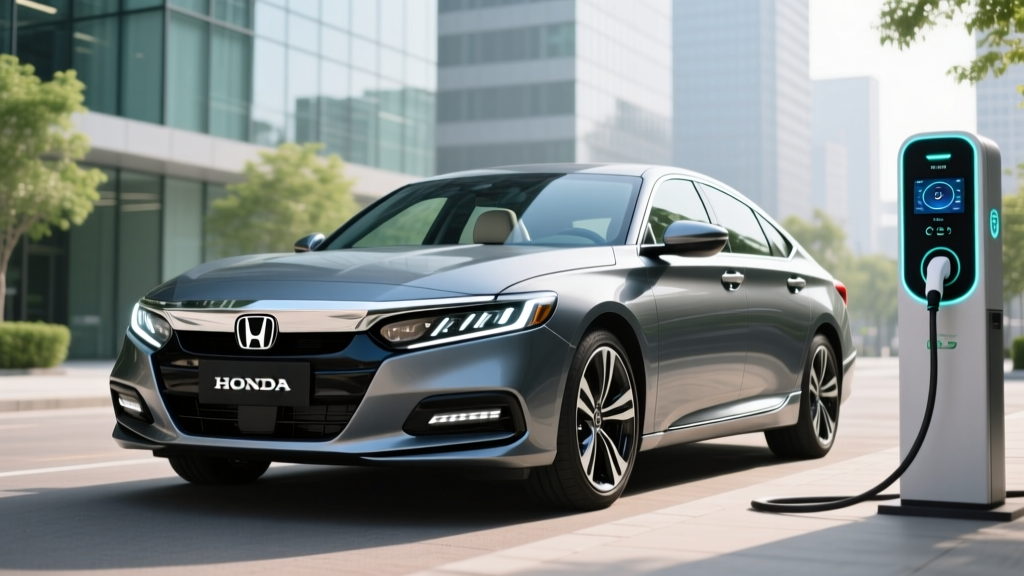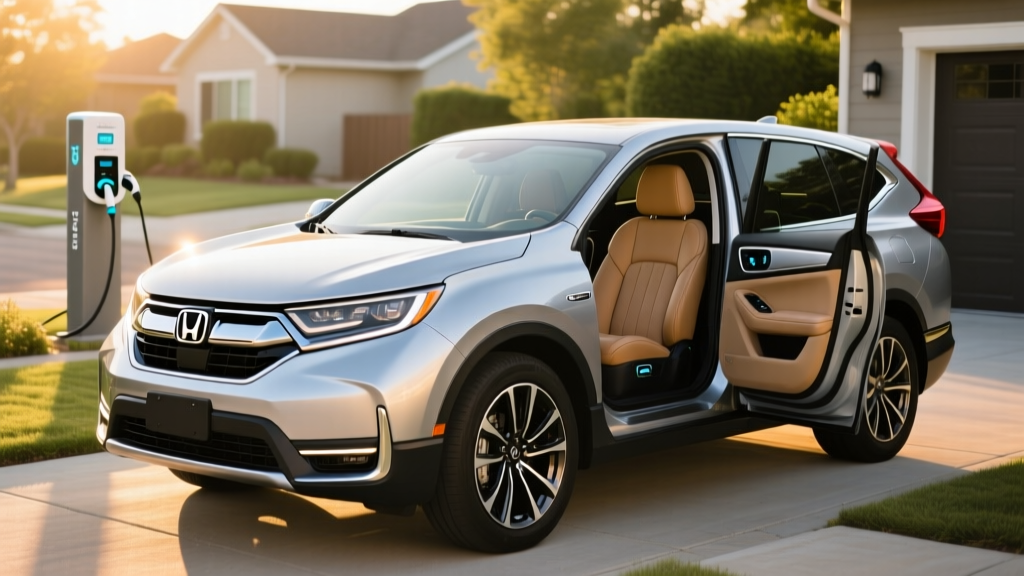
The 2026 Honda CR-V Hybrid Touring sits at the top of Honda's compact SUV hybrid lineup, packaging all-wheel drive, a two-motor hybrid system, and Honda's fullest feature set into a vehicle that returns an EPA-estimated 40 MPG combined. For buyers who want meaningful fuel savings without plugging in or changing their daily habits, the Touring trim represents the most complete expression of the CR-V Hybrid formula. This guide breaks down the real numbers — efficiency, powertrain output, pricing, battery longevity, and how this conventional hybrid (HEV) stacks up against plug-in hybrids and full battery-electric vehicles.
2026 Honda CR-V Hybrid Touring: Core Specifications
| Specification | Value |
|---|---|
| Powertrain | 2.0L 4-cylinder + two-motor hybrid system |
| Combined Horsepower | 204 hp |
| Combined Torque | 247 lb-ft (electric motor peak) |
| Drivetrain | Real Time AWD (standard on Touring) |
| EPA MPG (City / Hwy / Combined) | 43 / 36 / 40 MPG |
| Fuel Tank Capacity | 14.0 gallons |
| Total Driving Range | ~560 miles (EPA est.) |
| 0–60 mph | ~7.6 seconds (est.) |
| Cargo Volume (behind rear seats) | 36.3 cu ft |
| Cargo Volume (rear seats folded) | 76.5 cu ft |
| Towing Capacity | 1,000 lbs |
| Hybrid Battery Warranty | 8 years / 100,000 miles |
| MSRP (Touring AWD) | ~$42,350 (est., incl. destination) |
Fuel Economy: EPA Ratings vs. Real-World MPG
The EPA rates the 2026 CR-V Hybrid AWD at 43 MPG city, 36 MPG highway, and 40 MPG combined, per fueleconomy.gov. These numbers apply across the hybrid trims (Sport, Sport-L, Sport Touring, and Touring) since they share the same powertrain and AWD configuration.
| Driving Scenario | EPA Estimate | Real-World Expectation |
|---|---|---|
| City / Stop-and-Go | 43 MPG | 42–46 MPG (hybrids often beat EPA in city) |
| Highway (70 mph steady) | 36 MPG | 33–36 MPG (aero drag limits regen benefit) |
| Combined Mixed Driving | 40 MPG | 37–42 MPG depending on terrain and climate |
| Cold Weather (below 30°F) | — | 33–37 MPG (engine runs more for cabin heat) |
The key advantage of Honda's two-motor hybrid system is city efficiency. At low speeds, the CR-V Hybrid operates primarily on its electric drive motor, with the gasoline engine acting as a generator rather than directly turning the wheels. This series-hybrid behavior in stop-and-go traffic is why real-world city MPG often meets or exceeds the EPA city estimate — a pattern consistent across Honda's e:HEV lineup. Highway driving, where the engine clutches in directly, yields numbers closer to or slightly below the EPA highway figure.
Powertrain Deep Dive: How the Two-Motor Hybrid Works
The 2026 CR-V Hybrid pairs a 2.0-liter Atkinson-cycle four-cylinder engine with Honda's two-motor hybrid system. Combined output is 204 horsepower, with the electric drive motor producing peak torque of 247 lb-ft. That torque figure is available from low RPM, giving the CR-V Hybrid responsive off-the-line acceleration that feels notably quicker than its 0–60 time of roughly 7.6 seconds suggests.
The system operates in three modes depending on driving conditions:
- EV Drive: Battery powers the drive motor alone (short distances, low speeds)
- Hybrid Drive: Engine generates electricity to power the drive motor (most city and acceleration scenarios)
- Engine Drive: Engine directly drives the wheels via a lock-up clutch (steady highway cruising)
This is a conventional hybrid (HEV). There is no plug, no external charging, and no electric-only range to manage. The small lithium-ion battery pack (approximately 1.1 kWh) recharges through regenerative braking and the gasoline engine. You simply fill up with gasoline and drive — exactly like a traditional car, but with significantly better fuel economy.
HEV vs. PHEV vs. BEV: Which Powertrain Fits You?
The 2026 CR-V Hybrid is a conventional HEV. Honda does not currently offer a plug-in hybrid (PHEV) version of the CR-V in the US market. Here's how the three electrified powertrain types compare for buyers cross-shopping this segment:
| Factor | HEV (CR-V Hybrid) | PHEV (e.g., Toyota RAV4 Prime) | BEV (e.g., Hyundai Ioniq 5) |
|---|---|---|---|
| Plugs In? | No | Yes (Level 1/2) | Yes (Level 1/2/DC) |
| Electric-Only Range | ~1 mile at low speed | 30–42 miles typical | 250–320+ miles (EPA) |
| Uses Gasoline? | Yes, always | Yes, after battery depletes | No |
| Combined MPG / MPGe | 40 MPG | 38 MPG + 94 MPGe | 110–132 MPGe |
| Home Charging Needed? | No | Recommended (240V) | Essential (240V) |
| Upfront Price Premium | +$1,500–$3,000 vs gas | +$5,000–$8,000 vs gas | +$8,000–$15,000 vs gas |
| Federal Tax Credit (§30D) | Not eligible | Up to $7,500 (if eligible) | Up to $7,500 (if eligible) |
| Best For | No home charging access, road trips | Short commutes + long road trips | Home charging, mostly local driving |
Consider a PHEV or BEV instead if: You have reliable home Level 2 charging, your daily commute is under 40 miles (PHEV) or 250 miles (BEV), and you want to reduce or eliminate gasoline consumption.
Pricing, Trims, and Tax Credit Eligibility
The 2026 Honda CR-V Hybrid is offered in four trims. The Touring sits at the top of the lineup:
| Trim | Drivetrain | Est. MSRP |
|---|---|---|
| Sport | AWD | ~$36,350 |
| Sport-L | AWD | ~$38,850 |
| Sport Touring | AWD | ~$41,350 |
| Touring (non-Sport) | AWD | ~$42,350 |
Note: Pricing is estimated based on 2025 carryover and may shift at official 2026 launch. Confirm with Honda's official pricing when available.
Federal tax credit (§30D): The CR-V Hybrid is a conventional HEV and does not qualify for the federal plug-in vehicle tax credit under IRS §30D. That credit applies only to plug-in electric vehicles (PHEVs and BEVs) meeting battery sourcing, MSRP, and buyer income requirements. Some states offer separate incentives for hybrids, but these vary widely — check your state's energy or DMV website for current programs.
The Touring trim includes features that justify its position at the top: a 9-inch touchscreen with wireless Apple CarPlay and Android Auto, a 12-speaker Bose audio system, heated and ventilated front seats, heated rear seats, a heated steering wheel, wireless phone charging, a hands-free power tailgate, and Honda Sensing (the full ADAS suite including adaptive cruise control, lane-keeping assist, and collision mitigation braking).
Battery Longevity, Warranty, and Replacement Cost
Hybrid battery longevity is one of the most common buyer concerns, and the data is reassuring. Honda's hybrid systems have been in production since the early 2000s (starting with the Insight and Civic Hybrid). Real-world evidence from high-mileage Honda hybrids shows the battery packs routinely lasting 150,000–200,000+ miles before significant degradation occurs. The CR-V Hybrid's relatively small battery (~1.1 kWh) experiences shallow charge-discharge cycles — it never fully depletes or fully charges, which greatly reduces cell stress compared to a full EV battery.
If replacement is needed out of warranty, a new Honda hybrid battery pack typically costs between $2,000 and $4,000 including labor. Refurbished or aftermarket packs are available for $1,000–$2,500. For context, this is substantially less than a full EV battery replacement ($8,000–$20,000+), reflecting the much smaller capacity.
Other Hybrid System Components
Beyond the battery, the hybrid system includes the power control unit (inverter), the two electric motors, and the engine-generator. These components carry the same 8-year/100,000-mile warranty. The electric motors themselves have no wear items (no brushes, no fluids to change) and typically outlast the vehicle. The gasoline engine follows Honda's standard 5-year/60,000-mile powertrain warranty.
Who Should Buy the 2026 CR-V Hybrid Touring?
The Touring trim makes sense for buyers who want maximum fuel efficiency in a compact SUV without altering their refueling habits. Here's a practical decision framework:
- Drive 12,000–18,000 miles per year and want to cut fuel costs by 30–40% vs. the gas CR-V (28 MPG combined)
- Don't have access to Level 2 home or workplace charging
- Take regular road trips exceeding 300 miles where charging infrastructure adds friction
- Want premium features (Bose audio, ventilated seats, full Honda Sensing) in a fuel-efficient package
- Plan to keep the vehicle 8+ years (well within the hybrid battery warranty window)
Consider alternatives if you:
- Have home charging and a commute under 35 miles — a PHEV like the RAV4 Prime or Tucson PHEV lets you drive most days on electricity alone
- Want zero tailpipe emissions and have reliable charging — a BEV like the Ioniq 5 or Tesla Model Y eliminates gasoline entirely
- Prioritize towing — the CR-V Hybrid is rated for only 1,000 lbs; the gas CR-V manages 1,500 lbs, and larger SUVs handle far more
Frequently Asked Questions
How many MPG does the 2026 Honda CR-V Hybrid Touring get?
The EPA rates the CR-V Hybrid AWD at 43 MPG city, 36 MPG highway, and 40 MPG combined. In real-world driving, expect 37–42 MPG combined depending on conditions. City driving often yields results at or above the 43 MPG city estimate thanks to regenerative braking and electric-motor-dominant operation at low speeds. Highway-heavy commutes at 70+ mph will trend toward the mid-30s.
Does the CR-V Hybrid need to be plugged in?
No. The 2026 CR-V Hybrid is a conventional hybrid (HEV). It has no plug and no external charging capability. The small hybrid battery recharges through regenerative braking and the gasoline engine. You refuel it exactly like a traditional gasoline vehicle — at any gas station.
How far can the CR-V Hybrid drive on electric power alone?
Only very short distances at low speeds (roughly under 1 mile below 25 mph in ideal conditions). The system uses the electric motor extensively, but the battery is too small (~1.1 kWh) to sustain meaningful electric-only driving. If electric-only range is a priority, a plug-in hybrid (PHEV) or a full battery-electric vehicle (BEV) is the right choice.
Is the CR-V Hybrid reliable? What about battery replacement cost?
Honda's hybrid powertrain has a strong reliability track record spanning two decades. The hybrid battery is warranted for 8 years/100,000 miles (10 years/150,000 miles in CARB states). Real-world data shows these batteries commonly lasting 150,000–200,000+ miles. Out-of-warranty replacement costs $2,000–$4,000 for a new pack, or $1,000–$2,500 for a refurbished unit — significantly less than a full EV battery swap.
Does the 2026 CR-V Hybrid qualify for any tax credit?
No. The federal §30D tax credit applies only to plug-in electric vehicles (PHEVs and BEVs) that meet battery sourcing, MSRP caps, and buyer income requirements. The CR-V Hybrid, as a conventional HEV, does not qualify. Check your state's incentive programs — some states offer rebates or reduced registration fees for hybrid vehicles, but these vary by jurisdiction. Consult IRS.gov for current federal credit rules.
How does the Touring trim compare to the Sport Touring?
The Sport Touring and the Touring share the same hybrid powertrain, AWD system, and EPA fuel economy. The differences are largely cosmetic and feature-based: the Sport Touring gets sport-tuned styling cues (blacked-out trim, unique wheels), while the standard Touring leans toward a more traditional premium appearance. Both include Honda Sensing, Bose audio, and the full comfort-feature suite. Choose based on styling preference — the mechanical and efficiency experience is identical.
How does the CR-V Hybrid compare to the gas-only CR-V?
The gasoline 2026 CR-V AWD returns an EPA-estimated 28 MPG combined (27 city / 32 highway). The hybrid's 40 MPG combined represents a ~43% improvement in fuel economy. At 15,000 miles per year and $3.50/gallon gasoline, that translates to roughly $700–$800 in annual fuel savings, meaning the hybrid's price premium pays for itself in approximately 3–4 years of typical driving. The hybrid also delivers smoother, more responsive low-speed acceleration thanks to electric motor torque.