Introduction to the Jeep Wrangler 4xe
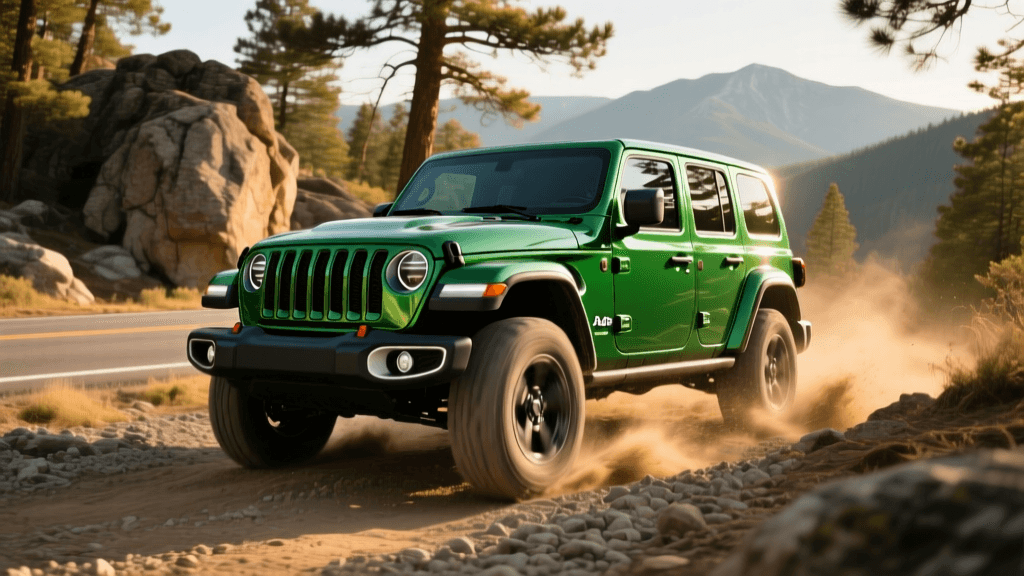
Welcome to the ultimate beginner's guide to one of the most unique and capable vehicles on the market today: the Jeep Wrangler 4xe. For decades, the Wrangler has been the undisputed king of off-road SUVs, but the introduction of the 4xe (pronounced 'four-by-e') plug-in hybrid electric vehicle (PHEV) has completely changed the game. By combining a traditional turbocharged gas engine with advanced electric motors and a high-voltage battery pack, Jeep has created a rig that can silently crawl over boulders and handle your daily commute without burning a drop of gasoline. However, transitioning from a standard gas-powered vehicle to a PHEV requires a bit of a learning curve. In this comprehensive review, we will break down everything a beginner needs to know about the Wrangler 4xe, focusing heavily on its real-world electric range, charging logistics, and how the added battery weight impacts its legendary off-road prowess.
Understanding the PHEV Powertrain
Before diving into the numbers, it is crucial to understand what a PHEV actually is. Unlike a standard hybrid (like the classic Toyota Prius) which uses a tiny battery to assist the gas engine, or a fully electric vehicle (EV) which has no gas engine at all, a PHEV sits right in the middle. The Wrangler 4xe features a 17-kilowatt-hour (kWh) battery pack paired with a 2.0-liter turbocharged inline-four engine and two electric motors. This setup produces a combined 375 horsepower and a massive 470 lb-ft of torque. The beauty of this system is flexibility: you can drive on pure electricity for short distances, or rely on the gas engine for cross-country road trips, completely eliminating the 'range anxiety' associated with fully electric vehicles.
Real-World Electric Range vs. EPA Estimates
When you look at the official EPA window sticker, the Wrangler 4xe boasts an estimated 21 miles of all-electric range. However, as any seasoned EV owner will tell you, the EPA estimate is based on controlled testing conditions that rarely mirror the real world. The Wrangler is essentially a brick on wheels; its boxy aerodynamics, heavy curb weight (over 5,000 pounds), and aggressive off-road tires create immense rolling resistance and drag. So, what can you actually expect when you unplug and hit the road?
In optimal conditions—mild weather, flat terrain, and city driving at speeds under 45 mph—you can realistically achieve 18 to 20 miles of electric range. However, if you take the 4xe on the highway at 70 mph, the aerodynamic drag will slash that range down to roughly 13 to 15 miles. Furthermore, cold weather severely impacts battery chemistry and requires the vehicle to use precious battery power to heat the cabin, potentially dropping your winter electric range to 10 to 12 miles. While this may sound disappointing compared to a Tesla, it is important to remember that the average American commute is under 16 miles one way, meaning many 4xe owners can still complete their daily driving on electricity alone.
Range and Efficiency Data Table
| Metric | EPA Estimate | Real-World Summer | Real-World Winter |
|---|---|---|---|
| Electric Range (City/Mixed) | 21 Miles | 18 - 20 Miles | 10 - 14 Miles |
| Electric Range (Highway 70mph) | N/A | 13 - 15 Miles | 9 - 11 Miles |
| MPGe (Electric + Gas) | 49 MPGe | 42 - 46 MPGe | 35 - 40 MPGe |
| Gas-Only Fuel Economy | 20 MPG | 18 - 21 MPG | 16 - 19 MPG |
For more detailed specifications and official ratings, you can always refer to Jeep's official 4xe information page, which outlines the engineering behind these impressive numbers.
Charging the Wrangler 4xe: What Beginners Must Know
Charging your PHEV is where the rubber meets the road for daily usability. The Wrangler 4xe features a charging port located on the front left fender, marked by a glowing LED ring that indicates charging status. Out of the factory, the vehicle comes with a Level 1 charging cable that plugs into a standard 120-volt household outlet. While this is convenient for occasional use, it only delivers about 1.4 kW of power, meaning a full charge from empty will take roughly 12 to 14 hours. For most owners, this is simply too slow.
To truly enjoy the 4xe, you need to install a Level 2 home charger. A Level 2 charger operates on a 240-volt circuit (similar to what an electric oven or dryer uses) and can deliver up to 7.2 kW of power to the Jeep's onboard charger. With a Level 2 setup, a depleted battery will recharge to 100% in just 2 to 2.5 hours. This means you can easily top off the battery while you are at work or running errands. According to the Department of Energy's Alternative Fuels Data Center, installing a dedicated Level 2 home charging station is the single most effective way to maximize the efficiency and convenience of owning a plug-in hybrid.
Off-Road Performance: Does the Battery Hurt or Help?
The biggest question off-road enthusiasts ask is whether the heavy battery pack ruins the Wrangler's trail capabilities. The short answer is no, but the driving dynamics are undeniably different. Jeep ingeniously packaged the 400-volt battery pack under the rear seats and inside the frame rails, keeping the center of gravity relatively low and protecting the cells from rock strikes. Furthermore, all high-voltage components are sealed and waterproof, allowing the 4xe to maintain the same impressive water fording capabilities as its gas counterparts.
Where the 4xe truly shines off-road is in its electric torque delivery. Electric motors provide 100% of their torque at zero RPM. When you are crawling over steep, technical rock gardens in 4-Low, this instant, controllable power means you rarely have to 'rev' the engine to get over an obstacle. You simply modulate the throttle with millimeter precision, and the Jeep creeps forward silently. This silent crawling is not only incredibly satisfying, but it also allows you to hear your spotter and the terrain, and it minimizes your impact on the natural environment.
Key Off-Road Specifications (Rubicon 4xe)
- Ground Clearance: 10.8 inches
- Water Fording Depth: 31.5 inches
- Approach Angle: 43.8 degrees
- Breakover Angle: 22.6 degrees
- Departure Angle: 37.0 degrees
- Crawl Ratio: 470:1 (in 4-Low)
Expert reviewers at Car and Driver have consistently noted that the 4xe's added weight actually helps keep the suspension planted on loose, uphill climbs, providing a surprising traction advantage over lighter, gas-only Wranglers.
Mastering E-Save and Hybrid Modes
To get the most out of the 4xe, you must understand its three primary E-Selec driving modes: Hybrid, Electric, and E-Save. The Hybrid mode is the default and seamlessly blends gas and electric power for maximum overall efficiency. The Electric mode forces the vehicle to run strictly on battery power until it is depleted or you floor the throttle. However, the secret weapon for off-roaders and hypermilers is E-Save.
E-Save allows you to preserve your current battery charge for later use. If you live in the city but plan to hit the off-road trails on the weekend, you can use E-Save during your highway commute, forcing the gas engine to do the heavy lifting while saving your precious electric range for silent, low-speed rock crawling later. You can even configure E-Save to actively 'recharge' the battery using the gas engine while driving, though this will significantly reduce your gas mileage in the short term.
Beginner Mistakes to Avoid
As a new 4xe owner, avoid the common trap of never plugging in. Many buyers purchase the 4xe for the federal tax incentives or the extra horsepower but treat it like a standard hybrid, never charging it at home. Running a 5,000-pound vehicle with a dead battery pack forces the small 2.0L gas engine to work overtime, resulting in dismal fuel economy (often dropping below 18 MPG). To truly benefit from the PHEV architecture, you must commit to plugging in daily. Additionally, avoid using the regenerative braking 'Max Regen' setting on slippery off-road trails, as the aggressive deceleration can upset the vehicle's balance on loose gravel or snow.
Final Verdict: Is the Wrangler 4xe Right for You?
The Jeep Wrangler 4xe is not a perfect vehicle; it is heavy, expensive, and its real-world electric range is modest compared to sleek aerodynamic sedans. However, it is a vehicle of compromises that executes its specific mission brilliantly. If you want a daily driver that can handle a short, emissions-free commute during the week, and then tackle extreme, rugged terrain on the weekend without requiring a trailer or a tow rig, the 4xe is in a class of its own. By understanding its real-world range limitations, investing in a proper Level 2 home charger, and utilizing the E-Save modes intelligently, beginners can unlock the full, rugged potential of this electrified icon.