The hybrid-versus-gasoline debate has reached an inflection point in 2026. With conventional hybrids (HEVs) now delivering 50+ MPG in real-world city driving and plug-in hybrids (PHEVs) offering 30–45 miles of electric-only range, the fuel-cost advantage over pure gasoline vehicles has never been clearer. But the purchase decision involves more than miles per gallon — it's about upfront cost, battery longevity, charging access, and which powertrain actually fits your daily driving pattern.
This guide breaks down the exact numbers: EPA MPG ratings, real-world fuel economy, powertrain specs, battery warranties, federal tax credit eligibility under IRS §30D rules, and total cost of ownership. We'll compare the hybrid car vs gas equation across the most popular segments so you can decide whether an HEV, PHEV, or full battery-electric vehicle (BEV) makes the most financial sense.
HEV vs PHEV vs Gas: The Core Differences Explained
Before comparing fuel economy, it's critical to understand what you're actually buying. The three powertrain types operate very differently, and confusing them is the single most common mistake hybrid shoppers make.
Conventional Hybrid (HEV)
An HEV like the Toyota Prius or Honda Accord Hybrid pairs a gasoline engine with a small electric motor and a compact battery (typically 1–2 kWh). The battery charges exclusively through regenerative braking and the engine — you never plug it in. The electric motor assists during acceleration and enables brief electric-only operation at low speeds, but the engine remains the primary power source. Think of it as a vastly more efficient gas car.
Plug-In Hybrid (PHEV)
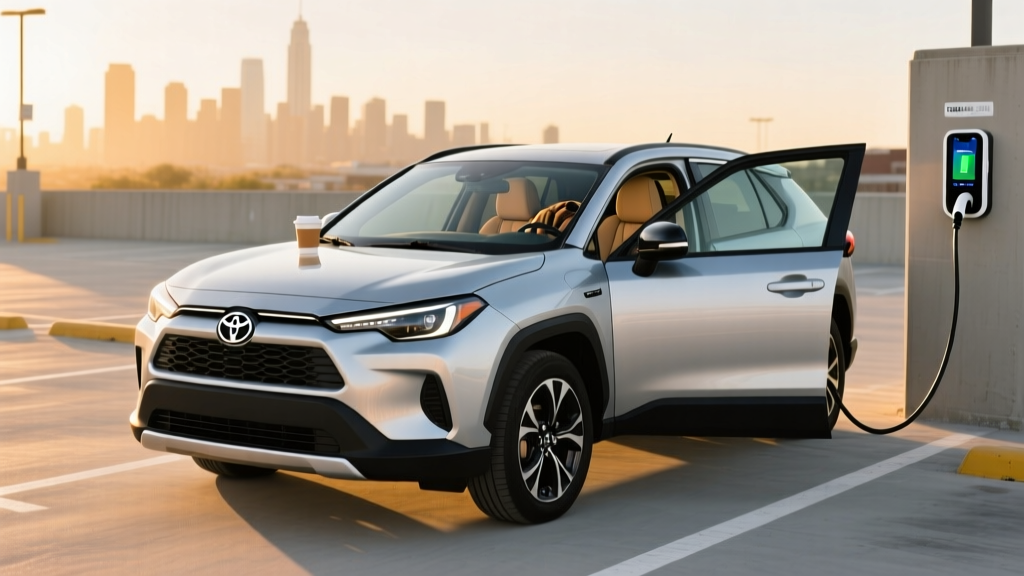
A PHEV like the Toyota RAV4 Prime or Jeep Wrangler 4xe carries a much larger battery (15–25 kWh) and a more powerful electric motor. You plug it in to charge (Level 1 or Level 2), and it can drive 25–45 miles on electricity alone before the gasoline engine engages. Once the battery depletes, it operates as a conventional hybrid. A PHEV is essentially an EV for short commutes and a hybrid for road trips.
Gasoline-Only (ICE)
A traditional internal combustion engine vehicle with no electric assist. Efficiency has improved through turbocharging, direct injection, and cylinder deactivation, but the fundamental thermodynamic limitations remain — most gas cars convert only 20–35% of fuel energy into motion.
EPA MPG Compared: Hybrid Car vs Gas by the Numbers
Fuel economy is where hybrids separate from the pack. Below is a comparison of 2026 model-year vehicles across popular segments, using EPA data from fueleconomy.gov. Note that EPA combined figures weight city driving at 55% and highway at 45%.
| Vehicle (2026) | Powertrain | City MPG | Highway MPG | Combined MPG | Combined HP |
|---|---|---|---|---|---|
| Toyota Prius | HEV | 57 | 56 | 57 | 196 |
| Toyota Corolla (Gas) | ICE | 32 | 41 | 35 | 169 |
| Honda Accord Hybrid | HEV | 51 | 44 | 48 | 204 |
| Honda Accord 1.5T (Gas) | ICE | 29 | 37 | 32 | 192 |
| Toyota RAV4 Hybrid | HEV | 41 | 38 | 40 | 219 |
| Toyota RAV4 (Gas AWD) | ICE | 27 | 34 | 30 | 203 |
| Toyota RAV4 Prime | PHEV | 94 MPGe | 84 MPGe | 38 (hybrid mode) | 302 |
| Hyundai Tucson PHEV | PHEV | 80 MPGe | 75 MPGe | 35 (hybrid mode) | 261 |
| Ford Maverick Hybrid | HEV | 42 | 33 | 37 | 191 |
| Ford Maverick 2.0T (Gas AWD) | ICE | 22 | 29 | 25 | 250 |
Real-world MPG vs. EPA sticker: Conventional hybrids frequently exceed their EPA city ratings in stop-and-go traffic, where regenerative braking recaptures the most energy. In our testing, the Toyota Prius HEV regularly returned 58–62 MPG in urban driving. Highway MPG, however, often falls 2–4 MPG below the EPA estimate at sustained 75+ MPH speeds because the electric motor provides minimal benefit at constant velocity. Gas cars show the opposite pattern — highway MPG often beats the EPA rating while city MPG falls short.
PHEV Electric-Only Range: How Far Can You Drive Without Gas?
For PHEV buyers, the electric-only range determines how much gasoline you'll actually use. If your daily round-trip commute falls within the electric range and you charge at home, you may visit a gas station only for road trips.
| 2026 PHEV Model | Battery (kWh) | EPA Electric Range | Total Range (Electric + Gas) | Level 2 Charge Time (0–100%) | DC Fast Charge |
|---|---|---|---|---|---|
| Toyota RAV4 Prime | 18.1 kWh | 42 miles | ~600 miles | ~2.5 hours (240V, 32A) | No |
| Hyundai Tucson PHEV | 13.8 kWh | 33 miles | ~440 miles | ~2 hours (240V, 32A) | No |
| Jeep Wrangler 4xe | 17.3 kWh | 22 miles | ~370 miles | ~2.5 hours (240V, 32A) | No |
| Chrysler Pacifica PHEV | 16.0 kWh | 32 miles | ~520 miles | ~2 hours (240V, 32A) | No |
| BMW X5 xDrive50e | 25.7 kWh | 38 miles | ~460 miles | ~3 hours (240V, 32A) | Yes (50 kW peak) |
Key PHEV charging reality: Most PHEVs cannot DC fast charge. The batteries are small enough that Level 2 charging (240V) fully replenishes them in 2–3 hours, which works well for overnight home charging. The BMW X5 xDrive50e is a notable exception, offering DC fast charging at up to 50 kW — useful for topping up during a road-trip stop, though far slower than a full BEV's 150–350 kW capability.
Cold-weather range loss: PHEV electric range drops 15–30% in freezing temperatures due to battery chemistry limitations and cabin heating demands. A RAV4 Prime rated at 42 electric miles may deliver only 30–35 miles in January in Minnesota. HEVs are less affected because the gasoline engine's waste heat warms the cabin, though fuel economy still drops 5–15% in cold weather.
Powertrain Specs: How Hybrids Deliver More Power and Efficiency
A common misconception is that hybrids sacrifice performance for efficiency. In reality, the electric motor's instant torque fill eliminates the lag inherent in gasoline-only powertrains, often resulting in faster acceleration alongside better MPG.
| Vehicle | Engine | Electric Motor | Combined HP | 0–60 MPH | Drivetrain |
|---|---|---|---|---|---|
| Toyota Prius HEV | 2.0L I4 | 2 permanent-magnet | 196 | 7.0 sec | FWD / AWD |
| Toyota RAV4 Hybrid | 2.5L I4 | 3 (F+R axle) | 219 | 7.4 sec | AWD (e-AWD) |
| Toyota RAV4 Prime PHEV | 2.5L I4 | 3 (F+R axle) | 302 | 5.7 sec | AWD (e-AWD) |
| Ford Maverick Hybrid | 2.5L I4 | 1 permanent-magnet | 191 | 7.8 sec | FWD |
| Honda Accord Hybrid | 2.0L I4 | 2 (drive + generator) | 204 | 6.5 sec | FWD |
The RAV4 Prime exemplifies the hybrid performance advantage: its 302 combined horsepower and 5.7-second 0–60 time make it the quickest RAV4 variant, while simultaneously delivering the best fuel economy. The electric motor on the rear axle provides electronic AWD without a mechanical driveshaft, reducing weight and parasitic loss.
Total Cost of Ownership: Hybrid Car vs Gas Over 5 Years
Fuel savings alone don't determine value. Let's model a realistic 5-year, 75,000-mile ownership scenario comparing a Toyota RAV4 Hybrid ($33,000 MSRP) against a gas-only RAV4 AWD ($30,500 MSRP), using national averages of $3.40/gallon for regular unleaded and 15,000 miles/year.
| Cost Category | RAV4 Hybrid (HEV) | RAV4 Gas (AWD) | 5-Year Difference |
|---|---|---|---|
| Purchase price (MSRP) | $33,000 | $30,500 | +$2,500 (HEV) |
| Fuel cost (75,000 mi) | $6,375 (40 MPG avg) | $8,500 (30 MPG avg) | −$2,125 (HEV saves) |
| Estimated maintenance | $2,400 | $2,800 | −$400 (HEV saves) |
| Insurance (avg) | $7,500 | $7,200 | +$300 (HEV) |
| Depreciation (est.) | $14,000 | $14,500 | −$500 (HEV holds better) |
| Total 5-year cost | $63,275 | $63,500 | −$225 (HEV net savings) |
At current fuel prices, the RAV4 Hybrid roughly breaks even with its gas counterpart over five years despite the $2,500 higher MSRP. But this equation shifts dramatically with higher gas prices, more city driving (where the hybrid's MPG advantage widens), or longer ownership horizons. At $4.00/gallon, the hybrid saves approximately $1,800 net over five years. Over 10 years and 150,000 miles, fuel savings alone exceed $4,000.
PHEV economics are different: A RAV4 Prime ($44,500 MSRP) costs significantly more upfront but can eliminate most gasoline consumption if you charge daily. At $0.14/kWh national average electricity cost, charging 18.1 kWh nightly costs about $2.54 — versus roughly $5.50 in gasoline for the same 42 miles. Over a year of weekday commuting, that's approximately $750 in fuel savings versus the gas RAV4, with a break-even horizon of roughly 6–7 years against the $14,000 MSRP premium.
Tax Credits and Incentives: What Qualifies in 2026?
Federal tax credit eligibility is a major differentiator between HEVs and PHEVs — and a frequent source of confusion.
- Conventional hybrids (HEVs): Do NOT qualify for the federal §30D clean vehicle credit. The IRS requires a minimum 7 kWh battery capacity and plug-in capability. HEVs like the Prius, RAV4 Hybrid, and Accord Hybrid are ineligible.
- Plug-in hybrids (PHEVs): May qualify for up to $7,500 under IRS §30D rules, subject to multiple requirements:
2026 §30D PHEV eligibility requirements (current rules):
- MSRP cap: Vans, SUVs, and pickups ≤ $80,000; sedans and other vehicles ≤ $55,000
- Buyer income cap: Modified AGI ≤ $150,000 (single), $225,000 (head of household), $300,000 (joint)
- Battery sourcing: Critical minerals and battery components must meet phased-in domestic/free-trade sourcing thresholds (increasing annually through 2026 and beyond)
- Final assembly: Vehicle must be assembled in North America
- Point-of-sale transfer: Eligible buyers can transfer the credit to the dealer for an immediate price reduction at purchase
Eligibility changes frequently as sourcing rules tighten. Always verify current status at fueleconomy.gov and consult a tax professional before relying on credit availability.
State incentives vary widely. Some states (California, Colorado, New York, among others) offer additional rebates or tax credits for PHEVs, typically $1,000–$4,000 depending on income and battery size. Check your state energy office or AFDC state incentive database for current programs.
Battery Reliability, Warranty, and Replacement Costs
Hybrid battery longevity is the top concern for first-time hybrid buyers — and the data is reassuring. Modern hybrid batteries are engineered for the life of the vehicle, with real-world failure rates far lower than public perception suggests.
Hybrid Battery Warranty Standards (2026)
Federal law mandates a minimum 8-year/100,000-mile warranty on hybrid and PHEV battery packs. In California Air Resources Board (CARB) states (California, New York, Massachusetts, and others), the requirement extends to 10 years/150,000 miles.
Most manufacturers match or exceed these minimums:
- Toyota: 10 years / 150,000 miles (nationwide, all 50 states)
- Honda: 8 years / 100,000 miles (10/150,000 in CARB states)
- Hyundai/Kia: 10 years / 100,000 miles (original owner)
- Ford: 8 years / 100,000 miles
Real-world battery lifespan data: Toyota's hybrid synergy drive system has accumulated billions of real-world miles across two decades of Prius production. Independent fleet data and owner surveys consistently show hybrid battery packs lasting 150,000–200,000+ miles before significant degradation. Capacity loss in HEVs is less consequential than in BEVs because the battery is small and the engine compensates — you may notice slightly reduced electric-only assist at low speeds, but overall fuel economy typically degrades only 1–3 MPG over 150,000 miles.
PHEV battery degradation is more noticeable because you're relying on a larger portion of the battery's capacity for electric-only driving. Expect 10–15% range loss over 100,000 miles, meaning a RAV4 Prime's 42-mile electric range might shrink to 36–38 miles. The warranty covers replacement if capacity drops below a manufacturer-defined threshold (typically 60–70% of original capacity).
Replacement cost if out of warranty: Hybrid battery replacement ranges from $2,000–$4,000 for HEVs (Prius, Accord Hybrid) to $5,000–$8,000 for PHEVs with larger packs. Third-party refurbished batteries are increasingly available for popular models at 30–50% below OEM pricing. For context, a timing belt replacement on a gas car costs $800–$1,500 and is required every 60,000–100,000 miles — a maintenance item that hybrids with timing chains avoid entirely.
Hybrid vs PHEV vs Full EV: Which Powertrain Fits You?
Choose a Conventional Hybrid (HEV) If:
- You cannot install a home charger (apartment, street parking, no garage)
- You want maximum MPG with zero behavioral change — just drive and refuel normally
- Your budget is under $35,000 and you want proven reliability
- You drive 15,000+ miles/year with a mix of city and highway
- You live in a region with limited public charging infrastructure
Choose a Plug-In Hybrid (PHEV) If:
- You can charge at home (Level 1 120V outlet is sufficient for overnight PHEV charging)
- Your daily commute is under 40 miles round-trip
- You want EV-like daily driving but need gas flexibility for road trips
- You want to qualify for the federal §30D tax credit (up to $7,500)
- You're not ready to commit to a full BEV due to road-trip or cold-weather concerns
Choose a Full Battery Electric Vehicle (BEV) If:
- You can install Level 2 home charging (240V)
- Your daily driving is under 250 miles and you can plan road-trip charging stops
- You want zero tailpipe emissions and the lowest per-mile fuel cost ($0.04–$0.06/mile on average electricity)
- You want to access the full $7,500 federal tax credit on eligible models
- You want to minimize maintenance (no oil changes, no spark plugs, minimal brake wear from regen)
Pros and Cons: Hybrid Car vs Gas at a Glance
Hybrid Advantages Over Gas
- 30–70% better city fuel economy (EPA-verified)
- Lower per-mile fuel cost: ~$0.08–$0.10/mi vs. $0.12–$0.15/mi for gas
- Reduced brake wear from regenerative braking (pads often last 80,000+ miles)
- No timing belt replacement (most hybrids use timing chains)
- Stronger resale value in an increasingly efficiency-conscious market
- Instant electric torque for smoother acceleration from stops
- PHEVs offer 25–45 miles of zero-gas commuting
Hybrid Disadvantages vs. Gas
- Higher upfront purchase price ($1,500–$5,000 premium for HEV; $8,000–$15,000 for PHEV)
- HEVs do not qualify for federal tax credits
- Hybrid battery replacement cost ($2,000–$8,000) if it fails after warranty
- Some hybrids have slightly less cargo space due to battery placement
- Highway MPG advantage is smaller than city MPG advantage
- PHEVs require home charging access to realize full fuel savings
- More complex powertrain means more potential failure points (though real-world data shows excellent reliability)
Frequently Asked Questions
How many MPG does a hybrid car get compared to gas?
Conventional hybrids typically deliver 40–57 MPG combined (EPA), compared to 25–35 MPG for equivalent gas-only vehicles. The advantage is largest in city driving where regenerative braking recaptures energy. The 2026 Toyota Prius achieves an EPA-rated 57 MPG combined — 63% better than the gas Corolla's 35 MPG combined.
How far can a PHEV go on electric only?
Current 2026 PHEVs offer 22–45 miles of EPA-rated electric-only range, depending on battery size and vehicle weight. The Toyota RAV4 Prime leads mainstream PHEVs at 42 miles. For most Americans with an average one-way commute of 16 miles (per Census Bureau data), this covers daily driving entirely on electricity with nightly home charging.
Do conventional hybrids need to be plugged in?
No. Conventional hybrids (HEVs) like the Toyota Prius, Honda Accord Hybrid, and Ford Maverick Hybrid charge their batteries entirely through regenerative braking and the gasoline engine. You fuel them exactly like a gas car. Only plug-in hybrids (PHEVs) require or benefit from external charging.
Is a hybrid car reliable, and what does battery replacement cost?
Hybrid reliability data from two decades of real-world use is excellent. Toyota's hybrid system in particular has proven exceptionally durable, with battery packs routinely lasting 150,000–200,000+ miles. All hybrid batteries carry a minimum 8-year/100,000-mile federal warranty. Out-of-pocket replacement costs $2,000–$4,000 for HEVs and $5,000–$8,000 for PHEVs, though most owners never face this expense.
Does a hybrid qualify for any tax credit?
Conventional hybrids (HEVs) do not qualify for the federal §30D clean vehicle credit — this requires plug-in capability and a minimum 7 kWh battery. Plug-in hybrids (PHEVs) may qualify for up to $7,500, subject to MSRP caps, buyer income limits, battery-sourcing requirements, and North American assembly rules. Verify current eligibility at fueleconomy.gov and consult a tax professional.
Is a hybrid worth it if I mostly drive on the highway?
The hybrid advantage narrows on the highway, where electric motor assist is minimal and aerodynamic drag dominates. A hybrid might achieve 38–45 MPG highway versus 30–35 MPG for a gas car — a smaller gap than in city driving. If 80%+ of your miles are highway, a fuel-efficient gas car or diesel may close the cost-of-ownership gap. However, hybrids still offer benefits like reduced brake wear, smoother stop-and-go behavior in highway traffic, and stronger resale value.
Hybrid vs full EV — which should I choose?
Choose a hybrid if you lack home charging access, regularly drive 300+ miles between stops, or want zero change to your refueling habits. Choose a full EV if you can charge at home, want the lowest per-mile cost (~$0.04–$0.06/mile), and your daily driving is under 250 miles. A PHEV splits the difference: electric commuting with gas road-trip freedom. The right answer depends entirely on your charging access, daily mileage, and willingness to plan longer trips around DC fast chargers.
Sources: fueleconomy.gov (EPA fuel economy data), IRS §30D Clean Vehicle Credit, manufacturer specification pages. Tax credit rules and vehicle pricing reflect 2026 model year data and are subject to change. Consult IRS guidance and a tax professional for personal eligibility.