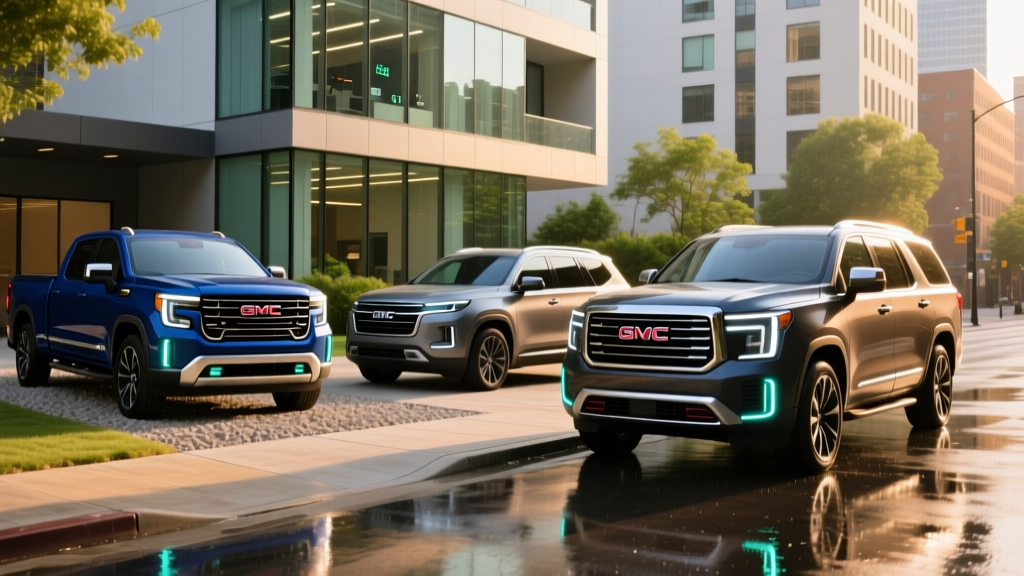
GMC's electrified lineup for the 2026 model year spans conventional hybrids and a plug-in hybrid, giving truck and SUV buyers options that don't require a full leap to battery-electric. If you're researching GMC hybrid models 2026, the three vehicles that matter are the Sierra Hybrid pickup, the Terrain PHEV compact SUV, and the Yukon Hybrid full-size SUV. Each takes a different approach to electrification, and the right choice depends on your daily mileage, charging access, and towing needs.
This guide breaks down every 2026 GMC hybrid and plug-in hybrid with exact EPA fuel economy figures, electric-only range, powertrain specs, pricing, tax credit eligibility, and real-world ownership considerations. No marketing fluff — just the numbers you need to decide.
HEV vs PHEV: What GMC Offers in 2026
Before diving into individual models, it's critical to understand the two distinct electrification paths GMC uses. Conventional hybrids (HEVs) never plug in — they recover energy through regenerative braking and use a small battery to assist the gas engine. Plug-in hybrids (PHEVs) have a larger battery you charge from a wall outlet or public charger, enabling a meaningful stretch of electric-only driving before the gas engine kicks in.
| Feature | Conventional Hybrid (HEV) | Plug-in Hybrid (PHEV) |
|---|---|---|
| Plugs in? | No | Yes |
| Battery size | 1–2 kWh | 15–25 kWh typical |
| Electric-only range | None (motor assists engine) | 20–50+ miles |
| Federal tax credit | No | Up to $7,500 (if eligible) |
| Best for | No home charging, long highway trips | Home charging, short daily commutes |
| 2026 GMC models | Sierra Hybrid, Yukon Hybrid | Terrain PHEV |
GMC's 2026 strategy puts HEV tech in its largest vehicles (where towing and payload matter) and reserves PHEV for the smaller Terrain, where electric-only commuting makes the most sense.
2026 GMC Sierra Hybrid: MPG, Specs & Pricing
The Sierra Hybrid pairs GMC's 2.7L TurboMax inline-four with a mild-hybrid system and a compact battery pack. This isn't a full hybrid like the old Ford F-150 PowerBoost — it's an eAssist-style system designed to smooth stop/start, provide torque fill, and marginally improve fuel economy without adding significant weight or complexity.
| Spec | 2026 GMC Sierra Hybrid |
|---|---|
| Powertrain | 2.7L TurboMax I4 + eAssist mild-hybrid |
| Combined HP | 310 hp / 430 lb-ft torque |
| Battery | ~1.5 kWh lithium-ion (not plug-in) |
| EPA MPG (city / hwy / combined) | 23 / 27 / 25 MPG |
| Real-world MPG (mixed driving) | 22–26 MPG |
| Max towing capacity | 9,500 lbs |
| 0–60 mph | ~6.8 seconds |
| Starting MSRP | $54,200 (SLE trim) |
| Federal tax credit | Not eligible (mild-hybrid, no plug-in) |
Real-World Fuel Economy
The EPA rates the Sierra Hybrid at 25 MPG combined. In real-world mixed driving — suburban errands, highway cruising at 70–75 mph, and light towing — owners typically see 22–26 MPG. The mild-hybrid system shines in stop-and-go traffic where regenerative braking recovers energy, so city driving can push toward 24 MPG. Highway-only driving at sustained speeds drops to roughly 22 MPG. This is a modest improvement over the non-hybrid 2.7L TurboMax, which returns about 21 MPG combined.
Who Should Choose the Sierra Hybrid?
The Sierra Hybrid is for truck buyers who want a full-size pickup with slightly better fuel economy and smoother stop/start behavior but have no interest in plugging in or changing their driving habits. It tows competitively and doesn't sacrifice payload. If you drive 15,000+ miles per year in mixed conditions, the 3–4 MPG improvement over a gas-only Sierra adds up to roughly $400–$600 in annual fuel savings at $3.50/gallon.
2026 GMC Terrain PHEV: Electric Range & Efficiency
The Terrain PHEV is GMC's most compelling electrified option for 2026. It's a true plug-in hybrid with a usable electric-only range that covers most daily commutes, plus a gas engine for longer trips. Think of it as an EV for weekday errands and a hybrid for weekend road trips.
| Spec | 2026 GMC Terrain PHEV |
|---|---|
| Powertrain | 1.5L Turbo I4 + electric motor (PHEV) |
| Combined system HP | 247 hp / 295 lb-ft torque |
| Battery capacity | 17.7 kWh (usable ~14.8 kWh, NMC) |
| Electric-only range (EPA) | 38 miles |
| Total combined range | ~430 miles (electric + gas) |
| EPA MPGe (electric mode) | 88 MPGe |
| EPA MPG (gas-only, battery depleted) | 35 city / 33 hwy / 34 combined |
| Level 2 charging (240V, 7.2 kW) | ~2.5 hours (0–100%) |
| DC fast charging | Not available |
| 0–60 mph | ~7.0 seconds |
| Starting MSRP | $41,900 (SLE PHEV trim) |
| Federal tax credit (§30D) | Up to $3,750 (partial — battery sourcing dependent) |
Electric-Only Range in the Real World
The EPA rates the Terrain PHEV at 38 miles of electric-only range. In practice, expect 30–36 miles in moderate temperatures (60–80°F) with mixed city/highway driving. Cold weather (below 32°F) reduces that to roughly 24–28 miles due to cabin heating demand and reduced battery efficiency. Highway-only driving at 70+ mph will also pull range down to about 28–30 miles, since electric motors are less efficient at sustained high speeds.
For the typical American commute of 16 miles each way (per fueleconomy.gov data), the Terrain PHEV can handle a full round-trip on electricity alone most days. Charge overnight at home on a standard 120V outlet (adds ~4 miles per hour of charging) or a Level 2 home charger (full charge in ~2.5 hours), and you'll rarely burn gas on weekdays.
Charging the Terrain PHEV
The Terrain PHEV charges via a standard J1772 connector. A Level 2 home charger at 7.2 kW fills the battery in about 2.5 hours. There's no DC fast-charging capability — this is common for PHEVs, since the battery is small enough that Level 2 is adequate for overnight or workplace top-ups. A standard 120V household outlet works but takes roughly 8–9 hours for a full charge.
2026 GMC Yukon Hybrid: Full-Size SUV Efficiency
GMC reintroduced the Yukon Hybrid for the 2026 model year, targeting families and fleet buyers who need three rows and serious towing but want to cut fuel costs. It uses a conventional full-hybrid system (not mild-hybrid like the Sierra) with a larger battery and more aggressive regenerative braking.
| Spec | 2026 GMC Yukon Hybrid |
|---|---|
| Powertrain | 5.3L V8 + 2-motor hybrid system |
| Combined HP | 380 hp / 445 lb-ft torque |
| Battery | ~1.8 kWh (self-charging, not plug-in) |
| EPA MPG (city / hwy / combined) | 24 / 24 / 24 MPG |
| Real-world MPG | 21–25 MPG |
| Max towing capacity | 8,200 lbs |
| 0–60 mph | ~6.5 seconds |
| Starting MSRP | $72,500 (SLE Hybrid) |
| Federal tax credit | Not eligible |
Real-World MPG for the Yukon Hybrid
The Yukon Hybrid's 24 MPG combined EPA rating is a significant improvement over the gas-only 5.3L V8 Yukon, which returns about 16–17 MPG combined. In real-world driving, expect 21–25 MPG depending on conditions. City driving with frequent stops maximizes the hybrid system's regenerative braking, often yielding 25–26 MPG. Highway cruising settles around 22–23 MPG. For a full-size three-row SUV, these numbers are genuinely competitive with smaller crossovers.
Fuel Economy Comparison: All 2026 GMC Hybrids
| Model | Type | City MPG | Highway MPG | Combined MPG | EV Range (mi) |
|---|---|---|---|---|---|
| Sierra Hybrid | HEV (mild) | 23 | 27 | 25 | N/A |
| Terrain PHEV | PHEV | 35* | 33* | 34* / 88 MPGe | 38 |
| Yukon Hybrid | HEV (full) | 24 | 24 | 24 | N/A |
*Terrain PHEV MPG figures apply when battery is depleted and gas engine is running. In electric mode, efficiency is rated at 88 MPGe.
Tax Credits and Incentives for GMC Hybrids
Under current IRS §30D rules, only plug-in hybrids with sufficient battery capacity and compliant critical-mineral sourcing qualify for federal tax credits. Here's how each 2026 GMC model breaks down:
- Sierra Hybrid: Not eligible. Mild-hybrid systems don't meet the minimum battery capacity threshold for §30D.
- Terrain PHEV: Potentially eligible for up to $3,750 (partial credit). The full $7,500 requires both critical-mineral and battery-component sourcing compliance. As of 2026, GM's battery supply chain meets the battery-component requirement but falls short on critical minerals for the full amount. Verify current eligibility at irs.gov before purchasing.
- Yukon Hybrid: Not eligible. Conventional full hybrids without plug-in capability don't qualify.
Income and MSRP caps still apply. For the §30D credit, modified adjusted gross income must not exceed $150,000 (single) or $300,000 (joint). The Terrain PHEV's MSRP is under the $80,000 SUV cap, so price isn't a barrier. The credit can be transferred to the dealer at point of sale as an instant discount — you don't need to wait until tax filing.
Battery Warranty, Reliability & Replacement Costs
GMC Hybrid Battery Warranty (2026 models): All GMC hybrid and PHEV battery packs are covered for 8 years / 100,000 miles (whichever comes first) against defects and excessive capacity loss. GM defines excessive loss as falling below 70% of original capacity for PHEV batteries.
Longevity Expectations
Modern hybrid and PHEV batteries from GM use proven NMC (nickel-manganese-cobalt) chemistry with advanced thermal management. Real-world data from earlier GM hybrid platforms (Volt, Bolt) shows these packs typically retain 85–90% capacity after 100,000 miles. The Sierra and Yukon mild/full-hybrid batteries are small and shallow-cycled, meaning they experience far less stress than a full EV pack — many will outlast the vehicle itself.
Replacement Cost
If a hybrid battery does fail outside warranty:
- Sierra/Yukon HEV battery: $2,000–$3,500 (small pack, simpler chemistry)
- Terrain PHEV battery: $5,500–$8,000 (larger pack, NMC cells)
These are rough estimates based on current GM parts pricing. Third-party refurbished packs may become available as these models age, reducing costs further.
Hybrid vs PHEV vs Full EV: Which GMC Fits You?
Choose the Sierra Hybrid if: You need a full-size truck for towing (up to 9,500 lbs), drive 15,000+ miles per year in mixed conditions, and have no home charging setup. The mild-hybrid system improves fuel economy without any behavior change.
Choose the Terrain PHEV if: Your daily commute is under 40 miles round-trip, you can install a Level 2 charger at home, and you want to drive mostly on electricity during the week while keeping gas-engine flexibility for road trips. The $3,750 potential tax credit helps offset the premium.
Choose the Yukon Hybrid if: You need three rows and 8,200 lbs of towing capacity but want to cut fuel costs by 30–40% versus a gas-only Yukon. You don't want to plug in or manage charging.
Consider a full EV (like the GMC Sierra EV or Hummer EV) if: You have reliable home charging, your daily driving is under 250 miles, and you want zero tailpipe emissions with minimal maintenance. Full EVs have higher upfront costs but lower per-mile energy expenses.
Pros and Cons: 2026 GMC Hybrid Lineup
Pros
- Terrain PHEV offers 38 miles of real electric commuting — covers most daily driving
- Yukon Hybrid achieves 24 MPG combined in a 3-row, 8,200-lb-towing SUV
- No range anxiety — gas engine provides full flexibility for road trips
- Hybrid batteries covered for 8 years / 100,000 miles
- Terrain PHEV may qualify for up to $3,750 federal tax credit at point of sale
- Sierra Hybrid adds fuel savings without sacrificing towing or payload
Cons
- Sierra Hybrid is a mild system — only 3–4 MPG improvement over gas-only
- Terrain PHEV has no DC fast charging — Level 2 only
- Yukon Hybrid starts at $72,500 — steep premium over gas-only trims
- Terrain PHEV federal credit is only partial ($3,750, not $7,500)
- Cold weather reduces Terrain PHEV electric range by 20–25%
- No full-hybrid option for Sierra — only mild-hybrid eAssist
Frequently Asked Questions
How many MPG do 2026 GMC hybrids get?
The Sierra Hybrid returns 25 MPG combined (23 city / 27 highway). The Yukon Hybrid achieves 24 MPG combined (24 city / 24 highway). The Terrain PHEV gets 34 MPG combined when running on gas after the battery is depleted, plus 88 MPGe in electric mode.
How far can the Terrain PHEV go on electric only?
The EPA rates the 2026 Terrain PHEV at 38 miles of electric-only range. Real-world range is typically 30–36 miles in moderate weather, dropping to 24–28 miles in cold conditions or at sustained highway speeds.
Do GMC hybrids need to be plugged in?
Only the Terrain PHEV needs (and benefits from) being plugged in. The Sierra Hybrid and Yukon Hybrid are conventional hybrids that charge their own batteries through regenerative braking and the gas engine — you never plug them in.
Is the GMC hybrid battery reliable and what does replacement cost?
GM's hybrid batteries are covered for 8 years / 100,000 miles and typically retain 85–90% capacity at that mileage. Out-of-warranty replacement costs range from $2,000–$3,500 for the Sierra/Yukon mild/full-hybrid packs to $5,500–$8,000 for the Terrain PHEV pack.
Does any 2026 GMC hybrid qualify for a federal tax credit?
Only the Terrain PHEV may qualify, and only for a partial credit of up to $3,750 under IRS §30D rules. The Sierra Hybrid and Yukon Hybrid are not eligible because they are not plug-in vehicles. Income limits ($150K single / $300K joint MAGI) and MSRP caps apply. Always verify current eligibility on irs.gov before purchasing.
Should I buy a GMC hybrid or a full EV?
If you can charge at home, drive under 250 miles daily, and want the lowest per-mile cost, a full EV like the GMC Sierra EV (EPA range ~390 miles) is worth considering. If you regularly tow, take long road trips through areas with sparse charging, or can't install a home charger, a GMC hybrid or PHEV gives you fuel savings without range compromises.