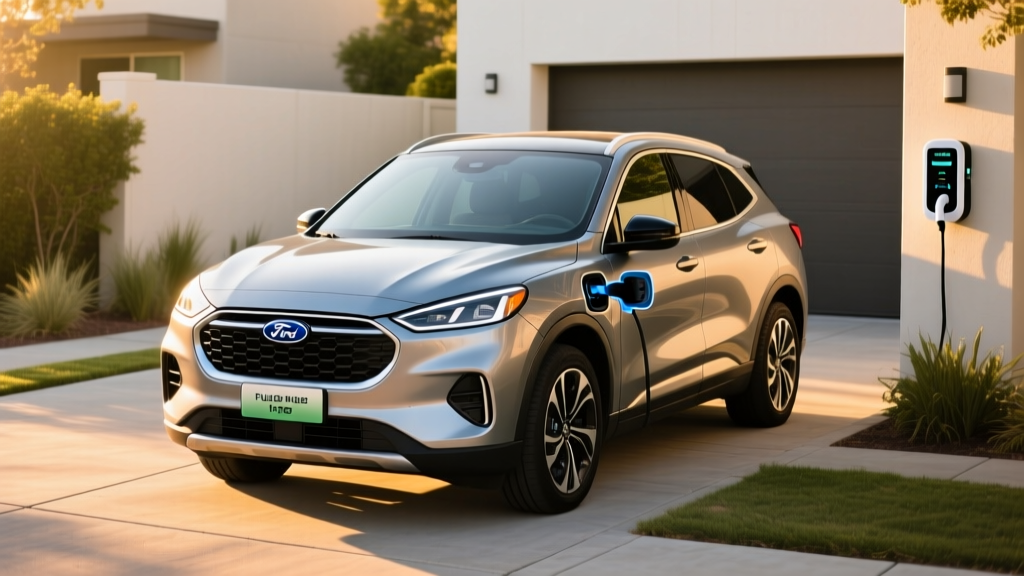
If you want to drive on electricity for your daily commute but keep a gas engine for weekend road trips, the Ford Escape Plug-In Hybrid (PHEV) sits in a practical middle ground. Unlike a conventional hybrid that only charges its small battery through regenerative braking and the engine, the Escape PHEV carries a larger battery pack you can plug in overnight, giving it a genuine electric-only range before the gasoline engine ever starts. This guide breaks down the real numbers — range, efficiency, charging, powertrain specs, pricing, and long-term battery reliability — so you can decide if this compact SUV PHEV fits your garage.
Escape PHEV vs. Escape Hybrid: What's the Actual Difference?
Ford sells the Escape with two electrified powertrains, and buyers frequently confuse them. The distinction matters for your wallet and your daily routine.
| Attribute | Escape Hybrid (HEV) | Escape Plug-In Hybrid (PHEV) |
|---|---|---|
| Plug-in charging required? | No — self-charging via engine & regen | Yes — plug in for electric-only miles |
| Battery capacity | ~1.1 kWh (small buffer) | 14.4 kWh usable |
| Electric-only range | None (motor assists engine only) | EPA 37 miles |
| Combined horsepower | 198 HP | 210 HP |
| EPA combined MPG (gas) | 39 MPG | 40 MPG (charge-sustaining) |
| MPGe (electric + gas) | N/A | 105 MPGe |
| Starting MSRP | ~$33,000 | ~$39,500 |
| Federal tax credit | Not eligible | Up to $3,750 (§30D, subject to sourcing rules) |
The conventional Escape Hybrid never plugs in. Its small battery captures energy from braking and the engine, and the electric motor simply assists the gas engine for better fuel economy. The Escape PHEV, by contrast, has a battery roughly 13 times larger, an onboard charger, and a charge port. Plug it in at home on a standard 120V outlet or a 240V Level 2 charger, and you can drive up to 37 miles on electricity alone before the 2.5-liter Atkinson-cycle four-cylinder engine kicks in seamlessly.
Electric-Only Range and Total Driving Range
EPA electric-only range: 37 miles
Real-world expectation: 30–35 miles in mixed driving; 25–28 miles in cold weather or sustained highway speeds above 70 mph.
Total combined range (electric + full gas tank): approximately 490 miles.
The Escape PHEV's 14.4 kWh usable battery (from a gross pack rated at approximately 14.4 kWh) delivers an EPA-rated 37 miles of electric-only driving. In practice, most owners report 32–36 miles on a full charge during moderate-weather commutes at suburban speeds. Cold weather (below 35°F) reduces lithium-ion battery efficiency and increases cabin heating loads, typically cutting electric range by 15–25%. Highway driving at 75+ mph also reduces range because aerodynamic drag rises with the square of speed.
Once the battery depletes to its buffer threshold, the vehicle operates as a conventional hybrid, using the engine and regenerative braking to sustain the small remaining charge. The 11.1-gallon fuel tank combined with 40 MPG charge-sustaining efficiency yields roughly 444 miles of gas-only range, for a total combined range near 490 miles.
Fuel Economy: EPA Ratings and Real-World MPG
| Mode | City | Highway | Combined |
|---|---|---|---|
| Charge-sustaining (gas only, battery depleted) | 42 MPG | 37 MPG | 40 MPG |
| Combined electric + gas | 105 MPGe | ||
| Energy consumption (electric mode) | 32 kWh/100 mi | ||
According to fueleconomy.gov, the Escape PHEV achieves 105 MPGe when operating on its combined electric and gasoline energy sources. Once the battery is depleted and the vehicle runs purely on gasoline, it delivers 40 MPG combined — with a notably higher 42 MPG city rating thanks to regenerative braking recapturing energy in stop-and-go traffic.
Real-world MPG note: Hybrids and PHEVs in charge-sustaining mode often match or slightly exceed their EPA city ratings in actual urban driving because real stoplights and traffic produce more regen opportunities than the EPA test cycle simulates. On long highway trips at 75 mph with a depleted battery, expect closer to 34–36 MPG. Drivers who charge daily and commute within the 37-mile electric window may go weeks without visiting a gas station, effectively achieving infinite MPG for their routine driving.
Powertrain, Battery, and Charging Specifications
| Engine | 2.5L Atkinson-cycle inline-4 |
| Engine output | 163 HP / 155 lb-ft torque |
| Electric motor | Permanent-magnet synchronous, 130 HP |
| Combined system output | 210 HP |
| Transmission | eCVT (planetary gearset, no fixed gears) |
| Battery chemistry | Lithium-ion (NMC) |
| Battery capacity (usable) | 14.4 kWh |
| Onboard charger | 3.3 kW (Level 2 AC) |
| DC fast charging | Not supported |
| Charge time (120V Level 1) | ~10–11 hours (0–100%) |
| Charge time (240V Level 2, 3.3 kW) | ~3.5 hours (0–100%) |
| Charge port | J1772 (AC only) |
| Drivetrain | Front-wheel drive |
| 0–60 mph | ~8.5 seconds |
| Towing capacity | 1,500 lbs |
The Escape PHEV pairs a 2.5-liter four-cylinder engine with a 130-HP electric motor through Ford's eCVT, which uses a planetary gearset rather than traditional gear shifts. Combined output is 210 HP — adequate for highway merging and confident passing, if not sporty.
Charging is limited to AC only. The 3.3 kW onboard charger means a full charge from a 240V Level 2 home station takes about 3.5 hours. On a standard 120V household outlet (Level 1), a full charge takes roughly 10–11 hours, which works for overnight replenishment if your daily driving is under 37 miles. The Escape PHEV does not support DC fast charging — this is typical for PHEVs in this class, since the relatively small battery doesn't justify the added cost and weight of DC hardware. If you need rapid public charging, a full BEV is the better choice.
Pricing, Trims, and Federal Tax Credit Eligibility
The 2026 Ford Escape PHEV starts at approximately $39,500 (MSRP, including destination) in the base trim, with higher trims reaching the mid-$40,000s when equipped with options like the Premium package, panoramic sunroof, and advanced driver-assistance features.
Federal §30D tax credit: The Escape PHEV may qualify for a partial federal tax credit — historically up to $3,750 — but eligibility depends on several factors that change periodically:
- Battery component and critical mineral sourcing: Under current IRS §30D rules, the credit is split into two $3,750 halves based on battery-component manufacturing and critical-mineral sourcing requirements. Vehicles that meet only one requirement receive $3,750; those meeting neither receive $0.
- MSRP cap: SUVs must have an MSRP at or below $80,000 (the Escape PHEV clears this easily).
- Buyer income cap: Modified adjusted gross income must not exceed $150,000 (single), $225,000 (head of household), or $300,000 (joint).
- Point-of-sale transfer: Eligible buyers can transfer the credit to the dealer at purchase, reducing the out-of-pocket price immediately rather than waiting for a tax refund.
Always verify current eligibility on the IRS Clean Vehicle credit page or with a tax professional before purchasing, as sourcing rules tighten annually.
Battery Warranty, Reliability, and Replacement Cost
Hybrid/PHEV battery warranty: Ford covers the Escape PHEV's high-voltage battery for 8 years or 100,000 miles (whichever comes first). In California Air Resources Board (CARB) states, the warranty extends to 10 years or 150,000 miles. The warranty guarantees the battery will retain sufficient capacity to function as designed — typically defined as retaining at least 60–70% of original capacity.
Ford's hybrid powertrains have built a solid reliability track record over two decades, dating back to the 2005 Escape Hybrid. The eCVT design eliminates traditional transmission wear items (no clutch packs, no torque converter, no gear shifts), which reduces long-term mechanical failure points. The high-voltage battery in a PHEV operates within a managed state-of-charge window — it never fully charges to 100% or drains to true 0% — which significantly extends cell lifespan compared to consumer electronics.
Battery replacement cost: Out of warranty, a replacement high-voltage battery pack for the Escape PHEV currently ranges from approximately $6,000 to $8,500 including parts and labor. However, real-world data from long-term PHEV and hybrid owners shows that complete battery failure within the first 150,000 miles is uncommon. Gradual capacity loss of 10–15% over 10 years is more typical, which might reduce electric-only range from 37 miles to around 31–33 miles — still functional for most commutes.
The conventional 12V auxiliary battery (which powers electronics and starts the vehicle's computers) is a separate maintenance item and typically costs $200–$350 to replace every 4–6 years, same as any vehicle.
Who Should Choose the Escape PHEV vs. a Full EV or Gas Car?
Choose the Ford Escape PHEV if:
- Your daily round-trip commute is under 35 miles and you can charge at home (Level 1 or Level 2).
- You take road trips of 200+ miles several times a year and don't want to plan around public charging infrastructure.
- You live in an apartment or area where reliable public DC fast charging is limited.
- You want lower fuel costs for commuting without the higher upfront price of a long-range BEV.
Choose a full EV (BEV) instead if:
- You have reliable home Level 2 charging and rarely drive more than 250 miles in a single day.
- You want to eliminate oil changes, spark plugs, and exhaust-system maintenance entirely.
- You want access to DC fast charging at 150+ kW for road trips.
- You want maximum federal tax credit eligibility (up to $7,500 for qualifying BEVs).
Choose the conventional Escape Hybrid (HEV) instead if:
- You cannot charge at home or at work (no garage, no outlet access).
- You want hybrid-level fuel economy (39 MPG combined) with zero change to your fueling routine.
- You want a lower purchase price (~$6,000 less than the PHEV) and don't need electric-only driving.
Driving Impressions and Daily Ownership Practicalities
In electric-only mode, the Escape PHEV is quiet and smooth, with the electric motor's instant torque making city driving responsive. The transition from electric to hybrid mode when the battery depletes is nearly imperceptible — the engine starts quietly and the eCVT manages power blending without the rubber-band sensation some older CVTs produce.
The PHEV's battery pack is mounted under the cargo floor, which reduces rear cargo volume slightly compared to the gas-only Escape (approximately 34.4 cubic feet behind the rear seats vs. 37.5 in the gas model). The spare tire is replaced by a tire-inflator kit. Rear passenger space is unaffected.
Ford's Co-Pilot360 driver-assistance suite comes standard, including adaptive cruise control, lane-centering, and automatic emergency braking. This is a SAE Level 2 system — it assists with steering and speed but requires the driver to remain fully engaged and hands-on or eyes-on at all times. It is not autonomous driving.
Pros, Cons, and the Bottom Line
Pros
- 37 miles of electric-only range covers most daily commutes
- 40 MPG combined even after the battery is depleted
- No range anxiety — gas engine provides 490+ total miles
- Charges fully overnight on a standard 120V outlet
- Strong 8-year/100,000-mile battery warranty
- Lower running costs vs. gas-only Escape without BEV infrastructure needs
Cons
- No DC fast charging capability
- 3.3 kW onboard charger is slow by modern PHEV standards
- FWD only — no AWD option on the PHEV (AWD is available on the HEV)
- Cargo space slightly reduced vs. gas model
- Partial tax credit ($3,750 max) vs. up to $7,500 for qualifying BEVs
- Premium over the conventional Escape Hybrid takes years to recoup on fuel savings alone
The Ford Escape Plug-In Hybrid is a pragmatic electrification choice for households that want electric commuting without committing to a full EV. If you can charge at home and your daily mileage stays within its 37-mile electric envelope, you'll drive most days without burning a drop of gas — while keeping the flexibility for 400-mile road trips without a single charging stop. The key trade-offs are the slow AC-only charging, the lack of AWD, and a price premium over the standard hybrid that requires consistent plug-in habits to justify.
Frequently Asked Questions
How many MPG does the Ford Escape Plug-In Hybrid get?
The Escape PHEV achieves an EPA-rated 105 MPGe when combining electric and gasoline operation. Once the battery is depleted and the vehicle runs on gasoline alone, it delivers 40 MPG combined (42 city / 37 highway). Real-world highway driving at sustained speeds above 70 mph typically yields 34–36 MPG in charge-sustaining mode.
How far can the Escape PHEV go on electric only?
The EPA rates the Escape PHEV at 37 miles of electric-only range. In real-world conditions, expect 30–35 miles in moderate weather with mixed driving, and 25–28 miles in cold weather or at sustained highway speeds. Once the battery depletes, the gas engine takes over seamlessly.
Does the Ford Escape PHEV qualify for a federal tax credit?
The Escape PHEV may qualify for a partial federal tax credit of up to $3,750 under IRS §30D, depending on current battery-sourcing and critical-mineral requirements. Eligibility also depends on your income (capped at $150K single / $300K joint) and the vehicle's MSRP (under the $80K SUV cap). Always verify current eligibility at IRS.gov or with a tax professional before purchase.
Is the Escape PHEV reliable, and what does battery replacement cost?
Ford's hybrid powertrains have a strong long-term reliability record, and the eCVT design eliminates many traditional transmission failure points. The high-voltage battery is warranted for 8 years/100,000 miles (10 years/150,000 miles in CARB states). Out-of-warranty replacement currently costs approximately $6,000–$8,500, but complete battery failure within 150,000 miles is uncommon based on historical hybrid data.
Can the Escape PHEV charge at public DC fast chargers?
No. The Escape PHEV only supports AC charging via a J1772 connector at up to 3.3 kW. It cannot use DC fast chargers (CCS, NACS, or CHAdeMO). A full charge on a 240V Level 2 home charger takes about 3.5 hours; on a 120V household outlet, roughly 10–11 hours.
Should I get the Escape PHEV or a full electric vehicle?
If you can charge at home, rarely drive more than 250 miles in a day, and want zero tailpipe emissions with minimal maintenance, a full BEV like the Tesla Model Y or Hyundai Ioniq 5 offers a more complete electric experience. If you need long-road-trip flexibility without charging stops, lack reliable home charging, or want a lower purchase price, the Escape PHEV bridges both worlds effectively.