The Only Hybrid Minivan That Makes Sense in 2025
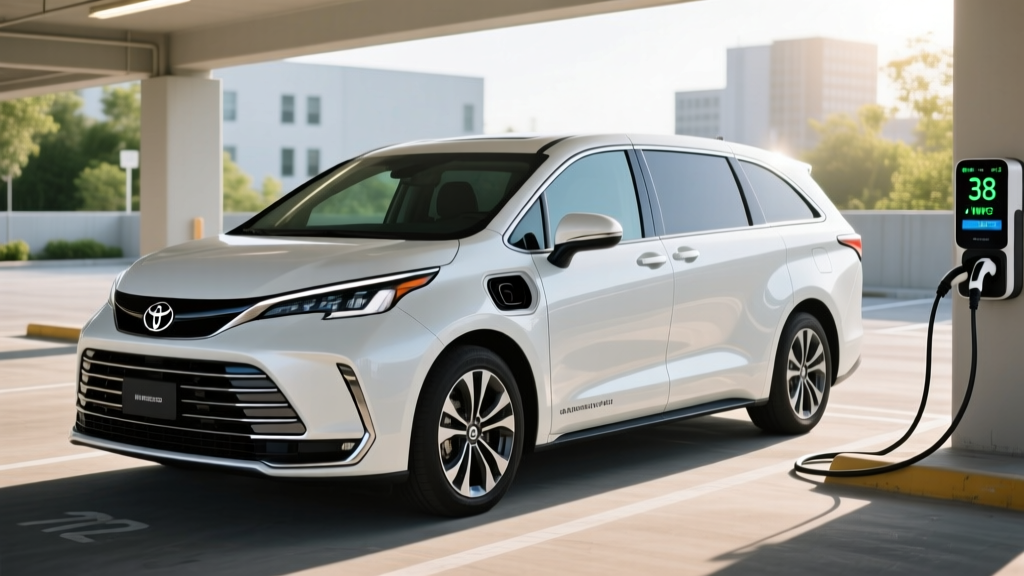
The Toyota Sienna has been a hybrid-only vehicle since the 2021 model year, and the 2025 Sienna hybrid continues that strategy with a 2.5-liter four-cylinder engine paired with Toyota's fourth-generation hybrid system. Unlike the Chrysler Pacifica Hybrid — which is a plug-in hybrid (PHEV) offering 32 miles of electric-only range — the Sienna is a conventional hybrid (HEV). You never plug it in. It captures energy through regenerative braking and engine operation, stores it in a small nickel-metal hydride battery, and uses electric motors to supplement the gasoline engine.
For families weighing the 2025 Sienna hybrid against fully electric alternatives like the Kia EV9 or a plug-in hybrid like the Pacifica PHEV, the Sienna occupies a specific niche: three-row seating, standard electronic on-demand AWD on most trims, and no charging infrastructure required. Here's a data-driven breakdown of what you're actually buying.
HEV vs PHEV: Where the Sienna Fits
| Feature | 2025 Toyota Sienna (HEV) | 2025 Chrysler Pacifica Hybrid (PHEV) | Full EV (e.g., Kia EV9) |
|---|---|---|---|
| Plug-in required? | No — self-charging hybrid | Yes — Level 2 recommended | Yes — Level 2 home + DC fast charging |
| EPA combined | 36 MPG | 30 MPG (gas) / 82 MPGe (electric) | 84-89 MPGe |
| Electric-only range | N/A | 32 miles | 280-300 miles (full battery) |
| Total range | ~640 miles | ~430 miles (combined EV + gas) | 280-300 miles |
| AWD availability | Standard on most trims | FWD only | RWD or AWD |
| Federal tax credit (§30D) | Not eligible | Up to $7,500 (if sourcing rules met) | Up to $7,500 (if sourcing rules met) |
The distinction matters. A conventional hybrid like the Sienna does not have a large battery you charge from the grid. Its 1.6 kWh nickel-metal hydride (NiMH) pack is small — roughly 1/40th the capacity of a typical EV battery — and exists solely to buffer energy between the engine, motors, and regenerative braking system. You drive it exactly like a gas car. The efficiency gains come from the electric motors handling low-speed propulsion, the engine shutting off at stops, and the continuously variable transmission (eCVT) keeping the engine in its most efficient RPM range.
Fuel Economy: EPA Numbers and Real-World MPG
The EPA rates the 2025 Toyota Sienna hybrid at the following fuel economy figures:
| Drivetrain | City MPG | Highway MPG | Combined MPG | Annual Fuel Cost* |
|---|---|---|---|---|
| FWD (LE trim) | 36 | 36 | 36 | ~$1,550 |
| AWD (XLE, Limited, etc.) | 35 | 36 | 35-36 | ~$1,600 |
*Based on 15,000 miles/year and $3.50/gallon regular unleaded. Actual costs vary by region and driving habits.
Real-World MPG: What Owners Actually Report
Toyota's hybrid system excels in city driving, where regenerative braking and low-speed electric motor use deliver outsized gains. In mixed suburban driving, many Sienna owners report matching or slightly exceeding the EPA's 36 MPG combined figure — particularly in warm weather with moderate acceleration.
However, real-world highway fuel economy tends to dip. At sustained 75-80 mph speeds, the aerodynamic drag of a minivan body and the limited electric assist at high speeds push real-world highway figures to approximately 30-33 MPG. Cold weather further reduces efficiency: expect 28-31 MPG combined in freezing temperatures as the engine runs more frequently to provide cabin heat and the battery's charge/discharge efficiency drops.
For comparison, a similarly sized gas-only minivan (the Honda Odyssey, which remains V6-only) achieves 22 MPG combined. The Sienna hybrid delivers a 60%+ improvement in city fuel economy and roughly a 50% improvement overall, translating to approximately $600-$800 in annual fuel savings for a typical driver covering 15,000 miles per year.
Powertrain Specs: What's Under the Hood
| Specification | 2025 Toyota Sienna Hybrid |
|---|---|
| Engine | 2.5L inline-4, Atkinson cycle |
| Engine output | 189 hp / 176 lb-ft torque |
| Front electric motor | 134 hp / 199 lb-ft |
| Rear electric motor (AWD) | 54 hp / 89 lb-ft |
| Combined system output | 245 hp (FWD) / 245 hp (AWD) |
| Transmission | eCVT (planetary gearset) |
| Hybrid battery | 1.6 kWh NiMH (sealed, under front seats) |
| 0-60 mph | ~7.1 seconds (FWD) |
| Towing capacity | 3,500 lbs (all trims) |
| Fuel tank | 17.9 gallons (regular unleaded) |
| Total range (est.) | ~640 miles (FWD) |
The Sienna's hybrid powertrain uses Toyota's proven series-parallel architecture. The eCVT isn't a traditional belt-and-pulley CVT — it's a planetary gearset that seamlessly blends power from the engine and electric motors without fixed gear ratios. This eliminates shift shock and keeps the engine near its peak thermal efficiency (~41% for this Atkinson-cycle four-cylinder).
The rear electric motor on AWD trims is relatively small at 54 hp. It engages primarily during acceleration from a stop and in low-traction conditions rather than providing continuous all-wheel drive. Think of it as traction-enhanced FWD rather than a traditional mechanical AWD system. It's effective for snow and rain but won't match the capability of a torque-vectoring AWD system on dry pavement.
2025 Sienna Hybrid Pricing by Trim
The 2025 Sienna is available in six trims. All use the same hybrid powertrain — there is no non-hybrid option.
| Trim | Drivetrain | MSRP (incl. $1,450 dest.) | Key Features |
|---|---|---|---|
| LE | FWD or AWD | $39,185 (FWD) / $40,785 (AWD) | 8-passenger, Toyota Safety Sense 3.0, 9" touchscreen |
| XLE | FWD or AWD | $44,185 (FWD) / $45,785 (AWD) | 7-passenger, SofTex seats, power liftgate, wireless CarPlay |
| XSE | AWD | $47,385 | Sport-tuned suspension, 20" wheels, 7-passenger |
| Woodland Edition | AWD | $48,485 | Roof rails, tow package, 18" TRD-style wheels |
| Limited | FWD or AWD | $51,585 (FWD) / $53,185 (AWD) | Leather, 12-speaker JBL audio, panoramic roof option |
| Platinum | AWD | $57,285 | HUD, 360° camera, rear entertainment, heated/ventilated 2nd row |
Tax Credit Eligibility
The 2025 Sienna hybrid does not qualify for the federal §30D Clean Vehicle Credit. Under current IRS rules, the §30D credit applies only to plug-in electric vehicles (BEVs and PHEVs) with battery capacities of at least 7 kWh. The Sienna's 1.6 kWh NiMH battery is far below this threshold. This is a deliberate trade-off: Toyota chose a simpler, lighter, and less expensive conventional hybrid system over a plug-in architecture.
Some states offer their own incentives for hybrid vehicles, though these are uncommon and vary by jurisdiction. Check your state's energy or environmental agency for current programs. Toyota does not currently offer any manufacturer incentives specific to the Sienna hybrid.
Battery Warranty, Reliability, and Replacement Costs
Toyota Hybrid Battery Warranty
- Hybrid battery: 10 years / 150,000 miles (whichever comes first)
- Hybrid system components: 8 years / 100,000 miles
- Bumper-to-bumper: 3 years / 36,000 miles
- Powertrain (engine/transaxle): 5 years / 60,000 miles
Toyota's hybrid battery track record is among the best in the industry. The Prius, which has used a similar NiMH-based hybrid system for over two decades, routinely sees original hybrid batteries lasting 150,000-200,000+ miles. The Sienna's system is newer (introduced 2021), but it uses the same proven architecture.
If the hybrid battery does need replacement out of warranty, a new OEM battery from Toyota costs approximately $3,000-$4,000 including installation at a dealership. Third-party reconditioned batteries are available for $1,500-$2,500. This is dramatically less than EV battery replacement costs, which can exceed $10,000-$20,000, because the Sienna's battery is small and uses mature NiMH chemistry rather than large-format lithium-ion cells.
For reliability data, NHTSA lists any active recalls and safety investigations. The Sienna has earned the IIHS Top Safety Pick+ rating in prior model years, and the 2025 model carries Toyota Safety Sense 3.0 standard across all trims, including pre-collision braking, lane-tracing assist, and adaptive cruise control.
Sienna Hybrid vs. the Competition
✅ Why the 2025 Sienna Hybrid Works
- 36 MPG combined — best-in-class minivan fuel economy
- Standard AWD on most trims — no competitor offers this in a hybrid minivan
- No charging infrastructure needed — works for apartment dwellers and road-trippers alike
- ~640 miles total range on a single tank
- Proven Toyota hybrid reliability with 10-year battery warranty
- 3,500-lb towing capacity across all trims
⚠️ Trade-Offs to Consider
- 245 hp is adequate but not quick — the Pacifica PHEV hits 260 hp combined
- No electric-only driving mode — you always burn some gasoline
- No federal tax credit eligibility (PHEV and EV competitors may qualify for up to $7,500)
- Highway MPG drops to ~30-33 in real-world 75+ mph driving
- Top trims (Platinum at $57K+) overlap with luxury SUV territory
- Engine noise under hard acceleration is noticeable (eCVT drone)
The Chrysler Pacifica Hybrid remains the only plug-in hybrid minivan, offering 32 miles of electric-only range for short commutes and school runs without using a drop of gas. If you have home Level 2 charging and most of your daily driving falls under 30 miles, the Pacifica PHEV can effectively function as an EV during the week with gas backup for road trips. However, it's FWD only, and once the battery depletes, its gas-only MPG drops to 30 — well below the Sienna's 35-36.
The Honda Odyssey and Kia Carnival remain conventional V6 gas vehicles with no hybrid option, averaging 22 MPG combined. If fuel economy is a priority, neither competes with the Sienna.
Who Should Buy the 2025 Sienna Hybrid?
Choose the Sienna hybrid if:
- You need three rows and want maximum fuel efficiency without plugging in
- You live in an apartment or lack home charging access
- You take frequent road trips and want 600+ mile range without charging stops
- You need AWD for snow/rain climates
- You plan to keep the vehicle 10+ years and value Toyota's hybrid longevity
Choose a PHEV (Pacifica Hybrid) if:
- You have home Level 2 charging and daily drives under 32 miles
- You want some electric-only driving without full EV commitment
- You may qualify for the $7,500 federal tax credit
Choose a full EV (Kia EV9) if:
- You have reliable home charging and access to DC fast chargers for road trips
- You want zero tailpipe emissions and the lowest per-mile energy cost
- You're eligible for the full $7,500 federal credit, significantly reducing the effective price
The 2025 Sienna hybrid doesn't try to be revolutionary. It's a pragmatic, efficient family hauler that eliminates fuel cost anxiety without introducing charging logistics. For buyers who want three rows, don't want to think about charging, and drive more than 12,000 miles per year, the math is straightforward: at 36 MPG combined versus 22 MPG for a gas minivan, the Sienna saves roughly 220 gallons of gas annually — about $770 per year at $3.50/gallon, or over $3,800 in five years.
Frequently Asked Questions
How many MPG does the 2025 Sienna hybrid actually get?
The EPA rates it at 36 MPG combined (FWD) or 35-36 MPG combined (AWD). In real-world driving, expect 30-33 MPG on sustained highway trips at 75+ mph, and 36-38+ MPG in city and suburban driving where the hybrid system excels. Cold weather reduces combined MPG by roughly 10-15%.
Does the Sienna hybrid need to be plugged in?
No. The 2025 Sienna is a conventional hybrid (HEV), not a plug-in hybrid (PHEV). Its 1.6 kWh battery charges through regenerative braking and the gasoline engine. You refuel it at a gas station like any other car.
Is the Sienna hybrid reliable? What about battery replacement cost?
Toyota's hybrid systems have a strong long-term reliability record. The hybrid battery is warranted for 10 years / 150,000 miles. Out-of-warranty replacement costs approximately $3,000-$4,000 for a new OEM battery — significantly less than EV battery replacement. Many Toyota hybrid batteries last 150,000-200,000+ miles based on Prius fleet data.
Does the 2025 Sienna qualify for any federal tax credit?
No. The §30D Clean Vehicle Credit requires a plug-in vehicle with at least 7 kWh of battery capacity. The Sienna's 1.6 kWh NiMH battery doesn't qualify. Only plug-in hybrids (like the Chrysler Pacifica Hybrid) and full EVs are eligible under current IRS rules.
Can the Sienna hybrid run on electric power alone?
Briefly, at very low speeds (under ~25 mph) and for short distances (a few hundred yards), the Sienna can operate in EV mode using battery power alone. However, this isn't a meaningful electric-only range — it's a feature of the hybrid system for parking lots and stop-and-go traffic. For sustained electric-only driving, you'd need a PHEV like the Pacifica Hybrid (32 miles EV range) or a full BEV.
How does AWD work on the Sienna hybrid?
The Sienna's electronic on-demand AWD uses a separate 54 hp electric motor on the rear axle — there's no mechanical driveshaft connecting the engine to the rear wheels. The rear motor engages during acceleration from a stop and when the system detects front-wheel slip. It's effective for snow, rain, and light off-pavement use but is not a full-time AWD system like you'd find on a Subaru.