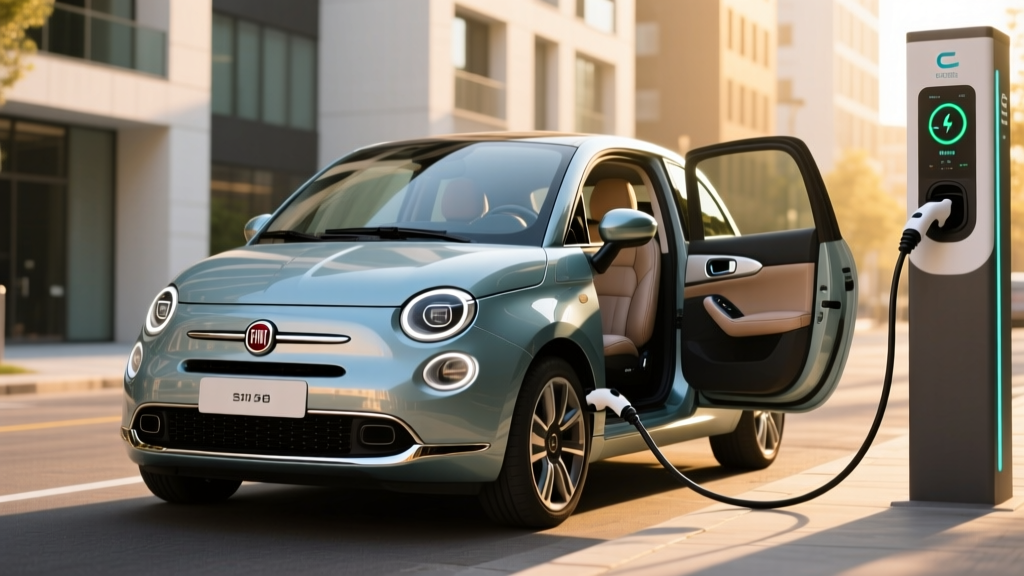
The Fiat 500 has long been the quintessential European city car, and its mild-hybrid variant promises incremental fuel savings without the complexity of a full hybrid or plug-in system. But in a market increasingly dominated by battery-electric vehicles and more sophisticated hybrid powertrains, does the Fiat 500 Hybrid still make sense for American buyers? We've analyzed the specs, crunched the fuel-economy numbers, and weighed its ownership proposition against both full EVs and conventional gas cars.
Fiat 500 Hybrid: What Kind of Hybrid Is It?
First, a critical distinction that trips up many shoppers: the Fiat 500 Hybrid is a mild hybrid (MHEV), not a conventional hybrid (HEV) like the Toyota Prius, and certainly not a plug-in hybrid (PHEV). Understanding this difference shapes every expectation you should have about fuel savings, driving behavior, and ownership.
Hybrid Type Breakdown
| Feature | Mild Hybrid (MHEV) — Fiat 500 | Full Hybrid (HEV) | Plug-in Hybrid (PHEV) |
|---|---|---|---|
| Electric-only driving | No | No (very short distances only) | Yes (typically 20-50 mi) |
| Needs to be plugged in | No | No | Yes |
| Battery size | ~0.13 kWh (small lithium) | ~1-2 kWh | ~10-20 kWh |
| Primary electric role | Regen + torque assist + stop/start | Low-speed assist + regen | Full electric propulsion |
| Fuel savings vs gas | Modest (5-15%) | Moderate (20-40%) | Large if charged regularly |
The Fiat 500 Hybrid uses a belt-integrated starter-generator (BISG) paired with a small lithium-ion battery. This system recovers energy during braking, provides a slight torque fill during acceleration, and enables a smoother stop-start function. It cannot propel the car on electricity alone, and you never plug it in. The gas engine does all the heavy lifting.
Powertrain Specs: Engine, Motor, and Horsepower
| Specification | Detail |
|---|---|
| Engine | 1.0L 3-cylinder turbocharged |
| Electric assist | Belt-integrated starter-generator (BISG), ~3.6 kW |
| Combined output | 70 hp (51 kW) |
| Torque | 68 lb-ft (92 Nm) |
| Transmission | 6-speed manual |
| Drivetrain | Front-wheel drive |
| 0-62 mph (0-100 km/h) | ~13.8 seconds |
| Top speed | ~104 mph (167 km/h) |
| Mild-hybrid battery | ~0.13 kWh lithium-ion |
| Curb weight | ~2,150 lbs (975 kg) |
At 70 horsepower, the Fiat 500 Hybrid is not quick by any standard. The BISG system contributes a small torque assist at low RPMs, which smooths out the 3-cylinder's inherent roughness and slightly improves throttle response, but this is not a performance-oriented setup. The 6-speed manual is the only transmission offered in most markets — there is no automatic option, which limits its appeal for US buyers accustomed to automatics.
Fuel Economy: EPA MPG and Real-World Expectations
The Fiat 500 Hybrid's fuel economy is its primary selling point. However, because this model has limited US availability (Fiat's American lineup has narrowed significantly), official EPA figures may not be published for every model year. Based on European WLTP testing and comparable Fiat 500 powertrain data, here are the estimated figures:
| Driving Condition | Estimated MPG |
|---|---|
| City | ~42 MPG |
| Highway | ~53 MPG |
| Combined | ~47 MPG |
Real-world caveat: These figures derive primarily from WLTP testing cycles, which tend to be slightly more optimistic than EPA estimates for highway driving. In real-world mixed driving, expect closer to 40-45 MPG combined. The mild-hybrid system's biggest efficiency gains come in stop-and-go city traffic, where regenerative braking and the enhanced stop-start function reduce idle fuel burn. On sustained highway cruises at 70+ mph, the hybrid system contributes less, and you'll see figures closer to the non-hybrid 1.0L FireFly engine — roughly 45-48 MPG highway.
For comparison, the conventional gas-only Fiat 500 with the same 1.0L engine achieves approximately 38-41 MPG combined. The mild-hybrid system delivers a realistic 10-15% improvement, which translates to roughly 1-2 fewer fill-ups per year for an average driver covering 12,000 miles annually.
Pricing, Availability, and Tax Credit Eligibility
The Fiat 500 Hybrid is primarily sold in European markets, with a starting price around €16,000-€18,000 (approximately $17,500-$19,500 USD at current exchange rates). US availability has been extremely limited — Fiat's American presence has contracted to the Fiat 500e (fully electric) in recent years, and the hybrid variant is not part of the current US lineup as of 2026.
If you're considering importing or if Fiat reintroduces the hybrid to the US market, here's what to know about incentives:
- Federal §30D tax credit: The Fiat 500 Hybrid does not qualify for the federal plug-in EV tax credit. The IRS §30D credit requires a vehicle to have a battery capacity of at least 7 kWh and the ability to be recharged from an external source (source: IRS). A mild hybrid with a 0.13 kWh battery that charges only through regenerative braking does not meet these criteria.
- State incentives: Most state-level EV incentives similarly require plug-in capability. A few states offer small rebates for any hybrid purchase, but these are uncommon and typically modest ($250-$500).
- Used hybrid credit: The federal used clean vehicle credit (up to $4,000) applies only to plug-in vehicles, not conventional or mild hybrids.
Bottom line: there is no meaningful tax incentive for purchasing a mild hybrid in the United States. The value proposition rests entirely on fuel savings and a potentially lower purchase price versus a full EV.
Reliability and Battery Warranty
Hybrid Battery Longevity
The Fiat 500 Hybrid's mild-hybrid battery is far smaller and less stressed than a full hybrid or PHEV battery pack. At approximately 0.13 kWh, it operates within a narrow state-of-charge window and experiences shallow charge/discharge cycles, which significantly extends its lifespan.
- Expected battery lifespan: 10-15 years / 150,000+ miles (mild-hybrid batteries rarely fail prematurely)
- Warranty (Europe): Typically 8 years / 100,000 miles on hybrid system components
- Battery replacement cost: Estimated $500-$1,200 for the mild-hybrid lithium battery — a fraction of the $2,000-$8,000 cost for full hybrid or PHEV packs
The 1.0L FireFly 3-cylinder engine has been in production since 2016 and has proven reasonably reliable in Fiat and Jeep applications across Europe. Common concerns are minor — turbo wastegate rattle on early models and occasional start-stop system glitches that the mild-hybrid BISG system largely resolves. The manual transmission is a simple, durable unit.
Because the mild-hybrid system adds minimal complexity (no high-voltage cabling, no electric drive motor, no large battery cooling system), there is very little to go wrong versus a conventional gas car. This is one of the mild hybrid's underrated advantages: you get slight fuel savings without the maintenance and repair anxiety some buyers associate with full hybrid or PHEV systems.
Fiat 500 Hybrid vs. Full EV vs. Gas Car: Which Fits You?
✅ Reasons to Choose the Fiat 500 Hybrid
- You want a simple, affordable city car with slightly better fuel economy
- You cannot install a home charger and lack reliable public charging access
- You prefer a manual transmission and lightweight, tossable handling
- You want minimal added complexity vs. a standard gas car
- Your budget is under $20,000 (in markets where it's available)
❌ Reasons to Look Elsewhere
- You want meaningful fuel savings — a full HEV or PHEV delivers 2-3x the efficiency gain
- You want electric-only driving for short commutes (PHEV territory)
- You need an automatic transmission (not offered on the hybrid)
- You want access to HOV lanes or EV tax credits (requires plug-in capability)
- You drive primarily highway miles, where the mild-hybrid advantage is smallest
Choose a full EV (like the Fiat 500e) if you have home charging, drive under 150 miles daily, and want the lowest per-mile fuel cost (roughly $0.04-$0.06/mile on electricity vs. $0.10-$0.13/mile on gas at 47 MPG). The 500e offers ~149 miles of EPA range and qualifies for used-EV tax credits when purchased pre-owned.
Choose a full hybrid (HEV) like the Toyota Prius or Hyundai Elantra Hybrid if you want 50+ MPG combined without plugging in, need more interior space, and want widely available US service infrastructure. These vehicles deliver 2-3x the fuel savings of a mild hybrid.
Choose a PHEV like the Toyota Prius Prime if you have home charging and a short commute (under 40 miles) but want gas-engine backup for longer trips. You'll drive most days on electricity alone.
Who Should Actually Buy the Fiat 500 Hybrid?
The Fiat 500 Hybrid occupies a narrow niche. It makes the most sense for urban European buyers who want an inexpensive, easy-to-park city car with marginally improved fuel economy and no change to their fueling habits. For US buyers in 2026, the practical challenge is availability — this model simply isn't sold stateside, and importing one involves significant regulatory and cost hurdles.
If you're drawn to the Fiat 500 platform and are in the US market, the Fiat 500e (all-electric) is the more relevant option. It offers 149 miles of EPA range, 118 hp, DC fast charging capability (up to 85 kW peak, 10-80% in approximately 35 minutes), and a starting MSRP around $32,500 before any incentives. For buyers who want the Fiat 500 experience with genuinely transformative fuel-cost savings, the EV variant is the stronger pick — provided you can charge at home.
If you're committed to a hybrid and need US availability, the Toyota Prius (57 MPG combined, starting ~$28,500) or Hyundai Elantra Hybrid (54 MPG combined, starting ~$26,500) deliver vastly superior fuel economy, automatic transmissions, full warranties, and widespread dealer support.
Frequently Asked Questions
How many MPG does the Fiat 500 Hybrid get?
The Fiat 500 Hybrid achieves an estimated 47 MPG combined (42 city / 53 highway) under WLTP testing. Real-world combined driving typically yields 40-45 MPG. This represents a roughly 10-15% improvement over the non-hybrid 1.0L Fiat 500.
Can the Fiat 500 Hybrid drive on electric power alone?
No. As a mild hybrid (MHEV), the Fiat 500 Hybrid cannot propel itself on electricity alone. The small BISG motor assists the gas engine during acceleration and recovers energy during braking, but the gasoline engine provides 100% of the propulsion at all times.
Does the Fiat 500 Hybrid need to be plugged in?
No. The mild-hybrid battery charges exclusively through regenerative braking and engine-driven generation. There is no plug, no charging cable, and no need for any charging infrastructure.
Does the Fiat 500 Hybrid qualify for any tax credit?
No. The federal §30D clean vehicle credit requires a plug-in vehicle with at least 7 kWh of battery capacity. The Fiat 500 Hybrid's 0.13 kWh mild-hybrid battery does not qualify. Most state incentives similarly require plug-in capability.
Is the Fiat 500 Hybrid available in the United States?
As of 2026, the Fiat 500 Hybrid is not part of Fiat's US lineup. American buyers can purchase the Fiat 500e (fully electric) or look to other hybrid models from Toyota, Hyundai, and Honda. European buyers have access to the hybrid variant through Fiat's standard dealer network.
How long will the mild-hybrid battery last?
Mild-hybrid batteries are small, lightly stressed, and typically last 10-15 years or 150,000+ miles. Replacement cost is estimated at $500-$1,200 — far less than full hybrid or PHEV battery replacement. The Fiat hybrid system carries an 8-year/100,000-mile warranty in European markets.
Is the Fiat 500 Hybrid reliable?
The mild-hybrid system adds minimal complexity to an already simple powertrain. The 1.0L FireFly engine has been in production since 2016 with generally acceptable reliability. The BISG system has fewer failure points than a full hybrid's high-voltage components. Overall, reliability should be comparable to or slightly better than the conventional gas Fiat 500.