Quick Verdict: The Corolla Cross Hybrid Delivers Where It Counts
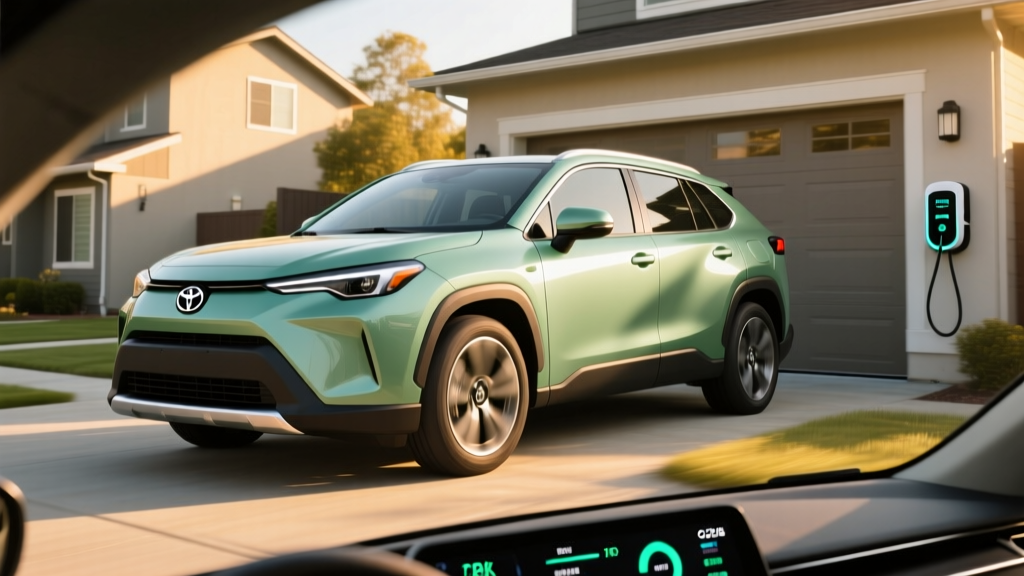
The Toyota Corolla Cross Hybrid occupies a narrow but valuable lane: a subcompact crossover with standard all-wheel drive, over 40 MPG in real-world driving, and a starting price that undercuts most rivals by several thousand dollars. For 2026, Toyota continues the hybrid-only AWD powertrain that pairs a 2.0-liter four-cylinder with two electric motor-generators, producing a combined 196 horsepower. There is no plug-in hybrid (PHEV) variant — this is a conventional self-charging hybrid (HEV) that never needs to be plugged in.
If you need a small crossover for commuting, grocery runs, and occasional road trips without thinking about charging infrastructure, the Corolla Cross Hybrid is one of the most efficient vehicles in its class. But it trades excitement and interior refinement for that efficiency. Let's get into the exact numbers.
HEV vs PHEV: Where the Corolla Cross Hybrid Fits
Conventional Hybrid (HEV) — like the Corolla Cross Hybrid: A small battery (typically 1-2 kWh) recharges through regenerative braking and the gas engine. You never plug it in. The electric motor assists the engine during acceleration and can propel the car at very low speeds for short distances. The goal is maximum MPG with zero behavior change.
Plug-In Hybrid (PHEV): A larger battery (typically 10-20 kWh) that you plug in to recharge, offering 20-40 miles of electric-only driving before the gas engine kicks in. Examples include the Toyota RAV4 Prime or Hyundai Tucson PHEV. PHEVs qualify for partial federal tax credits but cost $5,000-$10,000 more upfront.
Full EV (BEV): No gas engine at all. Larger battery (60-100+ kWh), 200-400 mile range, requires home or public charging. Lowest per-mile energy cost but requires charging access.
The Corolla Cross Hybrid is strictly an HEV. Toyota does not offer a Corolla Cross Prime or any plug-in variant. If you want plug-in electric range in a Toyota crossover, you'd need to step up to the RAV4 Prime (42 miles electric-only, but ~$44,000 starting) or look at the RAV4 Hybrid (HEV, similar concept but larger).
Fuel Economy: EPA Ratings and Real-World MPG
| Metric | EPA Rating | Real-World Expectation |
|---|---|---|
| City | 46 MPG | 44-50 MPG (hybrids excel in stop-and-go) |
| Highway | 39 MPG | 36-40 MPG (aerodynamic drag at 75+ mph) |
| Combined | 42 MPG | 40-44 MPG depending on driving mix |
Source: fueleconomy.gov (EPA estimates for 2026 Toyota Corolla Cross Hybrid AWD).
How does a hybrid get better city MPG than highway? Regenerative braking recovers energy during deceleration, and the electric motor handles low-speed driving where gas engines are least efficient. On a 10-mile urban commute with traffic lights, you'll regularly see 46-50 MPG on the trip computer. Sustained 80-mph highway driving drops that to the mid-to-high 30s.
Cold-weather note: In freezing temperatures, expect a 5-10% MPG reduction. The engine runs more often to generate cabin heat and warm up the catalytic converter. This is normal for all hybrids and far less severe than the 20-30% range loss a full EV experiences in cold weather.
With a 10.6-gallon fuel tank, total range is approximately 445 miles per tank under mixed driving — comparable to most gas crossovers but with fewer fill-ups.
Powertrain Specs: What's Under the Hood
| Specification | 2026 Corolla Cross Hybrid |
|---|---|
| Engine | 2.0L 4-cylinder Atkinson-cycle |
| Combined System Horsepower | 196 HP |
| Electric Motors | 2 motor-generators (MG1 + MG2), e-AWD rear motor |
| Transmission | Electronically controlled CVT (eCVT) |
| Drivetrain | Electronic On-Demand AWD (standard, all trims) |
| Hybrid Battery | ~1.3 kWh lithium-ion (self-charging, no plug) |
| 0-60 MPH | ~7.5 seconds (est.) |
| Towing Capacity | Not rated for towing |
The fifth-generation Toyota Hybrid System uses a 2.0-liter Atkinson-cycle engine — an engine design optimized for efficiency over raw power — paired with two motor-generators in the transaxle. A separate rear-axle electric motor provides all-wheel drive by powering the rear wheels when slip is detected or during hard acceleration. There is no mechanical driveshaft connecting the front and rear axles; the rear motor draws from the hybrid battery and is recharged by the engine or regen.
The 196 combined horsepower is a meaningful step up from the non-hybrid Corolla Cross (169 HP from a conventional 2.0L). Acceleration is confident for merging and passing, though the eCVT keeps the engine at a steady drone under hard throttle — typical of Toyota's hybrid system. It's not sporty, but it's smooth and responsive in daily driving.
Pricing, Trims & Tax Credit Eligibility
| Trim | 2026 MSRP (est.) | Key Features |
|---|---|---|
| S | ~$30,500 | 8" touchscreen, Toyota Safety Sense 3.0, 17" alloy wheels, LED headlights |
| SE | ~$32,500 | SofTex seats, heated front seats, wireless CarPlay/Android Auto, 18" wheels |
| XSE | ~$34,500 | Power liftgate, JBL audio (9 speakers), panoramic roof option, ambient lighting |
Federal tax credit (§30D): The Corolla Cross Hybrid does not qualify for the federal plug-in vehicle tax credit. The IRS §30D credit applies only to plug-in electric vehicles (BEVs and PHEVs) with a minimum battery capacity of 7 kWh for PHEVs or 16 kWh for BEVs, subject to MSRP caps, buyer income limits, and battery-component/critical-mineral sourcing requirements. Conventional hybrids like this one are excluded. See current rules at IRS.gov.
Some states and utilities offer rebates for conventional hybrids, but these vary widely and are often modest ($250-$500). Check your state energy office or local utility for current programs.
Total cost of ownership advantage: At 42 MPG combined and $3.25/gallon gas, annual fuel cost is approximately $1,160 for 15,000 miles. A comparable gas-only subcompact crossover averaging 28 MPG would cost roughly $1,740 per year — a savings of about $580 annually, or $2,900 over five years.
Battery Warranty, Reliability & Replacement Cost
Toyota Hybrid Battery Warranty: 10 years / 150,000 miles (whichever comes first) on the hybrid battery pack, transferable to subsequent owners. This covers capacity loss below a defined threshold and any defects. Source: Toyota warranty guide.
Powertrain Warranty: 5 years / 60,000 miles.
Basic (bumper-to-bumper): 3 years / 36,000 miles.
Toyota's hybrid system has an exceptional reliability track record. The Prius has been in production since 1997, and the hybrid synergy drive architecture is now in its fifth generation. The hybrid battery in the Corolla Cross is relatively small (~1.3 kWh) and operates within a narrow state-of-charge window (roughly 40-80%), which dramatically reduces stress and degradation compared to a full EV battery that cycles between 10-90%.
Real-world longevity: Many Toyota hybrids exceed 200,000 miles on the original hybrid battery. Failures before 150,000 miles are uncommon. When replacement is needed out of warranty, a new OEM hybrid battery for a Toyota 2.0L hybrid system typically costs $2,000-$3,500 installed. Third-party reconditioned batteries are available for $1,000-$2,000.
Reliability ratings: Toyota as a brand consistently ranks near the top in J.D. Power and Consumer Reports reliability surveys. The Corolla Cross specifically carries Toyota Safety Sense 3.0 standard (pre-collision, lane departure, adaptive cruise, lane tracing) and earns strong safety scores from NHTSA and the IIHS.
Who Should Buy the Corolla Cross Hybrid?
Choose the Corolla Cross Hybrid if:
- You want maximum fuel economy without plugging in or changing habits
- You need AWD for snow or rain but don't want the MPG penalty of a traditional AWD system
- Your daily commute is under 50 miles and includes stop-and-go traffic
- You want a proven, low-maintenance powertrain with a 10-year battery warranty
- Budget is around $30,000-$35,000 and you prioritize running costs over luxury
Look elsewhere if:
- You want electric-only driving — consider a PHEV like the RAV4 Prime or a BEV like the Hyundai Ioniq 5
- You need significant cargo space or towing — the Corolla Cross is compact (25.5 cu ft cargo) and not rated for towing
- You want a premium interior — materials are functional but hard-plastic-heavy compared to rivals like the Mazda CX-30
- You regularly drive long highway stretches — a diesel or efficient gas car may match hybrid highway MPG
Pros & Cons at a Glance
Pros
- 42 MPG combined with standard AWD — class-leading efficiency
- 196 HP is brisk for the segment; confident highway merging
- 10-year/150,000-mile hybrid battery warranty
- Toyota Safety Sense 3.0 standard on all trims
- Low starting price (~$30,500) for a hybrid AWD crossover
- Proven fifth-gen Toyota hybrid reliability
Cons
- No plug-in hybrid option for electric-only commuting
- Interior materials feel budget-tier; road noise is noticeable
- Not rated for towing
- Rear seat and cargo space tighter than RAV4 or Honda CR-V
- eCVT engine drone under hard acceleration
- No federal tax credit (HEV, not PHEV/BEV)
Frequently Asked Questions
How many MPG does the Corolla Cross Hybrid get?
The EPA rates the 2026 Corolla Cross Hybrid at 46 city / 39 highway / 42 combined MPG. Real-world testing shows most drivers achieve 40-44 MPG combined, with city-heavy commutes occasionally exceeding 46 MPG thanks to regenerative braking.
Does the Corolla Cross Hybrid need to be plugged in?
No. The Corolla Cross Hybrid is a conventional hybrid (HEV), not a plug-in hybrid. The small hybrid battery recharges automatically through regenerative braking and the gas engine. You fuel it like any other car at a gas station.
Is there a plug-in hybrid (PHEV) version of the Corolla Cross?
No. Toyota does not offer a plug-in hybrid Corolla Cross. If you want Toyota plug-in hybrid capability in a crossover, the RAV4 Prime offers 42 miles of electric-only range but starts around $44,000.
Is the Corolla Cross Hybrid reliable, and what does battery replacement cost?
Toyota's hybrid system is among the most proven in the industry, with millions of units on the road since 1997. The hybrid battery carries a 10-year/150,000-mile warranty. Out-of-warranty replacement runs $2,000-$3,500 for an OEM battery, though many units last well beyond 200,000 miles.
Does the Corolla Cross Hybrid qualify for any tax credit?
No. The federal §30D plug-in vehicle tax credit applies only to plug-in electric vehicles (BEVs and PHEVs) meeting battery-capacity, MSRP, income, and sourcing requirements. Conventional hybrids do not qualify. Check your state for any local hybrid incentives.
Hybrid vs PHEV vs EV — which is right for me?
Choose a hybrid (HEV) like the Corolla Cross if you want better MPG with zero lifestyle change — no charging, no range planning. Choose a PHEV if you have home charging and a short commute (under 30 miles) and want electric-only daily driving with gas-engine flexibility for road trips. Choose a full EV if you have reliable home charging, want the lowest per-mile cost, and are comfortable with 250-350 miles of range and occasional DC fast-charging stops on road trips.
How does the Corolla Cross Hybrid AWD system work?
The Corolla Cross Hybrid uses electronic on-demand AWD. A dedicated electric motor on the rear axle powers the rear wheels when the system detects front-wheel slip, during hard acceleration, or at low speeds in slippery conditions. There is no mechanical driveshaft — the rear motor draws from the hybrid battery. This adds minimal weight and preserves the 42 MPG combined rating.