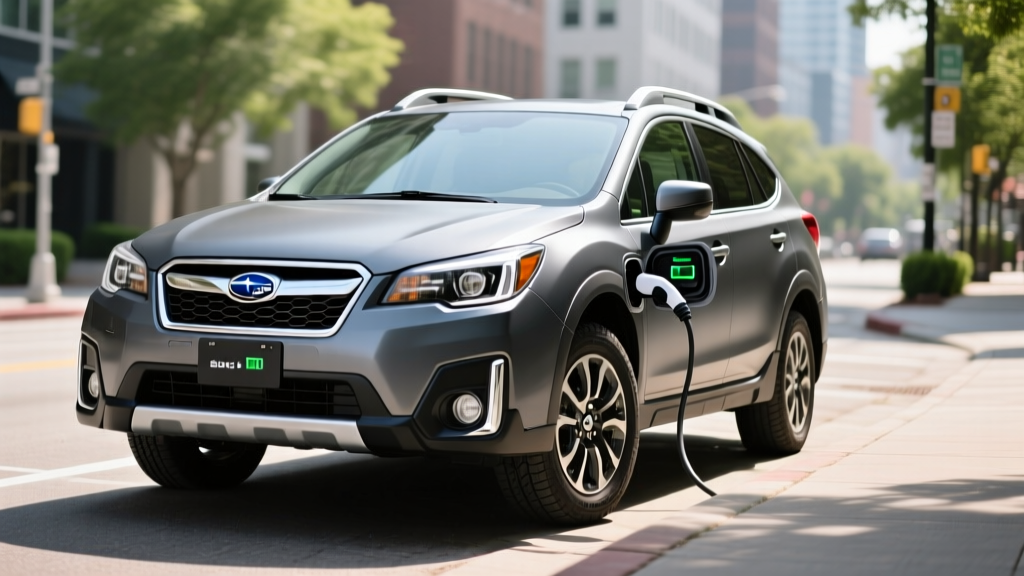
The 2014 Subaru XV Crosstrek Hybrid was Subaru's first attempt at a hybridized vehicle, blending a 2.0-liter boxer engine with a small electric motor sandwiched between the engine and the CVT transmission. It arrived as a conventional hybrid (HEV) — meaning no plug, no electric-only driving, just regenerative braking and electric assist to squeeze out better fuel economy. More than a decade later, with the model long discontinued, the used-market question is straightforward: does this early hybrid still make financial and practical sense, or has the battery aged past its useful life?
This guide breaks down the 2014 Crosstrek Hybrid's real fuel economy, powertrain specs, battery longevity data, and ownership costs so you can make an informed used-car decision.
HEV vs PHEV: What the 2014 Crosstrek Hybrid Actually Is
Before evaluating this car, it's critical to understand what type of hybrid it is. The 2014 Crosstrek Hybrid is a conventional hybrid (HEV), not a plug-in hybrid (PHEV). You cannot plug it in. It has no electric-only driving range. Its small nickel-metal hydride (NiMH) battery charges exclusively through regenerative braking and the gasoline engine.
| Feature | HEV (This Car) | PHEV | BEV (Full EV) |
|---|---|---|---|
| Plug-in charging | No | Yes | Yes |
| Electric-only range | 0 miles | 20–50 miles typical | 200–400+ miles |
| Battery size | ~0.5 kWh (NiMH) | 8–20 kWh (Li-ion) | 50–100+ kWh (Li-ion) |
| Tailpipe emissions | Yes (reduced vs gas) | Yes (when engine runs) | None |
| Federal tax credit (new) | None | Up to $7,500 (§30D) | Up to $7,500 (§30D) |
| Fueling | Gasoline only | Gasoline + electricity | Electricity only |
Subaru later released a plug-in version — the Crosstrek PHEV (2019–2023) — with a larger lithium-ion battery, 17 miles of electric-only range, and the ability to charge from a wall outlet. That is a fundamentally different vehicle. The 2014 model discussed here offers no plug-in capability.
Fuel Economy: EPA Numbers vs Real-World MPG
The headline question for any hybrid buyer: how many MPG does the 2014 Crosstrek Hybrid get?
| Driving Condition | EPA MPG |
|---|---|
| City | 29 MPG |
| Highway | 33 MPG |
| Combined | 31 MPG |
Source: EPA / fueleconomy.gov
For comparison, the non-hybrid 2014 Crosstrek with the CVT achieved 25 city / 33 highway / 28 combined. The hybrid's advantage is concentrated in city driving, where the electric motor assists during stop-and-go acceleration and regenerative braking recaptures energy. On the highway, where the gasoline engine operates at a steady state, the hybrid's efficiency advantage narrows significantly.
Real-World MPG Expectations
Owner-reported data on fueleconomy.gov and Fuelly shows real-world combined fuel economy clustering around 28–31 MPG for most drivers. Some owners in heavy urban traffic with frequent regen opportunities report 32–33 MPG. Highway-only road trips at 70+ MPH tend to drop to 27–29 MPG.
Cold weather (below freezing) typically reduces hybrid fuel economy by 5–10% due to increased engine idling for cabin heat and reduced battery efficiency. Expect roughly 26–28 MPG combined in winter conditions in northern climates.
The net improvement over the non-hybrid CVT Crosstrek is approximately 3 MPG combined — modest, but meaningful over high annual mileage.
Powertrain Specs: Engine, Motor, and Combined Output
| Specification | Value |
|---|---|
| Engine | 2.0L 4-cylinder boxer (FB20) |
| Engine output | 148 hp / 145 lb-ft torque |
| Electric motor | 10 kW (13.4 hp) integrated in CVT |
| Combined system output | 160 hp / 163 lb-ft torque |
| Transmission | Lineartronic CVT |
| Drivetrain | Symmetrical AWD (full-time) |
| Battery type | Nickel-Metal Hydride (NiMH) |
| Battery capacity | ~0.5 kWh (13.5 kW output) |
| 0–60 mph | ~9.3 seconds |
| Curb weight | ~3,395 lbs |
| Cargo volume | 20.8 cu ft (rear seats up) |
The electric motor's 13.4 horsepower may sound trivial, but its value lies in low-RPM torque fill. The motor engages from standstill through approximately 20 MPH, smoothing out the CVT's off-the-line behavior and reducing the engine's workload during the most fuel-intensive phase of acceleration. At cruising speeds, the motor primarily functions as a generator during deceleration and braking.
The hybrid system adds roughly 300 lbs over the non-hybrid Crosstrek, which partly offsets the efficiency gains and contributes to the car's leisurely 9.3-second 0–60 time. This is not a performance vehicle — it's a fuel-sipping compact crossover with Subaru's trademark all-wheel drive.
Battery Longevity, Warranty, and Replacement Cost
For any used hybrid — especially one that's now over a decade old — battery health is the dominant concern.
Original Battery Warranty
Subaru originally warranted the 2014 Crosstrek Hybrid's NiMH battery for 8 years / 100,000 miles (10 years / 150,000 miles in California and states adopting CARB emissions standards). As of 2026, the standard 8-year warranty has expired for all 2014 models. Only vehicles registered in CARB states with fewer than 150,000 miles may still have residual coverage — check with a Subaru dealer using the VIN.
NiMH Battery Degradation Reality
Nickel-metal hydride batteries degrade more gracefully than early lithium-ion packs but are not immune to capacity loss. After 10+ years, expect 15–30% capacity reduction in the hybrid battery. Because the Crosstrek Hybrid's battery is small (~0.5 kWh) and the electric motor's role is limited, moderate degradation manifests as slightly reduced electric assist and marginally lower city MPG — not a catastrophic failure.
Complete battery failure (where the hybrid system throws a warning light and disables the electric motor entirely) is less common on Subaru's NiMH system than on some competitors, but it does occur. The vehicle will still drive on the gasoline engine alone if the hybrid battery fails — you simply lose the efficiency benefit and the electric torque assist.
Battery Replacement Cost
If the hybrid battery requires replacement:
- Subaru dealer (new OEM battery): $2,500–$3,500 including labor
- Aftermarket refurbished NiMH pack: $1,200–$2,000 installed
- Used/salvage battery: $500–$900 (risky — unknown remaining life)
Given that a clean 2014 Crosstrek Hybrid typically sells for $8,000–$12,000 on the used market in 2026, a $3,000+ OEM battery replacement represents 25–35% of the vehicle's value. Factor this into your purchase decision — ideally, buy a unit with documented hybrid-system service or a pre-purchase inspection confirming battery health.
Reliability and Common Issues
The 2014 Crosstrek Hybrid's reliability is mixed. The underlying FB20 engine and Lineartronic CVT are well-understood Subaru components with generally good longevity records when maintained. However, this first-generation hybrid system introduced some model-specific concerns:
- Hybrid battery degradation: The most predictable age-related issue. Monitor for reduced MPG and hybrid system warning lights.
- CVT behavior: Some owners report shuddering or hesitation, particularly when the hybrid system transitions between electric and gasoline power at low speeds. A CVT fluid change (not always on Subaru's maintenance schedule) at 60,000-mile intervals can help.
- 12V battery drain: Like many hybrids, the 2014 Crosstrek can drain its 12V accessory battery if left unused for extended periods, since the DC-DC converter that charges it only activates when the hybrid system is "ready to drive."
- Brake actuator assembly: The regenerative braking system uses an electronic brake actuator that has been a known failure point on several Toyota and Subaru hybrids of this era. Replacement cost: $1,200–$1,800.
For a pre-purchase inspection, have a technician check the hybrid battery's state of health via OBD-II scan tool, verify the brake actuator's operation, and confirm CVT fluid condition.
Tax Credits and Used Purchase Economics
No federal tax credit applies to the 2014 Crosstrek Hybrid — neither when it was new nor as a used purchase today. Conventional hybrids (HEVs) have never qualified for the federal §30D Clean Vehicle Credit, which requires plug-in capability and minimum battery capacity thresholds. The IRS §30D rules are explicit: the vehicle must be a plug-in electric vehicle.
The used EV credit (§25E) — which offers up to $4,000 for qualifying pre-owned plug-in vehicles — also does not apply, since this is a conventional hybrid, not a PHEV or BEV.
Total Cost of Ownership Snapshot
At an average used price of $10,000 and 31 MPG combined, the 2014 Crosstrek Hybrid's annual fuel cost (12,000 miles/year at $3.50/gallon) runs approximately $1,355. Compare this to:
- Non-hybrid 2014 Crosstrek (28 combined): ~$1,500/year in fuel
- 2026 compact PHEV (e.g., Toyota RAV4 Prime): ~$600–$900/year in combined fuel/electricity
- 2026 compact BEV (e.g., Hyundai Ioniq 5): ~$500–$700/year in electricity
The hybrid saves roughly $145/year in fuel over the non-hybrid. At that rate, any price premium over a comparable gas Crosstrek takes years to recoup — and a single hybrid battery replacement erases the savings entirely.
Pros
- Standard AWD — rare in the hybrid compact crossover segment
- Good ground clearance (8.7 inches) for light off-road and snow
- No plug-in requirement — works for apartment dwellers without charging access
- Proven Subaru boxer engine with widely available parts
- NiMH battery degrades gradually rather than failing abruptly
Cons
- Only 3 MPG improvement over the non-hybrid model
- Heavy for its size (3,395 lbs) with leisurely acceleration
- Original hybrid battery warranty has expired on most vehicles
- No tax credits — new or used
- Small cargo area (20.8 cu ft) and tight rear seats
- Outdated infotainment and no modern driver-assist features
Who Should Buy the 2014 Crosstrek Hybrid?
Decision Framework
Choose the 2014 Crosstrek Hybrid if:
- You need AWD and live in a snowy or rainy climate
- You cannot plug in at home (no garage, apartment living)
- You want lower fuel costs without changing your fueling habits
- You find one under $10,000 with a clean hybrid battery report
- Light off-road capability (dirt roads, ski trips) matters to you
Choose a newer PHEV instead if:
- You can install a Level 2 home charger
- Your daily commute is under 30 miles (PHEV electric-only range covers it)
- You want modern safety tech (automatic emergency braking, lane-keeping)
- You want to qualify for federal or state tax incentives
Choose a full EV instead if:
- You have reliable home charging access
- Your daily driving is under 200 miles
- You want minimal maintenance and the lowest per-mile energy cost
- You plan to own the vehicle 5+ years and want current technology
Frequently Asked Questions
How many MPG does the 2014 Crosstrek Hybrid get?
The EPA rates it at 29 city / 33 highway / 31 combined. Real-world driving typically yields 28–31 MPG combined, with cold weather reducing that to 26–28 MPG. The advantage over the non-hybrid Crosstrek is approximately 3 MPG combined.
Can I plug in the 2014 Crosstrek Hybrid to charge it?
No. This is a conventional hybrid (HEV), not a plug-in hybrid. It has no charging port. The battery charges only through regenerative braking and the gasoline engine. If you want a plug-in Subaru, look at the 2019–2023 Crosstrek PHEV, which offered 17 miles of electric-only range.
Is the 2014 Crosstrek Hybrid reliable?
The underlying powertrain (FB20 engine, CVT) is generally reliable with proper maintenance. The primary concern is the aging NiMH hybrid battery, which is now past its original 8-year/100,000-mile warranty. Budget $1,500–$3,500 for a potential battery replacement during ownership. Get a pre-purchase hybrid system inspection before buying.
What does it cost to replace the hybrid battery?
A new OEM battery from a Subaru dealer runs $2,500–$3,500 installed. Aftermarket refurbished NiMH packs cost $1,200–$2,000 installed. Given the vehicle's $8,000–$12,000 used-market value in 2026, this is a significant expense relative to the car's worth.
Does the 2014 Crosstrek Hybrid qualify for any tax credit?
No. Conventional hybrids have never qualified for the federal §30D Clean Vehicle Credit, which requires plug-in capability. The used EV credit (§25E) also does not apply. Only plug-in hybrids (PHEVs) and battery-electric vehicles (BEVs) are eligible for federal tax incentives. Check your state's specific programs — some states have offered rebates for conventional hybrids, but most have shifted focus to plug-in vehicles.
How does the 2014 Crosstrek Hybrid compare to a modern PHEV?
Modern PHEVs like the Toyota RAV4 Prime or Subaru's own 2023 Crosstrek PHEV offer 17–42 miles of electric-only range, significantly more power (the RAV4 Prime produces 302 hp), and far better overall efficiency when charged regularly. However, they cost $35,000–$45,000 new. The 2014 Crosstrek Hybrid's advantage is purely its low used-market entry price and standard AWD.
What should I check before buying a used 2014 Crosstrek Hybrid?
Request an OBD-II hybrid battery health report showing individual cell voltages and internal resistance. Verify the CVT has been serviced (fluid change). Check for brake actuator warning lights or recalls. Confirm the vehicle's title is clean and review maintenance records. If the hybrid battery shows significant cell imbalance, negotiate the price down by at least $2,000 to cover a replacement.