The Chevy Trailblazer Hybrid: What Buyers Need to Know in 2026
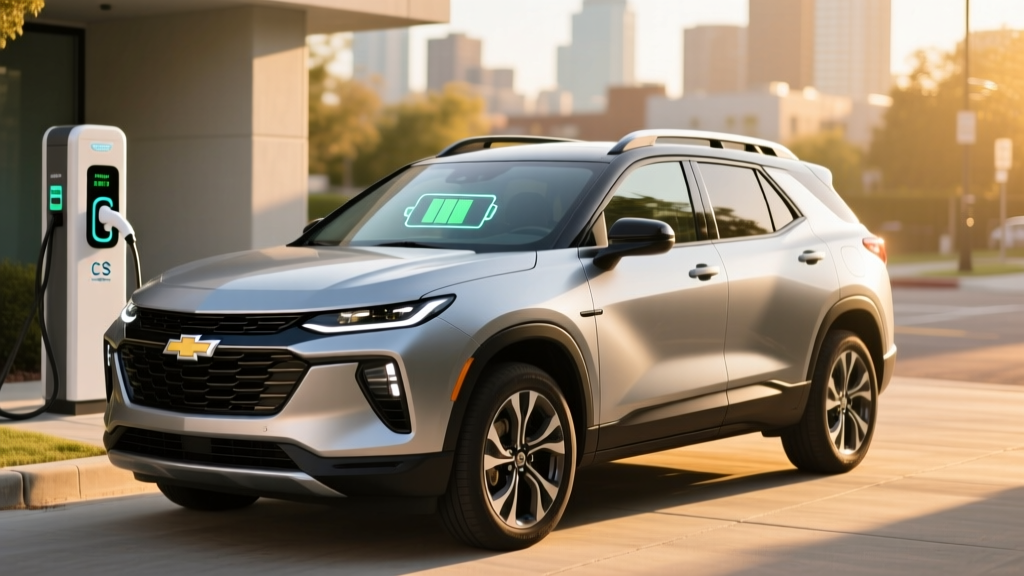
If you've been searching for a Chevy Trailblazer hybrid, you're not alone — the subcompact crossover is one of Chevrolet's best-selling entry-level SUVs, and fuel-conscious buyers naturally want an electrified version. But here's the reality check that matters before you visit a dealership: as of the 2026 model year, Chevrolet does not offer a conventional hybrid (HEV) or plug-in hybrid (PHEV) version of the Trailblazer in the United States.
The Trailblazer continues to be sold exclusively with a turbocharged gasoline powertrain. However, Chevrolet's broader electrification strategy, the success of hybrid competitors in this segment, and the automaker's expanding hybrid lineup elsewhere make this a topic worth unpacking in detail. Below, we cover what the Trailblazer actually offers, what hybrid alternatives exist in this price range, the real math on MPG and ownership costs, and how to decide between a hybrid, PHEV, or full EV for your next subcompact SUV purchase.
2026 Chevy Trailblazer Powertrain: Gas-Only Specs
Before discussing what the Trailblazer doesn't have, let's establish what it does offer. The 2026 Trailblazer is available with two turbocharged three-cylinder engines:
| Spec | 1.2L Turbo (FWD) | 1.3L Turbo (AWD) |
|---|---|---|
| Engine | 1.2L Turbo 3-cylinder | 1.3L Turbo 3-cylinder |
| Horsepower | 137 hp | 155 hp |
| Torque | 162 lb-ft | 174 lb-ft |
| Transmission | CVT | 9-speed automatic |
| Drivetrain | FWD | AWD available |
| EPA City MPG | 29 | 26 |
| EPA Highway MPG | 33 | 29 |
| EPA Combined MPG | 31 | 27 |
| 0-60 mph (est.) | ~9.5 sec | ~8.8 sec |
Source: fueleconomy.gov (EPA estimates). Real-world highway mileage may drop 2-4 MPG under heavy load, high speeds, or cold weather. City driving in stop-and-go traffic often aligns closely with or slightly below the EPA city figure for turbocharged non-hybrid engines.
HEV vs PHEV vs EV: Understanding the Electrification Options
Since a Chevy Trailblazer hybrid isn't currently available, buyers exploring electrified alternatives need a clear framework for what each technology offers. This distinction is critical because marketing materials and forum discussions often blur these categories.
| Feature | HEV (Conventional Hybrid) | PHEV (Plug-In Hybrid) | BEV (Full Electric) |
|---|---|---|---|
| Plugs in? | No — self-charging via regen & engine | Yes — has a larger battery you charge externally | Yes — battery only, no gas engine |
| Electric-only range | ~1 mile or less at low speed | 20-50 miles typical | 200-400+ miles |
| Battery size | 1-2 kWh | 10-25 kWh | 60-100+ kWh |
| Gas engine? | Yes — primary power + charging | Yes — kicks in after battery depletes | No |
| Fueling/charging | Gas station only | Gas station + Level 1/2 home charging | Home + public DC fast charging |
| Tailpipe emissions | Reduced vs gas-only | Zero when in EV mode | Zero |
| Federal tax credit (§30D) | Not eligible | Up to $7,500 (if eligible) | Up to $7,500 (if eligible) |
| Typical MPG/MPGe | 40-55 MPG combined | 30-50 MPG + 80-100 MPGe | 100-130 MPGe |
Which One Fits Your Driving Pattern?
- Choose an HEV if you want better fuel economy with zero lifestyle change — no plugs, no charging routines, just fill up at the gas station and go. Ideal if you lack home charging access.
- Choose a PHEV if your daily commute is under 30-40 miles round trip and you can charge at home overnight. You'll drive most days on electricity alone, with a gas engine for longer road trips.
- Choose a BEV if you have reliable home Level 2 charging, your daily driving is predictable, and you want the lowest per-mile fuel cost and minimal maintenance.
Hybrid Alternatives to the Chevy Trailblazer in 2026
Since the Trailblazer hybrid doesn't exist, here are the closest electrified competitors in the subcompact and compact crossover segment — all available now with real hybrid or PHEV powertrains.
| Model | Type | EPA Combined MPG / MPGe | EV Range (PHEV) | Combined HP | Starting MSRP |
|---|---|---|---|---|---|
| Toyota Corolla Cross Hybrid | HEV | 42 MPG combined | N/A | 196 hp | ~$30,000 |
| Kia Niro Hybrid | HEV | 53 MPG combined | N/A | 139 hp | ~$28,500 |
| Kia Niro PHEV | PHEV | 48 MPG + 105 MPGe | 33 miles | 180 hp | ~$35,500 |
| Hyundai Tucson Hybrid | HEV | 38 MPG combined | N/A | 226 hp | ~$34,000 |
| Hyundai Tucson PHEV | PHEV | 35 MPG + 80 MPGe | 33 miles | 261 hp | ~$40,000 |
| Ford Escape Hybrid | HEV | 39 MPG combined (FWD) | N/A | 198 hp | ~$34,500 |
| Chevrolet Equinox EV | BEV | 319 mi range / ~100 MPGe | 319 miles | 213-288 hp | ~$33,600 |
Source: EPA estimates via fueleconomy.gov and manufacturer MSRP data. Prices exclude destination charges and are subject to change.
Tax Credits: Does a Hybrid Qualify for Federal Incentives?
This is where the distinction between HEV, PHEV, and BEV becomes a financial question, not just a technical one.
Conventional Hybrids (HEV): No Federal Tax Credit
Standard hybrids like the Toyota Corolla Cross Hybrid and Kia Niro Hybrid do not qualify for the federal §30D clean vehicle tax credit. The IRS requires a minimum battery capacity and plug-in capability that conventional hybrids don't meet. Some states may offer minor rebates, but these vary by jurisdiction — check your state's energy office for current programs.
Plug-In Hybrids (PHEV): Potential §30D Eligibility
Qualifying PHEVs may receive up to $7,500 under the IRS §30D Clean Vehicle Credit, but eligibility is complex and changes frequently. Key requirements for 2026 include:
- MSRP cap: SUVs must have a base MSRP at or below $80,000
- Buyer income cap: Modified AGI cannot exceed $150,000 (single), $225,000 (head of household), or $300,000 (joint)
- Battery sourcing: Critical minerals and battery components must meet phased-in domestic/free-trade sourcing thresholds that tighten annually
- Assembly: Final assembly must occur in North America
- Point-of-sale transfer: Buyers can transfer the credit to the dealer for an upfront price reduction
BEVs (Full Electric): Same §30D Rules Apply
The Chevrolet Equinox EV, for instance, has qualified for the full $7,500 credit in recent years due to North American assembly and battery sourcing compliance — but this is subject to change. Always confirm before signing paperwork.
Battery Warranty, Reliability, and Replacement Costs
One of the most common concerns among hybrid buyers — and the reason some hesitate — is battery longevity. Here's what the data shows.
Real-World Hybrid Battery Degradation
Conventional hybrid batteries (typically 1-2 kWh nickel-metal hydride or lithium-ion) experience minimal degradation because the vehicle's software keeps the battery in a narrow state-of-charge window — usually between 40-80% — which dramatically extends cycle life. Toyota's hybrid batteries routinely last 150,000-200,000+ miles before needing replacement, based on fleet and owner data.
PHEV batteries (10-25 kWh) face more cycling stress but still benefit from software buffers. Expect 85-90% capacity retention at the 100,000-mile mark for most modern PHEVs.
Replacement Cost If Out of Warranty
| Type | Battery Size | Estimated Replacement Cost |
|---|---|---|
| HEV (e.g., Corolla Cross Hybrid) | ~1.3 kWh | $2,000 - $4,000 |
| PHEV (e.g., Tucson PHEV) | ~13.8 kWh | $6,000 - $10,000 |
| BEV (e.g., Equinox EV) | ~85 kWh | $12,000 - $20,000+ |
These are rough estimates. Actual costs vary by model, labor rates, and whether refurbished packs are available. The key point: HEV battery replacement is significantly cheaper than PHEV or BEV replacement because the battery is much smaller.
Who Should Buy a Hybrid, PHEV, or EV Instead of the Gas Trailblazer?
If you were hoping for a Chevy Trailblazer hybrid, the practical question becomes: what should you actually buy? Here's a decision framework based on real ownership patterns.
Choose a Conventional Hybrid (HEV) If:
- You want 40-53 MPG without changing your fueling routine
- You don't have access to home or workplace charging
- Your budget is $28,000-$35,000 and you want maximum fuel savings per dollar
- You drive 12,000-20,000 miles per year and want to minimize fuel cost
Top pick: Toyota Corolla Cross Hybrid (42 MPG, AWD, ~$30,000)
Choose a Plug-In Hybrid (PHEV) If:
- Your round-trip commute is under 30-40 miles and you can charge at home
- You take road trips regularly and don't want to plan around charging stations
- You want to drive on electricity most days but keep gas flexibility
- You can verify §30D tax credit eligibility for your chosen model
Top pick: Kia Niro PHEV (33 miles EV range, 48 MPG after depletion, ~$35,500 before credits)
Choose a Full EV (BEV) If:
- You have Level 2 home charging installed or confirmed
- Your daily driving is under 200 miles and predictable
- You want the lowest cost per mile (~$0.04-$0.06/mi on home electricity vs ~$0.12-$0.15/mi for gas)
- You want minimal maintenance (no oil changes, fewer moving parts)
Top pick: Chevrolet Equinox EV (319 mi EPA range, ~$33,600 before credits — the closest electrified Chevy to the Trailblazer's price point)
Will Chevrolet Ever Build a Trailblazer Hybrid?
Chevrolet has not announced a hybrid or PHEV Trailblazer for the U.S. market. The brand's electrification strategy has focused heavily on full EVs (Equinox EV, Blazer EV, Silverado EV, Bolt EV/EUV) rather than hybrids. However, GM has acknowledged that hybrid demand remains strong, and the automaker has introduced hybrid variants of some models in international markets.
If a Trailblazer hybrid or PHEV is eventually announced, expect it to share architecture with GM's existing hybrid systems and likely feature a 1.5L turbocharged engine paired with one or two electric motors. Until then, the alternatives listed above represent the most practical electrified options in this price and size class.
Frequently Asked Questions
Does the 2026 Chevy Trailblazer come in a hybrid version?
No. As of the 2026 model year, the Chevrolet Trailblazer is sold only with gasoline turbocharged engines (1.2L or 1.3L). Chevrolet has not announced a hybrid or PHEV variant for the U.S. market.
How many MPG does the gas Chevy Trailblazer get?
The 2026 Trailblazer with the 1.2L turbo FWD achieves 29 city / 33 highway / 31 combined MPG. The 1.3L turbo AWD gets 26 city / 29 highway / 27 combined MPG. These are EPA estimates from fueleconomy.gov.
What is the best hybrid alternative to the Chevy Trailblazer?
The Toyota Corolla Cross Hybrid (42 MPG combined, AWD, ~$30,000) is the closest in size, price, and capability. The Kia Niro Hybrid (53 MPG combined, ~$28,500) offers even better fuel economy in a slightly smaller package.
Do conventional hybrids need to be plugged in?
No. Conventional hybrids (HEVs) charge their small battery through regenerative braking and the gasoline engine. You never plug them in — you simply refuel at a gas station as usual.
How long do hybrid batteries last and what does replacement cost?
Most hybrid batteries are warrantied for 8 years/100,000 miles (10 years/150,000 miles in CARB states). Real-world data shows HEV batteries lasting 150,000-200,000+ miles. Out-of-warranty replacement for a conventional hybrid battery typically costs $2,000-$4,000.
Does a hybrid or PHEV qualify for the $7,500 federal tax credit?
Conventional hybrids (HEVs) do not qualify for the §30D federal tax credit. Some PHEVs may qualify for up to $7,500, but eligibility depends on MSRP caps, buyer income limits, battery sourcing requirements, and North American assembly. Verify current eligibility on the IRS Clean Vehicle Credit page before purchasing.
Hybrid vs PHEV vs EV — which saves the most money?
Over 5 years at 15,000 miles/year: an HEV saves roughly $3,000-$4,000 in fuel vs a gas-only car. A PHEV can save $4,000-$6,000+ if you charge daily and drive mostly on electricity. A BEV saves $5,000-$8,000+ in fuel and $1,500-$2,500 in maintenance. However, BEVs require home charging access, and upfront costs vary. The best choice depends on your driving pattern, charging access, and how long you plan to keep the vehicle.