Quick Verdict: The Original Luxury Hybrid SUV
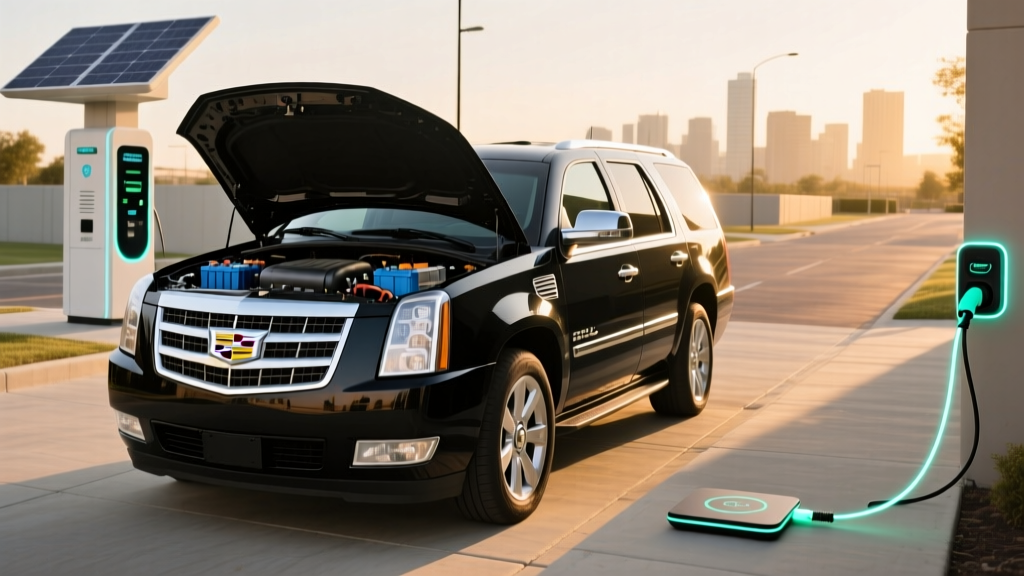
The 2009 Cadillac Escalade Hybrid was GM's ambitious attempt to make a full-size luxury SUV palatable at the pump during an era of $4 gasoline. Built on GM's two-mode hybrid system shared with the Chevrolet Tahoe Hybrid and GMC Yukon Hybrid, the Escalade Hybrid promised V8 power with V6-like fuel economy. Today, as a used vehicle entering its late teens, it remains a fascinating case study in early hybrid-SUV engineering — and a cautionary tale about battery longevity, parts availability, and the realities of owning a discontinued hybrid powertrain.
If you're researching a used 2009 Cadillac Escalade Hybrid, this guide covers everything from EPA fuel economy figures to battery replacement costs, real-world MPG expectations, and whether this aging hybrid still makes sense in 2026.
Fuel Economy: EPA MPG and Real-World Expectations
The 2009 Escalade Hybrid's headline achievement was its fuel economy. For a 5,800-pound luxury SUV with a 6.0-liter V8, the numbers were genuinely impressive for 2009.
| Driving Cycle | EPA Estimate | Real-World Expectation |
|---|---|---|
| City | 21 MPG | 19–22 MPG |
| Highway | 22 MPG | 20–23 MPG |
| Combined | 21 MPG | 19–21 MPG |
Source: fueleconomy.gov
Unlike many modern hybrids that dramatically exceed their EPA city estimates in stop-and-go traffic, the Escalade Hybrid's two-mode system shows relatively flat performance across city and highway driving. The two-mode hybrid system excels at low-speed electric-only operation (under ~25 mph in ideal conditions), but the vehicle's massive weight and poor aerodynamics limit gains at highway speeds.
For comparison, the conventional 2009 Escalade with the 6.2L V8 achieved 12 city / 19 highway / 14 combined — making the Hybrid's 50% city improvement substantial when the system is operating correctly.
How the Two-Mode Hybrid System Works: HEV, Not PHEV
HEV vs PHEV — Where the Escalade Hybrid Fits
Conventional Hybrid (HEV): The 2009 Escalade Hybrid is a conventional hybrid. It does not plug in. The 1.5 kWh nickel-metal hydride (NiMH) battery recharges solely through regenerative braking and the gasoline engine. Electric-only driving is limited to very low speeds (under ~25 mph) for short distances (roughly 1–2 miles at most).
Plug-in Hybrid (PHEV): A PHEV has a larger battery (typically 10–30 kWh), charges from a wall outlet or charger, and delivers 20–50 miles of electric-only range. The Escalade Hybrid is not a PHEV and offers no meaningful electric-only range for commuting.
Full EV (BEV): Zero gasoline, 200–400+ mile range. Not comparable to this vehicle.
The two-mode hybrid system, co-developed by GM, BMW, and DaimlerChrysler (the "Global Hybrid Cooperation"), pairs a 6.0-liter Vortec V8 (332 hp, 367 lb-ft) with two electric motors integrated into the 4-speed automatic transmission housing. Combined system output is 379 horsepower.
| Specification | 2009 Cadillac Escalade Hybrid |
|---|---|
| Engine | 6.0L Vortec V8 (332 hp / 367 lb-ft) |
| Electric Motors | Two AC motors in transmission (60 kW each) |
| Combined System Output | 379 hp |
| Transmission | Electrically Variable Transmission (EVT), 4-speed |
| Battery Type | Nickel-Metal Hydride (NiMH) |
| Battery Capacity | ~1.5 kWh (gross) |
| Electric-Only Range | ~1–2 miles at under 25 mph |
| Plug-In Charging | No — charges via regen and engine only |
| 0–60 mph | ~8.0 seconds |
| Curb Weight | ~5,841 lbs |
| Towing Capacity | 5,800 lbs (2WD) / 5,600 lbs (4WD) |
| Drivetrain | RWD or AWD |
The two-mode system operates in two distinct modes: at low speeds, it functions like a conventional series-parallel hybrid (similar to Toyota's system), allowing electric-only creep and engine-off stops. At higher speeds and under load, it locks into a fixed-gear mechanical path for efficient highway cruising, with electric motors providing assist. This dual-mode design was innovative but mechanically complex — a factor that matters for long-term reliability.
Battery Life, Degradation, and Replacement Costs
The NiMH battery pack in the 2009 Escalade Hybrid is now 17 years old by calendar age, and most surviving examples show significant capacity loss. Unlike modern lithium-ion packs, NiMH batteries degrade more predictably but also more severely over time, especially in hot climates.
Signs of Hybrid Battery Degradation
- Falling fuel economy: The most common indicator — if you're seeing 15–16 MPG combined instead of 19–21, the battery is no longer assisting effectively.
- More frequent engine starts at stops: A healthy pack keeps the engine off at red lights; a degraded pack forces the engine to idle.
- Reduced regenerative braking: The battery can't accept charge as quickly, so the friction brakes engage sooner and more often.
- Hybrid system warning light: Dashboard messages like "Service Hybrid System" indicate cell imbalance or failure.
Battery Replacement Cost
This is the critical ownership question. As of 2026:
- Dealer replacement (new OEM): $3,500–$5,000+ for the battery pack, plus $500–$1,000 in labor. Availability is increasingly limited as GM has reduced production of this specific NiMH pack.
- Remanufactured battery: $2,000–$3,500 from specialist hybrid battery shops. Quality varies; look for providers offering a 3-year warranty minimum.
- Individual cell/module replacement: Some hybrid specialists can replace only the failed modules within the pack for $800–$1,500, but this is a temporary fix if the remaining modules are also aging.
The limited parts supply for this specific two-mode hybrid battery is a genuine concern. Unlike the Toyota Prius, which enjoys a massive aftermarket ecosystem, the GM two-mode hybrid was produced in relatively low volumes (the Escalade Hybrid sold roughly 2,000–4,000 units per year), and the aftermarket support network is thin.
Reliability and Common Issues
The 2009 Escalade Hybrid carries the typical reliability concerns of a 17-year-old luxury SUV, compounded by hybrid-specific complexity.
Hybrid-Specific Concerns
- Battery failure: The most expensive single issue, as detailed above. Budget $2,500–$5,000 if the original battery is still in the vehicle.
- Inverter/coolant system: The hybrid system has its own coolant loop. Leaks or pump failures can damage the power electronics. Replacement of the inverter assembly runs $1,500–$3,000.
- EVT transmission: The electrically variable transmission is complex. While generally robust, failures are costly ($4,000–$7,000) and few shops are equipped to service them.
Standard Escalade Issues (Shared with Non-Hybrid)
- AFM (Active Fuel Management) lifter failure on the V8 — a well-documented GM issue that can destroy the engine
- Air suspension compressor failure (if equipped with Magnetic Ride Control)
- Power door handle and tailgate actuator failures
- Premium Bose amplifier failure
- Excessive oil consumption on high-mileage V8s
NHTSA records show several recalls for the 2009 Escalade, including hybrid-specific recalls for the battery energy control module. Verify all recall work was completed via NHTSA's recall lookup before purchasing.
Pricing and Tax Credit Eligibility in 2026
The 2009 Escalade Hybrid originally carried an MSRP of approximately $70,000–$75,000 depending on 2WD/4WD and options. In today's used market:
| Condition / Mileage | Typical Asking Price (2026) |
|---|---|
| Excellent, under 100K miles, battery replaced | $12,000–$18,000 |
| Good, 100K–150K miles, original battery | $7,000–$12,000 |
| Fair / needs battery, 150K+ miles | $4,000–$8,000 |
Does It Qualify for Any Tax Credit?
No. The 2009 Escalade Hybrid does not qualify for any current federal tax credit. The IRS §30D Clean Vehicle Credit applies only to new qualified plug-in electric vehicles and fuel cell vehicles purchased new. The IRS §30D rules explicitly exclude conventional hybrids (HEVs) that do not plug in, as well as any used vehicle purchase under the §25E used clean vehicle credit (which requires a plug-in EV or fuel cell vehicle).
The original hybrid tax credit that applied when this vehicle was new (up to $2,200 under the Energy Policy Act of 2005) expired for GM vehicles in 2010 after the manufacturer hit the 60,000-unit cap. There is no retroactive credit available.
2009 Escalade Hybrid vs Alternatives: What Should You Buy?
Pros
- Significantly better city MPG than non-hybrid Escalade (21 vs 12)
- Smooth, quiet electric-only low-speed operation
- Full luxury features and towing capability retained
- Low used-vehicle entry price
- Distinctive — very few on the road
Cons
- Battery replacement cost can exceed vehicle value
- Limited aftermarket support for two-mode hybrid parts
- No plug-in capability; electric-only range is negligible
- Complex powertrain = expensive repairs at age 17
- No federal or state tax credit eligibility
- Poor highway MPG despite hybrid system (22 EPA)
Hybrid vs PHEV vs EV — Which Fits You?
Choose this 2009 Escalade Hybrid if: You need a full-size, body-on-frame luxury SUV with towing capacity, you drive mostly in the city where the hybrid system shines, and you're prepared to budget $3,000–$5,000 for a potential battery replacement. It's a niche choice for enthusiasts or budget-conscious luxury buyers who accept the risk.
Choose a modern PHEV (e.g., 2025+ Jeep Grand Wagoneer PHEV or BMW X5 xDrive50e) if: You want 25–40 miles of electric-only commuting range, plug-in convenience, modern safety features, and a full factory warranty. Expect to pay $70,000–$100,000+ new, but the total cost of ownership is predictable.
Choose a full EV (e.g., Rivian R1S, Cadillac Escalade IQ) if: You have home charging access, want zero gasoline costs, and can invest $80,000+ in a new electric SUV. The upcoming Cadillac Escalade IQ represents the electric future of this nameplate with 400+ mile range.
Pre-Purchase Checklist: Inspecting a Used 2009 Escalade Hybrid
If you're seriously considering one, follow this checklist before handing over cash:
- Hybrid battery state of health: Have a hybrid-qualified technician scan the battery for cell voltage spread. Any module more than 0.3V different from the pack average indicates imminent failure.
- Recall completion: Check the VIN at NHTSA.gov — all hybrid-specific recalls must be completed.
- Coolant system integrity: Check both the engine and hybrid inverter coolant loops for leaks, discoloration, or low levels.
- AFM system health: Listen for ticking or misfire on cold start — signs of AFM lifter failure, which can be catastrophic.
- Transmission operation: The EVT should shift smoothly. Any clunking, shuddering, or delayed engagement is a red flag.
- Maintenance records: Verify regular oil changes (the V8 is sensitive to sludge), coolant flushes, and any prior hybrid service.
Frequently Asked Questions
How many MPG does the 2009 Cadillac Escalade Hybrid get?
The EPA rates it at 21 city / 22 highway / 21 combined. In real-world driving with a healthy battery, expect 19–21 MPG combined. If the hybrid battery has degraded, fuel economy can drop to 15–17 MPG — essentially matching the non-hybrid V8 Escalade.
Can the 2009 Escalade Hybrid drive on electric power only?
Only marginally. The two-mode system allows electric-only operation at very low speeds (under ~25 mph) for roughly 1–2 miles. This is not a plug-in hybrid — the small 1.5 kWh NiMH battery charges only through regenerative braking and the engine. You cannot plug it in, and it has no meaningful electric-only commuting range.
Is the 2009 Escalade Hybrid reliable?
At 17 years old, reliability depends entirely on maintenance history and battery condition. The two-mode hybrid system is complex and parts are increasingly scarce. The conventional V8 engine and chassis share common GM truck issues (AFM lifter failure, air suspension problems). Budget $2,000–$5,000 annually for maintenance and unexpected repairs. It is not a low-risk purchase.
What does it cost to replace the hybrid battery?
Expect $2,000–$3,500 for a remanufactured battery pack or $3,500–$5,000+ for a new OEM replacement, plus labor. Availability is a growing concern as GM has wound down production of this specific NiMH pack. Some hybrid specialists offer individual module replacement for $800–$1,500 as a less durable alternative.
Does the 2009 Escalade Hybrid qualify for a tax credit?
No. The federal §30D Clean Vehicle Credit applies only to new plug-in electric vehicles. The §25E used EV credit also requires a plug-in vehicle. As a conventional (non-plug-in) hybrid, the 2009 Escalade Hybrid qualifies for no current federal or state EV tax incentives. The original hybrid credit available at purchase expired for GM vehicles in 2010.
How does it compare to the non-hybrid 2009 Escalade?
The Hybrid trades 50 hp (379 combined vs 403 for the 6.2L V8) for roughly 50% better city fuel economy (21 vs 12 MPG). Highway MPG is nearly identical. The Hybrid is slightly slower to 60 mph (~8.0 seconds vs ~6.5 seconds) and has a marginally lower tow rating. The Hybrid also carried a ~$5,000 price premium when new.
AutoEdgeView provides independent analysis based on EPA data, manufacturer specifications, NHTSA records, and owner-reported data. Used vehicle prices and parts availability fluctuate. Always verify specific vehicle condition with a qualified pre-purchase inspection before buying. Tax credit information reflects 2026 IRS rules — consult a tax professional for personal eligibility.