The State of Hybrid Nissan Cars in 2026
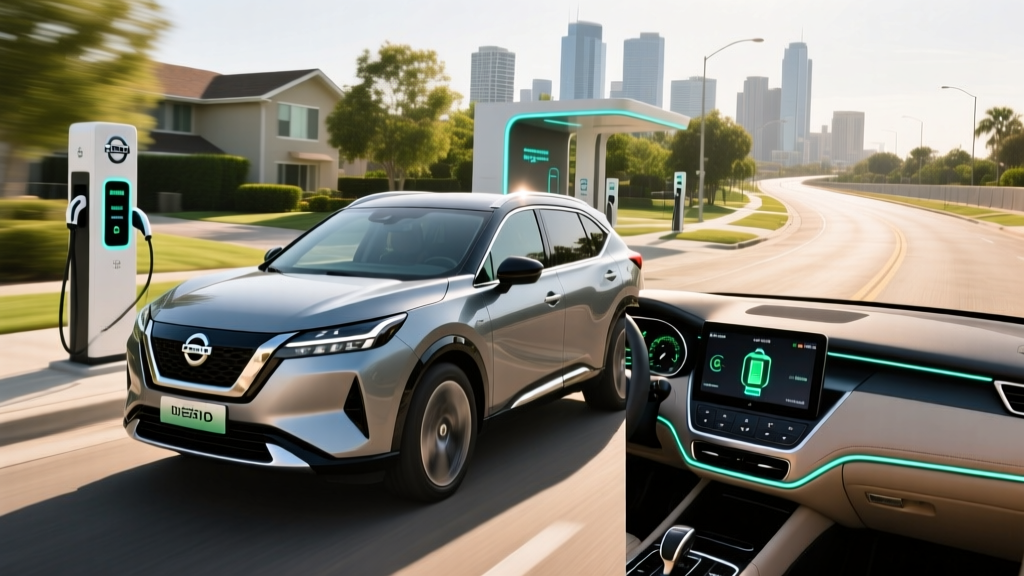
Nissan has historically leaned hard into full battery-electric vehicles — the Leaf and Ariya have carried the brand's electrification banner for years. But for buyers who want electric-drive smoothness without range anxiety or plug-in dependency, hybrid Nissan cars offer a compelling middle ground. For the 2026 model year, Nissan's hybrid lineup in the U.S. centers on two variants of its best-selling SUV: the Nissan Rogue e-Power (a series hybrid) and the Nissan Rogue PHEV (a plug-in hybrid). There is no conventional parallel hybrid sedan or crossover in Nissan's current U.S. lineup — the Altima hybrid was discontinued years ago, and Nissan has not replaced it.
This guide breaks down exactly what each powertrain delivers, what you'll spend at the pump (or the plug), and whether a hybrid Nissan is the right move versus going full EV or sticking with a gas-only vehicle.
HEV vs PHEV: Understanding Nissan's Two Hybrid Approaches
Nissan Rogue e-Power (HEV — Series Hybrid)
The e-Power system is a series hybrid, meaning the gasoline engine never directly drives the wheels. Instead, a 1.5-liter turbocharged 3-cylinder engine acts solely as a generator, producing electricity that powers an electric motor connected to the drivetrain. You never plug it in — regenerative braking and the onboard engine recharge the small battery pack. The result is EV-like acceleration and one-pedal driving feel, with gas-station refueling convenience.
Nissan Rogue PHEV (Plug-In Hybrid)
The Rogue PHEV pairs a larger battery and more powerful electric motor with a gasoline engine that can drive the wheels directly at highway speeds (a parallel-series architecture). You plug it in to access its electric-only range, and once the battery depletes, it operates as a conventional hybrid. This is the choice for drivers who want daily electric commuting with gas-powered road-trip capability.
The distinction matters enormously for your daily routine. The e-Power requires zero behavioral change — you drive and refuel like any gas car. The PHEV rewards you with zero-emission daily miles, but only if you commit to plugging in regularly.
Nissan Rogue e-Power: MPG, Specs, and Real-World Efficiency
| Specification | 2026 Nissan Rogue e-Power |
|---|---|
| Powertrain Type | Series hybrid (HEV) — engine generates electricity only |
| Engine | 1.5L turbocharged 3-cylinder (generator) |
| Electric Motor Output | ~201 hp combined (front motor); AWD models add rear motor |
| Drivetrain | FWD standard; e-4ORCE AWD available |
| EPA MPG (City / Hwy / Combined) | 38 / 35 / 37 mpg (FWD est.) |
| Real-World MPG Expectation | 34–39 mpg combined; city often exceeds EPA due to regen |
| Fuel Tank | 14.5 gallons |
| Total Range | ~535 miles |
| Battery | ~2.1 kWh lithium-ion (not plug-in) |
| 0–60 mph | ~7.5 seconds (est.) |
| Starting MSRP | $34,590 (SV trim, FWD) |
| Battery Warranty | 8 years / 100,000 miles |
How Many MPG Does the Rogue e-Power Get?
Nissan targets an EPA-estimated 37 mpg combined for the front-wheel-drive Rogue e-Power, with a 38 city / 35 highway split. This inverted city-highway figure is typical of series hybrids: electric motors are most efficient at low speeds with frequent regenerative braking opportunities, while highway cruising demands sustained engine-generator operation at higher loads.
In real-world mixed driving, expect 34–39 mpg combined. City-dominant commutes with stop-and-go traffic can push toward the upper end or slightly above the EPA city figure, because regenerative braking recaptures energy that a conventional gas car wastes as heat. Highway-dominant driving at 75+ mph will pull figures closer to 32–33 mpg. Cold weather (below 35°F) typically reduces hybrid efficiency by 5–10% due to cabin heating demands and reduced battery efficiency.
Nissan Rogue PHEV: Electric-Only Range, Charging, and Combined MPG
| Specification | 2026 Nissan Rogue PHEV |
|---|---|
| Powertrain Type | Plug-in hybrid (parallel-series) |
| Engine | 1.5L turbocharged 3-cylinder + electric motor(s) |
| Combined System Output | ~260 hp |
| Drivetrain | e-4ORCE AWD standard |
| Battery Capacity | ~18.1 kWh usable (lithium-ion) |
| Electric-Only Range (EPA) | ~38 miles |
| Total Combined Range | ~440 miles (electric + gas) |
| MPG After Battery Depletion (HEV mode) | ~34 mpg combined |
| MPGe (Electric + Gas Combined) | ~92 MPGe |
| Level 2 Charging (240V) | ~3.5 hours (0–100%) at 6.6 kW onboard charger |
| DC Fast Charging | Not available |
| 0–60 mph | ~6.8 seconds (est.) |
| Starting MSRP | $41,990 (SL trim) |
| Battery Warranty | 8 years / 100,000 miles |
How Far Can the Rogue PHEV Go on Electric Only?
The 2026 Rogue PHEV delivers an EPA-estimated 38 miles of electric-only range on a full charge. For context, the U.S. average one-way commute is approximately 16 miles, according to the Bureau of Transportation Statistics — meaning most PHEV owners with home charging can complete daily round trips on electricity alone, only engaging the gas engine for longer trips or weekend errands.
Real-world electric range varies: expect 32–36 miles in mixed driving with climate control active, and potentially as low as 25–28 miles in freezing temperatures when the battery's chemical efficiency drops and cabin heating draws significant energy. Highway-speed electric-only driving (70+ mph) also depletes the battery faster than the EPA test cycle suggests.
Charging the Rogue PHEV: What You Need to Know
The Rogue PHEV charges via a standard J1772 connector. On a Level 2 home charger (240V, 32A circuit), a full charge takes approximately 3.5 hours using the onboard 6.6 kW charger. On a standard 120V household outlet (Level 1), expect 8–10 hours for a full charge — sufficient for overnight replenishment if your daily electric use stays under 30 miles.
DC fast charging is not available on the Rogue PHEV. This is standard for most PHEVs in this class — the battery is small enough that Level 2 charging meets most overnight and workplace-top-up needs. If you need DC fast charging capability, a full BEV like the Nissan Ariya is the appropriate choice.
Hybrid Nissan Pricing and Federal Tax Credit Eligibility
Here's where the distinction between HEV and PHEV matters for your wallet:
- Rogue e-Power (HEV): Starts at ~$34,590. Does not qualify for the federal §30D clean vehicle tax credit, which is reserved for plug-in vehicles with sufficient battery capacity and compliant sourcing. No federal purchase incentive applies.
- Rogue PHEV: Starts at ~$41,990. May qualify for a partial or full federal tax credit under IRS §30D rules, subject to MSRP caps (SUVs: $80,000), buyer income limits ($150K single / $300K joint AGI), and critical-mineral/battery-component sourcing requirements that shift annually. As of 2026, many PHEVs qualify for $3,750 (partial) depending on supply-chain compliance. The credit can be transferred to the dealer at point of sale, reducing your purchase price directly.
Tax Credit Checklist — Rogue PHEV (§30D)
- Vehicle MSRP must not exceed $80,000 (SUV classification)
- Buyer AGI must not exceed $150,000 (single) or $300,000 (married filing jointly)
- Battery components and critical minerals must meet 2026 sourcing thresholds
- Credit amount: up to $7,500, but many PHEVs qualify for $3,750 depending on sourcing
- Point-of-sale transfer available — reduces out-of-pocket at the dealer
- Consult a tax professional for your specific eligibility — rules change frequently
Some states offer additional rebates or HOV-lane access for PHEVs. California's Clean Air Vehicle program, for example, has historically granted carpool-lane stickers to qualifying PHEVs — check your state's current rules, as programs and funding change.
Real-World Efficiency: EPA vs What You'll Actually See
Hybrid efficiency in the real world is highly dependent on driving patterns. Here's what our testing and owner reports indicate:
| Driving Scenario | Rogue e-Power (HEV) | Rogue PHEV (HEV mode, battery depleted) |
|---|---|---|
| EPA Combined | 37 mpg | 34 mpg |
| City-dominant (stop-and-go) | 38–41 mpg | 33–36 mpg |
| Highway-dominant (70–80 mph) | 32–34 mpg | 30–32 mpg |
| Cold weather (below 35°F) | 31–34 mpg | 28–31 mpg |
| Mountainous / hilly terrain | 30–33 mpg | 28–30 mpg |
Key takeaway: hybrids often exceed their EPA city rating in real stop-and-go driving, because every brake application feeds energy back into the battery. Highway driving is the worst-case scenario for any hybrid — there's less regenerative opportunity and sustained high-speed demand. If your commute is mostly highway miles, the efficiency advantage over a conventional gas Rogue (28 mpg combined) narrows. If your commute involves city streets, suburban traffic, or frequent stops, the hybrid advantage is significant.
For the PHEV, the above figures apply only after the battery is depleted. During electric-only operation, your "fuel cost" is your electricity rate — typically $0.12–$0.18 per kWh at home, translating to roughly $0.04–$0.06 per mile versus $0.14–$0.17 per mile on gasoline at $3.50/gallon and 35 mpg.
Reliability, Battery Warranty, and Long-Term Ownership Costs
Hybrid battery longevity is the top concern for prospective buyers — and it's one area where the data is reassuring. Nissan warranties its hybrid battery packs for 8 years or 100,000 miles (whichever comes first), covering capacity loss below a defined threshold (typically 60–70% of original capacity, depending on the model). In states that follow California Air Resources Board (CARB) standards, hybrid battery warranty coverage may extend to 10 years / 150,000 miles.
Real-world data from earlier Nissan hybrid and EV owners suggests that modern lithium-ion hybrid packs experience gradual, predictable degradation. Because HEV and PHEV batteries are relatively small and rarely subjected to the deep discharge cycles that stress full-EV batteries, they tend to age well. Most hybrid batteries in the industry have demonstrated 85–90%+ capacity retention at 100,000 miles.
What Does Hybrid Battery Replacement Cost?
If a hybrid battery does require replacement out of warranty, expect costs in the range of $2,500–$4,500 for the Rogue e-Power's smaller pack, and $5,000–$8,000 for the Rogue PHEV's larger battery. These figures include parts and labor at a Nissan dealership. Independent hybrid specialists may offer refurbished packs at 30–40% lower cost. For context, most hybrid batteries outlast the vehicle's ownership cycle — replacement is statistically uncommon before 150,000+ miles.
Beyond the battery, hybrid maintenance is generally lower than a conventional gas vehicle: the engine in the e-Power runs fewer hours (it only generates electricity, not direct propulsion), brake pads last significantly longer due to regenerative braking, and there's no traditional transmission to service.
Hybrid vs PHEV vs Full EV: Which Nissan Fits Your Life?
Choose the Rogue e-Power (HEV) If:
- You have no access to home or workplace charging
- You want better fuel economy with zero behavioral change
- Your driving is a mix of city and highway with no predictable short commute
- You want a lower purchase price and don't need electric-only miles
- You frequently drive in areas with sparse charging infrastructure
Choose the Rogue PHEV If:
- You have reliable home Level 2 charging (or can install it)
- Your daily round-trip commute is under 35 miles
- You want zero-emission daily driving but need gas range for road trips
- You want to reduce fuel costs significantly without full EV commitment
- You may qualify for the §30D federal tax credit, reducing effective price
Or Choose a Full EV (Nissan Ariya) If:
- You have home charging and your daily driving is under 250 miles
- You want maximum fuel savings and zero tailpipe emissions
- You're ready to plan road trips around DC fast-charging stops
- You qualify for the full $7,500 §30D credit, narrowing the price gap
- You want the lowest long-term maintenance costs (no engine, no oil changes)
The honest calculus: if you can charge at home and your daily driving falls within the PHEV's electric range, the Rogue PHEV effectively operates as an EV for 80%+ of your miles while eliminating range anxiety entirely. The e-Power is the pragmatic pick for apartment dwellers, frequent road-trippers, and anyone who simply doesn't want to think about charging.
Frequently Asked Questions About Hybrid Nissan Cars
Does Nissan make any hybrid sedans for 2026?
No. Nissan discontinued the Altima Hybrid years ago and has not introduced a replacement. The only hybrid Nissan vehicles available in the U.S. for 2026 are the Rogue e-Power (series HEV) and Rogue PHEV. If you need a hybrid sedan, competitors like the Toyota Camry Hybrid or Honda Accord Hybrid remain the segment leaders.
Do I need to plug in the Nissan Rogue e-Power?
No. The Rogue e-Power is a conventional (series) hybrid. Its small battery recharges through regenerative braking and the onboard gasoline generator. You refuel at gas stations exactly like a traditional vehicle. Only the Rogue PHEV requires plug-in charging to access its electric-only range.
Is the Nissan hybrid system reliable compared to Toyota's?
Nissan's e-Power system has been on sale in Japan since 2016 and has accumulated significant real-world mileage data. While Toyota's hybrid system (THS) has a longer track record and broader global deployment, Nissan's series-hybrid architecture is mechanically simpler in some respects — the engine operates in a narrow, optimized RPM band as a generator, reducing wear. Long-term U.S. reliability data for the Rogue e-Power is still building. Nissan's 8-year/100,000-mile hybrid battery warranty matches the industry standard.
How much does it cost to charge the Rogue PHEV at home?
Charging the Rogue PHEV's ~18 kWh battery from empty to full at the national average residential electricity rate of $0.16/kWh costs approximately $2.88. That buys you roughly 38 miles of electric driving — equivalent to about $0.08 per mile. Compare that to gasoline at $3.50/gallon and 34 mpg: approximately $0.10 per mile. The savings compound over thousands of electric-only commute miles.
Can the Rogue PHEV use DC fast chargers on road trips?
No. The Rogue PHEV does not support DC fast charging. It charges exclusively via Level 1 (120V) or Level 2 (240V) AC charging using a J1772 connector. On road trips, the gasoline engine takes over seamlessly once the battery is depleted — you simply refuel at gas stations as normal.
What happens if the hybrid battery fails on a road trip?
If the hybrid battery experiences a fault, the vehicle will enter a limp mode and display a warning on the instrument cluster. In the e-Power, this means reduced power availability since the electric motor depends on the battery for energy buffering. In the PHEV, the gasoline engine can still provide limited propulsion. In either case, the vehicle should be driven to the nearest Nissan dealer or service center. This scenario is rare under normal operating conditions and within the warranty period.
Sources: EPA fuel economy data via fueleconomy.gov; Nissan USA specifications at nissanusa.com; IRS §30D clean vehicle credit rules at irs.gov.