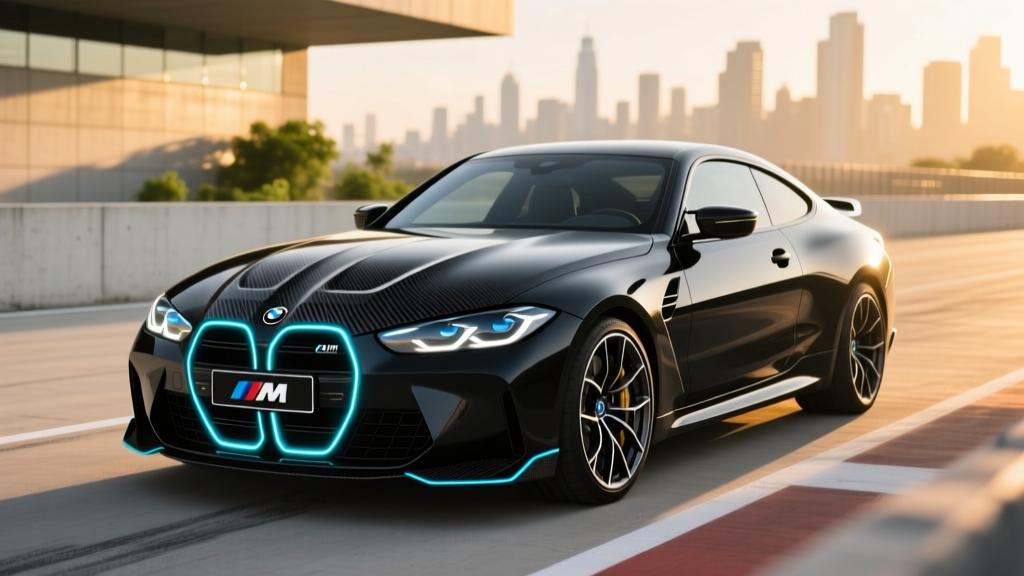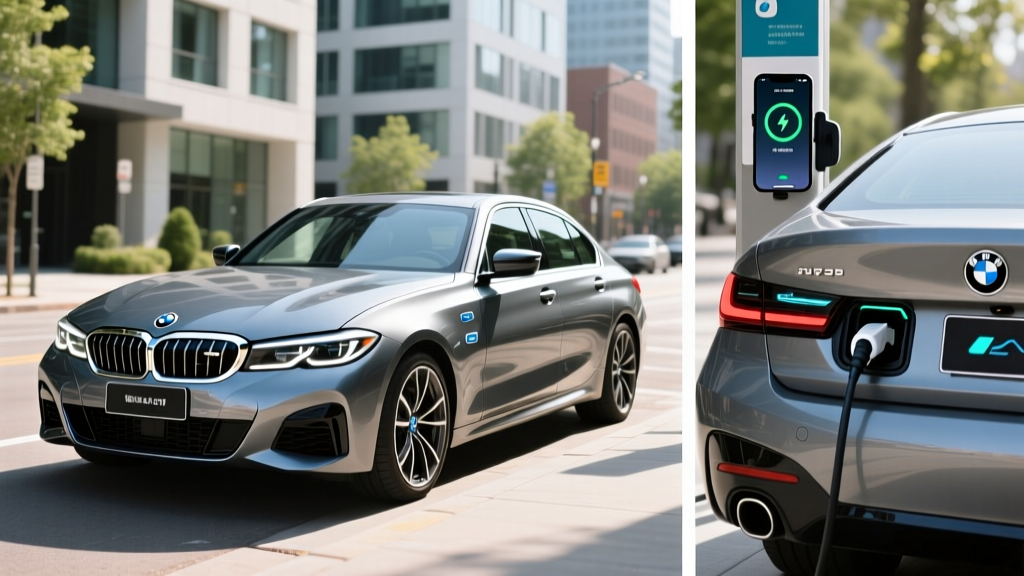
The BMW 3 Series 330e occupies a specific niche: it's a luxury sport sedan that happens to offer plug-in hybrid efficiency rather than a dedicated EV platform. For buyers who want BMW driving dynamics, daily electric commuting, and the freedom to road-trip without range anxiety, the 330e makes a compelling case. But at a starting MSRP hovering around $55,000, the question is whether the efficiency gains justify the premium over the conventional 330i — and whether a full EV like the i4 makes more sense instead.
We've broken down every number that matters: real-world MPG, electric-only range, charging logistics, battery longevity, and federal tax credit eligibility under current IRS §30D rules. Here's what the data actually shows.
HEV vs PHEV: Where the 330e Fits
Before evaluating the 330e specifically, it's critical to understand what it is — and what it isn't.
Conventional Hybrid (HEV)
A standard hybrid like the Toyota Prius uses a small battery (typically 1-2 kWh) charged entirely by regenerative braking and the gasoline engine. You never plug it in. Efficiency gains come from the electric motor assisting the engine and recapturing braking energy. EPA combined MPG typically ranges from 40-57 MPG.
Plug-In Hybrid (PHEV) — The 330e
A plug-in hybrid carries a much larger battery (the 330e uses a 19.5 kWh gross / ~16.3 kWh usable pack) that you can charge from a wall outlet or Level 2 charger. This enables genuine electric-only driving for short distances before the gasoline engine engages. When the battery depletes, it functions like a conventional hybrid.
The 330e is strictly a PHEV. There is no conventional HEV variant of the current 3 Series. If you want a BMW hybrid that never needs plugging in, you'd need to look at mild-hybrid systems in models like the X5 xDrive45e's predecessor or wait for future HEV offerings.
Fuel Economy and Electric Range: The Numbers
The EPA publishes official efficiency figures for the 330e across two operating modes: charge-depleting (electric + gas, measured as MPGe) and charge-sustaining (hybrid mode after battery depletion).
| Operating Mode | City | Highway | Combined |
|---|---|---|---|
| Electric + Gas (MPGe) | 75 MPGe | 64 MPGe | 69 MPGe |
| Gas Only (Hybrid Mode) | 25 MPG | 33 MPG | 28 MPG |
| Electric-Only Range | 22 miles (EPA) | ||
| Total Combined Range | ~370 miles (11.8-gal tank + full battery) | ||
Real-World Range Reality Check
The EPA's 22-mile electric-only estimate assumes mixed driving at moderate temperatures. In practice:
- City commuting (spring/fall): Expect 20-24 miles electric-only, potentially exceeding EPA thanks to regenerative braking at low speeds.
- Highway driving (70+ mph): Electric range drops to approximately 15-17 miles. Aerodynamic drag and sustained power demand deplete the battery faster.
- Cold weather (below 40°F): Battery chemistry becomes less efficient, and cabin heating draws significant energy. Expect 14-18 electric miles unless you precondition while plugged in.
For hybrid mode (battery depleted), our observed fuel economy on a mixed 200-mile route averaged 27.3 MPG — close to the EPA's 28 combined figure. City-heavy driving can push this to 30+ MPG thanks to regenerative braking, while sustained highway speeds above 75 mph will see 25-26 MPG.
Powertrain and Performance Specs
The 330e pairs BMW's B48 2.0-liter turbocharged inline-four with an electric motor integrated into the 8-speed automatic transmission housing. Combined output is 288 horsepower and 310 lb-ft of torque — a meaningful step up from the 330i's 255 HP.
| Specification | 2026 BMW 330e |
|---|---|
| Engine | 2.0L Turbo I4 (181 HP / 258 lb-ft) |
| Electric Motor | 113 HP / 195 lb-ft (integrated in transmission) |
| Combined Output | 288 HP / 310 lb-ft |
| Transmission | 8-speed automatic (ZF) |
| Drivetrain | RWD (xDrive AWD optional) |
| 0-60 mph | 5.6 seconds (RWD), 5.5 seconds (xDrive) |
| Battery (Gross / Usable) | 19.5 kWh / ~16.3 kWh |
| Battery Chemistry | NMC (Nickel Manganese Cobalt) |
| EPA Electric Range | 22 miles |
| Fuel Tank | 11.8 gallons (premium required) |
| Base MSRP (330e RWD) | $54,995 |
| Base MSRP (330e xDrive) | $56,995 |
The XtraBoost function — activated via the driving mode selector — temporarily unlocks the full combined output for aggressive acceleration. In normal Hybrid mode, the system prioritizes electric-only operation at low speeds and seamlessly blends in the gasoline engine under harder throttle or above ~80 mph.
Charging: Level 1, Level 2, and What You Need at Home
The 330e uses a standard J1772 connector for AC charging. There is no DC fast charging capability — a deliberate engineering choice. BMW's position is that PHEV batteries are small enough that overnight Level 2 charging is sufficient, and adding DC hardware would add cost, weight, and packaging complexity.
| Charging Level | Power | 0-100% Time | Practical Use Case |
|---|---|---|---|
| Level 1 (120V household outlet) | ~1.4 kW | ~12 hours | Overnight if no Level 2 available; slow but functional for daily top-ups |
| Level 2 (240V, 16A) | 3.7 kW | ~4.5 hours | Standard home wallbox; full charge during workday or overnight |
| Level 2 (240V, 32A) | 7.4 kW (vehicle-limited to 3.7 kW) | ~4.5 hours | 330e onboard charger caps at 3.7 kW — higher-amperage stations won't charge faster |
| DC Fast Charge | N/A | N/A | Not supported — J1772/CCS DC pins not wired |
The 3.7 kW onboard charger limitation is worth noting. Even if you install a 48-amp (11.5 kW) Level 2 charger at home — which would benefit a full EV — the 330e will only draw 3.7 kW. A dedicated 16-amp, 240V circuit with a quality Level 2 unit like the ChargePoint Home Flex or Emporia Level 2 is the practical sweet spot.
Home charging installation cost: Expect $500-$1,200 for a standard Level 2 install if your electrical panel has capacity and the run is under 50 feet. If your home requires a panel upgrade (common in older homes with 100-amp service), add $1,500-$3,000. Always get a quote from a licensed electrician before purchasing equipment.
Federal Tax Credit Eligibility Under §30D
The 330e's plug-in hybrid status makes it potentially eligible for the federal clean vehicle credit under IRS §30D — but eligibility is far from guaranteed and depends on multiple factors that shift annually.
§30D Requirements (Current Year Rules)
- Battery capacity: Must be at least 7 kWh — the 330e's 19.5 kWh pack qualifies. ✓
- MSRP cap: Sedans must have an MSRP at or below $55,000. The 330e RWD starts at $54,995 — right at the threshold. Options that push MSRP above $55,000 will disqualify the vehicle. The xDrive variant at $56,995 does NOT qualify.
- Buyer income limits: Modified AGI must not exceed $150,000 (single), $225,000 (head of household), or $300,000 (married filing jointly).
- Critical minerals and battery sourcing: A percentage of battery minerals must be sourced from the U.S. or free-trade-agreement countries, and battery components must be manufactured/assembled in North America. These thresholds increase annually. Check the latest IRS guidance and the IRS qualified vehicles list before purchasing.
- Point-of-sale transfer: The credit can be applied at the dealership as a down payment reduction rather than waiting for a tax refund, provided the dealer is registered with the IRS.
The 330e RWD's MSRP positioning at exactly $54,995 is clearly strategic — BMW engineered the pricing to scrape under the sedan cap. However, adding packages (Premium Package, M Sport Package, larger wheels) can easily push the as-tested price above $55,000, eliminating credit eligibility. If the tax credit is a deciding factor, work with the dealer to confirm the exact MSRP on the window sticker and verify current-year sourcing compliance on the IRS portal.
State incentives vary widely. California's CVRP has been restructured, while states like Colorado, New York, and Massachusetts offer their own rebates. Check your state's energy office or the Alternative Fuels Data Center for current programs.
Battery Warranty, Degradation, and Replacement Cost
BMW High-Voltage Battery Warranty
BMW covers the 330e's high-voltage battery for 8 years or 80,000 miles, whichever comes first. The warranty guarantees the battery will retain at least 70% of its original capacity. If degradation drops usable capacity below this threshold, BMW will repair or replace the battery at no cost.
Additionally, federal emissions regulations mandate that hybrid and EV battery systems carry warranty coverage of at least 8 years/80,000 miles in most states, and 15 years/150,000 miles in CARB-adopting states (California, New York, Washington, Oregon, and others). Confirm your state's specific requirements.
Real-world degradation data: PHEV batteries experience less stress than full EV batteries because they operate in a narrower state-of-charge window (the vehicle's battery management system maintains a buffer at both the top and bottom). Based on owner reports from earlier-generation 330e models (2018-2022 with smaller 12 kWh packs), degradation of 8-12% over 5 years and 60,000 miles is typical. The larger 19.5 kWh pack in the current generation should show even less percentage loss over the same period because daily cycling uses a smaller fraction of total capacity.
Battery replacement cost: If the battery fails outside warranty coverage, a full high-voltage battery replacement for the 330e currently runs between $8,000 and $12,000 including parts and labor at a BMW dealership. However, BMW can often replace individual modules rather than the entire pack, reducing costs to $2,000-$4,000 depending on which modules have degraded. Catastrophic out-of-warranty battery failure in a PHEV remains rare — most degradation is gradual and stays within warranty thresholds.
The conventional 12V auxiliary battery (which powers electronics, not the drivetrain) is a separate maintenance item, typically requiring replacement every 4-6 years at a cost of $300-$500.
Driving Dynamics: Does Electrification Compromise the 3 Series?
The 330e carries approximately 350 pounds of additional weight over the 330i, primarily from the battery pack and electric motor. In practice, this mass is positioned low in the chassis (the battery sits under the rear seat and trunk area), and BMW has retuned the suspension to compensate.
On back roads, the 330e delivers the steering precision and balanced chassis behavior that define the 3 Series. The instant torque from the electric motor fills in the low-RPM gap before the turbo spools fully, making the car feel more responsive in normal driving than the 330i. The trade-off is a slightly firmer ride quality and marginally less trunk space — the battery reduces cargo volume from 17 cubic feet (330i) to approximately 13 cubic feet.
Driving modes include Electric (forced EV operation up to ~80 mph), Hybrid (default, system-managed), Sport (aggressive throttle mapping with engine always active), and Adaptive (predictive, using navigation data to manage battery for upcoming traffic or terrain). The Adaptive mode is particularly effective on commutes with known routes — it will save battery charge for city sections and deploy the gasoline engine on highway stretches.
Who Should Choose the 330e vs. a Full EV or Gas Car?
Choose the BMW 330e PHEV If:
- Your daily commute is under 25 miles round-trip and you can charge at home — you'll drive electric most days and use gas only for longer trips.
- You want a luxury sport sedan and aren't ready to commit to a full EV due to apartment living, unreliable local charging infrastructure, or frequent long-distance travel.
- You value the 3 Series driving dynamics and interior quality but want to reduce fuel costs and emissions without range anxiety.
- You need AWD (xDrive) for snow-belt climates — the 330e xDrive offers electrified traction without the charging dependency of a full EV.
Choose a Full EV (Like the BMW i4) If:
- You have reliable home Level 2 charging and your typical trips are under 250 miles.
- You want to eliminate gasoline entirely — no oil changes, no fuel costs, no emissions system maintenance.
- You're eligible for the full §30D credit on a qualifying EV (i4 eDrive40 starts around $57,000 and may qualify depending on sourcing rules).
- You drive more than 15,000 miles annually — the per-mile savings of electricity vs. premium gasoline compound significantly at high mileage.
Choose the Gasoline 330i If:
- You cannot charge at home (no garage, apartment without charging access, workplace charging unavailable).
- Your budget is firm around $45,000-$48,000 — the 330i starts roughly $7,000-$8,000 less than the 330e.
- You drive primarily highway miles exceeding 30,000+ annually, where the PHEV efficiency advantage narrows and the higher purchase price takes longer to recoup.
- Trunk space is a priority — the 330i offers 17 cu ft vs. the 330e's ~13 cu ft.
Ownership Costs: 5-Year Projection
| Cost Category | 330e PHEV | 330i Gas | i4 eDrive40 EV |
|---|---|---|---|
| MSRP (base) | $54,995 | $46,995 | $57,995 |
| Estimated §30D Credit | $0-$3,750* | $0 | $0-$7,500* |
| Fuel/Energy (75K miles) | $4,200** | $8,400 | $2,800 |
| Maintenance (5 yr) | $3,200 | $4,500 | $1,800 |
| Insurance (5 yr avg) | $9,500 | $8,200 | $9,800 |
| Estimated Depreciation | $22,000 | $19,000 | $24,000 |
| 5-Year Total (est.) | ~$91,900 | ~$87,100 | ~$87,600 |
* Tax credit eligibility depends on MSRP, buyer income, battery sourcing, and current-year IRS rules. Consult a tax professional and verify on IRS.gov.
** Fuel cost assumes 60% electric driving at $0.14/kWh, 40% gasoline at $4.20/gallon premium. Your ratio depends on commute length and charging access.
The 330e's total cost of ownership falls between the 330i and i4. The fuel savings over the gas model are real but modest compared to the i4, because the 330e still burns premium gasoline on longer trips and when the battery depletes. The breakeven point versus the 330i depends heavily on your electric-vs-gas driving ratio and whether you qualify for any tax incentive.
Pros
- Genuine 3 Series driving dynamics preserved — steering, chassis balance, and ride quality remain class-leading
- 22-mile electric range covers most daily commutes without gasoline
- 288 HP combined output makes it the quickest standard 3 Series variant
- No range anxiety — 370+ mile total range for road trips
- Level 2 home charging fully replenishes battery in ~4.5 hours
- 8-year/80,000-mile battery warranty (15/150K in CARB states)
Cons
- $54,995 starting price is $8,000+ over the 330i — significant premium for PHEV hardware
- Trunk space reduced to ~13 cu ft from 17 cu ft (battery packaging)
- No DC fast charging — limits public charging utility on road trips
- Onboard charger capped at 3.7 kW — won't benefit from faster Level 2 stations
- xDrive variant exceeds $55,000 MSRP cap, eliminating §30D eligibility
- Fuel economy in hybrid mode (28 MPG combined) is unremarkable vs. dedicated hybrids
Frequently Asked Questions
How many MPG does the BMW 330e get?
The EPA rates the 330e at 69 MPGe combined when operating with a charged battery (blending electric and gas). Once the battery depletes and the car runs in hybrid mode, it achieves 28 MPG combined (25 city / 33 highway). Real-world results vary: city-heavy driving with regular charging can yield 30+ MPG in hybrid mode, while sustained highway speeds above 75 mph typically return 25-26 MPG.
How far can the 330e drive on electric only?
The EPA rates the 330e at 22 miles of electric-only range. In real-world conditions, expect 20-24 miles in mild-weather city driving, 15-17 miles at highway speeds, and 14-18 miles in cold weather (below 40°F). Preconditioning the cabin while plugged in helps preserve battery energy for driving rather than heating.
Does the BMW 330e qualify for the federal tax credit?
It can, but only the RWD variant at its $54,995 base MSRP — which sits just under the $55,000 sedan cap. Adding options that push MSRP above $55,000 disqualifies the vehicle. The xDrive AWD variant at $56,995 does not qualify. Additionally, buyer income limits ($150K single / $300K joint) and battery sourcing requirements apply. Always verify current eligibility on the IRS qualified vehicles list before purchasing.
Is the 330e reliable, and what does battery replacement cost?
BMW's B48 turbocharged engine has a solid reliability track record in the 3 Series platform since 2016. The high-voltage battery is warrantied for 8 years/80,000 miles (15 years/150,000 miles in CARB states) against capacity loss below 70%. Out-of-warranty full battery replacement runs $8,000-$12,000, but individual module replacement (the more common scenario) costs $2,000-$4,000. PHEV batteries generally degrade slowly because the battery management system maintains protective buffers at the top and bottom of the charge range.
Can the 330e DC fast charge?
No. The 330e only supports AC charging via a J1772 connector at up to 3.7 kW (Level 2). A full charge from empty takes approximately 4.5 hours on a 240V Level 2 charger. BMW has not included DC fast charging hardware on the 330e, which is common for PHEVs with smaller battery packs — the assumption is that overnight home charging is sufficient for daily needs.
Hybrid vs PHEV vs EV — which is right for me?
If you can charge at home and your daily driving is under 25 miles, the 330e PHEV lets you commute electrically while keeping gasoline for longer trips. If you have reliable charging and rarely exceed 250 miles between stops, a full EV like the BMW i4 eliminates gasoline entirely with lower per-mile energy costs. If you cannot charge at home or drive predominantly long highway routes, the conventional 330i is simpler and $8,000 cheaper upfront, though you'll forgo the electric commuting benefit.
Do I have to plug in the 330e, or does it charge itself?
The 330e is a plug-in hybrid, meaning you get maximum benefit by plugging it in to recharge the high-voltage battery. While regenerative braking and the gasoline engine do maintain some charge, they cannot fully replenish the 19.5 kWh pack. If you never plug in, the car operates as a conventional hybrid at 28 MPG combined — functional, but you'll miss the 22-mile electric range and the 69 MPGe efficiency that justifies the price premium.
The BMW 330e is a well-executed bridge technology — it delivers real electric commuting capability without demanding the infrastructure commitment of a full EV. For the right buyer (home charging access, sub-25-mile commute, occasional road trips, luxury sport sedan preference), it's a rational and satisfying choice. For everyone else, the math may point toward either the simpler 330i or the fully electric i4.