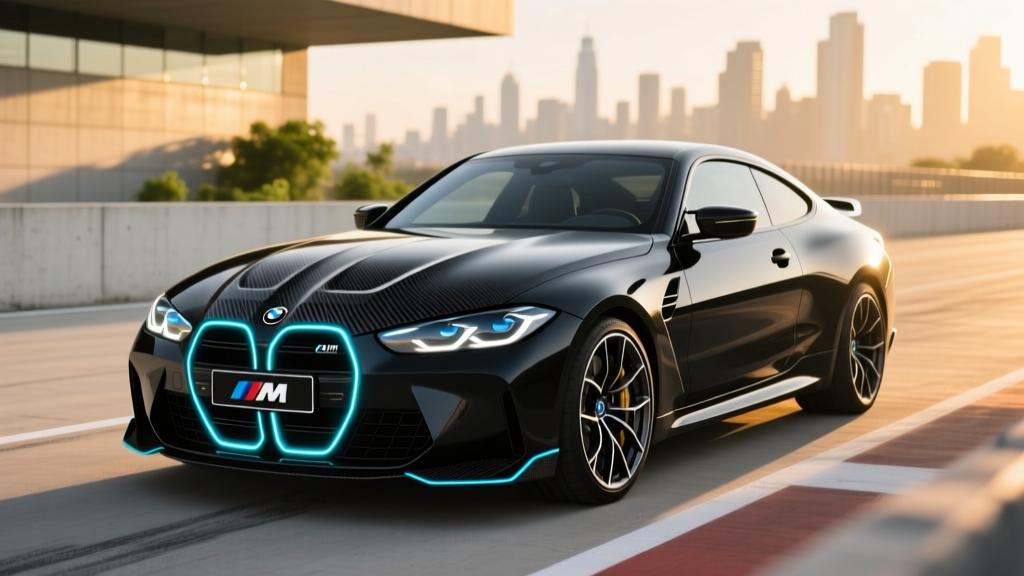
The BMW M Hybrid V8 isn't a car you'll find on a dealer lot. It's BMW's LMDh (Le Mans Daytona hybrid) prototype, purpose-built for top-tier endurance racing in the IMSA WeatherTech SportsCar Championship GTP class and the FIA World Endurance Championship Hypercar class. For the 2026 season, BMW M Team WRT and BMW M Team RLL campaign the M Hybrid V8 at events including the Rolex 24 at Daytona, the 12 Hours of Sebring, and the 24 Hours of Le Mans. Yet its hybrid powertrain — a twin-turbo V8 paired with a Bosch-supplied electric motor — raises questions that crossover directly into the road-car world: How does a performance hybrid system actually work? What kind of efficiency does it deliver? And what does BMW's motorsport hybrid tech tell us about the brand's future road-going PHEVs?
This guide dissects the BMW M Hybrid V8's hybrid architecture, translates racing specs into real-world context, and helps you understand how BMW's competition hybrid philosophy compares to the plug-in hybrids (PHEVs) and conventional hybrids (HEVs) you can actually buy today.
HEV vs PHEV vs LMDh Racing Hybrid — What's the Difference?
Before examining the M Hybrid V8's powertrain, it's essential to distinguish three fundamentally different hybrid architectures. Conflating them is the single most common source of buyer confusion in the electrified-vehicle space.
| Attribute | Conventional Hybrid (HEV) | Plug-In Hybrid (PHEV) | LMDh Racing Hybrid (M Hybrid V8) |
|---|---|---|---|
| Battery size | 1–2 kWh | 12–25 kWh (road cars) | ~2.2 kWh (spec racing cell) |
| Plug-in charging | No — regen only | Yes — Level 1/2 AC, some DC | No — regen + ICE charging only |
| Electric-only range | 0.5–2 mi at low speed | 20–50 mi EPA (typical) | Not rated (deploy-based) |
| Primary purpose | Fuel economy | Short EV commutes + gas flexibility | Performance + regulation compliance |
| Example | Toyota Prius | BMW XM, Toyota RAV4 Prime | BMW M Hybrid V8 |
The BMW M Hybrid V8 falls into none of the consumer categories. Its hybrid system exists to fill torque gaps during turbo spool-up, harvest energy under braking, and deploy up to 50 kW (approximately 67 hp) of electric boost — all governed by IMSA and WEC Balance of Performance (BoP) regulations. It cannot be plugged in, has no meaningful electric-only driving mode, and isn't measured in MPGe. Understanding this distinction is critical before comparing it to road-going BMW hybrids like the XM or the 750e xDrive.
BMW M Hybrid V8 Powertrain: V8 + Electric Motor Specs
The M Hybrid V8 is built on a Dallara LMDh chassis — the spec carbon-fiber tub mandated for all LMDh competitors — with BMW M's bespoke powertrain bolted in. Here are the known powertrain specifications for the 2026 competition season:
| Specification | BMW M Hybrid V8 (2026 LMDh) |
|---|---|
| Internal combustion engine | P66/3 4.0L twin-turbo V8 |
| ICE output (BoP-dependent) | ~630 hp (combined system, regulated) |
| Electric motor | Bosch Motor Generator Unit (MGU) |
| MGU output | Up to 50 kW (~67 hp) |
| Hybrid battery | Williams Advanced Engineering, ~2.2 kWh |
| Battery chemistry | NMC (nickel manganese cobalt) |
| Transmission | Xtrac 7-speed sequential |
| Drivetrain | Rear-wheel drive (ICE); MGU on rear axle |
| Minimum weight | 1,030 kg (2,271 lbs, per IMSA BoP) |
| 0-60 mph (estimated) | ~2.5 seconds |
| Top speed | ~211 mph (Le Mans configuration) |
The P66/3 engine is derived from BMW's DTM-era naturally aspirated V8, extensively reworked with twin turbochargers for LMDh duty. The Bosch MGU sits between the engine and gearbox, functioning as both a generator under braking (regenerative harvesting up to 150 kW) and a motor under acceleration (deploying up to 50 kW). The Williams Advanced Engineering battery — a spec component shared across all LMDh manufacturers — stores harvested energy in a compact, high-discharge NMC cell designed for thousands of charge-deploy cycles per race season.
BMW Motorsport's official LMDh program page details the development partnership with Dallara, Bosch, and Williams Advanced Engineering.
How Many MPG Does the BMW M Hybrid V8 Get?
Short answer: MPG is not a meaningful metric for the M Hybrid V8. Race cars don't receive EPA fuel-economy ratings, and LMDh prototypes are tuned for lap time, not efficiency. That said, the hybrid system does reduce fuel consumption compared to a non-hybrid equivalent.
Based on telemetry data and fuel-flow regulations, LMDh cars in IMSA GTP trim consume approximately 3.5 to 4.5 miles per gallon at race pace — roughly 30–40% less than the previous-generation DPi cars they replaced, thanks in part to the hybrid system's energy recovery under braking. Over a 24-hour race like Daytona, an LMDh car might use 800–1,000 gallons of VP Racing fuel (E20 blend), depending on BoP adjustments and pace.
The hybrid's efficiency contribution isn't about MPG — it's about energy deployment strategy. Teams manage battery state of charge (SoC) across each lap, deploying electric boost out of slow corners where the turbo V8 is still spooling, and harvesting under heavy braking zones. This lets the car accelerate harder without burning additional fuel, effectively acting as a performance multiplier rather than an economy device.
Electric-Only Range and Hybrid Deployment Strategy
The M Hybrid V8 has no usable electric-only driving mode in the conventional sense. Its ~2.2 kWh battery isn't designed to propel the car for miles on electricity alone. Instead, the battery operates in a narrow SoC window — typically between 30% and 80% — with the MGU constantly cycling between harvest and deploy multiple times per lap.
In pit-lane scenarios, LMDh regulations do permit low-speed electric-only movement, but this is limited to a few hundred meters at pit-lane speed limits (~37 mph). This is not "electric range" in any road-car sense — it's a regulatory provision to reduce pit-lane emissions and noise.
For comparison, BMW's road-going PHEV, the 2026 BMW XM, offers an EPA-estimated 31 miles of electric-only range from its 25.7 kWh battery — enough for most daily commutes without the V8 ever starting. That's the fundamental difference: road PHEVs prioritize electric range; racing hybrids prioritize power density and deployment timing.
BMW's Road-Going Hybrids: How the M Hybrid V8 Relates
BMW's motorsport hybrid program doesn't directly translate into a production car you can buy, but the engineering lessons do filter down. Here's how BMW's current consumer hybrid lineup compares to the race car's architecture:
| Model | Type | Engine | Combined HP | EV Range (EPA) | MSRP (2026) |
|---|---|---|---|---|---|
| BMW XM | PHEV | 4.4L TT V8 + e-motor | 644 hp (base) / 738 hp (Label Red) | 31 mi | $159,995 |
| BMW 750e xDrive | PHEV | 3.0L I6 turbo + e-motor | 483 hp | 34 mi | $107,995 |
| BMW X5 xDrive50e | PHEV | 3.0L I6 turbo + e-motor | 483 hp | 38 mi | $91,295 |
| BMW M Hybrid V8 | LMDh Race | 4.0L TT V8 + Bosch MGU | ~630 hp (BoP) | N/A | Not for sale |
The BMW XM is the closest spiritual sibling to the M Hybrid V8: a twin-turbo V8 paired with an electric motor for combined output exceeding 600 hp. But the XM is a 5,800-pound luxury SUV with 31 miles of EV range and a plug — a fundamentally different machine optimized for emissions compliance and daily usability, not lap times.
Pricing and Tax Credit Eligibility
The BMW M Hybrid V8 is not available for purchase at any price. BMW M Team RLL and BMW M Team WRT each run factory-entered cars with budgets estimated at $30–50 million per season, inclusive of chassis, powertrain development, logistics, and personnel. Privateer teams cannot currently purchase an M Hybrid V8; BMW has kept the program factory-exclusive through the 2026 season.
For BMW's road-going PHEVs, pricing and federal tax credit eligibility follow IRS §30D Clean Vehicle Credit rules:
- MSRP cap: SUVs/Pickups/Vans must be under $80,000; sedans under $55,000. The BMW XM ($159,995) and 750e ($107,995) exceed these caps and do not qualify for the federal credit.
- Buyer income cap: Modified AGI must not exceed $300,000 (joint), $225,000 (head of household), or $150,000 (individual).
- Battery sourcing: Critical minerals and battery components must meet escalating domestic-content thresholds (60% critical minerals / 75% battery components for 2026 model year vehicles).
- Point-of-sale transfer: Eligible credits can be transferred to the dealer at purchase for an upfront price reduction.
- BMW X5 xDrive50e: At $91,295 MSRP (SUV classification), it also exceeds the $80,000 SUV cap — meaning no current BMW PHEV qualifies for the full $7,500 federal credit as of the 2026 model year.
State-level incentives may still apply. California's CVRP, New York's Drive Clean Rebate, and Colorado's Innovative Motor Vehicle Credit have separate eligibility rules. Check your state's energy or DMV website for current programs.
Reliability, Battery Warranty, and Replacement Costs
BMW M Hybrid V8 (Race Car): The Williams Advanced Engineering racing battery is replaced on a scheduled cycle — typically every 2–4 races depending on degradation telemetry — at a cost absorbed by the team's operating budget. Individual cell cost is not publicly disclosed but is estimated at $50,000–$80,000 per pack based on LMP1-era data.
For BMW's consumer PHEVs, the relevant warranty and reliability data is:
| Model | Hybrid Battery Warranty | Powertrain Warranty | Estimated Replacement Cost |
|---|---|---|---|
| BMW XM | 8 years / 80,000 miles | 4 years / 50,000 miles | $18,000–$25,000 |
| BMW 750e xDrive | 8 years / 80,000 miles | 4 years / 50,000 miles | $15,000–$22,000 |
| BMW X5 xDrive50e | 8 years / 80,000 miles | 4 years / 50,000 miles | $16,000–$23,000 |
Federal law mandates that hybrid and EV battery warranties cover at least 8 years or 100,000 miles (whichever comes first) in California Air Resources Board (CARB) states, and 8 years / 80,000 miles in other states. BMW's warranty guarantees the battery will retain a minimum percentage of its original capacity (typically 70%) over the warranty period. Real-world data from earlier BMW PHEV generations (X5 xDrive45e, 330e) shows NMC batteries retaining 85–92% capacity after 5 years / 60,000 miles when properly maintained — avoiding frequent DC fast charging and extreme SoC states (below 10% or above 90% for extended periods).
Who Should Choose a BMW Hybrid — and Who Should Go Full EV?
Choose a BMW PHEV (XM, 750e, X5 50e) if:
- You want V8 or I6 performance with 30+ miles of silent, zero-tailpipe-emission commuting
- You lack reliable home or workplace charging and need gas-engine fallback for road trips
- You regularly drive in cold climates where EV range drops 20–30% in winter
- You tow (the X5 xDrive50e is rated at 7,200 lbs — most full EVs can't match this)
Choose a full BEV (BMW iX, i7, i4) if:
- You have Level 2 home charging and drive under 250 miles daily
- You want the lowest per-mile fuel cost ($0.04–$0.06/mile on home electricity vs. $0.12–$0.18/mile on gas)
- You want to eliminate oil changes, transmission fluid, and spark plug maintenance entirely
- You qualify for the $7,500 federal credit (i4 eDrive40 at $57,975 MSRP qualifies; most BMW iX trims do not)
The BMW M Hybrid V8 is relevant to you if:
- You follow IMSA or WEC endurance racing and want to understand the technology
- You're tracking BMW's engineering trajectory — the P66/3 V8 and Bosch MGU integration may inform future M-car PHEV powertrains (the next-generation M5 already uses a V8 PHEV setup)
- You're comparing LMDh hybrid architectures across manufacturers (Porsche 963, Acura ARX-06, Cadillac V-Series.R, Lamborghini SC63)
Real-World Takeaways: What the M Hybrid V8 Teaches Road-Car Buyers
The BMW M Hybrid V8 demonstrates that hybrid technology isn't solely about fuel economy. In motorsport, the hybrid system exists for performance augmentation — filling torque gaps, enabling all-wheel-drive-like traction from a rear-drive chassis, and giving drivers adjustable energy-deployment strategies mid-race. This philosophy is already visible in the BMW XM and M5 PHEV, where electric motors don't just save fuel; they add instantaneous torque that a turbocharged engine alone cannot deliver.
For buyers evaluating BMW's hybrid lineup, the key insight is that BMW treats electrification as a performance tool first and an efficiency tool second — the opposite of Toyota's approach with the Prius. If your priority is maximum MPG and lowest cost per mile, a Toyota RAV4 Prime (42 mi EV range, 94 MPGe, ~$48,000) is a more rational choice. If you want 600+ hp with the option to drive 30 miles on electricity before the V8 wakes up, BMW's PHEV lineup is the intended solution.
The racing program also validates the durability of high-cycle hybrid batteries. The M Hybrid V8's Williams Advanced Engineering cell endures thousands of charge-discharge cycles per season at high C-rates — far more punishing than any road-car duty cycle. That engineering data feeds directly into BMW's consumer battery management systems, contributing to the strong capacity-retention figures seen in current-generation BMW PHEVs.
Frequently Asked Questions
Is the BMW M Hybrid V8 a plug-in hybrid?
No. The BMW M Hybrid V8 is a racing prototype with a regenerative hybrid system. It charges its ~2.2 kWh battery exclusively through regenerative braking and the V8 engine — it cannot be plugged in. It has no meaningful electric-only driving range.
Can I buy a BMW M Hybrid V8?
No. The M Hybrid V8 is a factory-only LMDh race car campaigned by BMW M Team RLL (IMSA) and BMW M Team WRT (WEC). It is not available for private purchase. BMW has not announced any customer-racing program for the car as of the 2026 season.
How does the M Hybrid V8's hybrid system compare to a road-car PHEV?
Road PHEVs like the BMW XM use a much larger battery (25.7 kWh vs. ~2.2 kWh), can be plugged into Level 2 chargers, and offer 30+ miles of electric-only range. The M Hybrid V8's system is designed for instantaneous power deployment (50 kW boost) and rapid energy recovery (150 kW regen), not sustained electric driving.
What BMW hybrid can I actually buy in 2026?
BMW offers three PHEVs for the 2026 model year: the XM ($159,995, 644 hp, 31 mi EV range), the 750e xDrive ($107,995, 483 hp, 34 mi EV range), and the X5 xDrive50e ($91,295, 483 hp, 38 mi EV range). None currently qualify for the $7,500 federal tax credit due to MSRP cap limitations under §30D rules.
Is BMW's hybrid battery reliable long-term?
BMW covers its PHEV batteries with an 8-year/80,000-mile warranty (100,000 miles in CARB states). Real-world data from earlier BMW PHEV models shows 85–92% capacity retention after 5 years. Replacement costs range from $15,000–$25,000 if needed outside warranty, but most PHEV batteries outlast the vehicle's ownership period with proper care.
Does BMW make a full EV instead of a hybrid?
Yes. BMW's all-electric "i" lineup includes the i4 (up to 307 mi EPA range, from ~$57,975), the iX (up to 324 mi EPA range, from ~$87,250), and the i7 (up to 318 mi EPA range, from ~$124,200). The i4 eDrive40 qualifies for the federal tax credit; the iX and i7 generally do not due to MSRP caps.