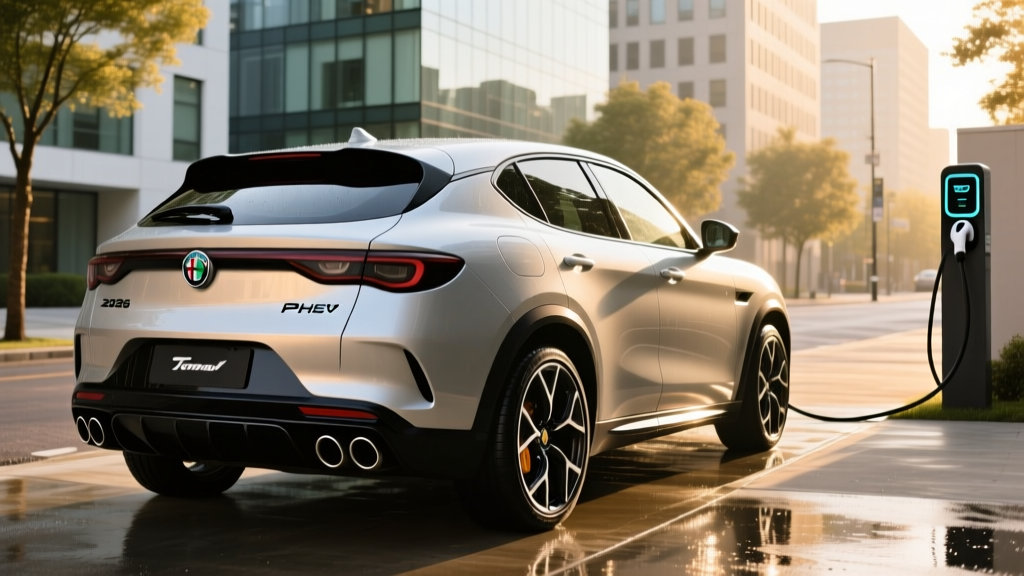
Alfa Romeo's entry into electrification takes a pragmatic form: the Tonale plug-in hybrid. Rather than jumping straight to a battery-electric vehicle, the Italian automaker paired a turbocharged gasoline engine with an electric motor and a modest battery pack, creating a compact luxury crossover that can handle daily commutes on electricity alone while retaining gas-engine range for longer trips. For buyers searching for an Alfa hybrid, the Tonale PHEV (badged as the Tonale Q4 in some markets) is currently the brand's only electrified offering available in the United States.
But does the Tonale PHEV's blend of Italian styling, 285 combined horsepower, and plug-in efficiency actually deliver in real-world driving? We've analyzed EPA data, manufacturer specifications, and ownership economics to give you the full picture.
Alfa Romeo's Hybrid Strategy: PHEV, Not HEV
Before diving into specs, it's essential to understand what kind of hybrid the Tonale is — because Alfa Romeo does not currently sell a conventional hybrid (HEV) in the US market.
Conventional Hybrid (HEV)
- No plug — charges via regenerative braking
- Small battery (~1-2 kWh)
- Cannot drive on electric only (or only at very low speeds)
- Improves MPG by 15-30% vs gas-only
- Example: Toyota RAV4 Hybrid
Plug-In Hybrid (PHEV) — Tonale
- Plugs in to charge — Level 1 or Level 2
- Larger battery (~15.5 kWh usable)
- 35 miles of true electric-only driving
- Gas engine kicks in for longer trips
- Eligible for potential tax credits
The Tonale is exclusively a PHEV. This means you can plug it in to access its full electric range, but the gas engine ensures you'll never be stranded if the battery depletes. If you're looking for a non-plug-in Alfa hybrid that simply gets better gas mileage without any charging routine, that product doesn't currently exist in Alfa's US lineup.
2026 Tonale PHEV Powertrain and Performance Specs
| Specification | Value |
|---|---|
| Combined System Horsepower | 285 hp |
| Gas Engine | 1.3L turbocharged inline-3 (180 hp) |
| Electric Motor (rear axle) | 90 kW (~121 hp) |
| Drivetrain | AWD (eAWD — electric rear axle) |
| Battery Capacity (usable) | 15.5 kWh (lithium-ion NMC) |
| 0-60 mph | 6.0 seconds |
| EPA Electric-Only Range | 35 miles |
| EPA Combined MPGe (electric + gas) | 77 MPGe |
| EPA MPG (gas-only, charge-depleted) | 29 combined (28 city / 31 hwy) |
| Total Range (electric + gas) | ~380 miles |
| DC Fast Charging | Not available (AC only) |
| Level 2 Charge Time (0-100%) | ~2.5 hours at 7.4 kW |
| Cargo Volume (rear seats up) | ~18.0 cu ft |
The powertrain architecture is worth noting: the 1.3-liter turbo three-cylinder drives the front wheels through a six-speed automatic transmission, while the rear-mounted electric motor powers the rear axle independently. This creates an "eAWD" system with no mechanical connection between front and rear — the car's computer seamlessly blends torque delivery. The result is a 0-60 mph time of 6.0 seconds, which is genuinely quick for this segment and noticeably faster than the non-hybrid Tonale.
Fuel Economy: EPA Numbers vs Real-World MPG
| Mode | City | Highway | Combined |
|---|---|---|---|
| Electric + Gas (MPGe) | — | — | 77 MPGe |
| Gas Only (charge-depleted MPG) | 28 | 31 | 29 |
What is MPGe? Miles Per Gallon Equivalent is the EPA's way of comparing electric energy consumption to gasoline. The 77 MPGe figure applies when you're regularly charging and using both electric and gas power. Once the battery is depleted, the Tonale operates as a conventional hybrid at 29 MPG combined.
Real-world expectations: According to fueleconomy.gov, the Tonale's EPA ratings are reasonable for mixed driving. However, real-world results vary significantly based on charging habits:
- With daily charging (commute under 35 miles): Many owners report using almost zero gasoline during the work week, effectively getting 100+ MPGe equivalent on short trips.
- Highway road trips (battery depleted): Expect 27-30 MPG at 70-75 mph — the small turbo-three is efficient but works hard at sustained highway speeds with a heavy vehicle (~4,100 lbs).
- Cold weather (below 30°F): Electric-only range drops 20-30% due to battery chemistry limitations and cabin heating demands. Expect ~25 miles of EV range in winter.
Charging the Tonale PHEV: What You Need to Know
The Tonale PHEV charges exclusively via AC power — there is no DC fast charging capability. This is typical for PHEVs in this class, where the battery is small enough that Level 2 charging is sufficiently fast.
| Level | Power | 0-100% Time | Miles of EV Range per Hour |
|---|---|---|---|
| Level 1 (120V household outlet) | ~1.4 kW | ~11 hours | ~3 mi/hr |
| Level 2 (240V home/public) | 7.4 kW | ~2.5 hours | ~14 mi/hr |
| DC Fast Charge | Not supported | N/A | N/A |
The Tonale uses a standard J1772 connector for AC charging, which is universal across all non-Tesla plug-in vehicles in North America. A full Level 2 charge in about 2.5 hours means you can easily top up during a workday or overnight at home.
Home charging setup: A basic Level 2 home charger (240V, 32-amp) costs roughly $500-$700 for the equipment, plus $400-$1,500 for professional electrician installation depending on your panel capacity and run distance. Since the Tonale's onboard charger maxes out at 7.4 kW, there's no benefit to installing a 48-amp or higher charger specifically for this vehicle — a standard 32-amp unit delivers its full charging speed.
Pricing, Trims, and Federal Tax Credit Eligibility
The 2026 Tonale PHEV is offered in three trims, all with standard AWD:
- Sprint: ~$47,490 MSRP (base, well-equipped)
- Ti: ~$50,490 MSRP (added luxury features, leather)
- Veloce: ~$53,490 MSRP (sport-tuned suspension, premium audio)
Federal Tax Credit (§30D) — Does the Tonale Qualify?
This is where the Tonale faces challenges. Under current IRS rules for the §30D Clean Vehicle Credit, eligibility depends on several requirements that shift annually:
- ✅ Vehicle qualifies as a PHEV: Tonale meets the minimum 7 kWh battery and plug-in requirements
- ✅ MSRP cap: SUVs must be under $80,000 — Tonale clears this easily
- ⚠️ Battery component sourcing: Must meet North American manufacturing thresholds (phased percentages increase yearly)
- ⚠️ Critical minerals sourcing: Must meet requirements for minerals like lithium, cobalt, nickel
- ❌ Final assembly: Must be assembled in North America — the Tonale is built in Pomigliano, Italy
- ⚠️ Buyer income caps: $150K single / $300K joint MAGI limits apply
Bottom line: Because the Tonale is assembled in Italy, it does not qualify for the federal §30D new clean vehicle credit. This is a significant disadvantage versus PHEV competitors assembled in North America. Always verify current eligibility on fueleconomy.gov's tax credit page before purchasing, as rules and eligible vehicle lists change.
Some state and local incentives may still apply regardless of assembly location — check your state's energy office or DMV for current programs. States like California, Colorado, and New York have offered rebates for PHEVs that don't require domestic assembly, though amounts and eligibility vary by jurisdiction and income.
Battery Warranty, Reliability, and Long-Term Costs
- Hybrid/EV battery: 8 years / 100,000 miles (whichever comes first)
- Powertrain warranty: 4 years / 50,000 miles
- Bumper-to-bumper: 4 years / 50,000 miles
- Battery capacity guarantee: Alfa warrants the battery will retain at least 70% of original capacity during the warranty period
Battery replacement cost: If the 15.5 kWh battery pack needs replacement out of warranty, expect a parts-and-labor cost in the range of $5,000 to $8,000 based on current PHEV battery pricing. However, PHEV batteries are notably durable because they're smaller, less stressed, and the vehicle's thermal management system protects them from extreme charge/discharge cycles. Most PHEV batteries outlast their warranty periods with minimal degradation.
Reliability considerations: Alfa Romeo's brand-wide reliability scores have historically trailed Japanese and German competitors in surveys from Consumer Reports and J.D. Power. The Tonale, being relatively new (introduced for the 2024 model year in the US), doesn't yet have extensive long-term reliability data. The PHEV powertrain itself — the 1.3L turbo-three and electric motor — is shared with other Stellantis products globally, which provides some track record. The main risk areas are electronics and infotainment software rather than the hybrid system itself.
Tonale PHEV vs Competitors: How It Stacks Up
| Attribute | Alfa Romeo Tonale | BMW X3 xDrive30e | Volvo XC60 Recharge |
|---|---|---|---|
| Combined HP | 285 | 288 | 455 |
| EV Range (EPA) | 35 mi | ~35 mi | ~35 mi |
| Battery (usable) | 15.5 kWh | ~14.9 kWh | ~14.9 kWh |
| Gas MPG (depleted) | 29 | ~28 | ~27 |
| 0-60 mph | 6.0 sec | 5.9 sec | 4.5 sec |
| Starting MSRP | ~$47,490 | ~$57,000 | ~$59,000 |
| Federal Tax Credit | No (Italy) | Check current | Check current |
| DC Fast Charge | No | No | No |
The Tonale's clearest advantage is price — it undercuts the BMW X3 PHEV and Volvo XC60 Recharge by roughly $10,000-$12,000 while delivering comparable electric range and competitive performance. Where it falls short is interior materials quality, brand reliability perception, and the lack of federal tax credit eligibility due to its Italian assembly.
✅ Pros
- Competitive 35-mile EV range
- 285 hp makes it genuinely quick (6.0s 0-60)
- Standard AWD across all trims
- ~$10K less than German/Swedish rivals
- Distinctive Italian styling stands out
- Good gas MPG (29) when battery is depleted
❌ Cons
- No federal tax credit (built in Italy)
- No DC fast charging
- Brand reliability reputation lags competitors
- Cargo space tight at ~18 cu ft
- Infotainment software can be sluggish
- Limited dealer network vs BMW/Mercedes/Volvo
Who Should Buy the Alfa Tonale Hybrid — and Who Shouldn't
Decision Framework
Choose the Tonale PHEV if:
- Your daily commute is under 35 miles round-trip and you can charge at home
- You want a luxury-badge PHEV without paying $55K+
- You value distinctive styling over conservative German design
- You want AWD for snow/rain and don't want a heavy full EV
- You take occasional road trips where charging infrastructure is sparse
Look elsewhere if:
- The $7,500 federal tax credit is essential to your budget — the Tonale doesn't qualify
- You want maximum electric range — consider a full BEV like the Tesla Model Y or Hyundai Ioniq 5
- Long-term reliability data is your top priority — Toyota RAV4 Prime or Honda CR-V Hybrid have stronger track records
- You need maximum cargo space — the Tonale's 18 cu ft is tight for the class
- You want DC fast charging for quick public top-ups — no PHEV in this class offers it
Hybrid vs PHEV vs Full EV — Which Is Right for You?
If you're cross-shopping the Tonale against non-plug-in hybrids and full EVs, here's a practical breakdown:
- Conventional hybrid (HEV): Best if you can't charge at home. No plug needed, just better MPG. You'll get 30-40 MPG combined with zero behavior change. Downside: no electric-only driving, no tax credit.
- Plug-in hybrid (PHEV) like the Tonale: Best if you can charge at home and regularly take trips over 100 miles. You get the best of both worlds — electric commuting, gas-engine road trips. Downside: higher purchase price, more complex powertrain.
- Full EV (BEV): Best if you can charge at home and your daily driving is under 250 miles. Lowest fuel and maintenance costs, strongest tax credit eligibility. Downside: road trip planning required, higher upfront cost, cold-weather range loss of 20-30%.
Frequently Asked Questions
How many MPG does the Alfa Romeo Tonale hybrid get?
The 2026 Tonale PHEV achieves 77 MPGe combined when using both electric and gas power. Once the battery is depleted, it operates as a conventional hybrid at 29 MPG combined (28 city / 31 highway). Real-world results vary: expect 27-30 MPG on highway road trips and potentially 100+ MPGe equivalent if your daily commute stays within the 35-mile electric range.
How far can the Tonale PHEV go on electric only?
The EPA rates the Tonale at 35 miles of electric-only range. In real-world conditions, expect 37-38 miles in mild weather at city speeds, and as low as 24-28 miles in cold weather or at sustained highway speeds. The 15.5 kWh battery pack is large enough for most daily commutes but will deplete quickly under hard acceleration or hill climbing.
Is the Alfa Romeo Tonale hybrid reliable?
Long-term reliability data is still limited since the Tonale launched in the US for the 2024 model year. Alfa Romeo as a brand has scored below average in reliability surveys. The hybrid powertrain components (electric motor, battery) carry an 8-year/100,000-mile warranty, which provides significant coverage. The main risk areas are electronics and software rather than the hybrid system itself.
What does it cost to replace the Tonale's hybrid battery?
Out-of-warranty replacement of the 15.5 kWh battery pack is estimated at $5,000 to $8,000 including labor. However, PHEV batteries are generally durable — the smaller capacity means less stress per cycle, and Alfa's thermal management system protects against degradation. Most PHEV batteries last well beyond their 8-year warranty period. The warranty guarantees at least 70% capacity retention.
Does the Alfa Romeo Tonale qualify for a tax credit?
The Tonale PHEV does not qualify for the federal §30D Clean Vehicle Credit because it is assembled in Italy, and the credit requires North American final assembly. State-level incentives may still apply depending on your jurisdiction — check your state energy office for current programs. Always verify eligibility on fueleconomy.gov before purchasing, as credit rules and eligible vehicle lists are updated regularly.
Can I charge the Tonale PHEV at a public fast charger?
No. The Tonale only supports AC charging (Level 1 and Level 2) via a J1772 connector. It cannot use DC fast chargers (CCS, NACS, or CHAdeMO). At a public Level 2 charger, a full charge takes about 2.5 hours at the car's maximum 7.4 kW acceptance rate.
Sources: fueleconomy.gov (EPA ratings), Alfa Romeo USA (manufacturer specifications), IRS.gov (§30D credit rules). All specifications based on 2026 model year data available at time of publication. Verify current pricing and credit eligibility before purchase.