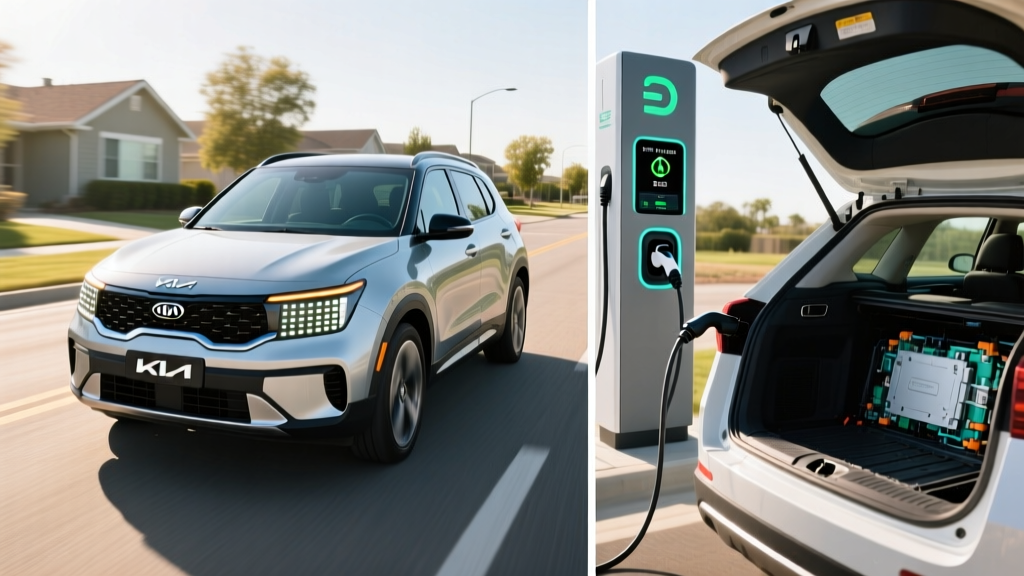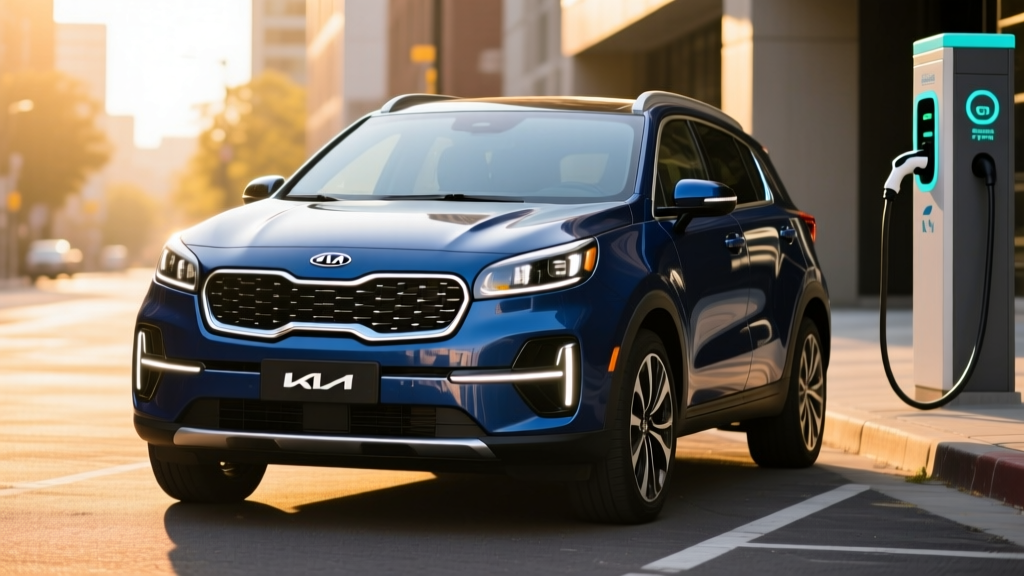
The compact hybrid SUV segment is crowded, but the Kia Sportage Hybrid X-Line occupies a specific niche: it pairs rugged crossover styling with genuine fuel efficiency and standard all-wheel drive. For buyers who want electrified efficiency without plugging in, the Sportage Hybrid remains one of the strongest contenders in the 2026 model year. This guide breaks down every number that matters — from EPA MPG to battery warranty — so you can decide whether this HEV fits your garage.
Kia Sportage Hybrid X-Line at a Glance: Key Specs
Before we get into real-world driving impressions and ownership costs, here are the headline numbers for the 2026 Sportage Hybrid X-Line. These figures come from the EPA and Kia's official specifications.
| Spec | Value |
|---|---|
| Powertrain | 1.6L turbocharged 4-cyl + electric motor (HEV) |
| Combined Horsepower | 232 hp |
| Combined Torque | 258 lb-ft |
| Transmission | 6-speed automatic |
| Drivetrain | AWD (standard on X-Line) |
| EPA Fuel Economy (City / Hwy / Combined) | 38 / 38 / 38 MPG |
| Fuel Tank Capacity | 13.7 gallons |
| EPA Total Range | ~521 miles |
| 0–60 mph | ~7.2 seconds (est.) |
| Cargo Volume (behind rear seats) | 39.5 cu ft |
| Towing Capacity | 2,000 lbs |
| Base MSRP (X-Line AWD) | $33,590 |
| Battery Warranty | 10 years / 100,000 miles |
The X-Line trim sits above the base LX Hybrid and adds exclusive exterior styling cues, 19-inch alloy wheels, synthetic leather upholstery, and additional driver-assist features. It does not add horsepower — all Sportage Hybrid trims share the same 232 hp powertrain.
HEV vs. PHEV: Which Sportage Hybrid Is Right for You?
Kia offers the Sportage in three powertrain flavors for 2026: a conventional gas model, a standard hybrid (HEV), and a plug-in hybrid (PHEV). The X-Line badge is available on both the HEV and PHEV variants, which creates confusion at the dealership. Here is how they differ.
HEV vs. PHEV — Quick Comparison
| Attribute | Sportage Hybrid (HEV) | Sportage Plug-In Hybrid (PHEV) |
|---|---|---|
| Needs to be plugged in? | No — charges via regenerative braking and engine | Yes — plug in for electric-only driving |
| Battery Size | ~1.49 kWh (small, self-charging) | 13.8 kWh (larger, plug-in capable) |
| Electric-Only Range | None (motor assists engine only) | EPA-est. 34 miles |
| Combined Horsepower | 232 hp | 261 hp |
| EPA Combined MPG / MPGe | 38 MPG | 84 MPGe (electric + gas) / 35 MPG (gas only) |
| DC Fast Charging | N/A | No (Level 2 AC only, ~2 hr to full) |
| Federal Tax Credit (§30D) | Not eligible | Up to $7,500 (subject to eligibility rules) |
| X-Line MSRP (AWD) | $33,590 | $40,490 |
The bottom line: If you cannot charge at home or at work, the HEV is the pragmatic choice — it never requires a plug and delivers 38 MPG regardless of your charging access. The PHEV makes financial sense only if you have reliable Level 2 charging and a commute under 34 miles, where it can operate as a daily EV with gas-engine backup for road trips.
Fuel Economy Deep Dive: EPA vs. Real-World MPG
The EPA rates the 2026 Sportage Hybrid X-Line AWD at 38 MPG city, 38 MPG highway, and 38 MPG combined (fueleconomy.gov). This symmetrical rating is notable — many hybrids favor city driving, but the Sportage Hybrid's turbocharged engine and 6-speed automatic (rather than a CVT) keep highway efficiency competitive.
Real-World MPG Expectations
EPA Combined: 38 MPG
City / suburban driving: 39–43 MPG — hybrids thrive in stop-and-go traffic where regenerative braking recovers energy. Owners frequently exceed the EPA city estimate on short, low-speed commutes.
Highway (70–80 mph sustained): 33–36 MPG — aerodynamic drag and the turbo engine working harder at speed reduce efficiency. This is typical for a boxy compact SUV.
Cold weather (below 30°F): 32–35 MPG — the engine runs more frequently to heat the cabin and maintain battery temperature, reducing electric-motor assist time.
Mountainous terrain / heavy cargo: 28–32 MPG — expect the most significant drops when climbing sustained grades or towing near the 2,000-lb limit.
Compared to the non-hybrid Sportage AWD (EPA 25 combined), the hybrid delivers roughly 52% better fuel economy. At $3.50/gallon and 15,000 miles per year, that translates to approximately $790 in annual fuel savings over the gas-only model — meaning the hybrid's price premium pays for itself in roughly 2–3 years for most drivers.
Powertrain and Driving Dynamics
The Sportage Hybrid pairs a 1.6-liter turbocharged inline-four (178 hp, 195 lb-ft on its own) with a 47.7 kW electric motor integrated into the 6-speed automatic transmission. Combined system output is 232 horsepower and 258 lb-ft of torque. This is a conventional parallel-hybrid architecture: the electric motor can propel the vehicle at low speeds for brief distances, but the gasoline engine is always available and engages seamlessly.
Unlike Toyota's e-CVT hybrid system, Kia uses a traditional geared automatic. The result is more natural acceleration feel — no "rubber-band" drone under hard throttle — at a small cost to ultimate city-cycle efficiency. In practice, the 232 hp output puts the Sportage Hybrid ahead of the Toyota RAV4 Hybrid (219 hp) and on par with the Honda CR-V Hybrid (204 hp) in straight-line performance.
The X-Line trim includes standard AWD with an electronically controlled coupling that sends torque rearward when slip is detected. It is not a dedicated off-roader, but it handles rain, light snow, and gravel roads competently. The 7.7 inches of ground clearance and approach/departure angles are adequate for forest service roads but not technical trails.
Pricing, Trims, and Tax Credit Eligibility
For the 2026 model year, the Sportage Hybrid lineup breaks down as follows:
| Trim | MSRP | Key Additions |
|---|---|---|
| LX Hybrid AWD | $29,590 | Base hybrid with full safety suite, 12.3" touchscreen |
| EX Hybrid AWD | $31,590 | Power liftgate, heated front seats, wireless charging |
| X-Line Hybrid AWD | $33,590 | Exclusive styling, 19" wheels, LED fog lights, roof rails |
| SX-Prestige Hybrid AWD | $37,090 | Panoramic sunroof, ventilated seats, Harman Kardon audio, Highway Driving Assist 2 |
Federal Tax Credit: Not Eligible (HEV)
The conventional Sportage Hybrid does not qualify for the federal §30D clean vehicle tax credit. That credit applies only to plug-in electric vehicles (BEVs and PHEVs) meeting battery sourcing, MSRP, and buyer income requirements as outlined by the IRS.
If the $7,500 credit is a priority, the Sportage PHEV may qualify — but eligibility depends on your modified adjusted gross income (AGI caps: $150K single / $300K joint), the vehicle's MSRP falling under the $80,000 SUV cap, and critical-mineral/battery-component sourcing requirements that change annually. Always verify current-year rules on IRS.gov or consult a tax professional before purchasing.
Some states offer separate rebates for conventional hybrids, but these vary widely by jurisdiction. Check your state energy office or AFDC state incentive database for local programs.
Battery Warranty, Reliability, and Replacement Cost
Hybrid battery longevity is the single most common concern among first-time hybrid buyers. Here is what you need to know about the Sportage Hybrid's battery system.
Battery Warranty Coverage
Hybrid battery: 10 years / 100,000 miles (whichever comes first)
Hybrid system components (inverter, electric motor, control unit): 10 years / 100,000 miles
Basic vehicle warranty: 5 years / 60,000 miles
Powertrain warranty: 10 years / 100,000 miles
Kia's hybrid battery warranty is among the longest in the industry, matching Hyundai and exceeding Toyota's 10-year/150,000-mile hybrid battery warranty (note: Toyota's is longer in mileage). The warranty covers capacity loss below a manufacturer-defined threshold and defects.
Real-world reliability data: The Sportage Hybrid's 1.6T powertrain has been in Kia/Hyundai products since the 2022 model year. Early reports from owners and reliability surveys indicate no systemic hybrid-battery failures. The small ~1.49 kWh battery pack undergoes relatively shallow charge/discharge cycles compared to a full EV, which significantly extends its operational lifespan. Most hybrid batteries from major manufacturers last 150,000–200,000+ miles before meaningful degradation.
Replacement cost if out of warranty: A Sportage Hybrid battery replacement is estimated at $2,000–$3,500 (parts and labor) based on comparable Kia/Hyundai hybrid packs. This is far less than an EV battery replacement ($8,000–$20,000+) because the pack is small. For context, a conventional automatic transmission replacement on a gas vehicle often costs $3,000–$5,000 — the hybrid battery is not the financial risk many buyers fear.
Who Should Choose the Sportage Hybrid X-Line?
✓ Choose the Sportage Hybrid X-Line If:
- You want 38+ MPG without ever plugging in
- You need AWD for snow, rain, or light trails
- You prefer a traditional automatic transmission over a CVT
- Your daily commute involves a mix of city and highway driving
- You want a 10-year/100,000-mile warranty for peace of mind
- You value distinctive styling (X-Line's rugged accents stand out vs. the LX)
- You tow occasionally (2,000-lb capacity covers small trailers and jet skis)
✗ Look Elsewhere If:
- You want electric-only driving — consider the Sportage PHEV or a full BEV
- You need maximum cargo space (the Hyundai Tucson Hybrid offers slightly more)
- You want a third row — look at the Kia Sorento Hybrid
- Federal tax credit eligibility is a dealbreaker — the HEV does not qualify
- You prioritize sporty handling over comfort — the Mazda CX-50 Hybrid drives sharper
- You want a CVT's ultra-smooth city behavior — the Toyota RAV4 Hybrid uses an e-CVT
Decision Framework: Hybrid vs. PHEV vs. Full EV
Choose the Sportage HEV if: You lack home/work charging access, want simplicity, and drive a mix of city and highway. Total cost of ownership is low, and you never think about charging.
Choose the Sportage PHEV if: You have Level 2 home charging, your commute is under 34 miles round-trip, and you want EV-like daily driving with gas-engine flexibility for road trips. Factor in the potential $7,500 federal credit (if eligible) to offset the ~$6,900 price premium over the HEV X-Line.
Choose a full BEV (e.g., Kia EV6, Hyundai Ioniq 5) if: You have reliable home charging, your daily driving is under 250 miles, and you want zero tailpipe emissions, minimal maintenance, and the lowest per-mile fuel cost. Expect to pay more upfront but save significantly on fuel and maintenance over 5+ years.
Competitor Comparison: How the Sportage Hybrid X-Line Stacks Up
| Spec | Kia Sportage Hybrid X-Line | Toyota RAV4 Hybrid XLE | Honda CR-V Hybrid Sport-L |
|---|---|---|---|
| EPA Combined MPG | 38 | 39 | 40 |
| Horsepower | 232 hp | 219 hp | 204 hp |
| Transmission | 6-speed auto | e-CVT | e-CVT |
| AWD Standard? | Yes | Yes | Yes |
| Cargo (rear seats up) | 39.5 cu ft | 37.6 cu ft | 36.3 cu ft |
| Towing | 2,000 lbs | 1,750 lbs | 1,000 lbs |
| Hybrid Battery Warranty | 10 yr / 100K mi | 10 yr / 150K mi | 8 yr / 100K mi |
| Approx. MSRP (AWD) | $33,590 | $34,095 | $36,350 |
The Sportage Hybrid trades 1–2 MPG for a meaningful power advantage (13–28 hp more than rivals), the highest towing capacity in the group, and the most cargo volume. The RAV4 Hybrid edges it out on fuel economy and battery warranty mileage. The CR-V Hybrid leads on MPG but trails on power, cargo, and towing. Your priorities determine the winner.
Frequently Asked Questions
How many MPG does the Kia Sportage Hybrid X-Line get?
The EPA rates it at 38 MPG city, 38 MPG highway, and 38 MPG combined. In real-world city driving with frequent stops, owners often see 39–43 MPG. Sustained highway driving at 75+ mph typically yields 33–36 MPG. Cold weather reduces these figures by roughly 3–5 MPG.
Does the Sportage Hybrid need to be plugged in?
No. The Sportage Hybrid (HEV) is a self-charging conventional hybrid. It recovers energy through regenerative braking and uses the gasoline engine to maintain battery charge. You fuel it like any other car at a gas station. Only the Sportage Plug-In Hybrid (PHEV) requires or benefits from being plugged in.
How far can the Sportage Hybrid go on electric power alone?
The conventional HEV cannot drive on electric power alone for meaningful distances — the motor assists the engine but does not independently propel the vehicle at speed. If electric-only driving matters to you, the Sportage PHEV offers an EPA-estimated 34 miles of electric-only range before the gas engine engages.
Is the Kia Sportage Hybrid reliable, and what does battery replacement cost?
Early reliability data is positive, with no widespread hybrid-system failures reported for the current-generation Sportage. Kia backs the hybrid battery and system components with a 10-year/100,000-mile warranty. If replacement is needed out of warranty, expect $2,000–$3,500 for the battery pack — comparable to a conventional transmission repair on a gas vehicle.
Does the Sportage Hybrid qualify for any tax credit?
The conventional Sportage Hybrid (HEV) does not qualify for the federal §30D clean vehicle tax credit, which is reserved for plug-in vehicles. The Sportage PHEV may qualify for up to $7,500 depending on your income, the vehicle's MSRP, and battery-sourcing requirements. Check current rules at IRS.gov. Some states offer separate hybrid rebates — search your state's incentive database for details.
How does the X-Line trim differ from other Sportage Hybrid trims?
The X-Line adds rugged exterior styling (unique front/rear bumpers, gloss-black accents, exclusive 19-inch wheels), roof rails, LED fog lights, and synthetic leather seats. Mechanically, it is identical to other Sportage Hybrid trims — same 232 hp, same 38 MPG, same AWD system. You are paying for appearance and convenience, not additional performance.
What is the real-world total range on a full tank?
With a 13.7-gallon fuel tank and 38 MPG combined, the EPA-estimated total range is approximately 521 miles. In real-world mixed driving, expect 480–520 miles. On a highway-heavy road trip at 75 mph, range may drop to around 440–470 miles before the low-fuel warning.