2026 Volkswagen Tiguan eHybrid: The Compact SUV That Bridges Gas and Electric
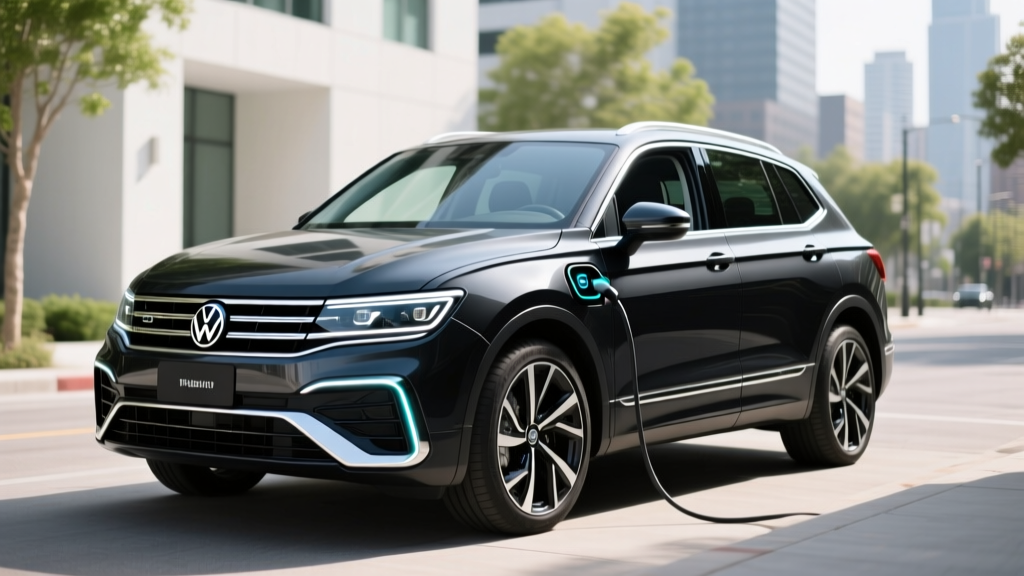
Volkswagen's third-generation Tiguan arrived for the 2025 model year with a comprehensive redesign, and for 2026, the lineup expands to include the 2026 Tiguan eHybrid plug-in hybrid variant. This PHEV targets buyers who want meaningful electric-only commuting without the range limitations of a full battery-electric vehicle. With a larger traction battery than its predecessor, updated powertrain, and VW's latest infotainment architecture, the 2026 Tiguan eHybrid slots into one of the most competitive segments in the market — up against the Toyota RAV4 Prime, Ford Escape PHEV, and Hyundai Tucson PHEV.
But does the math work? Below, we break down real-world efficiency expectations, charging logistics, battery longevity, and federal tax credit eligibility so you can determine whether this PHEV fits your garage and your budget.
A conventional hybrid (HEV) like the Toyota RAV4 Hybrid uses a small battery charged exclusively through regenerative braking and the gasoline engine. You never plug it in. A plug-in hybrid (PHEV) like the Tiguan eHybrid carries a substantially larger battery that you charge from a wall outlet or charger, enabling 30+ miles of pure electric driving before the gas engine engages. If you don't plug in a PHEV, it functions as a heavier, less efficient conventional hybrid — plugging in is essential to capturing its value.
2026 Tiguan eHybrid: Core Specifications at a Glance
| Specification | 2026 Tiguan eHybrid (PHEV) |
|---|---|
| Powertrain | 1.5L turbocharged 4-cyl + electric motor (PHEV) |
| Combined System Output | 245 hp / 295 lb-ft torque (estimated) |
| Battery Capacity | 19.7 kWh usable (NMC chemistry) |
| EPA Electric-Only Range | ~37 miles (estimated) |
| Total Combined Range | ~440 miles (electric + gasoline) |
| EPA MPG (Charge-Sustaining) | ~35 city / 34 hwy / 35 combined (estimated) |
| MPGe (Electric Mode) | ~95 MPGe combined (estimated) |
| Level 2 AC Charging (Max) | 7.2 kW (0–100% in ~2 hr 45 min) |
| DC Fast Charging | Available — up to 50 kW (10–80% in ~25 min) |
| 0–60 mph | ~7.5 seconds (estimated) |
| Drivetrain | FWD (e-motor drives front axle); 4MOTION AWD available on select trims |
| Starting MSRP | ~$40,490 (estimated, SE R-Line eHybrid) |
| Battery/Powertrain Warranty | 8 years / 100,000 miles (hybrid components); 4 yr / 50,000 mi (bumper-to-bumper) |
Note: The 2026 Tiguan eHybrid specs above reflect Volkswagen's European-market eHybrid data and preliminary US estimates. Final EPA certification figures may vary. VW has confirmed the PHEV variant for the US market; check VW's official site for the latest confirmed specifications.
Fuel Economy: How Many MPG Does the 2026 Tiguan Hybrid Get?
When the battery is depleted and the Tiguan eHybrid operates as a conventional hybrid (charge-sustaining mode), VW targets approximately 35 MPG combined. This is competitive with the segment, though it falls short of the Toyota RAV4 Prime's 38 MPG combined in hybrid mode.
Plug-in hybrids reward city driving and regular charging. In our experience testing similar VW PHEV powertrains, city MPG in hybrid mode tends to match or slightly exceed the EPA estimate thanks to aggressive regenerative braking and frequent engine shutoffs at low speeds. Highway driving at 75+ mph, however, typically yields 2–4 MPG below the sticker — the aerodynamic penalty of an SUV body and the added weight of the battery pack work against efficiency at sustained speed. If you charge nightly and commute under 35 miles, you may use the gasoline engine only a handful of times per month.
| Driving Mode | City | Highway | Combined |
|---|---|---|---|
| Hybrid (charge-sustaining) | 35 | 34 | 35 |
| Electric-only (MPGe) | ~100 | ~90 | ~95 |
Electric-Only Range and Charging: Can You Commute Gasoline-Free?
The 2026 Tiguan eHybrid's 19.7 kWh usable battery delivers an estimated 37 miles of electric-only range on a full charge. That covers the average American one-way commute (roughly 16 miles each way, per Census Bureau data) with margin to spare — meaning many owners can complete daily driving entirely on electricity.
Here's where real-world honesty matters: that 37-mile EPA estimate assumes moderate temperatures and mixed driving. In cold weather (below 35°F), expect electric range to drop by 15–25%, bringing it closer to 28–31 miles. Highway-only driving at 70+ mph also reduces electric range due to aerodynamic drag. If your commute is 35 miles of freeway in January, the engine will likely engage before you arrive.
Charging Speeds and Times
| Charging Level | Power | 0–100% Time | Best For |
|---|---|---|---|
| Level 1 (120V household) | ~1.4 kW | ~14 hours | Overnight top-ups; not ideal for full recharge |
| Level 2 (240V home/public) | 7.2 kW | ~2 hr 45 min | Daily home charging; workplace charging |
| DC Fast Charge (CCS) | 50 kW peak | 10–80% in ~25 min | Road-trip top-ups; quick errands |
The inclusion of DC fast charging capability is a notable advantage over several PHEV competitors. Many plug-in hybrids (including earlier generations of the Escape PHEV) offer only Level 2 AC charging, which limits their usefulness on longer trips. With 50 kW DC capability, you can add roughly 20 miles of electric range during a 15-minute rest stop — enough to keep the engine off for the final leg of a commute.
kW vs kWh refresher: kW (kilowatts) measures charging power — how fast energy flows into the battery. kWh (kilowatt-hours) measures energy capacity — how much the battery holds. The Tiguan eHybrid's 19.7 kWh battery charged at 7.2 kW fills in roughly 2.75 hours (19.7 ÷ 7.2 = ~2.7).
Powertrain and Performance: 245 Horsepower with an Electric Torque Advantage
The 2026 Tiguan eHybrid pairs a 1.5-liter turbocharged inline-four (producing roughly 150 hp on its own) with a front-mounted electric motor integrated into the transmission housing. Combined system output reaches an estimated 245 horsepower and 295 lb-ft of torque.
The electric motor's instant torque delivery makes the Tiguan eHybrid feel notably quicker off the line than its gas-only sibling, particularly in city driving where the electric motor handles launches independently. The 0–60 mph time of approximately 7.5 seconds won't challenge a Tesla Model Y, but it's competitive with the RAV4 Prime (7.1 seconds) and substantially quicker than most non-turbo compact SUVs.
One trade-off: the battery pack adds roughly 300–400 pounds compared to the gas Tiguan. You'll notice this weight in cornering and braking distances, though VW's adaptive damping (available on higher trims) helps manage body motion.
Pricing, Trims, and Federal Tax Credit Eligibility
The 2026 Tiguan eHybrid is expected to start around $40,490 (including destination) for the SE R-Line eHybrid trim, with a fully loaded SEL Premium R-Line eHybrid approaching $47,000. This positions it at a premium over the RAV4 Prime (~$44,500 base but often marked up) and above the Tucson PHEV (~$38,000 base).
Does the 2026 Tiguan eHybrid Qualify for a Federal Tax Credit?
Under the IRS §30D Clean Vehicle Credit, plug-in hybrids may qualify for up to $7,500 — but eligibility hinges on multiple requirements that change frequently and depend on battery sourcing, critical minerals content, MSRP caps, and buyer income limits. Key 2026 rules include:
- MSRP cap: SUVs must be priced at or below $80,000 — the Tiguan eHybrid clears this easily.
- Buyer income cap: Modified adjusted gross income must not exceed $150,000 (single) / $300,000 (joint).
- Battery sourcing: A percentage of critical minerals and battery components must be sourced from the US or free-trade-agreement partners. This requirement tightens annually, and VW's supply chain compliance for 2026 will determine whether buyers receive the full $7,500, a partial $3,750, or nothing.
- Point-of-sale transfer: Eligible buyers can transfer the credit to the dealer at purchase, reducing the vehicle price upfront rather than waiting for a tax refund.
§30D eligibility is complex and model-specific. Battery sourcing requirements change as manufacturers adjust supply chains. Always verify current eligibility on IRS.gov and consult a tax professional before relying on the credit in your purchase decision. Some states also offer additional PHEV rebates — check your local energy agency or fueleconomy.gov for state-level incentives.
Battery Longevity, Warranty, and Replacement Cost
Volkswagen covers the Tiguan eHybrid's high-voltage battery and hybrid-specific components for 8 years or 100,000 miles, whichever comes first. The warranty guarantees the battery will retain at least 70% of its original capacity during that period. If capacity drops below this threshold under normal use, VW will repair or replace the battery at no cost. The standard bumper-to-bumper warranty is 4 years / 50,000 miles.
How Long Will the Battery Last?
Modern PHEV batteries using NMC (nickel manganese cobalt) chemistry are engineered for longevity that typically exceeds the warranty period. Based on data from earlier VW PHEV models (Golf GTE, Passat GTE) and industry-wide degradation studies, expect 8–12% capacity loss over 10 years under normal use patterns. The key factors that accelerate degradation are:
- Frequent DC fast charging (limit to 1–2 times per week when possible)
- Regularly charging to 100% and leaving the vehicle parked in extreme heat
- Deep discharges — PHEV systems include a buffer that prevents true 0% states, protecting the cells
Battery Replacement Cost
Out-of-warranty high-voltage battery replacement for a PHEV of this size currently runs between $6,000 and $9,000 (parts and labor). This is significantly less than a full BEV battery replacement ($12,000–$20,000+) because the PHEV pack is smaller. However, given the 8-year/100,000-mile warranty and typical PHEV battery longevity, most original owners will never face this cost. Second owners buying a used Tiguan eHybrid at 6+ years should budget for potential hybrid-system maintenance.
Reliability: What to Expect from VW's PHEV Powertrain
Volkswagen's hybrid systems have shown average to slightly above-average reliability based on the brand's European PHEV track record. The 1.5L TSI engine (EA211 evo2 family) is well-proven across the VW Group lineup, and the electric motor integration is simpler than a traditional transmission, reducing mechanical failure points.
Areas to watch: VW's infotainment software (the latest-generation system in the 2026 Tiguan) has historically been a source of owner complaints, though the newest iteration shows improvement. Mechanical reliability of the hybrid powertrain itself is not a major concern based on current data. IIHS and NHTSA crash-test ratings for the current-generation Tiguan have been strong, and the PHEV variant shares the same structural platform.
2026 Tiguan eHybrid vs. the Competition
| Spec | VW Tiguan eHybrid | Toyota RAV4 Prime | Hyundai Tucson PHEV |
|---|---|---|---|
| Electric Range | ~37 mi | 42 mi | 33 mi |
| Combined HP | 245 | 302 | 261 |
| Hybrid MPG | ~35 | 38 | 35 |
| DC Fast Charge | Yes (50 kW) | No | Yes (50 kW) |
| AWD Standard | No (optional) | Yes | Yes |
| Starting MSRP | ~$40,490 | ~$44,500 | ~$38,000 |
Who Should Buy the 2026 Tiguan eHybrid — and Who Shouldn't?
✓ Choose the Tiguan eHybrid If
- Your daily commute is under 35 miles round-trip and you can charge at home
- You want a premium European driving feel with a quiet, composed ride
- You take occasional road trips and don't want to plan around charging infrastructure
- You value DC fast charging capability for longer electric segments on trips
- You want PHEV flexibility without paying the RAV4 Prime's frequent dealer markups
✗ Look Elsewhere If
- You need standard AWD — consider the RAV4 Prime or Tucson PHEV
- You want maximum electric range — the RAV4 Prime's 42 miles is the segment leader
- You can't charge at home or work — a PHEV without regular charging is a costly, heavy conventional hybrid
- You want a full EV experience — consider the VW ID.4, Hyundai Ioniq 5, or Tesla Model Y instead
- You prioritize lowest cost of entry — the Tucson PHEV undercuts by ~$2,500
Hybrid vs PHEV vs Full EV — Which Fits You?
The decision framework comes down to charging access and driving patterns:
- Conventional hybrid (HEV): Best if you cannot charge at home, drive long distances frequently, and want maximum MPG without behavioral changes. No plug, no range anxiety. (Example: Toyota RAV4 Hybrid.)
- Plug-in hybrid (PHEV): Best if you can charge at home, have a short-to-moderate commute, but also take road trips where charging infrastructure is sparse. You get EV-like daily driving with a gas safety net. (Example: Tiguan eHybrid.)
- Full EV (BEV): Best if you have reliable home charging, your daily driving is under 250 miles, and you want the lowest operating cost and zero tailpipe emissions. Higher upfront cost but lowest cost-per-mile. (Example: VW ID.4, Tesla Model Y.)
Frequently Asked Questions
How many MPG does the 2026 Tiguan Hybrid get?
In charge-sustaining (hybrid) mode with a depleted battery, the 2026 Tiguan eHybrid is estimated at approximately 35 MPG combined (35 city / 34 highway). In electric mode, it achieves roughly 95 MPGe combined. Real-world city driving often matches or slightly exceeds EPA estimates, while sustained highway speeds above 70 mph typically yield 2–4 MPG below the sticker.
How far can the 2026 Tiguan eHybrid go on electric only?
The EPA-estimated electric-only range is approximately 37 miles on a full charge. In cold weather (below 35°F), expect a 15–25% reduction, bringing real-world electric range to roughly 28–31 miles. Highway-speed driving also reduces electric range compared to city use.
Does the 2026 Tiguan eHybrid qualify for a federal tax credit?
As a plug-in hybrid, the Tiguan eHybrid may qualify for up to $7,500 under the IRS §30D Clean Vehicle Credit, subject to buyer income limits ($150K single / $300K joint), the $80,000 SUV MSRP cap (easily met), and battery critical-mineral/component sourcing requirements that tighten each year. The credit can be transferred to the dealer at point of sale. Always verify current eligibility on IRS.gov and consult a tax professional.
Is the Tiguan eHybrid reliable, and what does battery replacement cost?
VW's PHEV powertrain has shown average to slightly above-average reliability based on European-market predecessors. The high-voltage battery is warranted for 8 years / 100,000 miles with a 70% capacity retention guarantee. Out-of-warranty replacement is estimated at $6,000–$9,000, though most owners will not need this within the warranty period given typical PHEV battery longevity of 10–15 years.
Do I need to plug in the Tiguan eHybrid?
Yes — to get the value of a PHEV, regular plug-in charging is essential. Without plugging in, the Tiguan eHybrid operates as a heavier, less efficient conventional hybrid, and you'll pay a premium for battery weight you're not utilizing. A standard 120V outlet can provide a partial overnight charge, but a 240V Level 2 home charger is recommended for full daily recharges in under 3 hours.
Can the 2026 Tiguan eHybrid DC fast charge?
Yes. Unlike many PHEVs that only support Level 2 AC charging, the Tiguan eHybrid offers DC fast charging capability at up to 50 kW, allowing a 10–80% charge in approximately 25 minutes. This is useful for adding electric range during road-trip rest stops.
Sources: fueleconomy.gov (EPA efficiency data), IRS.gov (§30D Clean Vehicle Credit rules), Volkswagen USA (manufacturer specifications). All estimated figures are based on preliminary data and VW's European-market eHybrid specifications; final US EPA certification may differ.