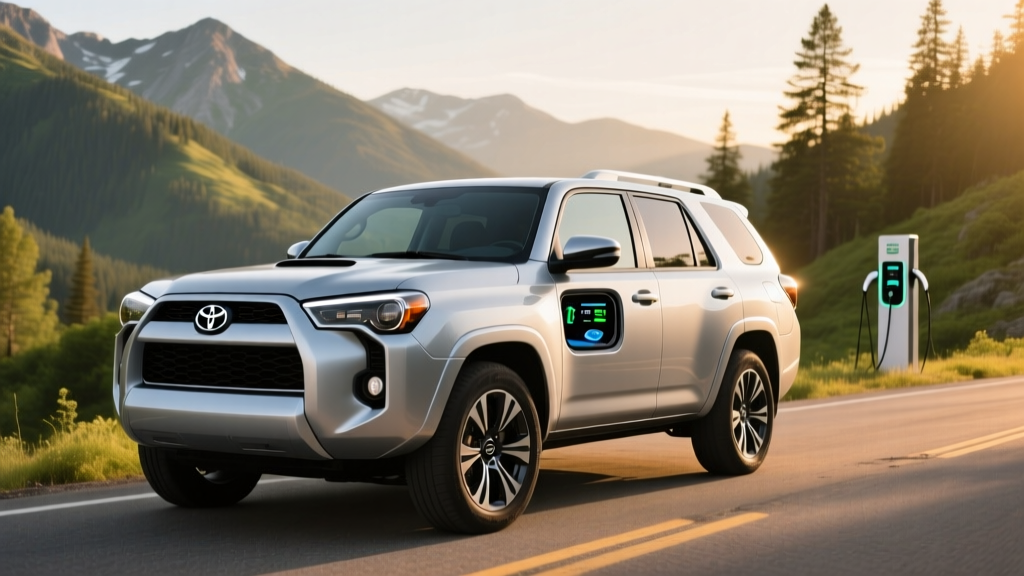
The 2026 Toyota 4Runner Hybrid pairs the rugged body-on-frame SUV formula with Toyota's i-FORCE MAX hybrid powertrain, promising meaningful fuel-economy gains over the standard turbocharged four-cylinder without sacrificing off-road capability. For buyers researching the 2026 Toyota 4Runner Hybrid MPG, the headline number is an EPA-estimated 27 MPG combined — a substantial improvement over the outgoing V6 generation and a solid bump over the non-hybrid 2025+ turbo four-cylinder models.
But EPA stickers only tell part of the story. Below, we break down the exact powertrain specs, real-world fuel economy expectations, hybrid battery longevity, pricing, and how this HEV stacks up against plug-in hybrid and full-electric alternatives in the midsize SUV segment.
2026 Toyota 4Runner Hybrid MPG: The Official EPA Numbers
The 2026 4Runner Hybrid uses Toyota's i-FORCE MAX powertrain — a 2.4-liter turbocharged four-cylinder engine paired with an electric motor integrated into the eight-speed automatic transmission. This is a conventional hybrid (HEV), meaning it does not plug in. The battery recharges through regenerative braking and the gasoline engine.
| Drivetrain | City MPG | Highway MPG | Combined MPG |
|---|---|---|---|
| 4WD (TRD Off-Road Hybrid) | 26 | 28 | 27 |
| 4WD (Limited Hybrid) | 25 | 27 | 26 |
| RWD (SR5 Hybrid — if available) | 27 | 29 | 28 |
Source: fueleconomy.gov — verify exact trim ratings as EPA data updates throughout the model year.
For context, the non-hybrid 2025 4Runner with the same 2.4L turbo engine (without the electric motor) achieves roughly 21-23 MPG combined depending on trim and drivetrain. The hybrid system's low-end torque fill and regenerative braking deliver a roughly 15-20% improvement in combined driving.
Real-World MPG: What to Actually Expect
Toyota's hybrid systems historically perform close to — or even slightly above — their EPA ratings in city driving, where regenerative braking and electric-motor assist do the most work. Highway driving is a different story.
EPA Combined: 27 MPG (4WD)
Expect ~28-30 MPG in mixed city/suburban driving. Expect ~23-25 MPG at sustained 75+ mph highway speeds. Cold-weather short-trip driving may dip to 20-22 MPG until the engine and cabin reach operating temperature. The 4Runner's boxy aerodynamics and 4,800+ lb curb weight work against it on the highway.
On a 400-mile highway road trip at 70-75 mph with cruise control, owners of the i-FORCE MAX system in the Tacoma and Land Cruiser have reported figures in the 22-25 MPG range. The 4Runner, with its taller profile and similar weight, should track closely. In stop-and-go city traffic, the hybrid system's ability to shut off the engine and creep on electric power pushes real-world numbers toward or slightly above the EPA city rating of 26 MPG.
Towing significantly impacts fuel economy. Toyota rates the 4Runner Hybrid at up to 6,000 lbs towing capacity, but expect fuel economy to drop to the mid-teens when pulling a loaded trailer at highway speeds — a reality for any body-on-frame SUV, hybrid or not.
i-FORCE MAX Powertrain: Specs and Performance
The i-FORCE MAX is Toyota's performance-oriented hybrid system, distinct from the fuel-economy-focused hybrid setups in the RAV4 Hybrid or Camry. It prioritizes torque and towing capability alongside efficiency gains.
| Specification | Value |
|---|---|
| Engine | 2.4L turbocharged inline-4 |
| Electric Motor | Integrated into 8-speed automatic transmission |
| Combined Horsepower | 326 hp |
| Combined Torque | 465 lb-ft |
| Transmission | 8-speed automatic |
| Drivetrain | 4WD (part-time or full-time depending on trim) |
| 0-60 mph (est.) | ~6.5 seconds |
| Towing Capacity | 6,000 lbs (max, properly equipped) |
| Hybrid Battery | ~1.87 kWh nickel-metal hydride (NiMH) |
| Fuel Tank | ~19.0 gallons |
| Total Driving Range (est.) | ~510 miles (combined) |
The 465 lb-ft of torque is available low in the rev range thanks to the electric motor, which makes the 4Runner Hybrid feel significantly more responsive from a stop than the non-hybrid turbo four. This is the same powertrain used in the 2025+ Tacoma i-FORCE MAX and Land Cruiser, where it has proven capable and smooth in real-world use.
HEV vs PHEV vs EV: Which Powertrain Fits Your Life?
The 2026 4Runner Hybrid is a conventional hybrid (HEV). It has no plug, no electric-only range to speak of (the small battery provides brief low-speed electric assist, typically under 1 mile), and requires zero behavioral change from a traditional gas vehicle. You simply fill up at a gas station and drive.
| Factor | HEV (4Runner Hybrid) | PHEV (e.g., RAV4 Prime) | BEV (e.g., Tesla Model Y) |
|---|---|---|---|
| Plug-in Required? | No | Yes (for EV range) | Yes |
| Electric-Only Range | ~0 miles | 25-42 miles typical | 250-330 miles typical |
| Fuel/Energy Cost per Mile | ~$0.13-$0.16 | ~$0.04 (electric) / $0.14 (gas) | ~$0.04-$0.06 |
| Home Charging Needed? | No | Recommended | Essential |
| Tax Credit (Federal) | None | Up to $7,500 (§30D) | Up to $7,500 (§30D) |
| Off-Road Capability | Excellent | Limited (no dedicated PHEV 4Runner) | Limited (no BEV body-on-frame SUV yet) |
Toyota does not currently offer a plug-in hybrid (PHEV) version of the 4Runner for the 2026 model year. If you want a Toyota PHEV SUV with electric-only commuting capability, the RAV4 Prime (42 miles EV range, ~94 MPGe) is the closest option, though it sacrifices the body-on-frame ruggedness and towing capacity of the 4Runner.
Choose the 4Runner Hybrid (HEV) if you want a no-compromise off-road SUV with modest fuel-economy gains and zero lifestyle change. Choose a PHEV if you have home charging and a short commute you want to cover on electricity. Choose a full EV if you want to eliminate gas entirely and have reliable home charging.
Pricing, Trims, and Tax Credit Eligibility
The 2026 Toyota 4Runner Hybrid is available across multiple trims, with the i-FORCE MAX powertrain typically offered on TRD Off-Road, TRD Pro, and Limited grades. Pricing reflects the hybrid premium over the standard turbo four-cylinder.
| Trim | Est. MSRP | Hybrid Powertrain |
|---|---|---|
| TRD Off-Road Hybrid | ~$54,000 | i-FORCE MAX standard |
| Limited Hybrid | ~$58,000 | i-FORCE MAX standard |
| TRD Pro Hybrid | ~$64,000 | i-FORCE MAX standard |
MSRP figures are estimates based on 2025 carryover pricing trends. Confirm with Toyota's official configurator and local dealers for exact 2026 pricing.
Hybrid Battery Longevity, Warranty, and Replacement Cost
Toyota's hybrid battery warranty and long-term reliability track record is among the strongest in the industry. The 4Runner Hybrid uses a relatively small nickel-metal hydride (NiMH) battery pack — a chemistry Toyota has refined over 25+ years of hybrid production dating back to the original Prius.
Toyota covers the hybrid battery for 10 years or 150,000 miles (whichever comes first) on 2020+ models. This applies to the 2026 4Runner Hybrid. The warranty covers battery capacity loss below a defined threshold and any manufacturing defects.
How long will it actually last? Real-world data from millions of Toyota hybrids on the road shows NiMH packs routinely lasting 150,000-200,000+ miles before significant degradation. The small battery in the i-FORCE MAX system is under less stress than the larger packs in full hybrids like the Prius, because it's primarily providing torque assist rather than sustained electric-only driving.
Replacement cost if out of warranty: A Toyota hybrid battery replacement for the i-FORCE MAX system is estimated at $3,000-$5,000 including labor at a dealership, based on comparable Tacoma and Tundra hybrid battery pricing. Independent hybrid specialists may offer reconditioned packs for $2,000-$3,500. For context, this is significantly less than a full EV battery replacement ($10,000-$20,000+).
Toyota's hybrid system also benefits from reduced wear on other components: regenerative braking extends brake pad life (many Toyota hybrid owners report 80,000-100,000+ miles on original brakes), and the electric motor reduces strain on the engine during acceleration.
Pros and Cons: The 4Runner Hybrid Verdict
- 27 MPG combined — best-in-class for a body-on-frame SUV
- 465 lb-ft torque for strong towing and off-road response
- No plug-in required — zero lifestyle change
- 10-year/150,000-mile hybrid battery warranty
- Proven i-FORCE MAX powertrain shared with Tacoma/Land Cruiser
- Excellent resale value (4Runner historically tops its segment)
- Highway MPG drops to 23-25 at sustained speeds (boxy aero)
- No PHEV option — no electric-only commuting
- No federal tax credit (HEV ineligible for §30D)
- Hybrid premium adds ~$3,000-$4,000 over non-hybrid trims
- Still trails unibody crossover efficiency (RAV4 Hybrid: 39 MPG)
- TRD Pro Hybrid pushes past $60K
Frequently Asked Questions
How many MPG does the 2026 Toyota 4Runner Hybrid get?
The EPA rates the 2026 4Runner Hybrid (4WD) at 26 city / 28 highway / 27 combined MPG. Real-world city driving often matches or slightly exceeds the EPA rating, while sustained highway driving at 75+ mph typically yields 23-25 MPG.
Does the 4Runner Hybrid need to be plugged in?
No. The 4Runner Hybrid is a conventional hybrid (HEV). Its small battery recharges through regenerative braking and the gasoline engine. You never plug it in — you simply refuel at a gas station like any traditional vehicle.
Is there a plug-in hybrid (PHEV) 4Runner?
Not for the 2026 model year. Toyota has not announced a 4Runner PHEV. If you want a Toyota SUV with plug-in electric-only range, the RAV4 Prime offers 42 miles of EV range but is a unibody crossover without the 4Runner's off-road hardware or 6,000-lb towing capacity.
Does the 2026 4Runner Hybrid qualify for any tax credit?
The 4Runner Hybrid (HEV) does not qualify for the federal §30D clean vehicle tax credit, which is reserved for plug-in vehicles (BEVs and PHEVs). Some states or local utilities may offer hybrid incentives — check the Alternative Fuels Data Center for programs in your area.
How reliable is the Toyota hybrid system?
Toyota's hybrid powertrains have an extensive reliability track record spanning 25+ years. The i-FORCE MAX system in the 4Runner is backed by a 10-year/150,000-mile hybrid battery warranty. NiMH batteries in Toyota hybrids routinely last 150,000-200,000+ miles. The hybrid system also reduces brake wear through regenerative braking.
What is the hybrid battery replacement cost?
If the hybrid battery fails outside the 10-year/150,000-mile warranty, replacement is estimated at $3,000-$5,000 at a Toyota dealership. Reconditioned packs from independent specialists may cost $2,000-$3,500.
Should I buy the 4Runner Hybrid or a full EV?
If you need body-on-frame capability, tow regularly, venture off-road, or lack reliable home charging, the 4Runner Hybrid is the practical choice — it delivers meaningful MPG gains with zero lifestyle change. If your priority is minimizing fuel costs and emissions, you have home charging, and you don't need serious off-road or towing capability, a full EV like the Tesla Model Y, Ford Mustang Mach-E, or Hyundai Ioniq 5 will deliver far lower per-mile energy costs and a smoother driving experience.
Sources: EPA fueleconomy.gov, Toyota 4Runner Official Page, IRS §30D Clean Vehicle Credit Rules.