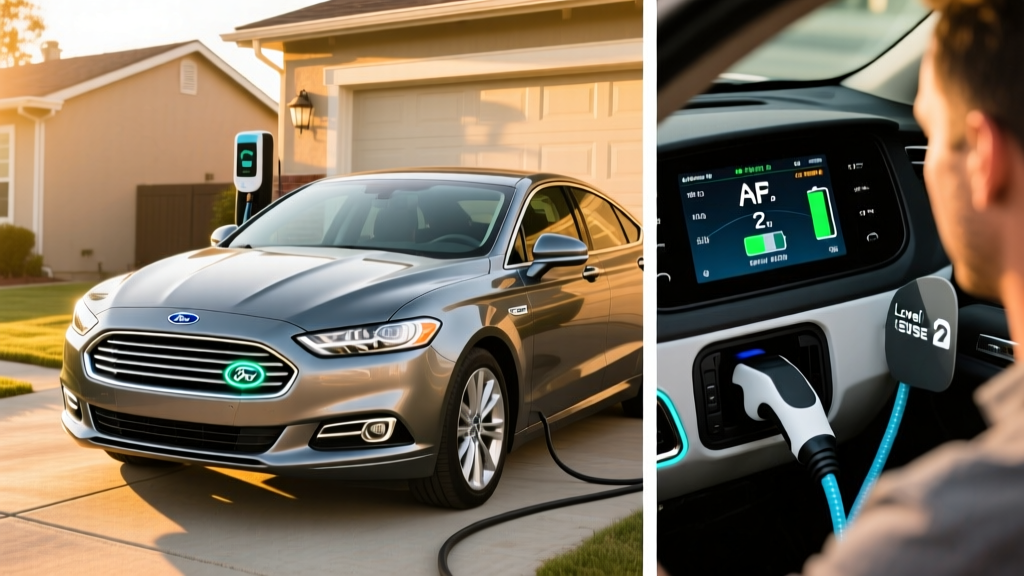
The Ford Fusion Hybrid was discontinued after the 2020 model year, but the 2018 model remains one of the most popular midsize hybrid sedans on the used market in 2026. With an EPA-rated 42 MPG combined and a proven Atkinson-cycle powertrain, it continues to attract buyers who want hybrid efficiency without plug-in complexity. This guide covers everything you need to know about the Ford 2018 Fusion Hybrid — from real-world fuel economy to battery longevity and whether it still makes financial sense today.
Ford 2018 Fusion Hybrid: Quick Verdict
The 2018 Fusion Hybrid is a conventional hybrid electric vehicle (HEV), not a plug-in. It generates all its electricity from regenerative braking and its gasoline engine — you never plug it in. For buyers who lack home charging access but want significantly better fuel economy than a gas-only midsize sedan, it remains a strong choice on the used market. The 2018 model year is particularly notable because Ford updated the Hybrid's software and battery management for improved low-speed electric driving compared to earlier Fusion Hybrid generations.
Fuel Economy: EPA Ratings vs Real-World MPG
| Metric | EPA Rating |
|---|---|
| City MPG | 43 MPG |
| Highway MPG | 41 MPG |
| Combined MPG | 42 MPG |
| Fuel Tank Capacity | 13.5 gallons |
| Total Range (est.) | ~567 miles |
Source: EPA Fuel Economy — 2018 Ford Fusion Hybrid
Powertrain and Performance Specs
| Specification | Value |
|---|---|
| Engine | 2.0L Atkinson-cycle I4 |
| Engine Horsepower | 141 HP @ 6,000 RPM |
| Electric Motor Output | 118 HP (88 kW) |
| Net Combined System Power | 188 HP |
| Transmission | eCVT (planetary gearset) |
| 0–60 MPH | ~8.2 seconds |
| Drivetrain | Front-wheel drive |
| Hybrid Battery Capacity | 1.4 kWh (Lithium-ion) |
| Battery Location | Behind rear seats (trunk) |
The 2.0L Atkinson-cycle engine prioritizes efficiency over peak power, but the electric motor fills in torque at low RPMs, giving the Fusion Hybrid adequate acceleration for merging and city driving. The eCVT is not a belt-driven CVT — it uses a planetary gearset that seamlessly blends engine and motor power. This design, shared with Toyota's hybrid system architecture, is widely regarded as one of the most durable transmission types in the industry.
Hybrid vs PHEV vs Full EV: Which Fits Your Situation?
The 2018 Fusion lineup offered three distinct powertrains. Choosing the right one depends on your charging access, commute pattern, and budget.
| Attribute | Fusion Hybrid (HEV) | Fusion Energi (PHEV) | Fusion Gas (2.5L) |
|---|---|---|---|
| Plugs In? | No | Yes | No |
| Battery Size | 1.4 kWh | 7.6 kWh usable | N/A |
| Electric-Only Range | ~0.5 mi (low speed) | 21 mi (EPA) | 0 mi |
| Combined MPG / MPGe | 42 MPG | 97 MPGe / 43 MPG (gas) | 25 MPG |
| System Horsepower | 188 HP | 188 HP | 175 HP |
| Trunk Space | 12.0 cu ft | 8.2 cu ft | 16.0 cu ft |
| 2026 Used Price (avg) | $12,000–$17,000 | $13,000–$18,000 | $10,000–$15,000 |
- Choose the Hybrid (HEV) if: You don't have access to a plug at home or work, you want maximum simplicity, and your commute involves a mix of city and highway driving.
- Choose the Energi (PHEV) if: You can install a Level 2 charger at home, your daily commute is under 20 miles (covering it entirely on electricity), and you still want a gas engine for road trips.
- Choose a full EV (like a used Bolt or Model 3) if: You have reliable home charging, your daily driving is under 200 miles, and you want zero tailpipe emissions with minimal maintenance.
- Choose the gas Fusion if: You drive very few miles per year (under 8,000), the hybrid premium doesn't pay back in fuel savings, or you need maximum trunk space.
Battery Longevity, Warranty, and Replacement Cost
Battery lifespan is the single most common concern among used hybrid buyers. Here's what the data shows for the 2018 Fusion Hybrid's 1.4 kWh lithium-ion pack:
Real-World Degradation Data: The Fusion Hybrid's battery is small (1.4 kWh) and operates within a narrow state-of-charge window — typically between 40% and 60%. This shallow cycling is extremely gentle on lithium-ion cells. Taxi fleet data and high-mileage owner reports show 2013–2018 Fusion Hybrids routinely reaching 150,000–200,000+ miles on the original hybrid battery with minimal capacity loss. Unlike full EVs where degradation directly reduces range, a hybrid's small battery primarily affects low-speed electric assist — even a degraded hybrid battery still delivers the majority of its fuel-economy benefit.
Battery Replacement Cost (2026): If the hybrid battery does fail out of warranty, replacement costs have come down significantly:
- New OEM battery (Ford dealer): $2,500–$3,500 (parts + labor)
- Refurbished/remanufactured battery: $1,200–$2,000 (installed at independent hybrid specialists)
- Used salvage battery: $500–$900 (from a wrecked Fusion, variable condition)
For context, a hybrid battery replacement at $2,000 is roughly equivalent to two years of fuel savings versus the gas-only Fusion at 12,000 miles/year — making it economically justifiable even on a used vehicle.
Tax Credits and Incentives in 2026
Federal tax credit: The 2018 Ford Fusion Hybrid does not qualify for the federal §30D new clean vehicle credit, which applies only to new vehicle purchases. The IRS §30D rules explicitly require a new, qualifying vehicle with specific battery sourcing and MSRP caps.
Used EV credit (§25E): The federal used clean vehicle credit provides up to $4,000 (or 30% of the sale price, whichever is lower) for qualifying used electrified vehicles. However, this credit applies only to used EVs and PHEVs — conventional hybrids like the Fusion Hybrid are not eligible. The used Fusion Energi (PHEV) may qualify if it meets the battery-capacity threshold and the buyer meets income requirements (AGI ≤ $75,000 single / $150,000 joint). Check current IRS guidance before relying on this credit.
State incentives: Some states offer their own rebates or HOV-lane access for hybrids, but these programs vary widely and change frequently. Check your state's energy office or DMV for current offerings.
Reliability and Common Issues
The 2018 Fusion Hybrid rates well for reliability compared to its gas-only counterpart. The hybrid powertrain eliminates several common failure points — there is no traditional starter motor, no alternator, and the eCVT has no friction bands or clutch packs to wear out. Brake pads last significantly longer (often 80,000+ miles) because regenerative braking handles most deceleration.
Known issues to check on a used 2018 Fusion Hybrid:
- 12V auxiliary battery: Like all hybrids, the Fusion has a conventional 12V battery that powers electronics. It typically lasts 3–5 years and costs ~$200 to replace. A dead 12V battery will prevent the car from starting even if the hybrid battery is fully charged.
- Coolant system: The hybrid system has a separate coolant loop. Check for proper maintenance intervals (coolant flush every 100,000 miles).
- Infotainment (SYNC 3): The 2018 model uses Ford's SYNC 3 system, which is generally stable but can be slow by 2026 standards. Apple CarPlay and Android Auto are supported on most trims.
- EVAP system codes: Some owners report occasional evaporative emissions system codes (P0456) — typically a loose gas cap or minor seal issue, inexpensive to fix.
The IIHS rated the 2018 Fusion as a Top Safety Pick when equipped with optional front crash prevention, and NHTSA gave it a 5-star overall safety rating.
Who Should Buy the 2018 Fusion Hybrid in 2026?
✓ Strong Fit
- Apartment/rental dwellers who cannot install a charger
- High-mileage commuters (15,000+ mi/year) who benefit most from 42 MPG
- Uber/Lyft drivers seeking low fuel costs without EV range planning
- Buyers in CARB states who still have remaining battery warranty
- First-time hybrid buyers wanting a proven, low-risk platform
✗ Consider Alternatives
- Drivers with home charging access — a used PHEV or EV offers lower per-mile cost
- Buyers needing cargo space — the hybrid battery reduces trunk to 12.0 cu ft
- Enthusiasts — the eCVT and 188 HP prioritize efficiency over driving dynamics
- Those wanting the latest ADAS — 2018-era Ford Co-Pilot360 is basic by 2026 standards
- Anyone wanting federal tax credits — only new EVs/PHEVs or used EVs/PHEVs qualify
Frequently Asked Questions
How many MPG does the 2018 Ford Fusion Hybrid actually get?
The EPA rates it at 43 city / 41 highway / 42 combined MPG. In real-world mixed driving, most owners report 40–46 MPG. City-heavy routes with frequent stops tend to push it toward the upper end of that range thanks to regenerative braking, while sustained highway driving at 75+ MPH drops it to 37–40 MPG.
Does the 2018 Fusion Hybrid need to be plugged in?
No. The Fusion Hybrid is a conventional HEV. It charges its 1.4 kWh battery entirely through regenerative braking and the gasoline engine. You simply fill it with gas like any other car. If you want a Fusion that plugs in, you're looking for the Fusion Energi (PHEV), which is a separate model with a 7.6 kWh battery and ~21 miles of electric-only range.
How long will the hybrid battery last?
Ford's original warranty covers 8 years/100,000 miles (10 years/150,000 miles in CARB states). Real-world data from fleet and high-mileage owners shows these batteries regularly lasting 150,000–200,000+ miles. The shallow charge-discharge cycles (operating between ~40–60% state of charge) are very gentle on the cells. If replacement is eventually needed, expect $1,200–$3,500 depending on whether you choose refurbished or new OEM.
Does the 2018 Fusion Hybrid qualify for any tax credit?
Not the conventional Hybrid. Federal §30D new vehicle credits and §25E used vehicle credits apply only to plug-in vehicles (EVs and PHEVs). The Fusion Energi (PHEV) may qualify for the used §25E credit (up to $4,000) if buyer income limits are met. Check IRS guidance on the used clean vehicle credit for current eligibility rules.
Is the 2018 Fusion Hybrid reliable compared to the Toyota Camry Hybrid?
The Fusion Hybrid is generally reliable, but the Camry Hybrid holds a slight edge in long-term ownership cost due to Toyota's larger dealer network, marginally higher resale values, and a longer track record with hybrid powertrains. The Fusion Hybrid offers a more engaging driving feel and a more premium interior, but the Camry Hybrid's EPA rating of 52 MPG combined (2018 model) significantly outperforms the Fusion's 42 MPG. If fuel economy is the top priority, the Camry Hybrid wins on paper; if ride quality and tech features matter more, the Fusion Hybrid is competitive.
What's the difference between the Fusion Hybrid and the Fusion Energi?
The Hybrid (HEV) has a 1.4 kWh battery, does not plug in, and gets 42 MPG combined. The Energi (PHEV) has a 7.6 kWh battery, plugs into a standard 120V outlet (or 240V Level 2 for faster charging), delivers ~21 miles of electric-only range, and gets 43 MPG combined once the battery is depleted. The Energi sacrifices trunk space (8.2 cu ft vs 12.0 cu ft) due to the larger battery. For a commute under 20 miles with home charging, the Energi can run almost entirely on electricity day-to-day.