Quick Verdict: The Midsize Sedan That Makes Hybrids Look Smart
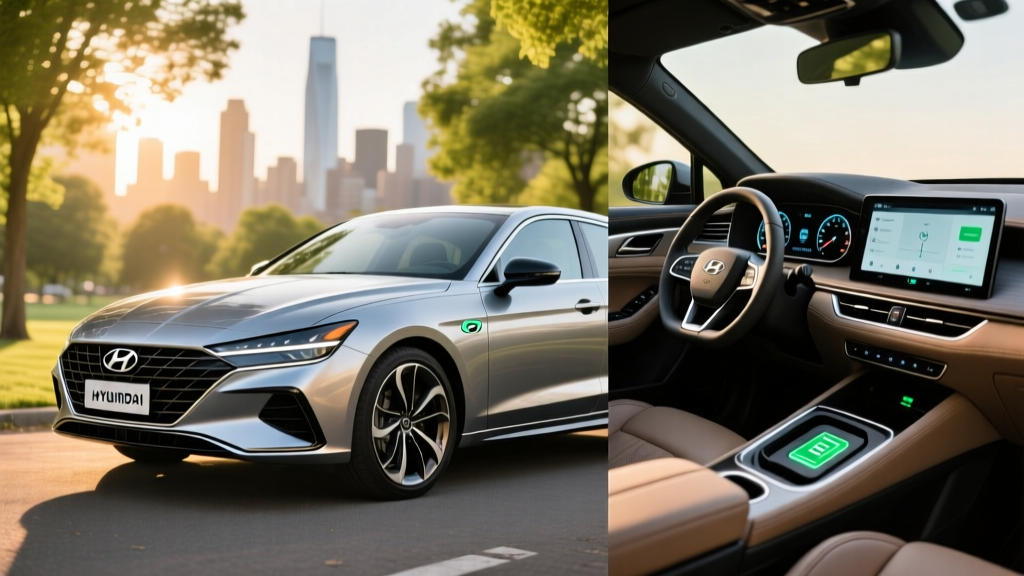
The 2026 Hyundai Sonata Hybrid Limited sits at the top of a three-trim lineup that continues to deliver class-leading fuel economy without asking you to plug in, change your driving habits, or accept a subcompact cabin. With an EPA-estimated 47 MPG combined, a well-appointed interior, and Hyundai's proven hybrid powertrain, the Limited trim adds premium features—leather seats, a panoramic sunroof, a 12.3-inch digital cluster, and Highway Driving Assist—without pushing the price into luxury territory.
This is a conventional hybrid (HEV), not a plug-in. That distinction matters: you never plug it in, there is no electric-only driving range to manage, and the federal §30D tax credit does not apply. What you get instead is a sedan that sips fuel in city traffic, returns strong highway numbers, and costs thousands less to own over five years than a comparable gas-only midsize sedan.
The 2026 Sonata Hybrid is a conventional hybrid (HEV). It uses a small battery (1.62 kWh) that recharges through regenerative braking and the gasoline engine. You never plug it in. A plug-in hybrid (PHEV), like the Tucson PHEV, has a larger battery (13.8+ kWh), offers 30+ miles of electric-only driving, and must be plugged in to realize its efficiency advantage. The Sonata lineup does not currently include a PHEV variant in the U.S. market.
Fuel Economy: EPA Numbers and Real-World MPG
The headline number for the 2026 Sonata Hybrid is its EPA-estimated fuel economy, which remains among the best in the midsize sedan segment. Hyundai's hybrid system pairs a 2.0-liter four-cylinder engine with an electric motor and a six-speed automatic transmission—no CVT drone here.
| Trim | City MPG | Highway MPG | Combined MPG |
|---|---|---|---|
| Blue (base) | 50 | 54 | 52 |
| SEL | 44 | 51 | 47 |
| Limited | 44 | 51 | 47 |
The Blue trim achieves its higher numbers through lighter wheels, low-rolling-resistance tires, and minor aerodynamic tweaks. The SEL and Limited share the same 19-inch alloy wheels and additional equipment weight, dropping the combined figure to 47 MPG.
In mixed driving that includes suburban commutes and highway cruising, owners consistently report 45–50 MPG combined in the SEL/Limited trims. City-heavy routes often push the number higher—hybrids recapture energy during stop-and-go braking, so expect 48–52 MPG in urban driving. Sustained highway driving at 75+ MPH with headwinds or elevation changes may dip to 40–43 MPG. Cold-weather operation (below 35°F) typically reduces efficiency by 5–10% as the engine runs longer to heat the cabin and catalytic converter.
For comparison, the non-hybrid 2026 Sonata with the 2.5-liter four-cylinder returns an EPA-estimated 28 MPG combined. The hybrid nearly doubles that figure, translating to roughly 200 fewer gallons of fuel per year at 15,000 miles driven—a savings of approximately $600–$800 annually depending on local fuel prices, according to fueleconomy.gov.
Powertrain Specs: 194 Horsepower Without the Compromise
The 2026 Sonata Hybrid uses Hyundai's TMED-II (Transmission-Mounted Electric Device) hybrid system, which integrates the electric motor directly into the six-speed automatic transmission. This setup avoids the rubber-band feel common in CVT-equipped competitors like the Toyota Camry Hybrid or Honda Accord Hybrid.
| Component | Specification |
|---|---|
| Engine | 2.0L Smartstream GDi 4-cylinder |
| Engine Output | 150 hp @ 6,000 rpm / 139 lb-ft torque |
| Electric Motor | 39 kW (52 hp) / 151 lb-ft torque |
| Combined System Output | 194 hp / 271 lb-ft torque |
| Transmission | 6-speed automatic with Active Shift Control |
| Hybrid Battery | 1.62 kWh lithium-ion polymer |
| Drivetrain | Front-wheel drive |
| 0–60 MPH | ~7.5 seconds (est.) |
| Top Speed | 130 MPH (electronically limited) |
The 194 combined horsepower figure is competitive with the turbocharged gas Sonata (191 hp from the 2.5T) and significantly more than the base 2.5L gas model (191 hp). The electric motor's instant torque delivery makes the Sonata Hybrid feel responsive off the line and confident during highway merging—a common weak point in older hybrid sedans.
Active Shift Control technology uses the electric motor to synchronize transmission shaft speeds during gear changes, reducing shift shock and improving efficiency by approximately 2–3%. The result is smooth, conventional-feeling gear changes rather than the continuous-ratio drone of a CVT.
2026 Sonata Hybrid Limited: Pricing and Trim Breakdown
The Limited trim represents the fully loaded Sonata Hybrid experience. Here is how the 2026 lineup is structured at launch:
| Trim | MSRP | Key Additions Over Prior Trim |
|---|---|---|
| Blue | $30,250 | Base hybrid: 17" wheels, 12.3" touchscreen, wireless CarPlay/Android Auto, SmartSense safety suite |
| SEL | $33,750 | 19" alloys, heated front seats, proximity key, wireless charging pad, blind-spot view monitor |
| Limited | $37,900 | Leather seats, panoramic sunroof, ventilated front seats, Highway Driving Assist, 12.3" digital cluster, Bose premium audio, surround-view monitor, parking collision avoidance |
Destination charges add approximately $1,150. Fully loaded, the 2026 Sonata Hybrid Limited lands near $39,000 out the door before any incentives or dealer adjustments.
The 2026 Sonata Hybrid is a conventional HEV, not a plug-in hybrid or battery-electric vehicle. It does not qualify for the federal §30D Clean Vehicle Credit (up to $7,500), which requires a minimum 7 kWh battery and plug-in capability per IRS guidelines. Some states offer modest rebates for high-efficiency hybrids—check your state energy office or the AFDC state incentives database for current programs. The now-expired federal Alternative Fuel Vehicle Refueling Property Credit (§30C) does not apply to HEVs.
Battery Warranty, Reliability, and Replacement Costs
Hybrid battery longevity is the single most common concern for first-time hybrid buyers. Hyundai addresses this with one of the strongest warranty packages in the industry.
- Hybrid Battery: 10 years / 100,000 miles (whichever comes first)
- Hybrid System Components (motor, inverter, controller): 10 years / 100,000 miles
- Powertrain (engine, transmission): 10 years / 100,000 miles
- New Vehicle Limited: 5 years / 60,000 miles
- Complimentary Maintenance: 3 years / 36,000 miles
The 1.62 kWh lithium-ion polymer battery in the Sonata Hybrid is far smaller and less stressed than a full EV battery pack. It operates within a narrow state-of-charge window (typically 40–60% SoC), which dramatically reduces degradation. Hyundai has used this hybrid architecture since 2011, and real-world failure data is minimal—most hybrid batteries in the Sonata and its platform-mate, the Kia Optima/K5 Hybrid, outlast the 10-year warranty period without issue.
If replacement is needed out of warranty, a new OEM hybrid battery for the Sonata Hybrid typically costs between $2,500 and $3,800 including labor at a dealership. Refurbished or aftermarket options are available for $1,200–$2,000. This is a fraction of EV battery replacement costs and comparable to a major transmission repair on a conventional vehicle.
Hyundai's Smartstream 2.0L engine has demonstrated strong reliability in fleet data, with no widespread timing-chain, head-gasket, or oil-consumption issues reported for the current generation. The six-speed automatic is a conventional torque-converter design—simpler and more proven than the dual-clutch transmissions used in some competing hybrids.
Who Should Buy the Sonata Hybrid Limited vs. an EV or Gas Sedan?
The Sonata Hybrid occupies a specific sweet spot. Here is a decision framework to determine whether it fits your situation:
- You drive 12,000–20,000 miles per year and want to minimize fuel costs without changing your refueling routine
- You lack reliable access to home or workplace EV charging (no garage, apartment living, street parking)
- You take regular road trips exceeding 300 miles and want zero range-planning hassle
- You want a fully loaded midsize sedan under $40,000
- You plan to keep the car 8–10 years and value the 10-year/100,000-mile powertrain warranty
- You can install a Level 2 home charger and most daily driving is under 60 miles
- You want to qualify for the $7,500 federal §30D tax credit (income and sourcing rules apply)
- You prioritize zero tailpipe emissions and lower per-mile energy costs (electricity at ~$0.14/kWh ≈ $0.04/mile vs. gas at ~$0.10/mile in the hybrid)
- You want minimal maintenance—no oil changes, no transmission fluid, fewer brake replacements due to regen
- Your annual mileage is under 8,000 miles—the hybrid premium takes 6+ years to recoup at low mileage
- Upfront purchase price is the primary constraint and you plan to sell within 3–4 years
The Sonata Hybrid Limited's $7,650 premium over the base gas Sonata Blue is recovered in approximately 4–5 years at 15,000 miles/year and $3.50/gallon fuel prices. At higher mileage, the payback period shortens to 3 years. Beyond fuel savings, the hybrid's regenerative braking extends brake pad life (often 80,000+ miles on original pads), partially offsetting the higher initial cost.
Limited Trim Features: What the Top-Tier Hybrid Gets
The Limited trim justifies its $37,900 MSRP with features typically found in entry-level luxury sedans:
- Highway Driving Assist (HDA): SAE Level 2 driver assistance combining adaptive cruise control with stop-and-go, lane-centering, and navigation-based speed adjustment. The driver must remain engaged—hands on the wheel, eyes on the road.
- Panoramic sunroof: Dual-panel glass roof with power sunshade
- Leather-trimmed seats: Heated and ventilated front seats, heated rear outboard seats
- 12.3-inch digital instrument cluster: Configurable hybrid-specific displays showing energy flow, charge state, and driving efficiency scores
- Bose 12-speaker premium audio: Includes center-channel and subwoofer
- Surround-view monitor: 360-degree camera system with parking collision avoidance assist (front, rear, and side)
- Remote Smart Parking Assist: Move the car in and out of tight spaces via the key fob
- Wireless charging pad and USB-C fast-charge ports: Front and rear
The Sonata Hybrid Limited also includes Hyundai's full SmartSense suite: forward collision avoidance with pedestrian/cyclist detection, blind-spot collision avoidance, rear cross-traffic collision avoidance, lane-keeping assist, driver attention warning, and safe exit assist. The Limited adds reverse parking collision avoidance and the upgraded Highway Driving Assist over lower trims.
5-Year Total Cost of Ownership: Sonata Hybrid Limited vs. Gas Sonata vs. EV
| Cost Category | Sonata Hybrid Limited | Sonata Gas (SEL, 28 MPG) | Hyundai Ioniq 6 SEL (EV) |
|---|---|---|---|
| Purchase Price (MSRP + dest.) | $39,050 | $31,050 | $43,600 |
| Federal Tax Credit | $0 | $0 | Up to $7,500* |
| Fuel / Energy (75k mi) | $5,180 | $9,640 | $2,630 |
| Maintenance (est.) | $2,100 | $3,200 | $1,200 |
| Insurance (est. avg.) | $8,500 | $7,800 | $9,200 |
| Depreciation (est.) | $16,800 | $15,200 | $19,500 |
| Net 5-Year Cost | $38,030 | $36,490 | $29,630 |
*EV tax credit subject to income caps, MSRP caps, battery sourcing rules per IRS §30D. Fuel costs based on $3.50/gal gas and $0.14/kWh electricity. Actual costs vary by region, driving style, and market conditions.
The Sonata Hybrid Limited's total cost of ownership is competitive with the gas model when factoring in fuel and maintenance savings, even without a federal tax credit. The EV option wins on pure economics if you qualify for the full credit and have home charging access—but the hybrid eliminates charging-infrastructure dependency entirely.
Frequently Asked Questions
How many MPG does the 2026 Sonata Hybrid Limited get?
The EPA rates the 2026 Sonata Hybrid Limited at 44 city / 51 highway / 47 combined MPG. Real-world driving typically yields 45–50 MPG combined, with city-heavy routes pushing toward 50+ MPG thanks to regenerative braking. Highway-only driving at sustained high speeds may return 40–43 MPG.
Does the 2026 Sonata Hybrid need to be plugged in?
No. The Sonata Hybrid is a conventional HEV. Its 1.62 kWh battery recharges through regenerative braking and the gasoline engine. You fuel it exclusively at gas stations, just like a conventional car. There is no plug, no charging cable, and no electric-only driving mode.
Does the 2026 Sonata Hybrid Limited qualify for any tax credit?
The Sonata Hybrid does not qualify for the federal §30D Clean Vehicle Credit, which requires plug-in capability and a minimum 7 kWh battery. Some states offer smaller incentives for high-MPG hybrids—check the AFDC state incentives database for programs in your area. Eligibility varies by jurisdiction and may change annually.
How long will the Sonata Hybrid battery last, and what does replacement cost?
Hyundai covers the hybrid battery for 10 years / 100,000 miles (10 years / 150,000 miles in CARB states). The battery operates in a narrow charge window that minimizes stress, and most units outlast the warranty period. Out-of-warranty replacement costs $2,500–$3,800 at a dealership, or $1,200–$2,000 for a refurbished unit.
Is the Sonata Hybrid Limited more reliable than the gas version?
Hyundai's hybrid system has accumulated over a decade of field data with low failure rates. The 2.0L Smartstream engine is less stressed than the 2.5L in the gas model, and regenerative braking reduces wear on friction brakes. The six-speed automatic is a proven design. Overall, the hybrid variant is at least as reliable as the gas model, with the added benefit of a 10-year/100,000-mile hybrid-specific warranty.
How does the Sonata Hybrid compare to the Toyota Camry Hybrid?
The 2026 Camry Hybrid (now exclusively hybrid with the fifth-generation Toyota Hybrid System) returns an EPA-estimated 44–51 MPG combined depending on trim and FWD vs. AWD. The Sonata Hybrid Limited matches or slightly exceeds the Camry's combined efficiency at 47 MPG while offering a conventional automatic transmission rather than a CVT. The Camry offers available AWD; the Sonata Hybrid does not. Both carry 10-year/100,000-mile hybrid battery warranties. The Sonata's Limited trim undercuts a comparably equipped Camry XSE Hybrid by approximately $1,500–$2,000.