Quick Verdict: Is the 2026 Santa Fe Hybrid Worth It?
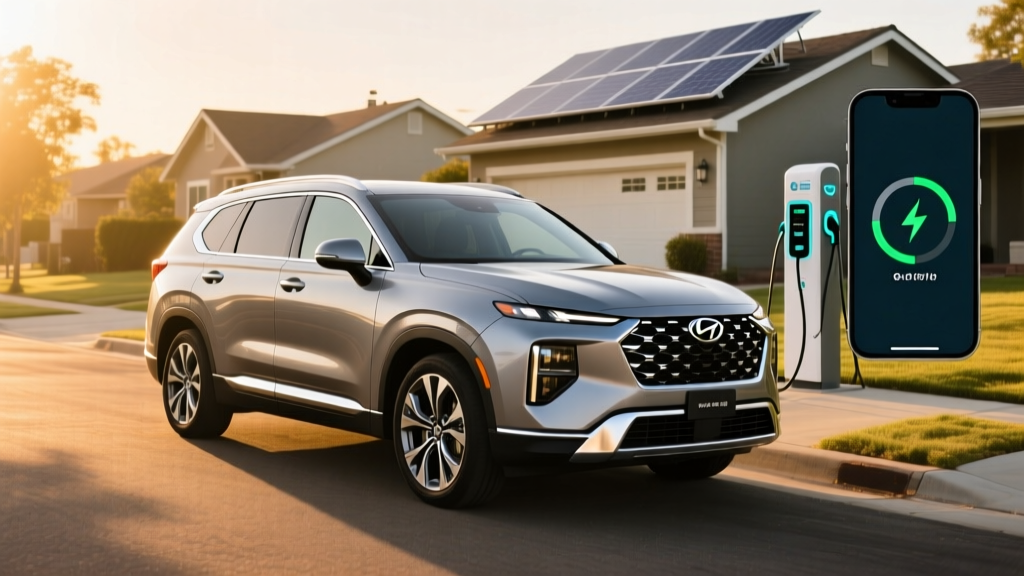
The 2026 Hyundai Santa Fe Hybrid occupies a practical middle ground for three-row SUV buyers who want electric-like efficiency without range anxiety or a home charger. Available as both a conventional hybrid (HEV) and a plug-in hybrid (PHEV), the Santa Fe delivers strong city fuel economy, standard all-wheel drive, and a usable third row — all starting well under $40,000 before incentives. If your daily commute is short and you have access to a plug, the PHEV variant can handle weeks of gas-free driving. If you don't plug in, the HEV still outperforms nearly every gasoline midsize SUV at the pump.
2026 Santa Fe Hybrid MPG: EPA Numbers and Real-World Expectations
Hyundai offers two electrified powertrains for the 2026 Santa Fe. The conventional hybrid (HEV) is the volume seller, while the plug-in hybrid (PHEV) targets commuters with access to charging. Here is how the EPA rates each:
| Powertrain | City MPG | Highway MPG | Combined MPG | MPGe (PHEV Combined) |
|---|---|---|---|---|
| Santa Fe Hybrid (HEV) AWD | 35 | 31 | 33 | N/A |
| Santa Fe Plug-In Hybrid (PHEV) AWD | 33 (gas-only mode) | 30 (gas-only mode) | 31 (gas-only mode) | 76 MPGe |
Source: EPA Fuel Economy Guide (fueleconomy.gov).
Real-World MPG vs. EPA Sticker
Hyundai's turbocharged 1.6-liter four-cylinder hybrid powertrain follows a pattern common to most modern hybrids: city efficiency outpaces highway numbers because regenerative braking recaptures energy in stop-and-go traffic. In mixed suburban driving at moderate temperatures, owners routinely report 34–37 MPG combined in the HEV — slightly above the EPA's 33 MPG estimate. Highway-only trips at 75+ mph tend to drop the HEV to 29–31 MPG as aerodynamic drag overwhelms the electric motor's assistance.
For the PHEV, the gas-only MPG applies once the battery is depleted. Expect roughly 31–33 MPG in that mode, which is still competitive for a 4,500-pound three-row SUV. If you charge daily and your commute falls within the electric-only range, you may not burn gasoline for weeks at a time.
HEV vs. PHEV: Which Santa Fe Hybrid Fits Your Life?
This distinction matters because the two powertrains serve different ownership patterns. A conventional hybrid (HEV) never plugs in — it recovers energy through regenerative braking and engine optimization. A plug-in hybrid (PHEV) adds a larger battery and a charge port, enabling electric-only driving before the gasoline engine kicks in.
| Feature | Santa Fe Hybrid (HEV) | Santa Fe Plug-In Hybrid (PHEV) |
|---|---|---|
| Plugs in? | No — self-charging via regen | Yes — Level 1 or Level 2 |
| Electric-only range | ~1 mile at low speed | 33 miles (EPA est.) |
| Total driving range | ~530 miles | ~430 miles (electric + gas) |
| Battery capacity | 1.49 kWh (small buffer) | 13.8 kWh usable (est.) |
| Combined horsepower | 231 hp | 261 hp |
| Starting MSRP | ~$38,950 | ~$43,450 |
| Federal tax credit (§30D) | Not eligible | Up to $7,500 (if eligible) |
PHEV Electric-Only Range: 33 Miles of Gas-Free Driving
The 2026 Santa Fe PHEV carries an EPA-estimated 33 miles of all-electric range. That figure is realistic for suburban errands and commutes at speeds under 50 mph. At sustained highway speeds of 70+ mph, expect that range to compress to roughly 25–28 miles as the electric motor works harder against wind resistance. Cold weather (below 35°F) further reduces usable range by 15–25% because cabin heating draws from the traction battery unless preconditioning is used.
Once the battery depletes, the PHEV seamlessly transitions to hybrid mode — you're never stranded. The gasoline engine fires up and the vehicle operates like a conventional hybrid for the remainder of your trip.
Powertrain and Performance Specs
| Specification | HEV | PHEV |
|---|---|---|
| Engine | 1.6L turbocharged I-4 | 1.6L turbocharged I-4 |
| Electric motor | 47.7 kW (64 hp) | 74 kW (99 hp) |
| Combined system output | 231 hp / 271 lb-ft | 261 hp / 271 lb-ft |
| Transmission | 6-speed automatic | 6-speed automatic |
| Drivetrain | AWD (HTRAC) | AWD (HTRAC) |
| 0–60 mph | ~7.6 sec | ~7.0 sec |
| Towing capacity | 2,000 lbs | 2,000 lbs |
| Cargo (behind 2nd row) | 40.5 cu ft | 38.7 cu ft |
The PHEV's larger electric motor provides noticeably stronger low-speed acceleration, making it feel quicker around town than the 0–60 times suggest. Both variants use Hyundai's HTRAC all-wheel-drive system, which can route torque front-to-rear as traction demands.
PHEV Charging: Times, Levels, and What You Need at Home
Only the PHEV variant requires (or benefits from) plugging in. The HEV charges its small battery entirely through regenerative braking and engine-driven generation.
| Charging Level | Power (kW) | 0–100% Time | Miles of EV Range Added per Hour |
|---|---|---|---|
| Level 1 (120V household outlet) | ~1.4 kW | ~10 hours | ~5 miles |
| Level 2 (240V home/public) | ~7.2 kW | ~2 hours | ~22 miles |
| DC Fast Charging | Not supported | N/A | N/A |
The Santa Fe PHEV does not support DC fast charging — this is typical for plug-in hybrids in this class. The onboard charger maxes out around 7.2 kW on Level 2, which is sufficient given the modest 13.8 kWh battery. A standard 120V outlet will fully replenish the battery overnight, making a dedicated Level 2 home charger optional rather than essential.
Home charging cost estimate: At the US average electricity rate of ~$0.17/kWh, fully charging the PHEV's battery costs roughly $2.35 — the equivalent of less than one gallon of gasoline for 33 miles of driving.
Pricing, Trim Levels, and Tax Credit Eligibility
| Trim | Powertrain | MSRP (2026 est.) |
|---|---|---|
| SE Premium | HEV | $38,950 |
| SEL Premium | HEV | $41,600 |
| Limited | HEV | $44,950 |
| SEL Premium | PHEV | $43,450 |
| Limited | PHEV | $47,200 |
Federal Tax Credit: §30D Eligibility for the PHEV
The Santa Fe PHEV may qualify for the federal §30D Clean Vehicle Credit of up to $7,500, but eligibility depends on several factors that change annually:
- MSRP cap: SUVs must have an MSRP at or below $80,000 (both PHEV trims qualify).
- Buyer income cap: Modified AGI must not exceed $150,000 (single), $225,000 (head of household), or $300,000 (joint).
- Battery sourcing: A percentage of critical minerals and battery components must be sourced from the US or free-trade-agreement countries. This requirement tightens each year, and the Santa Fe PHEV's eligibility may shift. Verify current-year status on the IRS website or with your tax professional before purchase.
- Point-of-sale transfer: As of 2024, eligible buyers can transfer the credit to the dealer at purchase, reducing the out-of-pocket price immediately rather than waiting for a tax refund.
The conventional HEV does not qualify for the §30D credit because it lacks the minimum battery capacity and plug-in capability required by law.
Battery Warranty, Reliability, and Replacement Cost
Hyundai Hybrid/PHEV Battery Warranty:
- Duration: 10 years / 100,000 miles (whichever comes first)
- Coverage: Defects and capacity loss below a defined threshold (typically 70% state of health)
- Transferable: Yes, to subsequent owners (coverage may reduce to 5yr/60k mi in some states for second owners — confirm with dealer)
- Hybrid system components: 10yr/100k mi (motor, inverter, converter)
Hyundai's 10-year/100,000-mile hybrid battery warranty is among the longest in the industry and directly addresses the top concern for hybrid buyers: battery longevity. In practice, Hyundai's lithium-ion hybrid batteries have shown low degradation rates. Most owners will never need a replacement under normal use.
What Does Replacement Cost If the Warranty Expires?
Out-of-warranty hybrid battery replacement for the Santa Fe HEV typically runs between $2,000 and $3,500 including labor, based on current parts pricing and dealer rates. The PHEV's larger battery pack is more expensive — expect $4,000 to $6,500 — though failures before 150,000 miles remain uncommon. These costs have declined steadily as hybrid parts availability improves and third-party refurbishment options expand.
Who Should Choose the Santa Fe Hybrid, PHEV, or a Full EV?
Choose the Santa Fe HEV if:
- You don't have access to a plug at home or work
- You want maximum simplicity — no charging cables, no planning
- You drive 12,000–15,000 miles per year in mixed conditions
- Budget is a priority and you want the lowest entry price
Choose the Santa Fe PHEV if:
- Your daily commute is under 30 miles round-trip
- You can plug in at home (even a standard 120V outlet works overnight)
- You want gas-free weekday driving but road-trip flexibility on weekends
- You qualify for the §30D tax credit, effectively narrowing the price gap with the HEV
Choose a full EV (e.g., Hyundai Ioniq 5, Kia EV9) if:
- You have reliable Level 2 home charging
- Your daily driving rarely exceeds 200 miles
- You want the lowest per-mile fuel cost and zero tailpipe emissions
- You're comfortable planning DC fast-charge stops on long road trips
Pros and Cons at a Glance
Pros
- HEV achieves 33+ MPG combined in a 3-row AWD SUV — best-in-class efficiency
- PHEV offers 33 miles of electric-only range for gas-free commuting
- 10-year/100,000-mile hybrid battery warranty provides long-term peace of mind
- Standard HTRAC AWD across all hybrid trims
- Competitive pricing vs. Toyota Highlander Hybrid and Kia Sorento Hybrid
- PHEV may qualify for up to $7,500 federal tax credit (verify eligibility)
Cons
- PHEV does not support DC fast charging
- Third-row space is tight for adults on long trips
- HEV not eligible for federal EV tax credit
- Cargo volume slightly reduced in PHEV due to larger battery pack
- Highway MPG drops noticeably above 75 mph in both variants
Frequently Asked Questions
How many MPG does the 2026 Santa Fe Hybrid get?
The EPA rates the 2026 Santa Fe Hybrid (HEV) at 35 city / 31 highway / 33 combined MPG. Real-world city driving often exceeds the EPA estimate, reaching 34–37 MPG combined in moderate conditions. Highway-only driving at high speeds may reduce efficiency to 29–31 MPG.
How far can the Santa Fe PHEV go on electric power alone?
The 2026 Santa Fe Plug-In Hybrid has an EPA-estimated 33 miles of electric-only range. In practice, expect 25–33 miles depending on speed, temperature, and terrain. Once depleted, the gasoline engine engages and the vehicle continues as a conventional hybrid.
Does the 2026 Santa Fe Hybrid qualify for a tax credit?
The conventional HEV does not qualify for the federal §30D Clean Vehicle Credit. The PHEV may qualify for up to $7,500, subject to buyer income limits, MSRP caps, and battery-sourcing requirements that change annually. Check the IRS Clean Vehicle Credit page for current eligibility before purchasing.
Is the Santa Fe Hybrid reliable? What about battery replacement cost?
Hyundai's hybrid system has demonstrated strong reliability, and the battery is backed by a 10-year/100,000-mile warranty. Out-of-warranty replacement costs are estimated at $2,000–$3,500 for the HEV and $4,000–$6,500 for the PHEV, though most batteries outlast 150,000+ miles without significant issues.
Do I need a home charger for the Santa Fe Hybrid?
No. The conventional HEV never plugs in. For the PHEV, a standard 120V household outlet is sufficient to fully recharge the battery overnight (~10 hours). A 240V Level 2 charger reduces that to about 2 hours but is not required.
How does the Santa Fe Hybrid compare to the Toyota Highlander Hybrid?
The Highlander Hybrid achieves a slightly higher EPA combined rating (35 MPG) and offers a larger third row, but it starts at a higher price point (~$42,000) and lacks a PHEV option. The Santa Fe Hybrid's lower entry price, PHEV variant, and longer warranty make it a compelling alternative for buyers prioritizing value and electrification flexibility.