Quick Verdict: The Luxury Hybrid That Doesn't Pretend to Be an EV
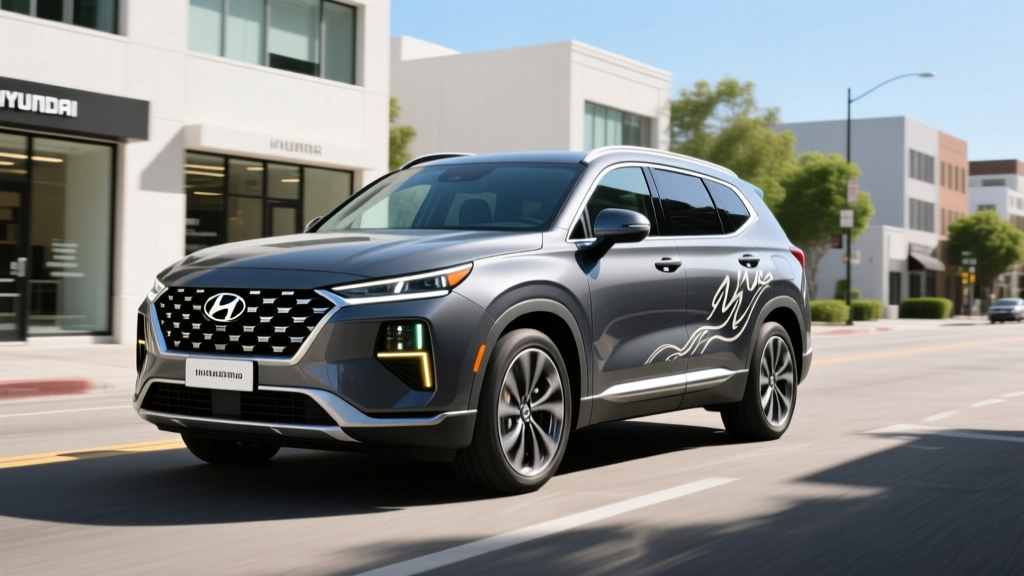
The 2026 Hyundai Santa Fe Hybrid Calligraphy occupies a specific niche: buyers who want three-row SUV luxury, genuine fuel savings, and zero lifestyle compromise. You never plug it in. You never hunt for a charger. You just drive and let the hybrid system sip fuel at a rate that embarrasses many compact sedans. For 2026, Hyundai continues the Santa Fe Hybrid's turbocharged 1.6-liter powertrain paired with a 47.7 kW electric motor, delivering 245 combined horsepower through a 6-speed automatic. The Calligraphy trim tops the range with quilted leather, a head-up display, and Hyundai's full suite of driver-assistance tech — all while returning an EPA-estimated 35 MPG combined.
But is the top-tier Hybrid Calligraphy the smart buy, or are you paying a luxury premium for marginal gains over the mid-tier Limited? And how does it stack up against the Santa Fe Plug-In Hybrid or a full EV like the Ioniq 5? This guide breaks down every number that matters.
HEV vs PHEV: Which Santa Fe Hybrid Is Which?
Hyundai sells the Santa Fe in two electrified flavors, and confusing them is the most common buyer mistake. Here's the clean distinction:
| Feature | Santa Fe Hybrid (HEV) | Santa Fe Plug-In Hybrid (PHEV) |
|---|---|---|
| Plug-in required? | No — never plugs in | Yes — plugs into Level 1 or Level 2 |
| Electric-only driving | Brief low-speed assist only | ~30 miles EPA electric-only |
| Battery size | 1.49 kWh (small buffer) | 13.8 kWh usable |
| Combined horsepower | 245 hp | 261 hp |
| EPA combined MPG/MPGe | 35 MPG (combined) | 79 MPGe (elec+gas) / 33 MPG (gas-only) |
| Federal tax credit | Not eligible | Up to $7,500 (§30D, subject to eligibility) |
| Starting MSRP (2026) | ~$39,500 | ~$46,500 |
Bottom line: The conventional Hybrid (HEV) is the no-compromise, no-plug option. The Plug-In Hybrid (PHEV) rewards those with home charging and short commutes but costs more upfront. The Calligraphy trim is available on both, but this review focuses on the HEV variant — the one most buyers actually want.
Fuel Economy: EPA Numbers and Real-World MPG
The 2026 Santa Fe Hybrid carries over its EPA ratings from the refreshed fifth-generation platform. Here's the official breakdown per fueleconomy.gov:
| Driving Cycle | EPA Estimate | Real-World Expectation |
|---|---|---|
| City | 36 MPG | 37–40 MPG (hybrids excel in stop-and-go) |
| Highway | 34 MPG | 30–33 MPG (aero drag + turbo engagement) |
| Combined | 35 MPG | 33–36 MPG (varies by driving mix) |
Real-world note: Like most Toyota/Hyundai hybrid systems, the Santa Fe HEV tends to beat its EPA city estimate because regenerative braking recovers energy that gas-only vehicles waste. Highway driving is a different story — sustained 75+ MPH speeds keep the turbocharged engine engaged more often, and the boxy SUV shape creates meaningful aerodynamic drag. Expect a combined real-world figure around 33–34 MPG if your commute is highway-heavy, and 37+ MPG if it's predominantly urban.
Powertrain & Performance Specs
| Specification | 2026 Santa Fe Hybrid Calligraphy |
|---|---|
| Engine | 1.6L Turbocharged GDI 4-cylinder |
| Engine output | 178 hp / 195 lb-ft torque |
| Electric motor | 47.7 kW (64 hp) / 195 lb-ft torque |
| Combined system output | 245 hp / 271 lb-ft torque |
| Transmission | 6-speed automatic |
| Drivetrain | HTRAC AWD standard on Calligraphy |
| 0–60 mph | ~7.8 seconds (est.) |
| Towing capacity | 2,000 lbs (braked) |
| Battery (traction) | 1.49 kWh lithium-ion polymer |
| Cargo volume (behind 3rd row) | 14.4 cu ft |
| Cargo (3rd row folded) | 40.5 cu ft |
| Cargo (all rear rows folded) | 79.6 cu ft |
The hybrid powertrain uses a parallel architecture — both the gas engine and electric motor can drive the wheels simultaneously or independently. At low speeds and light loads, the electric motor handles propulsion alone, which is why city MPG is so strong. Under hard acceleration, both power sources combine for the full 245 hp. The 6-speed automatic (not a CVT) is a deliberate choice: Hyundai prioritizes natural shift feel over the rubber-band sensation some CVT-equipped hybrids produce.
The Calligraphy trim comes exclusively with HTRAC all-wheel drive, which uses an electronically controlled coupling to send torque rearward when slip is detected. It's not a rock-crawler, but it handles rain, light snow, and gravel roads confidently.
Pricing, Trims & Tax Credit Eligibility
| Trim | Drivetrain | MSRP (2026 est.) |
|---|---|---|
| SEL Premium Hybrid | AWD | $39,500 |
| Limited Hybrid | AWD | $43,200 |
| Calligraphy Hybrid | AWD | $47,650 |
| Calligraphy PHEV | AWD | $52,350 |
The Calligraphy Hybrid at roughly $47,650 includes premium features like quilted Nappa leather, a 12.3-inch digital cluster, head-up display, Hyundai Digital Key 2, remote smart parking assist, a 12-speaker Bose audio system, and Highway Driving Assist 2 (a Level 2 ADAS system — the driver must remain engaged at all times).
The conventional Santa Fe Hybrid (HEV) does not qualify for the federal §30D clean vehicle credit. That credit applies only to plug-in electric vehicles with a battery capacity of at least 7 kWh.
The Santa Fe Plug-In Hybrid (PHEV) may qualify for up to $7,500 under IRS §30D rules, but eligibility depends on multiple factors: buyer income caps ($150K single / $300K joint), vehicle MSRP caps ($80K for SUVs), battery component and critical mineral sourcing requirements, and whether the credit is taken at point-of-sale or on your tax return. Always confirm eligibility with a tax professional and check the latest IRS guidance — sourcing rules have tightened significantly for 2026.
Reliability, Battery Warranty & Replacement Cost
• 10 years / 100,000 miles (original owner, powertrain + hybrid battery)
• 5 years / 60,000 miles (subsequent owners, transferable)
• Coverage triggers if hybrid battery capacity drops below ~70% of original capacity or if a cell/module fails
• 12V auxiliary battery: 3 years / 36,000 miles (standard warranty)
The Santa Fe Hybrid's 1.49 kWh traction battery is small and works under relatively gentle charge/discharge cycles compared to a full EV or PHEV battery. Hyundai's hybrid battery management system keeps the state of charge within a narrow window — typically between 40% and 80% — which dramatically reduces degradation stress. In real-world data from Hyundai's earlier hybrid systems (Sonata Hybrid, Ioniq Hybrid), battery failures before 150,000 miles are rare.
Replacement cost if out of warranty: A hybrid traction battery replacement for the Santa Fe Hybrid typically runs $2,000–$3,500 including labor at a Hyundai dealer. This is far less than a full EV battery replacement ($8,000–$20,000+) because the pack is small and modular. Independent hybrid specialists can often refurbish or replace individual modules for $800–$1,500.
Hyundai's overall reliability reputation has improved markedly. The brand earned above-average scores in recent IIHS evaluations, and the Santa Fe received Top Safety Pick+ recognition for the current generation when equipped with specific headlights. The hybrid powertrain adds complexity (electric motor, inverter, hybrid control unit) but removes other failure points — there's no traditional starter motor, no alternator, and regenerative braking extends pad and rotor life significantly.
Who Should Choose the Santa Fe Hybrid vs. PHEV vs. Full EV?
Choose the Santa Fe Hybrid (HEV) if:
- You cannot charge at home (apartment, street parking, no garage outlet)
- You take frequent road trips over 300 miles and don't want to plan charging stops
- You want maximum range per "refuel" (620+ miles) with 5-minute gas stops
- Your priority is reducing fuel cost without changing any driving habits
- You tow occasionally (2,000-lb capacity vs. lower ratings on many EVs in this class)
Choose the Santa Fe Plug-In Hybrid (PHEV) if:
- You can install a Level 2 charger at home (240V, ~$500–$1,500 install)
- Your daily commute is under 30 miles round-trip (you'll drive mostly electric)
- You want the federal tax credit (up to $7,500, subject to eligibility)
- You still want gas-engine flexibility for longer weekend trips
Choose a Full EV (like the Ioniq 5 or EV9) if:
- You have reliable home Level 2 charging and your daily driving is under 250 miles
- You want the lowest per-mile "fuel" cost (electricity at $0.12/kWh ≈ $0.04/mile vs. gas at $0.10–$0.14/mile)
- You want instant torque, one-pedal driving, and near-silent operation
- You're ready to plan road-trip charging stops (15–25 min at DC fast chargers)
The honest truth: if you're cross-shopping the Santa Fe Hybrid Calligraphy, you likely already know you're not ready for a full EV. Maybe your condo board won't approve a charger. Maybe you drive 600 miles to see family twice a year through rural areas with sparse charging infrastructure. The Hybrid eliminates every one of those barriers while still cutting your fuel bill roughly in half compared to the gas-only Santa Fe 2.5T (which returns around 24 MPG combined).
Pros & Cons at a Glance
Pros
- 35 MPG combined in a 3-row AWD SUV — genuinely excellent
- No plug-in required; zero lifestyle adjustment
- 620+ mile total range; 5-minute refueling
- Calligraphy trim rivals luxury brands at $20K less
- 10yr/100K mi hybrid battery warranty
- Smooth 6-speed auto (no CVT drone)
- Strong ADAS suite (Highway Driving Assist 2)
Cons
- Highway MPG drops to ~30–33 at sustained 75+ MPH
- No federal tax credit for HEV variant
- Third row is tight for adults on longer trips
- Calligraphy price pushes $50K with options/fees
- Towing limited to 2,000 lbs
- 0–60 in ~7.8s — adequate, not quick
- Hybrid battery replacement is $2K–$3.5K if out of warranty
Frequently Asked Questions
How many MPG does the 2026 Santa Fe Hybrid actually get?
The EPA rates it at 36 city / 34 highway / 35 combined. In real-world driving, city-heavy commuters often see 37–40 MPG thanks to regenerative braking, while highway-dominant drivers should expect 30–33 MPG. The combined real-world average lands around 33–36 MPG depending on your driving mix.
Does the Santa Fe Hybrid need to be plugged in?
No. The conventional Hybrid (HEV) never plugs in. It charges its small 1.49 kWh battery through regenerative braking and the gas engine. If you want plug-in capability with ~30 miles of electric-only range, you need the Santa Fe Plug-In Hybrid (PHEV), which is a separate model.
How far can the Santa Fe PHEV go on electric only?
The Santa Fe Plug-In Hybrid delivers an EPA-estimated 30 miles of electric-only range on a full charge. After the battery depletes, it operates as a conventional hybrid at approximately 33 MPG combined. Total range (electric + gas) exceeds 430 miles.
Is the Santa Fe Hybrid reliable? What about battery replacement?
Hyundai's hybrid systems have proven reliable, with the traction battery covered by a 10-year/100,000-mile warranty for the original owner. Out-of-warranty replacement costs run $2,000–$3,500 at a dealer, or $800–$1,500 at independent hybrid specialists. The small battery and conservative charge management mean most owners will never need a replacement.
Does the 2026 Santa Fe Hybrid qualify for any tax credit?
The conventional Hybrid (HEV) does not qualify for the federal §30D clean vehicle credit — that credit requires a plug-in vehicle with at least 7 kWh of battery. The Santa Fe PHEV may qualify for up to $7,500 depending on buyer income, MSRP caps, and battery sourcing requirements. Some states offer additional hybrid or PHEV rebates — check your state's energy office for current programs.
How does the Calligraphy trim differ from the Limited Hybrid?
The Calligraphy adds quilted Nappa leather, a head-up display, Hyundai Digital Key 2, remote smart parking assist, premium door sill plates, a unique grille design, and additional sound-deadening material. The powertrain, MPG, and AWD system are identical to the Limited Hybrid. You're paying roughly $4,450 more for luxury and convenience features.
Is Highway Driving Assist 2 self-driving?
No. Highway Driving Assist 2 is an SAE Level 2 driver-assistance system. It combines adaptive cruise control with lane-centering and can adjust speed based on GPS and road-sign data. However, the driver must keep hands on the wheel and eyes on the road at all times. It is not autonomous driving.