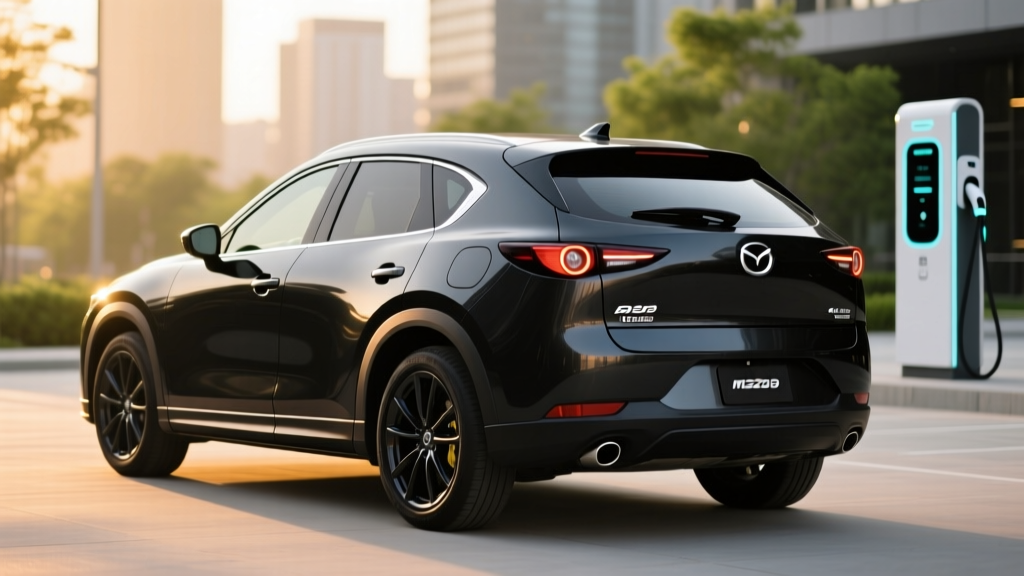
The 2026 Mazda CX-50 Hybrid enters its second model year carrying the Toyota-sourced hybrid powertrain that debuted for 2025, pairing a 2.5-liter four-cylinder engine with Toyota's proven hybrid transaxle. For buyers who want Mazda's premium interior and rugged styling without committing to a plug, this conventional hybrid (HEV) offers a compelling middle ground between the gas-only CX-50 and a full battery-electric vehicle.
This guide covers everything a research-driven buyer needs: exact EPA fuel economy, real-world MPG expectations, powertrain specs, pricing across trims, battery warranty details, and how the CX-50 Hybrid stacks up against plug-in hybrids and full EVs in the compact SUV segment.
2026 CX-50 Hybrid Fuel Economy: EPA and Real-World MPG
The headline number for any hybrid buyer is fuel economy, and the 2026 CX-50 Hybrid delivers figures that put it squarely in competition with the Toyota RAV4 Hybrid — the powertrain donor.
| Metric | EPA Estimate | Real-World Expectation |
|---|---|---|
| City MPG | 39 MPG | 38–42 MPG (hybrids excel in stop-and-go) |
| Highway MPG | 37 MPG | 34–36 MPG (aerodynamic drag reduces hybrid advantage) |
| Combined MPG | 38 MPG | 36–39 MPG depending on driving mix |
| Estimated Total Range | ~490 miles | ~440–500 miles (13.2-gal tank) |
Source: fueleconomy.gov
The key insight for hybrid shoppers: unlike gas-only vehicles, which lose efficiency in city driving, the CX-50 Hybrid actually gains efficiency in stop-and-go traffic. Regenerative braking recaptures energy that would otherwise be wasted, and the electric motor handles low-speed propulsion where internal combustion engines are least efficient. Expect to beat the EPA city estimate on suburban commutes with frequent stops. Highway-heavy drivers will see numbers closer to 34–36 MPG, especially at speeds above 70 mph or in cold weather when the engine runs more often for cabin heat.
HEV vs PHEV vs EV: Which Powertrain Fits You?
The CX-50 is offered only as a conventional hybrid (HEV) — Mazda does not currently sell a plug-in hybrid (PHEV) version. Understanding the distinction matters before you shop.
| Feature | CX-50 Hybrid (HEV) | Typical PHEV (e.g., RAV4 Prime) | Full EV (e.g., Ioniq 5) |
|---|---|---|---|
| Plug-in Required? | No — self-charging via regen & engine | Yes — plug in for electric-only range | Yes — plug in for all driving |
| Electric-Only Range | None (EV assist only at low speeds) | ~35–42 miles | 250–320+ miles (full battery) |
| Fuel/Charging | Gasoline only | Gasoline + electricity | Electricity only |
| Combined Efficiency | 38 MPG | ~38 MPG gas / 94 MPGe electric | 110–132 MPGe |
| Federal Tax Credit (§30D) | Not eligible | Up to $7,500 (if eligible) | Up to $7,500 (if eligible) |
| Home Charging Needed? | No | Recommended for EV range benefit | Required |
Choose the CX-50 Hybrid if: You live in an apartment or lack reliable home-charging access, you want a simple ownership experience with no plug-in routine, and you primarily need fuel savings on gasoline.
Choose a PHEV if: You have home Level 2 charging, your daily commute is under 40 miles (so you drive mostly on electricity), and you still want gas-engine flexibility for road trips.
Choose a full EV if: You have dependable home or workplace charging, you want the lowest per-mile fuel cost, and you're ready to plan around DC fast-charging on road trips.
Powertrain Specs: Toyota Hybrid System Under a Mazda Hood
Mazda partnered with Toyota for the CX-50 Hybrid's powertrain, using the same 2.5-liter Dynamic Force four-cylinder engine and hybrid transaxle found in the RAV4 Hybrid and Highlander Hybrid. This is a mature, fourth-generation Toyota Hybrid System (THS) — one of the most proven hybrid architectures on the road.
| Specification | 2026 CX-50 Hybrid |
|---|---|
| Engine | 2.5L inline-4 (Atkinson cycle) |
| Engine Output | 176 hp / 163 lb-ft torque |
| Electric Motor | Permanent magnet synchronous (front + rear) |
| Combined System Horsepower | 219 hp |
| Drivetrain | AWD (electronic rear motor, no mechanical driveshaft) |
| Transmission | eCVT (planetary gearset, no belt) |
| Hybrid Battery | ~1.6 kWh NiMH (sealed, self-charging) |
| 0–60 mph | ~7.2 seconds (estimated) |
| Towing Capacity | Up to 3,500 lbs (with tow package) |
The 219 combined horsepower figure is respectable for the segment and gives the CX-50 Hybrid confident highway merging power. The eCVT is a planetary gearset — not a traditional belt-and-pulley CVT — so it avoids the "rubber band" drone associated with older continuously variable transmissions. Acceleration feels linear and the engine only revs high under hard acceleration demands.
The AWD system is worth noting: the rear axle is driven entirely by a separate electric motor, not a mechanical driveshaft from the engine. This means rear-wheel torque is available instantly from a stop, improving traction in rain and light snow without the parasitic loss of a mechanical system.
Pricing and Trim Breakdown
The 2026 CX-50 Hybrid is offered across multiple trims, carrying over the structure Mazda established for the hybrid's 2025 debut year. Pricing below reflects estimated 2026 MSRP figures (final pricing confirmed at launch):
| Trim | Estimated MSRP | Key Features |
|---|---|---|
| Preferred Hybrid | ~$35,720 | 18" wheels, power liftgate, heated front seats, 10.25" display |
| Premium Hybrid | ~$39,420 | Panoramic moonroof, Bose 12-speaker audio, leatherette, wireless CarPlay |
| Premium Plus Hybrid | ~$42,120 | Ventilated seats, heated steering wheel, 20" wheels, navigation |
All trims include Mazda's i-Activsense safety suite (adaptive cruise control, lane-keeping assist, automatic emergency braking, blind-spot monitoring) as standard equipment.
Federal and State Tax Credit Eligibility
The CX-50 Hybrid is a conventional hybrid (HEV), which means it does not qualify for the federal §30D clean vehicle tax credit. That credit, which can provide up to $7,500, applies only to plug-in electric vehicles (PHEVs and BEVs) that meet battery sourcing, MSRP caps, and buyer income requirements under current IRS rules.
Some states and local utilities offer rebates or incentives for conventional hybrids, but these vary widely by jurisdiction. Check your state energy office or local utility for current programs. The fuel savings alone — roughly $500–$800/year compared to the gas-only CX-50 turbo — are the primary financial benefit of the hybrid powertrain.
Battery Warranty, Lifespan, and Replacement Cost
Hybrid battery longevity remains the top concern for first-time hybrid buyers. Here's what you need to know about the CX-50 Hybrid's battery:
| Battery Detail | Specification |
|---|---|
| Hybrid Battery Chemistry | Nickel-metal hydride (NiMH) |
| Hybrid Battery Capacity | ~1.6 kWh (small, self-charging) |
| Federal Emissions Warranty | 8 years / 100,000 miles (10 yr/150,000 mi in CARB states) |
| Expected Battery Lifespan | 150,000–200,000+ miles with normal use |
| Replacement Cost (out of warranty) | ~$2,500–$4,000 (dealer), ~$1,500–$2,500 (reconditioned) |
The Toyota-sourced NiMH hybrid battery in the CX-50 is a mature technology with an extensive real-world track record. Toyota's hybrid batteries in the RAV4 Hybrid and Camry Hybrid routinely last 200,000+ miles without replacement. The NiMH chemistry is less energy-dense than lithium-ion but extremely durable — it degrades very slowly and tolerates the shallow charge-discharge cycles that hybrid systems use.
Under federal law, hybrid battery packs are covered as emissions-related components for a minimum of 8 years/100,000 miles. In California Air Resources Board (CARB) states — which include California, New York, Massachusetts, Colorado, and over a dozen others — that coverage extends to 10 years/150,000 miles. If the hybrid battery fails within the warranty period, replacement is covered at no cost.
Out of warranty, a new OEM hybrid battery replacement runs approximately $2,500–$4,000 installed at a dealer. Reconditioned or refurbished hybrid batteries are available from aftermarket suppliers for $1,500–$2,500. Individual cell replacement (replacing only the failed modules rather than the entire pack) is possible at specialist hybrid repair shops for even less, typically $800–$1,500.
Real-World Ownership: What the EPA Numbers Don't Tell You
EPA estimates are standardized lab tests, but real-world hybrid efficiency depends heavily on your driving profile. Here's what to expect based on common scenarios:
City commuter (suburban stop-and-go): This is where the CX-50 Hybrid shines. Expect 39–42 MPG. The hybrid system shuts off the engine at stops, recaptures braking energy, and uses the electric motor for frequent low-speed acceleration. Drivers with short trips (under 5 miles) in warm weather will see the best numbers.
Highway cruiser (sustained 70+ mph): Hybrids lose their advantage at sustained high speeds because the engine must run continuously and aerodynamic drag dominates. Expect 34–36 MPG on long interstate trips. This is still better than the gas-only CX-50's ~27 MPG highway, but the gap narrows.
Cold weather (below 32°F): Hybrid fuel economy drops 10–20% in freezing temperatures. The engine runs more frequently to provide cabin heat (there's no electric heater on the CX-50 Hybrid), the battery is less efficient when cold, and winter fuel blends have lower energy density. Expect 30–34 MPG combined in winter months if you live in a cold climate.
Towing or heavy cargo: When towing near the 3,500-lb capacity, fuel economy will drop to roughly 22–26 MPG. The hybrid system still assists, but the engine bears the majority of the load under towing conditions.
Reliability and Safety
The CX-50 Hybrid benefits from one of the most reliable hybrid powertrains ever produced. Toyota's hybrid systems have consistently earned top reliability marks from Consumer Reports and J.D. Power over two decades. The 2.5L Dynamic Force engine and eCVT transaxle have no timing belt (chain-driven), no traditional starter motor, and no alternator — components that commonly fail on conventional vehicles. The regenerative braking system also reduces wear on the friction brake pads, which often last 80,000+ miles on Toyota hybrid platforms.
The CX-50 earned an IIHS Top Safety Pick+ rating for the 2025 model year, and the 2026 model carries the same structural design. Standard i-Activsense features include:
- Automatic emergency braking with pedestrian detection
- Lane departure warning and lane-keeping assist
- Full-speed adaptive cruise control
- Blind-spot monitoring with rear cross-traffic alert
- Rear automatic braking
Note: Mazda's driver-assistance features are SAE Level 1–2 systems. They provide steering and braking support but require full driver attention at all times. They are not autonomous or self-driving systems.
Pros and Cons: The Honest Assessment
Pros
- 38 MPG combined with no plug-in requirement or charging routine
- Toyota-sourced hybrid powertrain with proven 200K+ mile durability
- Premium Mazda interior quality above RAV4 Hybrid
- Standard AWD with instant electric rear-axle torque
- 3,500-lb towing capacity (with tow package)
- Strong city MPG that often exceeds EPA estimate
- Minimal brake wear thanks to regenerative braking
Cons
- No PHEV variant — cannot drive on electric-only power
- Not eligible for the federal §30D tax credit
- Highway MPG advantage over gas model is modest (~7 MPG)
- Rear cargo space slightly reduced vs. gas CX-50 (hybrid battery packaging)
- No DC fast charging capability (not applicable for HEV)
- Infotainment still relies on rotary dial, no touchscreen on lower trims
Frequently Asked Questions
How many MPG does the 2026 CX-50 Hybrid get?
The EPA rates the 2026 CX-50 Hybrid at 39 MPG city, 37 MPG highway, and 38 MPG combined. Real-world results typically range from 34 MPG (highway-heavy driving in cold weather) to 42 MPG (warm-weather city commuting). The hybrid system's efficiency peaks in stop-and-go traffic where regenerative braking recaptures the most energy.
Does the CX-50 Hybrid need to be plugged in?
No. The CX-50 Hybrid is a conventional hybrid (HEV), not a plug-in hybrid. Its small ~1.6 kWh battery recharges itself through regenerative braking and the gasoline engine. You never plug it in — just fill up at the gas station as you would with any conventional vehicle.
Does the 2026 CX-50 Hybrid qualify for a federal tax credit?
No. The federal §30D clean vehicle tax credit applies only to plug-in electric vehicles (PHEVs and BEVs) with sufficient battery capacity. Conventional hybrids like the CX-50 Hybrid do not qualify. Some state or utility incentives may apply depending on your jurisdiction — check your local programs.
How long will the CX-50 Hybrid battery last?
The Toyota-sourced NiMH hybrid battery is expected to last 150,000–200,000+ miles based on extensive real-world data from the RAV4 Hybrid and Camry Hybrid platforms. It is covered by a federal emissions warranty of 8 years/100,000 miles (10 years/150,000 miles in CARB states). Out-of-warranty replacement costs approximately $2,500–$4,000 for a new OEM unit.
Is the CX-50 Hybrid better than the gas-only CX-50?
For most buyers, yes. The hybrid delivers approximately 11 MPG better combined fuel economy (38 vs. ~27 MPG for the turbo AWD model), provides smoother acceleration from the electric motor assist, and costs only marginally more at the Preferred trim level. The gas-only CX-50 Turbo makes sense only if you prioritize maximum horsepower (256 hp) and don't mind higher fuel costs. The hybrid's 219 hp is adequate for daily driving and highway merging.
Should I wait for a CX-50 PHEV?
Mazda has not announced a plug-in hybrid CX-50 as of early 2026. If you need electric-only commuting range and want to stay in the Mazda lineup, the CX-70 PHEV or CX-90 PHEV are larger, more expensive alternatives. For a compact PHEV with similar dimensions, the Toyota RAV4 Prime (42 miles electric-only, ~$44,000 MSRP) remains the segment benchmark and may qualify for the federal tax credit depending on sourcing and income eligibility.