Quick Verdict: The Top-Trim Hybrid That Punches Above Its Weight
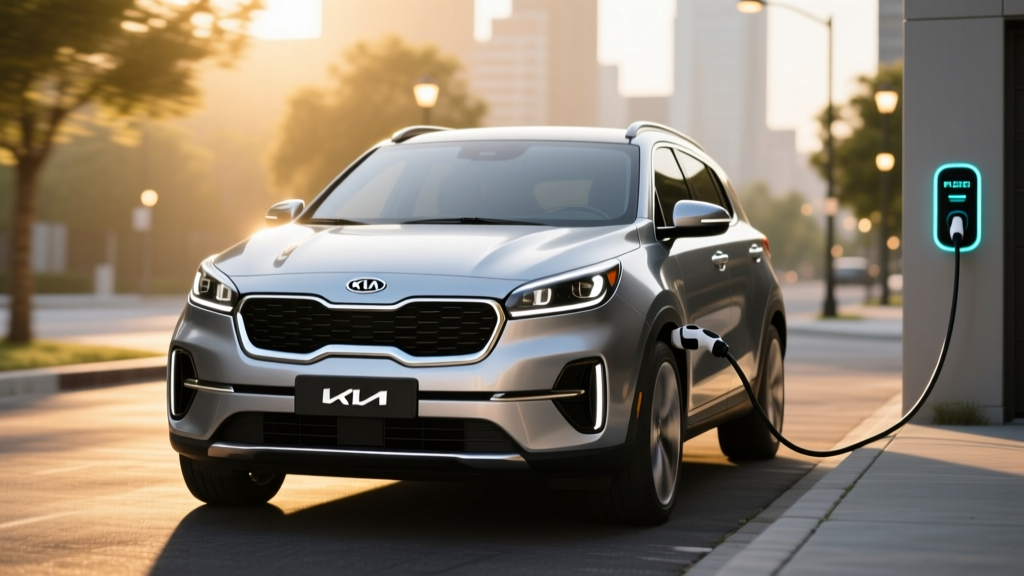
The 2026 Kia Sportage Hybrid SX-Prestige sits at the apex of Kia's compact hybrid SUV lineup, pairing a 226-horsepower turbo-hybrid powertrain with a premium feature set that rivals luxury-badge competitors costing $10,000 more. With an EPA-estimated 43 MPG city and 38 MPG combined, it delivers the kind of fuel economy that makes fuel stops a distant memory — without requiring you to plug in, change your driving habits, or worry about charging infrastructure.
This is a conventional hybrid (HEV), not a plug-in hybrid (PHEV). That distinction matters enormously for buyers cross-shopping the Sportage lineup, which also offers a Sportage PHEV variant with a larger battery and electric-only driving capability. In this review, we break down exactly what the SX-Prestige trim delivers, where its real-world MPG lands versus the EPA sticker, and whether the hybrid, PHEV, or a full EV makes more sense for your daily driving.
| Spec | 2026 Sportage Hybrid SX-Prestige |
|---|---|
| Powertrain | 1.6L turbo I4 + electric motor (HEV) |
| Combined Horsepower | 226 hp |
| Combined Torque | 258 lb-ft |
| Transmission | 6-speed automatic |
| Drivetrain | AWD (standard on SX-Prestige) |
| EPA MPG (City / Hwy / Combined) | 43 / 41 / 38 (FWD); 38 / 38 / 38 (AWD) |
| Fuel Tank | 13.7 gallons |
| Total Range (est.) | ~520 miles (AWD combined) |
| 0-60 mph | ~7.4 seconds |
| Cargo Volume (rear seats up / down) | 39.5 / 73.7 cu ft |
| Base MSRP (SX-Prestige AWD) | ~$38,090 |
| Battery / Powertrain Warranty | 10 yr / 100,000 mi |
HEV vs PHEV: Which Sportage Is Right for You?
Before diving deeper into the SX-Prestige, it's essential to understand the two electrified Sportage variants Kia offers, because they serve fundamentally different use cases.
| Attribute | Sportage Hybrid (HEV) | Sportage PHEV |
|---|---|---|
| Plug-in charging required? | No — charges via engine + regen | Yes — plug in to access EV range |
| Battery size | ~1.5 kWh (small buffer) | 13.8 kWh (usable) |
| Electric-only range | N/A (motor assists engine) | ~34 miles EPA |
| EPA MPG / MPGe | 38 combined MPG (AWD) | 84 MPGe (EV mode); 35 MPG (hybrid mode) |
| Total range | ~520 miles | ~430 miles combined |
| DC fast charging? | N/A | No — Level 2 AC only (~3.5 hours) |
| Starting MSRP | ~$30,090 (LX) | ~$39,990 (X-Line) |
| Federal tax credit (§30D) | Not eligible | May qualify — subject to sourcing/income rules |
The HEV (this review's focus) is the simpler choice: you drive it exactly like a gas car, never plug it in, and the hybrid system handles the rest. The small battery captures energy from braking and the engine, then deploys it to assist acceleration and enable low-speed electric creep. The result is dramatically better city MPG than a gas-only equivalent.
The PHEV adds a much larger 13.8 kWh battery and a more powerful electric motor, giving you roughly 34 miles of pure electric driving before the gas engine kicks in. If your commute is under 30 miles and you can charge at home overnight, the PHEV effectively operates as an EV for daily driving — with the gas engine as a backup for road trips. The tradeoff: higher purchase price, reduced cargo space (the larger battery intrudes slightly), and the need for home charging access to realize its benefits.
Fuel Economy: EPA Numbers vs Real-World MPG
The 2026 Sportage Hybrid with FWD earns an EPA-estimated 43 MPG city, 41 MPG highway, and 38 MPG combined, according to fueleconomy.gov. The AWD version — which is standard on the SX-Prestige trim — drops slightly to 38 MPG across the board (city/highway/combined).
| Driving Scenario | EPA Estimate (AWD) | Real-World Expectation |
|---|---|---|
| City (stop-and-go) | 38 MPG | 39-44 MPG — hybrids excel here |
| Highway (70-75 mph) | 38 MPG | 34-37 MPG — aero drag hurts at speed |
| Mixed commuting | 38 MPG | 36-40 MPG |
| Cold weather (below 30°F) | — | 32-36 MPG (engine runs more for heat) |
The real-world story with the Sportage Hybrid mirrors what we see across most Toyota and Hyundai-Kia hybrid platforms: city driving often exceeds the EPA sticker. Regenerative braking recaptures energy at every stoplight, and the engine shuts off frequently in low-speed traffic. On a suburban commute with frequent stops, 40-44 MPG is achievable in the AWD SX-Prestige.
Highway driving tells a different story. At sustained 75-80 mph speeds, the aerodynamic drag of the Sportage's boxy SUV profile works against it, and the hybrid system has fewer opportunities to recapture energy. Expect 34-37 MPG on long interstate runs. Cold weather further reduces efficiency because the gasoline engine must run more frequently to provide cabin heat and maintain battery temperature.
Compared to the gas-only Sportage (which earns roughly 25 MPG combined with AWD), the hybrid cuts fuel consumption by about 35%. Over 15,000 miles per year at $3.40/gallon, that translates to roughly $900-$1,100 in annual fuel savings versus the non-hybrid AWD model.
Powertrain and Driving Impressions
The Sportage Hybrid pairs a 1.6-liter turbocharged four-cylinder engine with a 47.7 kW (64 hp) electric motor integrated into the transmission housing. Combined output is 226 horsepower and 258 lb-ft of torque, routed through a 6-speed automatic transmission to all four wheels.
That 226 hp figure puts the Sportage Hybrid ahead of the Toyota RAV4 Hybrid (219 hp) and roughly on par with the Hyundai Tucson Hybrid (226 hp, its platform sibling). The turbo engine's contribution is key: unlike naturally aspirated hybrid competitors, the Sportage delivers strong mid-range punch when merging onto highways or climbing grades. The electric motor fills in the torque gap at low RPMs, eliminating the turbo lag you'd feel in the gas-only Sportage.
The 0-60 mph time of approximately 7.4 seconds is respectable for the class — not sporty, but confident. The 6-speed automatic is a deliberate choice over a CVT; it delivers more natural-feeling acceleration without the rubber-band drone that some CVT-equipped hybrids produce under hard throttle.
AWD is standard on the SX-Prestige, using an electronically controlled coupling to send torque rearward when slip is detected. This isn't a dedicated off-road system, but it handles rain, light snow, and gravel roads competently. Ground clearance sits at 7.1 inches, which is adequate for most conditions short of serious trail work.
SX-Prestige Trim: What You Get for $38,090
The SX-Prestige is the top-of-the-line Sportage Hybrid trim, and Kia loads it with features that would appear on the options list of a BMW X3 or Audi Q5. For the ~$38,090 MSRP (before destination), you receive:
- Panoramic curved display: Dual 12.3-inch screens (digital cluster + infotainment) in a single curved housing
- Navigation-based smart cruise control: Adjusts speed for curves and speed-limit changes
- Highway Driving Assist 2 (HDA2): SAE Level 2 driver assistance with lane-centering, adaptive cruise, and lane-change assist
- Heated and ventilated front seats, heated rear seats, heated steering wheel Harman Kardon premium audio: 8-speaker system
- Wireless Apple CarPlay and Android Auto Smart power liftgate with hands-free openLED projection headlights with dynamic bending lightSynTex (vegan leather) seating surfacesDigital key 2.0
- 43 MPG city (FWD) / 38 MPG combined (AWD) — no plugging in required
- 226 hp with turbo torque — confident highway merging
- SX-Prestige features rival luxury SUVs at $38K
- 10-year / 100,000-mile hybrid battery warranty
- 39.5 cu ft cargo space with seats up — class-competitive
- HDA2 Level 2 driver assist standard
- No federal tax credit eligibility (HEV)
- AWD highway MPG drops to ~34-37 real-world
- Kia resale value trails Toyota/Honda competitors
- 6-speed auto can hunt gears under hard acceleration
- No spare tire — tire inflation kit only
- Rear visibility compromised by thick C-pillars
- You cannot charge at home (apartment, street parking, no garage outlet)
- You want maximum simplicity — drive it like a gas car, never think about charging
- Your daily driving is varied: city errands, highway commutes, and occasional road trips
- Budget is a priority — the HEV starts ~$8,000 less than the PHEV
- You have reliable home Level 2 charging (240V outlet or installed charger)
- Your daily commute is under 30 miles round-trip (covers most of the 34-mile EV range)
- You want EV-like operating costs for daily driving but gas-engine backup for road trips
- You may qualify for the §30D tax credit, narrowing the price gap with the HEV
- You have home charging and rarely drive more than 250 miles in a single day
- You want the lowest per-mile fuel cost (electricity is typically $0.10-$0.15/mile vs $0.15-$0.20/mile for hybrid)
- You want zero tailpipe emissions and minimal maintenance (no oil changes, no engine)
- You're comfortable planning DC fast charging stops on longer road trips
At this price point, the SX-Prestige Hybrid undercuts comparably equipped rivals like the RAV4 Hybrid Limited (~$41,000) and the Honda CR-V Hybrid Sport Touring (~$41,500) while offering a more premium interior presentation. The tradeoff is that Kia's resale values historically trail Toyota's, which affects long-term cost of ownership.
Tax Credit Eligibility: What Hybrid Buyers Need to Know
Here's the straightforward answer: the 2026 Kia Sportage Hybrid (HEV) does not qualify for the federal §30D clean vehicle tax credit. That credit — up to $7,500 — is reserved for plug-in electric vehicles (BEVs and PHEVs) that meet battery sourcing, critical mineral, MSRP cap, and buyer income requirements as outlined by the IRS.
The Sportage PHEV variant may qualify for a partial or full §30D credit depending on current-year battery component sourcing rules and your individual tax situation. However, eligibility is complex: the vehicle must fall under the $80,000 MSRP cap for SUVs (which it does), your household modified adjusted gross income must not exceed $300,000 (joint) / $150,000 (single), and the battery must meet critical mineral and component sourcing thresholds that change annually.
⚡ Tax Credit Reality Check: The HEV Sportage Hybrid is ineligible for §30D. If a tax credit is a priority, consider the Sportage PHEV (eligibility varies — consult a tax professional and check the IRS's official clean vehicle credit page for current sourcing requirements). Some states offer separate rebates for hybrids; check your state energy office or AFDC incentive database.
Even without a federal credit, the Sportage Hybrid's fuel savings pay for the hybrid premium relatively quickly. The hybrid powertrain typically adds $1,500-$2,000 versus a comparably trimmed gas model, and at ~$900-$1,100 annual fuel savings, payback occurs within roughly 2 years of average driving.
Battery Longevity, Warranty, and Replacement Cost
Hybrid battery anxiety is one of the most common concerns we hear from first-time hybrid buyers. Here's the data-driven reality: modern hybrid battery packs are among the most durable components in the vehicle.
Kia backs the Sportage Hybrid's battery and hybrid-system components with a 10-year / 100,000-mile warranty (for the original owner; subsequent owners receive 10 years from date of first use). This covers the hybrid battery, electric motor, inverter, and related control modules against defects and capacity loss below a functional threshold.
The Sportage Hybrid uses a relatively small lithium-ion polymer battery pack (~1.5 kWh total capacity). Because the battery is small and the hybrid system manages charge/discharge cycles conservatively — never fully depleting or fully charging the pack — degradation is minimal. The battery operates within a narrow state-of-charge window (roughly 40-80%), which is the sweet spot for lithium-ion longevity.
Real-world lifespan data: Based on fleet data from Hyundai-Kia's hybrid platforms (which share this architecture), most hybrid batteries retain 90%+ of original capacity at 150,000 miles. Failures before 100,000 miles are statistically rare. Toyota's RAV4 Hybrid has demonstrated similar durability, with many examples exceeding 200,000 miles on the original battery.
Out-of-warranty replacement cost: If the hybrid battery does eventually need replacement beyond the warranty period, expect to pay approximately $2,500-$4,000 for a new OEM pack including labor, based on current Hyundai-Kia hybrid battery pricing. Third-party refurbished options may reduce this to $1,500-$2,500. This is significantly less than full EV battery replacements ($8,000-$20,000) because the hybrid pack is much smaller.
✅ Pros
❌ Cons
Hybrid vs PHEV vs EV: Which Fits Your Life?
Choosing between the Sportage Hybrid (HEV), Sportage PHEV, and a full battery-electric vehicle (BEV) like the Kia EV6 or Hyundai Ioniq 5 comes down to three questions:
Choose the Sportage Hybrid (HEV) if:
Choose the Sportage PHEV if:
Choose a full EV (like the Kia EV6) if:
For the majority of US buyers without home charging access, the Sportage Hybrid (HEV) remains the most practical electrified choice. It requires zero behavioral change, delivers meaningful fuel savings, and carries the lowest upfront cost of the three paths.
Reliability and Ownership Considerations
Kia's hybrid powertrain has proven reliable across the Niro, Sorento Hybrid, and Sportage Hybrid lineages. The 1.6L turbo-hybrid system has been in production since 2022 with no widespread failure patterns reported to NHTSA. The most common owner complaints relate to infotainment software quirks rather than powertrain issues.
Maintenance costs are lower than a gas-only vehicle: regenerative braking extends brake pad life significantly (many hybrid owners report 60,000+ miles on original pads), and the engine operates under less stress due to electric motor assist. You'll still need regular oil changes (Kia recommends every 7,500 miles with synthetic oil), but overall scheduled maintenance runs 15-20% less than the non-hybrid Sportage.
Insurance premiums for the Sportage Hybrid SX-Prestige are typically 5-10% higher than the gas equivalent due to the higher replacement cost of hybrid components, though this varies by insurer and region. Get quotes before purchasing if insurance cost is a concern.
Frequently Asked Questions
How many MPG does the 2026 Kia Sportage Hybrid SX-Prestige get?
The AWD SX-Prestige earns an EPA-estimated 38 MPG combined (38 city / 38 highway). The FWD Hybrid variant achieves 43 city / 41 highway / 38 combined. In real-world city driving, many owners report exceeding the EPA city estimate by 2-5 MPG thanks to regenerative braking. Highway driving at 75+ mph typically yields 34-37 MPG.
Does the Sportage Hybrid need to be plugged in?
No. The Sportage Hybrid (HEV) charges its own small battery through regenerative braking and the gasoline engine. You never plug it in. Only the Sportage PHEV variant requires plug-in charging to access its 34-mile electric-only range.
How far can the Sportage PHEV go on electric only?
The 2026 Sportage PHEV delivers an EPA-estimated 34 miles of electric-only range on its 13.8 kWh battery. Once depleted, it operates as a conventional hybrid at approximately 35 MPG combined. Total range (electric + gas) is approximately 430 miles.
Is the hybrid battery reliable, and what does replacement cost?
Kia's hybrid batteries are among the most reliable components in the vehicle, with most retaining 90%+ capacity at 150,000 miles. The battery is covered by a 10-year / 100,000-mile warranty. Out-of-warranty replacement costs approximately $2,500-$4,000 for a new OEM pack — far less than a full EV battery replacement.
Does the 2026 Sportage Hybrid qualify for any tax credit?
The conventional hybrid (HEV) does not qualify for the federal §30D clean vehicle tax credit, which is reserved for plug-in vehicles (BEVs and PHEVs). The Sportage PHEV may qualify depending on current battery sourcing rules, your income, and other IRS requirements. Check the IRS clean vehicle credit page and consult a tax professional for your specific situation.
How does the Sportage Hybrid compare to the RAV4 Hybrid?
The Sportage Hybrid (226 hp, 38 MPG combined AWD) edges out the Toyota RAV4 Hybrid (219 hp, 39 MPG combined AWD) on power while trailing slightly on fuel economy. The Sportage offers a more premium interior at the SX-Prestige level, but the RAV4 Hybrid holds its resale value significantly better. Both carry strong hybrid battery warranties (Kia: 10yr/100K mi; Toyota: 10yr/150K mi).