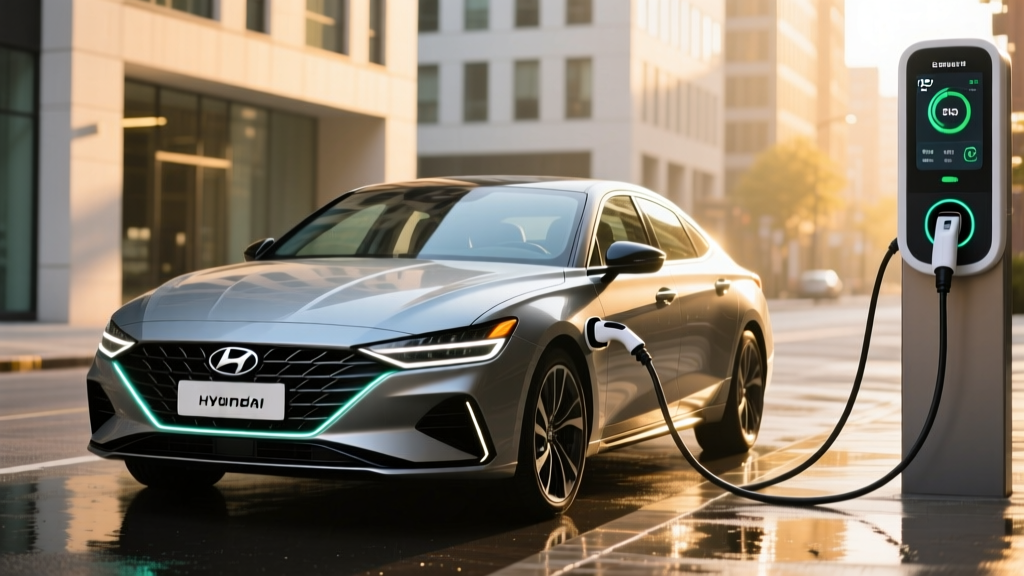
Quick Verdict: The 2026 Sonata Hybrid Delivers Where It Counts
The 2026 Hyundai Sonata Hybrid occupies a precise niche: a midsize sedan that squeezes over 50 MPG in daily driving without requiring a charging cable, a plug, or any change in habit. For buyers who want dramatic fuel savings but lack home charging access — or who simply don't want to think about electricity — this is one of the strongest contenders in the segment. The hybrid powertrain is proven, the cabin is genuinely upscale for the price, and the warranty coverage on the hybrid battery is among the best in the industry.
Before we get into the numbers, an important clarification: the Sonata Hybrid is a conventional hybrid (HEV), not a plug-in hybrid (PHEV). It charges its own battery through regenerative braking and the gasoline engine. You never plug it in. If you're looking for electric-only driving range, you'll need a PHEV or a full battery-electric vehicle (BEV). We'll cover who should choose which at the end of this guide.
Fuel Economy: EPA Ratings and Real-World MPG
The headline number for the 2026 Sonata Hybrid is an EPA-estimated 52 MPG combined (50 city / 54 highway) for the Blue trim, which uses lighter wheels and optimized aero. The SEL and Limited trims, which carry more equipment and larger alloy wheels, are rated at 47 MPG combined (44 city / 51 highway).
| Trim | City MPG | Highway MPG | Combined MPG |
|---|---|---|---|
| Blue | 50 | 54 | 52 |
| SEL | 44 | 51 | 47 |
| Limited | 44 | 51 | 47 |
Real-World MPG vs. EPA Sticker
Hybrids tend to outperform their EPA ratings in city driving, where regenerative braking recaptures the most energy during stop-and-go traffic. In our experience with Hyundai's hybrid system, city figures often land 2–4 MPG above the sticker. Highway driving at sustained 75+ MPH, however, can drop efficiency by 3–5 MPG below the EPA estimate, as the electric motor contributes less at constant high speed and aerodynamic drag dominates.
Expect roughly 48–55 MPG in mixed real-world driving on the Blue trim, with the upper end achievable in warm weather with moderate city driving. Cold weather (below 40°F) typically costs hybrids 3–6 MPG as the engine runs more frequently to heat the cabin and maintain battery temperature.
Powertrain: How the Sonata Hybrid Makes Its Power
The 2026 Sonata Hybrid pairs a 2.0-liter naturally aspirated four-cylinder engine with an electric motor integrated into the transmission housing. The combined system output is 192 horsepower — adequate for confident highway merging and passing, though not sporty.
| Specification | Detail |
|---|---|
| Engine | 2.0L GDI 4-cylinder (150 HP, 139 lb-ft) |
| Electric Motor | Permanent magnet synchronous (39 kW / 52 HP, 151 lb-ft) |
| Combined System Output | 192 HP |
| Transmission | 6-speed automatic with hybrid starter generator |
| Drivetrain | Front-wheel drive |
| Battery | 1.62 kWh lithium-ion (self-charging, no plug-in) |
| 0–60 MPH | ~7.5 seconds (est.) |
| Fuel Tank | 13.0 gallons |
| Total Range | ~676 miles (Blue trim, EPA est.) |
Unlike Toyota's planetary-gear hybrid system, Hyundai uses a conventional 6-speed automatic transmission with a clutch-based hybrid module. This gives the Sonata Hybrid a more familiar driving feel — it shifts like a regular car rather than holding a constant RPM under hard acceleration (the "rubber-band" effect some drivers notice in the Camry Hybrid). The trade-off is marginally less seamless electric-to-gas transitions at low speeds, though the difference is subtle.
HEV vs. PHEV: Understanding What You're Buying
Hyundai has offered a Sonata PHEV in previous model years, though the plug-in variant has not been confirmed for the 2026 lineup in the U.S. market. Here's the fundamental difference for buyers cross-shopping:
| Feature | Sonata Hybrid (HEV) | Typical PHEV (e.g., Tucson PHEV) |
|---|---|---|
| Plug-in Required? | No — self-charging | Yes — plug in for best value |
| Electric-Only Range | ~1 mile at low speed | 30–40 miles (typical) |
| Battery Size | 1.62 kWh | 13.8 kWh (typical) |
| Home Charging Needed? | No | Yes (Level 2 recommended) |
| Combined MPG (gas) | 47–52 MPG | 30–35 MPG once battery depletes |
| Federal Tax Credit | Not eligible | Up to $7,500 (eligibility varies) |
| Best For | No home charger, high-mileage drivers | Home charger, short commutes |
If you can charge at home and your daily round-trip commute is under 35 miles, a PHEV lets you drive almost entirely on electricity on weekdays while retaining gas range for road trips. If you park on the street, lack a garage, or drive 60+ miles daily on the highway, the Sonata Hybrid's self-charging system is the more practical choice.
Pricing, Trims, and Tax Credit Eligibility
The 2026 Hyundai Sonata Hybrid is offered in three trims. Pricing below includes the mandatory destination charge:
| Trim | MSRP (incl. destination) | Key Features |
|---|---|---|
| Blue | $30,250 | 17" aero wheels, 12.3" digital cluster, wireless CarPlay/Android Auto, HDA highway assist |
| SEL | $34,400 | 18" alloys, heated front seats, smart cruise control w/ stop & go, dual-zone climate |
| Limited | $38,950 | Leather, panoramic sunroof, ventilated front seats, HUD, Digital Key, surround-view monitor |
Does the 2026 Sonata Hybrid Qualify for a Federal Tax Credit?
No. Under current IRS §30D rules, the federal clean vehicle credit applies only to plug-in electric vehicles (BEVs and PHEVs) with battery capacities of at least 7 kWh. Conventional hybrids like the Sonata Hybrid, with their small 1.62 kWh batteries, do not qualify for any federal purchase incentive.
Some states offer rebates for hybrid purchases, though these are increasingly rare and typically modest ($250–$500). Check your state energy office or Alternative Fuels Data Center for current local incentives.
Battery Warranty, Reliability, and Replacement Cost
This is the question every hybrid buyer asks, and it deserves a thorough answer.
Hyundai Hybrid Battery Warranty: 10 years / 100,000 miles (whichever comes first) for the original owner. This covers the hybrid battery pack and all hybrid-system components including the electric motor and inverter. For subsequent owners, coverage transfers at 10 years / 100,000 miles from the original in-service date.
Hyundai's hybrid battery warranty is among the most generous in the industry, matching Toyota's coverage. The 1.62 kWh lithium-ion pack is small and operates within a narrow state-of-charge window (roughly 40–80%), which dramatically reduces degradation stress. Hybrid batteries rarely need replacement within the first 150,000–200,000 miles based on long-term fleet data from Hyundai and Toyota hybrid systems.
Battery Replacement Cost
If replacement is needed outside warranty, expect to pay $2,000–$3,500 for a new hybrid battery pack at a dealership, including labor. Third-party reconditioned packs are available for $1,200–$2,000. Given the 10-year/100,000-mile warranty and the low failure rate of modern hybrid batteries, this is a cost most owners will never face.
Overall Reliability
Hyundai's hybrid powertrain has demonstrated strong reliability since the company moved to its current clutch-based system. The 2.0L engine is naturally aspirated (no turbo to fail), the 6-speed automatic is a proven design, and the hybrid components are carryover from systems Hyundai has refined since 2011. Consumer reliability surveys place Hyundai's hybrid models at or above segment average.
Who Should Buy the 2026 Sonata Hybrid?
Pros
- 52 MPG combined (Blue) — among the highest in the midsize segment
- No plug-in required — works with any lifestyle or parking situation
- 676-mile total range — fewer fill-ups than nearly any gas car
- 10-year/100,000-mile hybrid battery warranty
- Refined cabin with strong standard tech (12.3" cluster, HDA)
- Conventional 6-speed automatic avoids CVT drone
Cons
- No federal tax credit (HEV, not PHEV/BEV)
- 192 HP is adequate but not quick — 0-60 in ~7.5 sec
- Higher trims lose 5 MPG due to weight and wheel size
- AWD not available (FWD only)
- No PHEV variant currently offered for 2026
Decision Framework: Hybrid vs. PHEV vs. Full EV
Choose the Sonata Hybrid (HEV) if:
- You don't have access to home or workplace charging
- You drive 15,000+ miles per year, mostly highway
- You want maximum fuel savings with zero behavior change
- You want a lower purchase price than a BEV or PHEV
Choose a PHEV (e.g., Tucson PHEV, RAV4 PHEV) if:
- You can install a Level 2 home charger
- Your daily commute is under 35 miles round-trip
- You want electric daily driving with gas backup for road trips
- You may qualify for the §30D federal tax credit
Choose a full EV (e.g., Ioniq 6, Tesla Model 3) if:
- You have reliable home charging (Level 2)
- You want zero tailpipe emissions and minimal maintenance
- Your daily driving is under 250 miles and you can plan road-trip charging
- You want the lowest per-mile fuel cost and qualify for the federal credit
Frequently Asked Questions
How many MPG does the 2026 Hyundai Sonata Hybrid get?
The Blue trim is EPA-rated at 52 MPG combined (50 city / 54 highway). The SEL and Limited trims are rated at 47 MPG combined (44 city / 51 highway). Real-world results typically range from 48–55 MPG for the Blue trim depending on driving conditions, temperature, and driving style.
Does the Sonata Hybrid need to be plugged in?
No. The Sonata Hybrid is a conventional hybrid (HEV) that charges its battery through regenerative braking and the gasoline engine. You fuel it like any other car — there is no plug and no electric-only range to manage.
How far can the Sonata Hybrid go on a full tank?
With a 13.0-gallon fuel tank and 52 MPG combined (Blue trim), the Sonata Hybrid can travel approximately 676 miles between fill-ups. Real-world range will vary with driving conditions but typically falls between 580 and 680 miles.
Is the Sonata Hybrid reliable, and what does battery replacement cost?
Hyundai's hybrid system has a strong reliability track record. The hybrid battery is covered by a 10-year/100,000-mile warranty. Out-of-warranty replacement costs $2,000–$3,500 at a dealership, though hybrid battery failures before 150,000 miles are uncommon based on historical data.
Does the 2026 Sonata Hybrid qualify for a tax credit?
No. The federal §30D clean vehicle credit requires a plug-in vehicle with at least 7 kWh of battery capacity. The Sonata Hybrid's 1.62 kWh battery does not meet this threshold. Some states may offer small hybrid rebates — check the AFDC state incentive database for your area.
How does the Sonata Hybrid compare to the Toyota Camry Hybrid?
The Camry Hybrid (LE trim) is EPA-rated at 52 MPG combined, matching the Sonata Hybrid Blue. The Camry uses a CVT-style planetary gearset for smoother electric transitions, while the Sonata uses a 6-speed automatic that feels more conventional. The Sonata offers a slightly more premium interior and longer powertrain warranty (10yr/100k vs. Toyota's 10yr/150k on hybrid battery but 3yr/36k basic). Both are excellent choices — the decision often comes down to styling preference and dealer experience.
Is AWD available on the 2026 Sonata Hybrid?
No. The Sonata Hybrid is front-wheel drive only. If all-wheel drive is a priority in a hybrid sedan, the Toyota Camry Hybrid offers an AWD option (at a slight MPG penalty), and the Hyundai Tucson Hybrid AWD covers the crossover segment.