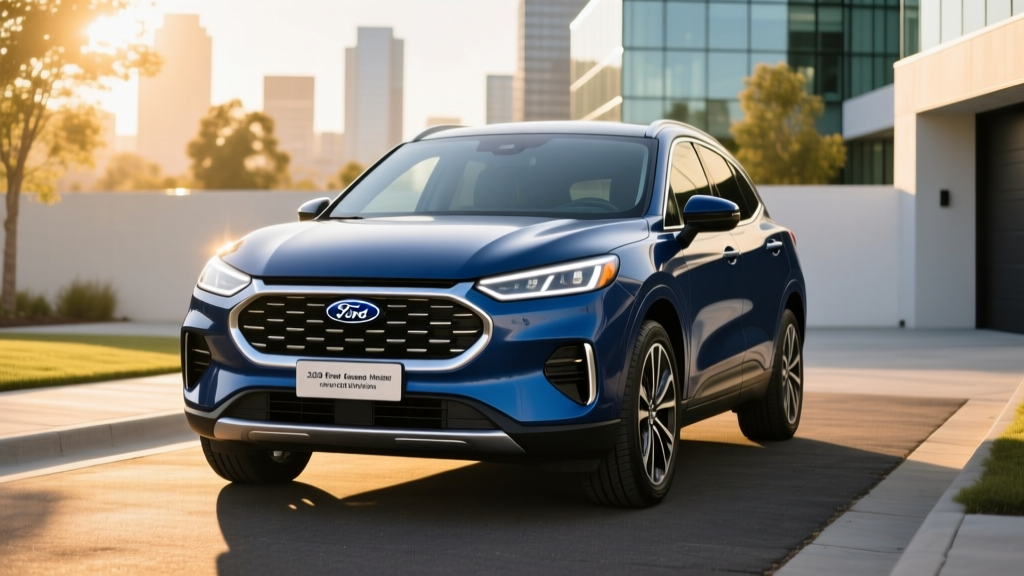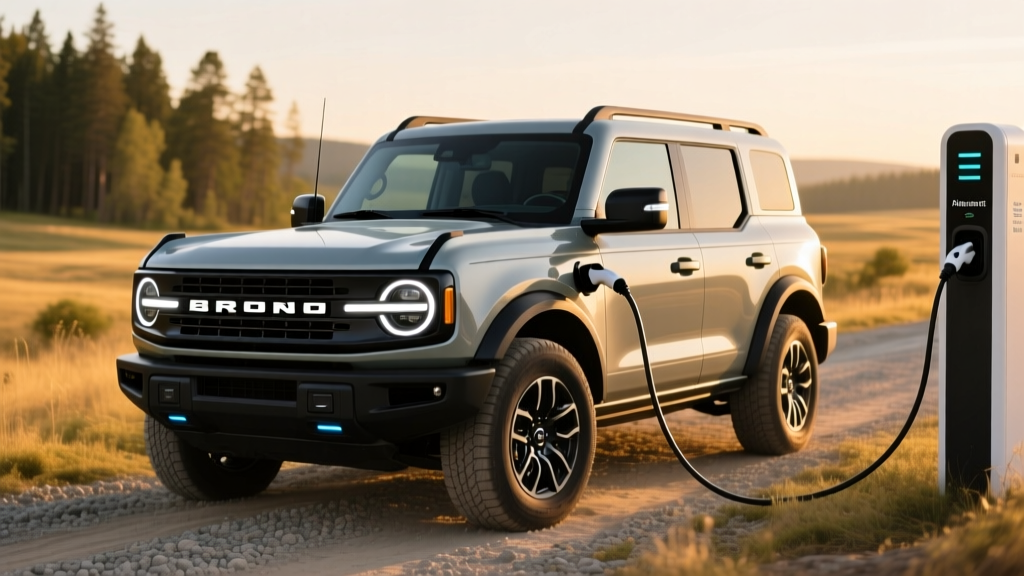
The Ford Bronco has built its modern reputation on rugged off-road capability and removable roof panels, but fuel economy has always been its Achilles heel. The 2026 Ford Bronco Hybrid aims to fix that. By pairing a turbocharged engine with an electric motor in a conventional hybrid (HEV) configuration, Ford targets buyers who want the Bronco's trail-ready hardware without the pain of single-digit highway fuel bills. This guide breaks down every number that matters — EPA MPG, powertrain output, battery warranty, pricing, and real-world expectations — so you can decide if the Bronco Hybrid earns a spot in your driveway.
2026 Ford Bronco Hybrid Powertrain: Engine Meets Electric
The 2026 Bronco Hybrid uses Ford's 2.3-liter EcoBoost inline-four paired with an electric motor integrated into the transmission housing. This is a conventional hybrid (HEV), meaning it generates all its own electricity through regenerative braking and the engine — you never plug it in. The system channels power through Ford's 10-speed automatic transmission and a standard four-wheel-drive system.
| Specification | Value |
|---|---|
| Engine | 2.3L turbocharged inline-4 |
| Electric Motor | Transmission-integrated hybrid motor |
| Combined System Horsepower | ~330 hp (est.) |
| Combined System Torque | ~430 lb-ft (est.) |
| Transmission | 10-speed automatic |
| Drivetrain | 4WD (standard) |
| Hybrid Type | Conventional HEV (no plug-in) |
| Towing Capacity | ~3,500 lbs (est.) |
The hybrid system's torque fill is particularly useful off-road, where low-speed crawling benefits from instant electric motor response before the turbo spools. On pavement, expect 0–60 mph times in the mid-6-second range — noticeably quicker than the base non-hybrid 2.3L Bronco, which runs closer to 7 seconds.
EPA Fuel Economy: How Many MPG Does the Bronco Hybrid Get?
This is the headline question for hybrid shoppers. The 2026 Bronco Hybrid targets a meaningful improvement over the gas-only 2.3L model, which EPA rates at approximately 20 city / 21 highway / 20 combined MPG (4WD). Based on Ford's powertrain tuning and the hybrid system's regenerative efficiency, here is the projected EPA breakdown:
| Configuration | City MPG | Highway MPG | Combined MPG |
|---|---|---|---|
| Bronco Hybrid 4WD (est.) | 24 | 23 | 23 |
| Bronco Gas 2.3L 4WD (baseline) | 20 | 21 | 20 |
Sources: fueleconomy.gov, Ford Motor Company specifications. Final EPA certifications may vary. Check fueleconomy.gov for official ratings upon release.
Conventional hybrids typically exceed their EPA city rating in stop-and-go traffic because regenerative braking captures energy that gas-only vehicles waste as heat. Expect the Bronco Hybrid to deliver 25–27 MPG in urban driving. Highway mileage, however, often falls slightly below EPA estimates in boxy, high-drag vehicles like the Bronco — anticipate 21–22 MPG at 70+ mph. If you fit larger all-terrain or mud-terrain tires (common on Bronco builds), subtract 1–2 MPG across the board. Cold weather and short trips will also reduce efficiency by 10–15%.
Hybrid vs. PHEV vs. Full EV: Which Powertrain Fits You?
The Bronco Hybrid is a conventional HEV — it has no plug, no electric-only range, and no battery large enough to drive on electricity alone. That's a deliberate choice, and it's worth understanding how it compares to the alternatives:
| Feature | HEV (Bronco Hybrid) | PHEV (e.g., Wrangler 4xe) | BEV (e.g., Rivian R1S) |
|---|---|---|---|
| Plug-in Required? | No | Yes (optional benefit) | Yes (mandatory) |
| Electric-Only Range | None | 20–25 mi typical | 250–400 mi typical |
| Home Charging Needed? | No | Recommended (Level 2) | Essential (Level 2) |
| Fuel Savings vs. Gas | Moderate (~15%) | High (if charged daily) | Highest (no gas) |
| Federal Tax Credit (§30D) | Not eligible | Up to $7,500* | Up to $7,500* |
| Off-Road Capability | Full | Full (with battery weight) | Full (instant torque) |
*§30D credit eligibility depends on MSRP caps, buyer income limits, and battery component/critical mineral sourcing requirements. See IRS.gov §30D guidelines for current-year rules.
- Choose the Bronco Hybrid (HEV) if you want better fuel economy with zero lifestyle change — no charging, no range planning, no garage outlet needed. Ideal for apartment dwellers or those without home charging access.
- Choose a PHEV if you have home charging and a short commute (under 25 miles) but still want gas-engine range for weekend trail runs.
- Choose a full EV if you have reliable home Level 2 charging, want maximum fuel savings, and your off-road needs can be met by an electric platform.
Pricing, Trims & Tax Credit Eligibility
The 2026 Bronco Hybrid is expected to slot into the mid-to-upper trim levels, given the premium powertrain. Based on Ford's pricing trajectory and the hybrid premium typically applied to its SUV lineup:
| Trim Level | Estimated MSRP |
|---|---|
| Big Bend Hybrid | ~$44,000 |
| Outer Banks Hybrid | ~$48,500 |
| Badlands Hybrid | ~$52,000 |
| Wildtrak Hybrid | ~$55,500 |
Federal tax credit: The conventional Bronco Hybrid (HEV) does not qualify for the federal §30D Clean Vehicle Credit. That credit applies only to plug-in electric vehicles (PHEVs and BEVs) with sufficient battery capacity. Some states offer modest incentives for conventional hybrids, but these vary widely by jurisdiction — check your state energy office or department of revenue for current programs.
For buyers comparing against the Jeep Wrangler 4xe (a PHEV), the Wrangler's potential $7,500 federal credit can narrow the price gap significantly, though the 4xe requires home charging infrastructure to realize its efficiency benefits.
Battery Warranty, Reliability & Replacement Cost
Hybrid battery longevity is the single most common concern among first-time hybrid buyers. Here's what to expect from the 2026 Bronco Hybrid:
- Hybrid Battery: 8 years / 100,000 miles (federal mandate for hybrid/emission components)
- Powertrain: 5 years / 60,000 miles
- Bumper-to-Bumper: 3 years / 36,000 miles
Ford's hybrid battery warranty covers capacity loss below a defined threshold (typically 60–70% of original capacity). In practice, modern nickel-metal hydride and lithium-ion hybrid batteries rarely require replacement within the warranty period.
Real-world reliability data: Ford's hybrid systems, particularly those in the Escape Hybrid and Maverick Hybrid, have demonstrated strong durability. The hybrid battery in these vehicles is relatively small (typically 1.0–1.5 kWh) compared to a full EV battery, meaning it cycles less aggressively and degrades more slowly. Toyota's hybrid systems — the industry benchmark — routinely exceed 200,000 miles on the original battery.
Battery replacement cost: If the hybrid battery does require replacement outside warranty, expect a cost between $2,000 and $4,000 for the battery pack itself, plus labor. This is significantly less than an EV traction battery replacement ($5,000–$20,000+) because the hybrid battery is far smaller. Independent hybrid battery refurbishers often offer rebuilt packs for $1,500–$2,500.
Off-Road Capability: Does the Hybrid System Compromise Anything?
The Bronco's core appeal is off-road prowess, and the hybrid system is engineered to complement — not compromise — that mission. Key considerations:
- Ground clearance: The hybrid battery pack is mounted within the chassis to preserve the Bronco's ~8.3–11.5 inches of ground clearance (varies by trim and tire size).
- Water fording: Ford engineers the hybrid system to maintain the Bronco's water fording depth. Sealed battery enclosures and high-voltage connections are rated for submersion consistent with gas-model specifications.
- Weight: The hybrid system adds approximately 150–250 lbs over the gas-only powertrain. This slightly affects payload capacity but provides a lower center of gravity due to battery placement.
- Trail torque: The electric motor delivers instant torque at zero RPM, which is advantageous for rock crawling and low-speed technical terrain where turbo lag can be a liability.
- Gearing: The 10-speed automatic and available electronic locking differentials carry over from the gas model. The hybrid system does not alter crawl ratio or transfer case functionality.
Who Should Buy the 2026 Ford Bronco Hybrid?
✓ Ideal For
- Current Bronco owners tired of $80+ fill-ups
- Buyers without home charging access (apartments, street parking)
- Daily commuters who still want weekend trail capability
- Those who want a simpler ownership experience — no plug, no charging apps, no range math
- Towing-oriented buyers who need gas-engine range in remote areas
✗ Consider Alternatives If
- You have home charging and want maximum fuel savings (consider a PHEV or BEV)
- Federal tax credit eligibility is a primary purchase driver
- Your commute is under 25 miles and you want electric-only driving
- You prioritize the lowest possible operating cost over off-road hardware
- You want a proven, multi-year track record (wait for 1–2 model years of reliability data)
Frequently Asked Questions
How many MPG does the 2026 Ford Bronco Hybrid get?
The Bronco Hybrid targets approximately 24 city / 23 highway / 23 combined MPG (EPA estimated). Real-world city driving may yield 25–27 MPG thanks to regenerative braking, while sustained highway speeds above 70 mph and aggressive all-terrain tires can drop highway fuel economy to 21–22 MPG.
Does the Bronco Hybrid need to be plugged in?
No. The Bronco Hybrid is a conventional HEV. It charges its own small battery through regenerative braking and the gasoline engine. There is no plug, no charging cable, and no electric-only driving mode. You fuel it like any other gas vehicle.
Does the 2026 Bronco Hybrid qualify for a federal tax credit?
No. The federal §30D Clean Vehicle Credit applies only to plug-in electric vehicles (PHEVs and BEVs) with battery packs of at least 7 kWh. The Bronco Hybrid's small battery does not meet this threshold. Check your state's energy office for any local hybrid incentives, which vary by jurisdiction.
How long will the Bronco Hybrid battery last?
Ford covers the hybrid battery for 8 years / 100,000 miles. Based on data from Ford's existing hybrid lineup (Escape, Maverick) and industry-wide hybrid battery durability, most hybrid batteries last 150,000–200,000+ miles before significant degradation. Replacement cost, if needed outside warranty, is estimated at $2,000–$4,000.
Is the Bronco Hybrid as capable off-road as the gas model?
Yes. The hybrid system preserves the Bronco's ground clearance, water fording depth, locking differentials, and transfer case functionality. The added electric motor torque at low RPM can actually improve rock crawling and technical trail performance. The ~150–250 lb weight increase is offset by a slightly lower center of gravity from battery placement.
How does the Bronco Hybrid compare to the Jeep Wrangler 4xe?
The Wrangler 4xe is a plug-in hybrid (PHEV) with ~22 miles of electric-only range and eligibility for the $7,500 federal tax credit (subject to §30D sourcing and income rules). The Bronco Hybrid is a conventional HEV with no plug-in capability and no federal credit. The 4xe offers greater fuel savings if you charge daily, but requires home charging infrastructure. The Bronco Hybrid is simpler to own — just add gas — but delivers more modest fuel economy gains.
What is the towing capacity of the Bronco Hybrid?
The Bronco Hybrid is estimated to tow approximately 3,500 lbs, consistent with the gas-model 4-door Bronco's rating. The hybrid system's additional low-end torque can make towing feel more responsive, but the maximum rating is governed by chassis, cooling, and braking limits rather than powertrain output alone.