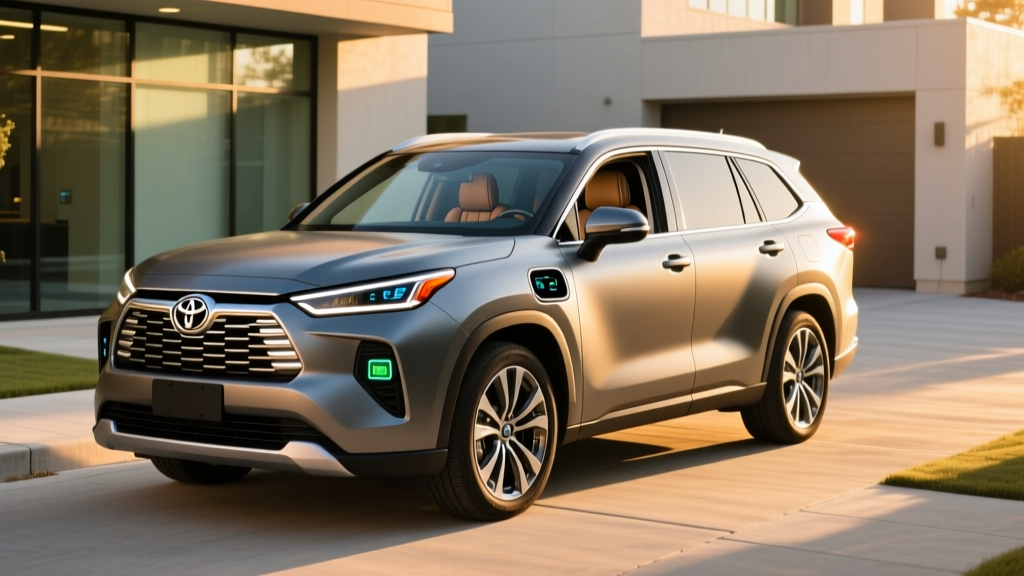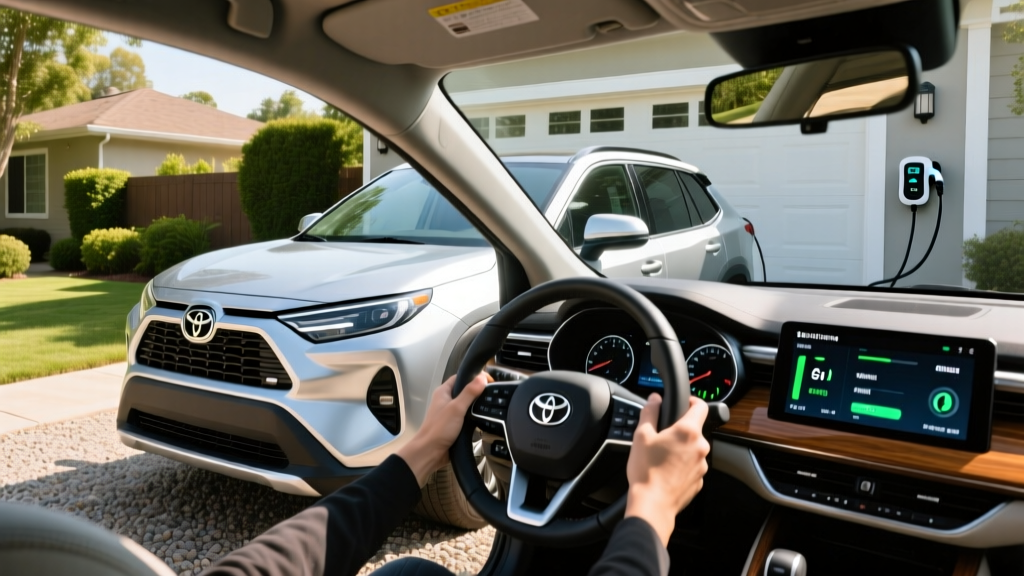
The 2024 Toyota RAV4 XLE Hybrid occupies a specific niche that many buyers are actively searching for: a compact SUV that delivers hybrid fuel economy without requiring a plug, a charging routine, or a lifestyle change. As the mid-trim of Toyota's hybrid RAV4 lineup, the XLE Hybrid pairs a 2.5-liter four-cylinder engine with Toyota's fourth-generation hybrid system and standard electronic all-wheel drive. For 2026 buyers evaluating used 2024 models or comparing against newer model years, this remains one of the most data-rich, reliability-proven hybrid SUVs on the market.
Below, we break down the exact EPA figures, real-world MPG observations, powertrain specs, battery warranty details, and how the RAV4 XLE Hybrid stacks up against its plug-in sibling (the RAV4 Prime) and full-electric competitors.
2024 Toyota RAV4 XLE Hybrid: Key Specifications
| Specification | Value |
|---|---|
| EPA Fuel Economy (City / Highway / Combined) | 41 / 38 / 39 MPG |
| Powertrain | 2.5L 4-cyl + 3 electric motors (AWD) |
| Combined System Horsepower | 219 hp |
| Drivetrain | Electronic AWD (eAWD) standard |
| Hybrid Battery | 1.6 kWh (sealed NiMH), self-charging HEV |
| Plug-In Required? | No — regenerative braking & engine recharge |
| 0–60 mph | ~7.4 seconds |
| Cargo Volume (behind rear seats) | 37.5 cu ft |
| Towing Capacity | 1,750 lbs |
| Base MSRP (XLE Hybrid AWD, 2024) | $33,575 (incl. destination) |
| Federal Tax Credit (§30D) | Not eligible — HEV, not a PHEV or BEV |
| Hybrid Battery Warranty | 10 years / 150,000 miles |
Fuel Economy: EPA Ratings vs. Real-World MPG
The EPA rates the 2024 RAV4 XLE Hybrid at 41 MPG city, 38 MPG highway, and 39 MPG combined (source: fueleconomy.gov). These figures apply to the XLE trim with standard eAWD — all 2024 RAV4 Hybrid trims share the same powertrain and EPA ratings.
| Driving Scenario | EPA Rating | Real-World Expectation |
|---|---|---|
| City / Stop-and-Go | 41 MPG | 38–44 MPG (hybrids often exceed EPA in city) |
| Highway (70+ mph) | 38 MPG | 33–37 MPG (aerodynamic drag, less regen benefit) |
| Combined | 39 MPG | 36–40 MPG depending on mix |
| Cold Weather (below 30°F) | — | 32–36 MPG (engine runs more for cabin heat) |
Why real-world city MPG can beat the EPA sticker: Toyota's hybrid system recovers kinetic energy during braking and low-speed driving, allowing the electric motor to handle much of the city load. In moderate climates with mixed suburban driving, owners frequently report 40–43 MPG. However, sustained highway driving at 75–80 mph and cold-weather operation reduce the hybrid advantage because the gasoline engine must run continuously for propulsion and cabin heating.
For context, the non-hybrid 2024 RAV4 LE AWD is rated at 27 MPG combined — meaning the XLE Hybrid delivers roughly 44% better fuel economy while adding 16 horsepower and standard AWD.
HEV vs. PHEV: Understanding the RAV4 Hybrid Lineup
Toyota sells two distinct electrified RAV4 variants, and confusing them is one of the most common buyer mistakes:
| Feature | RAV4 Hybrid (HEV) — XLE, XSE, etc. | RAV4 Prime (PHEV) |
|---|---|---|
| Powertrain Type | Conventional hybrid — no plug | Plug-in hybrid — charges from wall outlet |
| Battery Capacity | 1.6 kWh (NiMH) | 18.1 kWh (lithium-ion) |
| Electric-Only Range | ~1 mile at low speed (not practical) | 42 miles EPA (EV mode) |
| Total Combined Range | ~570 miles (14.5-gal tank) | ~600 miles (EV + gas combined) |
| Combined Horsepower | 219 hp | 302 hp |
| 0–60 mph | ~7.4 sec | ~5.7 sec |
| DC Fast Charge? | No | No (Level 2 AC only, ~2.5 hr at 240V) |
| Starting MSRP (2024) | $33,575 (XLE) | $43,690 (SE) |
| Federal Tax Credit | None | Up to $7,500 (§30D, subject to sourcing rules) |
| Fuel Economy (gas mode) | 39 MPG combined | 38 MPG combined (after EV range depleted) |
| MPGe (PHEV EV mode) | N/A | 94 MPGe combined |
The critical distinction: The RAV4 XLE Hybrid is a conventional hybrid (HEV). It never needs to be plugged in. The small 1.6 kWh battery recharges through regenerative braking and the gasoline engine. The RAV4 Prime is a plug-in hybrid (PHEV) with a much larger 18.1 kWh battery that provides 42 miles of electric-only driving before the gas engine engages. If you want electric-only commuting, the Prime is the correct choice — but it costs roughly $10,000 more before any tax credit.
Powertrain Deep Dive: 219 hp with Three Electric Motors
The 2024 RAV4 XLE Hybrid uses Toyota's Hybrid Synergy Drive IV system, which combines:
- Front motor/generator (MG1): Functions as a starter, generator, and engine-speed controller
- Front drive motor (MG2): 88 kW (118 hp) primary electric drive motor
- Rear drive motor (MG-R): 40 kW (54 hp) dedicated rear-axle motor providing electronic AWD
- 2.5L Dynamic Force inline-4: 176 hp / 163 lb-ft on its own, running the Atkinson cycle for efficiency
Combined system output is 219 horsepower. The eAWD system does not use a mechanical driveshaft — instead, the rear motor activates automatically when front-wheel slip is detected or during hard acceleration, distributing up to 20% of torque to the rear axle. This is sufficient for rain, light snow, and gravel roads, but it is not a dedicated off-road system.
The eCVT (electronically controlled continuously variable transmission) uses a planetary gearset rather than a belt or chain, which is one reason Toyota's hybrid drivetrains have exceptional longevity records — there are no friction bands, clutch packs, or belts to wear out.
Battery Warranty, Lifespan, and Replacement Cost
2024 RAV4 Hybrid Battery Coverage
Warranty: 10 years or 150,000 miles (whichever comes first) — transferable to subsequent owners. This covers the hybrid battery pack and all hybrid-system components including the inverter, motors, and control modules.
Chemistry: Sealed nickel-metal hydride (NiMH) — proven technology used in Toyota hybrids since the 1997 Prius.
Expected Lifespan: Toyota hybrid NiMH packs routinely last 150,000–200,000+ miles before significant capacity loss. Failures before 100,000 miles are uncommon.
Replacement Cost (out of warranty): $2,000–$4,000 for a new OEM pack from a Toyota dealer. Refurbished/reconditioned packs are available from $1,000–$2,000. Individual module replacement (a common repair for isolated cell failures) can cost $200–$600.
Toyota's hybrid battery track record is among the strongest in the industry. The NiMH chemistry used in the RAV4 Hybrid is less energy-dense than lithium-ion but significantly more durable over time and temperature extremes. Degradation in a conventional hybrid is also less consequential than in an EV — even with 20–30% capacity loss, the vehicle remains fully functional because the engine compensates. You may notice a slight MPG reduction (1–3 MPG) but not a stranded-vehicle scenario.
Toyota's official warranty documentation confirms the 10-year/150,000-mile hybrid battery coverage for all 2024 models, which was extended from the prior 8-year/100,000-mile standard starting with 2020 model-year vehicles.
Pricing, Trims, and Tax Credit Eligibility
The 2024 RAV4 XLE Hybrid carried a base MSRP of $33,575 including destination. Key trim pricing for the 2024 RAV4 Hybrid lineup:
| Trim | 2024 MSRP | Notable Additions Over XLE |
|---|---|---|
| LE Hybrid | $31,725 | Base hybrid — fewer comfort features |
| XLE Hybrid | $33,575 | Blind-spot monitor, dual-zone climate, smart key |
| XLE Premium Hybrid | $35,350 | SofTex seats, moonroof, power liftgate |
| Woodland Edition Hybrid | $35,825 | TRD-tuned suspension, all-terrain tires |
| XSE Hybrid | $36,060 | Sport-tuned suspension, 19" wheels |
| Limited Hybrid | $39,075 | Leather, JBL audio, panoramic roof |
Federal tax credit: The RAV4 Hybrid (HEV) does not qualify for the IRS §30D Clean Vehicle Credit. That credit applies only to battery-electric vehicles (BEVs) and plug-in hybrids (PHEVs) meeting battery-sourcing and critical-mineral requirements. Conventional hybrids are excluded regardless of price or efficiency.
The RAV4 Prime (PHEV) may qualify for up to $7,500 under §30D, but eligibility depends on the buyer's adjusted gross income, the vehicle's MSRP cap ($80,000 for SUVs), and battery-component/critical-mineral sourcing rules that have tightened annually. Always verify current eligibility on IRS.gov and consult a tax professional before assuming credit availability.
State incentives: A handful of states offer rebates or HOV-lane access for conventional hybrids, but these are increasingly rare as programs shift focus to BEVs and PHEVs. Check your state's energy or environmental agency for current programs.
Who Should Choose the RAV4 XLE Hybrid (vs. PHEV or EV)?
The RAV4 XLE Hybrid is the right choice if:
- You cannot charge at home (apartment, street parking, no garage access)
- You want maximum fuel economy with zero change to your refueling routine
- You regularly take long road trips and don't want to plan around charging stops
- You want proven long-term reliability with minimal maintenance
- Your budget is $30K–$38K and you don't want the Prime's $10K premium
Consider the RAV4 Prime (PHEV) instead if:
- You have home Level 2 charging and a commute under 42 miles round-trip
- You want to drive primarily on electricity most days
- You can utilize the up-to-$7,500 federal tax credit (effectively closing the price gap)
- You want 302 hp and 5.7-second 0–60 performance
Consider a full BEV instead if:
- You have reliable home charging and want zero tailpipe emissions
- Your daily driving is under 250 miles and you rarely road-trip beyond DC fast-charger coverage
- You want the lowest per-mile fuel cost and minimal drivetrain maintenance
Real-World Ownership: What to Expect
Fuel cost comparison: At 39 MPG combined and $3.50/gallon gas, the RAV4 XLE Hybrid costs approximately $0.090 per mile in fuel. A comparable gas-only RAV4 LE AWD (27 MPG combined) costs $0.130 per mile. Over 15,000 miles per year, the hybrid saves roughly $600 annually in fuel. Over a typical 8-year ownership period, that's approximately $4,800 in fuel savings — enough to offset much of the hybrid's MSRP premium over the non-hybrid LE.
Maintenance: The hybrid system adds virtually no maintenance burden. There is no hybrid-battery cooling filter to service on the RAV4 (unlike some older Prius models). Brake pads last significantly longer due to regenerative braking — 60,000–80,000+ miles is common. Oil changes follow the standard 10,000-mile/12-month Toyota interval using 0W-16 synthetic.
Insurance: Hybrid RAV4 insurance premiums are typically comparable to gas RAV4 rates and lower than BEV premiums. National average for a 2024 RAV4 Hybrid is approximately $1,500–$1,900/year depending on driver profile and state.
Resale value: Toyota RAV4 Hybrids hold value exceptionally well. According to industry depreciation data, a 3-year-old RAV4 Hybrid retains approximately 65–70% of its original MSRP, outperforming most competitors in the compact SUV segment.
Pros
- 39 MPG combined — among the best in the compact SUV class
- Standard eAWD across all hybrid trims
- No plug-in required — zero lifestyle adjustment
- 10-year/150,000-mile hybrid battery warranty
- Proven, low-maintenance eCVT powertrain
- Strong resale value and reliability record
- 37.5 cu ft cargo space (competitive with gas RAV4)
Cons
- No federal tax credit eligibility (HEV exclusion)
- Highway MPG drops noticeably above 75 mph
- eAWD rear motor is light-duty — not for serious off-roading
- Cabin noise under hard acceleration (eCVT drone)
- Infotainment system is functional but not class-leading
- 1,750-lb towing capacity (lower than some turbo competitors)
- Cold-weather MPG penalty of 3–6 MPG due to engine-run heating
Frequently Asked Questions
How many MPG does the 2024 RAV4 XLE Hybrid actually get?
The EPA rates it at 41 city / 38 highway / 39 combined MPG. In real-world mixed driving, most owners see 36–43 MPG depending on conditions. City and suburban driving tend to produce the best results; sustained highway speeds and cold weather reduce efficiency.
Does the RAV4 Hybrid need to be plugged in?
No. The 2024 RAV4 Hybrid is a conventional HEV. The 1.6 kWh battery recharges entirely through regenerative braking and the gasoline engine. There is no charging port and no plug-in capability. If you want plug-in electric driving, you need the RAV4 Prime (PHEV).
How far can the RAV4 Hybrid drive on electric power alone?
Effectively about 1 mile at very low speeds (under 25 mph) in residential settings. This is not a usable electric-only range — the system uses the electric motor to assist the engine and enable engine-off coasting, not to replace gasoline propulsion. For meaningful electric-only driving (42 miles), the RAV4 Prime PHEV is required.
Is the RAV4 Hybrid reliable, and what does battery replacement cost?
Toyota's hybrid system has an exceptional reliability record spanning over 25 years of production. The NiMH hybrid battery is warranted for 10 years/150,000 miles, and real-world data shows many packs lasting well beyond 200,000 miles. Out-of-warranty replacement runs $2,000–$4,000 for a new OEM pack, or $1,000–$2,000 for a refurbished unit. Individual module repairs cost significantly less.
Does the 2024 RAV4 Hybrid qualify for any tax credit?
No. The IRS §30D Clean Vehicle Credit applies only to plug-in vehicles (BEVs and PHEVs). The conventional RAV4 Hybrid does not qualify regardless of buyer income or vehicle price. The RAV4 Prime (PHEV) may qualify for up to $7,500 depending on battery-sourcing requirements and buyer income limits. Always verify on IRS.gov.
How does the RAV4 XLE Hybrid compare to the RAV4 Prime?
The Prime offers 42 miles of electric-only range, 302 hp, and potential federal tax-credit eligibility — but starts at $43,690, roughly $10,000 more than the XLE Hybrid. If you can charge at home and your commute is under 42 miles, the Prime can operate almost entirely on electricity for daily driving. If you can't charge at home or prefer a lower purchase price, the XLE Hybrid delivers excellent MPG with zero plug-in hassle.
Is the eAWD system good in snow?
The electronic AWD provides competent traction for moderate snow, rain, and gravel. The rear motor engages automatically when slip is detected. However, it's a light-duty system providing up to 20% rear torque bias — it is not equivalent to a mechanical AWD system with a locking center differential. For severe winter conditions, dedicated winter tires make a larger difference than the AWD system alone.