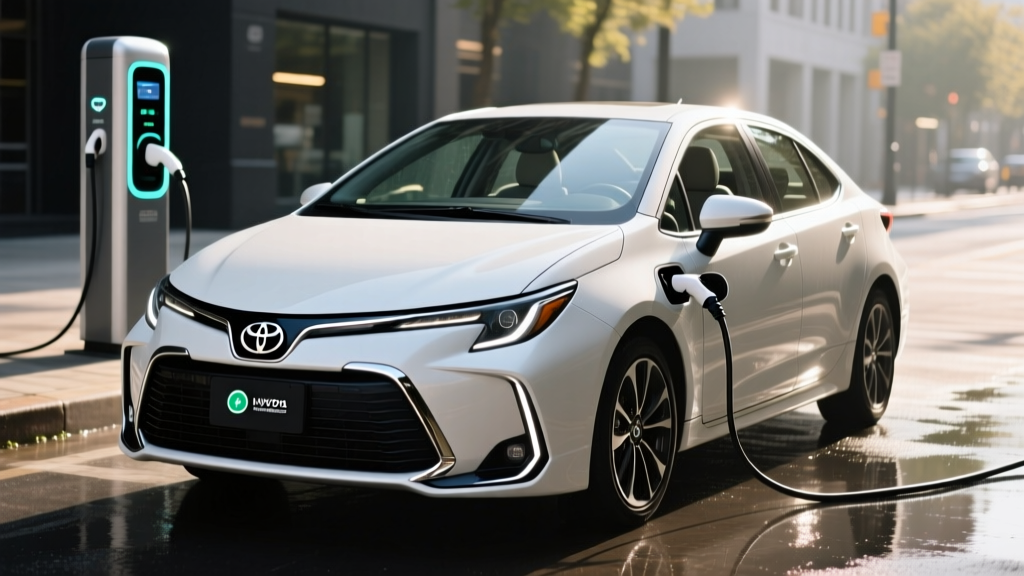
The Toyota Corolla Hybrid has earned its reputation as one of the most efficient compact sedans on the road, and the 2026 model year continues that legacy with minimal changes to a proven formula. If you're searching for a Corolla Hybrid 2026 model, you're looking at a conventional hybrid (HEV) — not a plug-in — that delivers exceptional fuel economy without ever needing to be plugged in.
This guide covers everything a buyer needs: exact EPA MPG figures, how real-world driving compares to the sticker, powertrain specs, pricing by trim, battery warranty coverage, and whether this hybrid makes more sense for your situation than a PHEV or full battery-electric vehicle.
2026 Corolla Hybrid Fuel Economy: EPA Ratings and Real-World MPG
The headline number is what draws most buyers to the Corolla Hybrid. For 2026, Toyota carries over the fifth-generation hybrid powertrain that debuted with this generation, and the EPA ratings remain among the best in the compact sedan segment.
| Drivetrain | City MPG | Highway MPG | Combined MPG |
|---|---|---|---|
| FWD (LE, SE) | 53 | 46 | 50 |
| AWD (SE, XLE) | 47 | 41 | 44 |
Source: fueleconomy.gov
In mixed driving, the FWD Corolla Hybrid consistently meets or slightly exceeds its 50 MPG combined EPA rating — particularly in city and suburban driving where the hybrid system recovers the most energy through regenerative braking. Owners frequently report 52-55 MPG in warm-weather city commuting. Highway-only driving at 75+ mph typically drops to 42-45 MPG for FWD trims, as the electric motor contributes less at sustained high speed. AWD trims run about 4-6 MPG lower across all conditions due to the rear motor and added weight. In cold weather (below 35°F), expect a 5-10% fuel economy reduction as the engine runs longer to provide cabin heat and the battery operates less efficiently.
Hybrid vs. Plug-In Hybrid: Understanding the 2026 Corolla's System
A common question from shoppers: is the Corolla Hybrid a plug-in? The answer is no. The 2026 Corolla Hybrid is a conventional hybrid electric vehicle (HEV). It generates all its electricity internally through the gasoline engine and regenerative braking. There is no charging port, no electric-only driving mode of meaningful distance, and no need to install a home charger.
| Feature | HEV (Corolla Hybrid) | PHEV (e.g., Prius Prime) | BEV (e.g., Tesla Model 3) |
|---|---|---|---|
| Plug-in required? | No | Yes | Yes |
| Electric-only range | <1 mile at low speed | 25-44 miles typical | 250-360+ miles |
| Gasoline engine? | Yes | Yes | No |
| Home charging needed? | No | Recommended | Essential |
| Federal tax credit (§30D) | No | Up to $7,500* | Up to $7,500* |
| Starting price range | ~$24,000-$29,000 | ~$33,000-$40,000 | ~$38,000-$55,000+ |
*§30D tax credit eligibility depends on MSRP caps, buyer income limits, and battery component/critical mineral sourcing. See IRS guidelines for current-year rules.
The Corolla Hybrid is ideal if you want maximum efficiency with zero lifestyle change — no charging routines, no range planning, no home electrical upgrades. If you have home charging access and a short commute, a PHEV like the Prius Prime (44 miles electric-only) lets you drive most days without burning gas. If you have reliable charging and want to eliminate gas entirely, a BEV is the next step.
Powertrain Specs: Engine, Motors, and Horsepower
The 2026 Corolla Hybrid pairs a 1.8-liter four-cylinder Atkinson-cycle engine with Toyota's hybrid transaxle system. FWD models use a single front motor-generator setup, while AWD trims add a second, independent rear electric motor that engages during acceleration and low-traction conditions.
| Specification | Detail |
|---|---|
| Engine | 1.8L 4-cyl Atkinson-cycle |
| Combined system horsepower | 138 hp |
| Transmission | eCVT (planetary gearset) |
| Drivetrain options | FWD or electronic AWD |
| Hybrid battery | ~0.9 kWh lithium-ion (sealed, not plug-in) |
| 0-60 mph (est.) | ~9.0 seconds (FWD) |
| Fuel tank capacity | 11.4 gallons |
| Total driving range (FWD, est.) | ~570 miles |
The 138 combined horsepower is modest by modern standards, and the Corolla Hybrid is not a quick car. However, the electric motor's instant torque gives it responsive off-the-line acceleration in city driving, which is where this powertrain shines. The eCVT is a gearless planetary system — not a belt-driven CVT — so it avoids the rubber-band feel and durability concerns associated with traditional CVTs.
The small ~0.9 kWh hybrid battery is never "depleted" in the way an EV battery is. The hybrid system constantly cycles it between roughly 40-80% state of charge, which significantly reduces stress and extends its operational life.
2026 Corolla Hybrid Pricing by Trim
Toyota offers the 2026 Corolla Hybrid across several trim levels. Pricing below reflects estimated MSRP including destination charge.
| Trim | Drivetrain | MSRP (est.) |
|---|---|---|
| LE | FWD | $24,225 |
| SE | FWD or AWD | $26,725 - $28,125 |
| XLE | AWD | $29,725 |
Pricing based on Toyota's published MSRP. Verify with your dealer for current availability and regional pricing.
The 2026 Corolla Hybrid does not qualify for the federal §30D new clean vehicle credit. That credit applies only to plug-in electric vehicles (PHEVs and BEVs) meeting battery sourcing and MSRP/income requirements. Conventional hybrids are excluded. Some states offer modest rebates for HEVs — check your state energy office or AFDC incentive database for local programs. The Corolla Hybrid's low purchase price, however, means its total cost of ownership is competitive with PHEVs even without a federal credit.
Battery Warranty, Lifespan, and Replacement Cost
Battery longevity is the top concern for hybrid buyers considering long-term ownership. Toyota addresses this with one of the strongest hybrid battery warranties in the industry.
- Hybrid battery coverage: 10 years / 150,000 miles (whichever comes first)
- Hybrid system components: 8 years / 100,000 miles
- Powertrain warranty: 5 years / 60,000 miles
- Capacity retention threshold: Toyota covers the hybrid battery if it fails to function as designed (no specific % capacity floor published, as HEV batteries are not range-defining)
In practice, Toyota hybrid batteries routinely last 150,000-200,000+ miles before replacement is needed. The Prius, which shares hybrid architecture philosophy, has documented cases of original batteries exceeding 250,000 miles. The Corolla Hybrid's smaller battery experiences less thermal and depth-of-discharge stress than an EV battery, contributing to its longevity.
If replacement is eventually needed out of warranty, a new OEM Corolla Hybrid battery typically costs $2,000-$3,500 including labor. Refurbished or reconditioned units are available for $1,000-$1,800. Individual module replacement (if only a few cells degrade) can reduce costs further.
Who Should Buy the 2026 Corolla Hybrid?
✓ Choose the Corolla Hybrid If
- You want 50 MPG without changing your fueling routine
- You don't have access to home or workplace charging
- Your budget is under $30,000 and you want maximum efficiency
- You plan to own the car 8-10+ years and value proven reliability
- You live in a region with extreme cold where EV range loss is a concern
- You drive high annual miles and want low per-mile fuel cost
✗ Look Elsewhere If
- You want electric-only commuting (consider Prius Prime PHEV)
- You need strong acceleration — 138 hp and a 9-second 0-60 are leisurely
- You want federal tax credit eligibility (PHEVs/BEVs only)
- You need a hatchback or SUV body style (Corolla is sedan-only)
- You want advanced driver-assist beyond Toyota Safety Sense 3.0
- Premium interior materials and large infotainment screens are priorities
Corolla Hybrid vs. the Competition
The compact hybrid sedan segment has thinned out as competitors shift to crossovers, but the Corolla Hybrid still faces a few rivals worth comparing:
| Model | Combined MPG | HP | Starting MSRP |
|---|---|---|---|
| Toyota Corolla Hybrid (FWD) | 50 | 138 | $24,225 |
| Hyundai Elantra Hybrid | 54 | 139 | $26,500 |
| Honda Civic Hybrid | 49 | 200 | $29,845 |
The Elantra Hybrid edges out the Corolla on paper with 54 MPG combined, though real-world results are closer. The Civic Hybrid trades a single MPG for significantly more power (200 hp) and a more refined interior — at a $5,000+ premium. The Corolla Hybrid occupies the value-efficiency sweet spot: lowest price, AWD availability (neither rival offers it), and Toyota's long-standing hybrid reliability track record.
Frequently Asked Questions
How many MPG does the 2026 Corolla Hybrid actually get?
The EPA rates the FWD Corolla Hybrid at 53 city / 46 highway / 50 combined MPG. AWD trims are rated at 47/41/44 MPG. In real-world driving, FWD models often exceed 50 MPG in city conditions and achieve 42-45 MPG on sustained highway trips. Cold weather reduces efficiency by roughly 5-10%.
Does the Corolla Hybrid need to be plugged in?
No. The Corolla Hybrid is a conventional HEV. It charges its own small battery through regenerative braking and the gasoline engine. There is no plug, no charging cable, and no electric-only driving range to manage.
Is the 2026 Corolla Hybrid reliable?
Toyota's hybrid powertrain is among the most proven in the automotive industry, with over 25 years of production history. The Corolla Hybrid shares architecture with the Prius family, which has demonstrated 200,000+ mile battery longevity in widespread real-world use. Toyota backs the hybrid battery with a 10-year/150,000-mile warranty.
What does a Corolla Hybrid battery replacement cost?
Out-of-warranty replacement with a new OEM hybrid battery typically runs $2,000-$3,500 including labor. Refurbished units are available for $1,000-$1,800. Most owners never need replacement within the warranty period, and many original batteries last 150,000-250,000 miles.
Does the 2026 Corolla Hybrid qualify for a tax credit?
No. The federal §30D clean vehicle credit applies only to plug-in vehicles (PHEVs and BEVs). The Corolla Hybrid, as a conventional HEV, does not qualify. Check your state's incentive programs for any local hybrid rebates.
Corolla Hybrid vs. Prius — which should I buy?
The Prius offers slightly better fuel economy (up to 57 MPG combined), more cargo space as a liftback, and is available as a PHEV (Prius Prime, 44 miles electric-only). The Corolla Hybrid starts about $4,000 lower and comes in a traditional sedan form factor. If budget is paramount, the Corolla Hybrid wins. If you want plug-in capability or more versatility, the Prius or Prius Prime is the better choice.