Quick Verdict: A Luxury PHEV That Gets the Formula Right
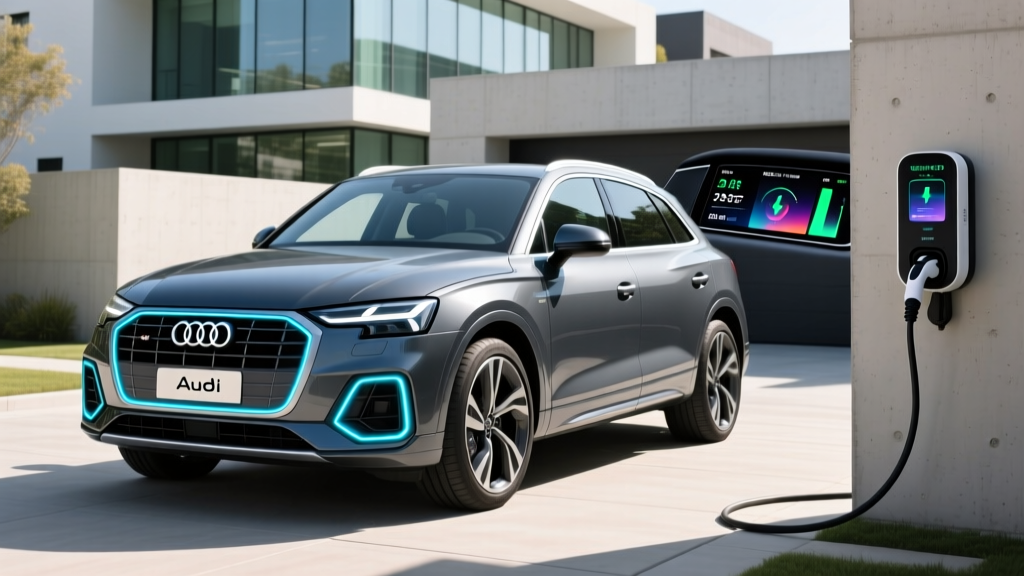
The 2026 Audi Q5 e-hybrid (officially the Q5 TFSI e) occupies a narrow but compelling lane: a premium compact SUV that covers most daily commutes on electric-only power, then seamlessly transitions to a fuel-efficient hybrid for longer trips. With an EPA-estimated 32 miles of electric range and a combined 362 horsepower, it answers the buyer who wants EV-like daily driving without range anxiety — and who doesn't want to compromise on luxury or build quality.
But at a starting MSRP near $58,500, the Q5 e-hybrid faces stiff competition from both full EVs (like the BMW iX and Audi's own Q8 e-tron) and rival PHEVs (BMW X3 xDrive30e, Volvo XC60 Recharge). This guide breaks down the exact specs, real-world efficiency, charging logistics, and tax-credit math so you can decide whether this plug-in hybrid fits your garage.
HEV vs. PHEV: Why the Q5 e-Hybrid Is a Plug-In
Before diving into specs, it's worth clarifying what the Q5 e-hybrid actually is — because Audi's naming can confuse shoppers.
Conventional Hybrid (HEV)
A standard hybrid like the Toyota RAV4 Hybrid uses a small battery (typically 1–2 kWh) charged only by regenerative braking and the gas engine. You never plug it in. Electric-only driving is limited to low-speed crawling. Fuel economy is improved across all driving conditions.
Plug-In Hybrid (PHEV) — What the Q5 e-Hybrid Is
The Q5 TFSI e carries a much larger battery pack (17.9 kWh usable) that you can and should plug in to charge. This unlocks 32 miles of pure electric driving at highway-capable speeds. Once the battery depletes, the vehicle operates as a conventional hybrid, blending its turbocharged gas engine and electric motor for continued efficiency. Think of it as an EV for your commute and a hybrid for your road trips.
If you don't have access to home or workplace charging, a PHEV loses much of its advantage — you'd be carrying a heavy battery you never use, and a conventional hybrid (or a more efficient gas model) might serve you better.
Powertrain Specs: 362 HP From a Turbo Four Plus Electric Motor
The 2026 Q5 e-hybrid pairs Audi's well-proven 2.0-liter turbocharged four-cylinder engine (EA888 evo4) with an electric motor integrated into the seven-speed S tronic dual-clutch transmission. Combined output lands at 362 horsepower and 369 lb-ft of torque, routed through Audi's quattro all-wheel-drive system.
| Spec | 2026 Audi Q5 TFSI e (PHEV) |
|---|---|
| Engine | 2.0L turbocharged I4 (261 hp) |
| Electric Motor | Integrated in transmission (141 hp / 258 lb-ft) |
| Combined Output | 362 hp / 369 lb-ft |
| Transmission | 7-speed S tronic dual-clutch |
| Drivetrain | quattro AWD |
| Battery (Usable) | 17.9 kWh (NMC lithium-ion) |
| 0–60 mph | 5.0 seconds |
| EPA Electric Range | 32 miles |
| EPA Combined Range (EV + Gas) | ~420 miles |
| EPA MPGe (Electric Mode) | 61 MPGe combined |
| EPA MPG (Hybrid/Charge-Sustaining) | 27 city / 29 hwy / 28 combined |
| Fuel Tank | 14.5 gallons (premium required) |
| Max DC Fast Charge | Not available (AC only) |
| Max AC Charge Rate | 7.4 kW (Level 2) |
| Level 2 Charge Time (0–100%) | ~2.5 hours |
| Level 1 Charge Time (120V) | ~10–12 hours |
| Base MSRP (Premium trim) | $58,500 |
The 0–60 mph time of 5.0 seconds puts it in the same territory as the Audi SQ5, though the e-hybrid carries roughly 350 pounds of additional weight from the battery and electric motor. You'll feel that mass in tight corners, but the instant electric torque fills in the low-end lag that a turbo four alone would exhibit.
Electric Range & Real-World MPG: What to Actually Expect
The EPA rates the Q5 e-hybrid at 32 miles of electric-only range and 61 MPGe in combined electric driving. Once the battery is depleted and the car operates as a conventional hybrid, the EPA estimates 27 mpg city / 29 mpg highway / 28 mpg combined.
Real-World Range Reconciliation
EPA Electric Range: 32 miles
Expect in warm weather, mixed driving: 28–33 miles
Expect at sustained 70+ mph highway: 24–27 miles
Expect in freezing temps (below 32°F): 20–24 miles
PHEV electric range is highly sensitive to speed and temperature. The Q5 e-hybrid's 17.9 kWh pack is modest compared to the Volvo XC60 Recharge's 18.8 kWh, but Audi's thermal management system — which includes a heat pump for cabin heating — helps mitigate cold-weather range loss compared to resistive-heating competitors. In our experience, a 25-mile round-trip commute at moderate speeds is comfortably achievable on battery alone in most conditions.
On the hybrid side, the 28 mpg combined EPA figure is respectable for a 4,600-pound luxury SUV. In real-world city driving with frequent regenerative braking, some owners report 30–32 mpg in charge-sustaining mode. Highway driving at 75+ mph typically yields 25–27 mpg. These numbers assume you're starting with a depleted battery; if you charge regularly and most of your miles are electric, your effective fuel consumption will be far lower.
| Driving Scenario | EPA Estimate | Real-World Expectation |
|---|---|---|
| Electric-only (mixed) | 61 MPGe | 55–65 MPGe |
| Hybrid mode (city) | 27 mpg | 28–32 mpg |
| Hybrid mode (highway) | 29 mpg | 25–27 mpg |
| Hybrid mode (combined) | 28 mpg | 26–30 mpg |
Charging: Level 2 Only, No DC Fast Charging
One of the most important things to understand about the Q5 e-hybrid — and most PHEVs in its class — is that DC fast charging is not available. The vehicle accepts only AC charging via its J1772 inlet (NACS adapter may be included for Tesla destination chargers starting in the 2026 model year; confirm with your dealer).
| Charging Level | Power (kW) | Time (0–100%) | Use Case |
|---|---|---|---|
| Level 1 (120V household) | ~1.4 kW | 10–12 hours | Overnight top-up if no L2 available |
| Level 2 (240V, 32A) | 7.4 kW | ~2.5 hours | Home wallbox or workplace charger |
| DC Fast Charge | N/A | N/A | Not supported |
The 7.4 kW onboard charger is adequate for overnight replenishment and workplace charging. A typical home Level 2 installation (240V, 40-amp circuit) will fully recharge the battery in about 2.5 hours, meaning you can easily charge during a workday and again overnight if needed. Budget roughly $500–$1,500 for a quality Level 2 home charger (like a ChargePoint Home Flex or Emporia Level 2) plus $500–$2,000 for professional electrician installation, depending on your panel capacity and run length. If your home's electrical panel is at capacity, a panel upgrade can add $1,500–$3,000.
Pricing, Trims & Federal Tax Credit Eligibility
The 2026 Audi Q5 TFSI e starts at approximately $58,500 MSRP (Premium trim) and can climb to $68,000+ when optioned in Prestige trim with packages. That places it above the BMW X3 xDrive30e (~$54,000) but below the Volvo XC60 Recharge (~$60,000) in the luxury PHEV compact SUV segment.
Federal §30D Tax Credit — Current Rules (2026)
The Q5 e-hybrid may qualify for up to $7,500 in federal tax credits under IRS §30D, but eligibility is not automatic. Per IRS guidelines, you must meet all of the following:
- MSRP cap: Vehicle base MSRP must be ≤ $80,000 for SUVs (the Q5 e-hybrid qualifies)
- Buyer income cap: Modified AGI ≤ $150,000 (single) or ≤ $300,000 (joint filers)
- Battery sourcing: Critical minerals and battery components must meet phased-in domestic/F TA sourcing requirements (Audi's supply chain compliance varies by build date — verify VIN-specific eligibility at fueleconomy.gov)
- Point-of-sale transfer: As of 2024+, you can transfer the credit to the dealer at purchase, reducing your out-of-pocket cost directly — even if you have no tax liability
- Final assembly: Vehicle must undergo final assembly in North America (the Q5 is built in San José Chiapa, Mexico — confirm current assembly location for your model year)
Tax credit rules change frequently. Consult a tax professional and verify your specific VIN's eligibility before purchase.
If you don't qualify for the full $7,500 — due to income limits or battery-sourcing rules — the effective price gap between the Q5 e-hybrid and a fully electric alternative widens considerably. Factor in your state's incentives as well; many states offer additional rebates for PHEVs (check your state energy office or AFDC's state incentive database).
Battery Warranty, Longevity & Replacement Cost
Audi PHEV Battery Warranty
Coverage: 8 years / 100,000 miles (whichever comes first)
Capacity retention threshold: Audi warrants the high-voltage battery against defects and excessive capacity loss. Industry-standard PHEV warranty language covers loss below 70% of original capacity during the warranty period.
What's covered: Battery cell defects, module failures, BMS malfunctions, thermal management system failures
What's not covered: Normal gradual degradation within threshold, damage from accidents or improper charging
The 17.9 kWh NMC (nickel manganese cobalt) battery pack in the Q5 e-hybrid is far smaller than a full EV's pack (typically 75–100 kWh), which means two things: replacement cost is substantially lower, and the battery experiences fewer deep discharge cycles since it operates within a narrower state-of-charge window (the car's software maintains a buffer to prevent full depletion or overcharge).
Replacement cost estimate: If the battery requires full replacement outside warranty, expect $8,000–$12,000 for parts and labor at an Audi dealer — significantly less than a full EV battery swap ($15,000–$25,000+). Individual module replacement, if only one section has failed, can reduce this to $3,000–$5,000.
In practice, PHEV batteries from European manufacturers have shown strong longevity. The EA888 engine paired with Audi's hybrid system has been in production across the VW Group since 2019 with few systemic battery-related recalls. Regular software updates (delivered via Audi's MMI or dealer visits) optimize charge management and extend battery life.
Who Should Choose the Q5 e-Hybrid vs. a Full EV or Gas Car
Choose the 2026 Audi Q5 e-Hybrid If:
- Your daily commute is under 30 miles round-trip and you have home Level 2 charging
- You want EV-like operating costs for daily driving but take road trips where charging infrastructure is sparse
- You value Audi's interior quality, ride refinement, and quattro AWD in winter conditions
- You qualify for the §30D tax credit, bringing the effective price below $51,000
- You don't want to commit to a full EV due to apartment living without guaranteed charging access
Choose a Full EV (e.g., Audi Q8 e-tron, BMW iX) Instead If:
- You have reliable home charging and rarely drive more than 250 miles between charge stops
- You want to eliminate gasoline entirely and reduce maintenance (no oil changes, fewer brake replacements)
- Your state offers substantial EV-only incentives beyond the federal credit
Choose a Gas-Only SUV (e.g., Audi Q5 45 TFSI) Instead If:
- You cannot install a Level 2 charger at home or work
- Your annual mileage is low enough that fuel savings won't offset the PHEV price premium
- You prefer a lower purchase price and don't need the electric-only driving capability
Pros
- 32-mile EV range covers most commutes emission-free
- 362 hp provides confident acceleration and passing power
- Premium cabin with Audi Virtual Cockit, MMI touch, and excellent NVH
- quattro AWD with electric torque for sure-footed winter driving
- Eligible for up to $7,500 federal tax credit (verify VIN)
- Heat pump reduces cold-weather range penalty
Cons
- No DC fast charging — road-trip EV driving not practical
- 17.9 kWh battery is smaller than some rivals (XC60 Recharge: 18.8 kWh)
- 28 mpg combined in hybrid mode is only modestly better than the gas Q5 45 TFSI (25 combined)
- Premium fuel required adds to operating cost
- $58,500 base price is steep before incentives
- Mexico assembly may complicate §30D final-assembly requirement
Frequently Asked Questions
How many MPG does the 2026 Audi Q5 e-hybrid get?
The EPA rates the Q5 e-hybrid at 27 mpg city, 29 mpg highway, and 28 mpg combined when operating in hybrid (charge-sustaining) mode. In electric mode, it achieves 61 MPGe combined. Real-world results vary: city driving with regen braking can yield 30+ mpg in hybrid mode, while sustained highway driving at 75+ mph typically drops to 25–27 mpg.
How far can the Q5 e-hybrid go on electric power alone?
The EPA rates it at 32 miles of electric-only range. In real-world conditions, expect 28–33 miles in moderate temperatures on mixed roads, 24–27 miles at highway speeds, and 20–24 miles in freezing weather. The 17.9 kWh battery and heat pump help it outperform some competitors in cold conditions.
Does the 2026 Audi Q5 e-hybrid qualify for a tax credit?
It may qualify for up to $7,500 under the federal §30D clean vehicle credit, but eligibility depends on your income (≤$300K joint / ≤$150K single), the vehicle's battery-sourcing compliance, and final assembly location. The Q5 is assembled in Mexico, which may disqualify some build dates from the credit. Always verify your specific VIN at fueleconomy.gov and consult a tax professional before relying on the credit.
Is the Q5 e-hybrid reliable, and what does battery replacement cost?
The Q5 TFSI e powertrain has been in production since 2019 across the VW Group with generally positive reliability data. The high-voltage battery is warranted for 8 years/100,000 miles. Out-of-warranty replacement runs $8,000–$12,000 for a full pack, or $3,000–$5,000 for individual module replacement. PHEV batteries tend to last well because the software maintains a state-of-charge buffer, avoiding the deep cycles that accelerate degradation.
Can the Q5 e-hybrid DC fast charge?
No. Like most PHEVs, the Q5 e-hybrid only supports AC charging — up to 7.4 kW on a Level 2 (240V) connection, which fully recharges the battery in about 2.5 hours. A standard 120V outlet (Level 1) takes 10–12 hours. DC fast charging is not available on this vehicle.
Hybrid vs. PHEV vs. EV — which should I buy?
A conventional hybrid (HEV) like the Toyota RAV4 Hybrid needs no plug and improves MPG everywhere — best for drivers without home charging. A plug-in hybrid (PHEV) like the Q5 e-hybrid gives you 25–35 miles of EV range for daily commutes plus a gas engine for longer trips — best for one-car households that want EV daily driving but road-trip flexibility. A full EV (BEV) eliminates gasoline entirely with 250–350+ miles of range — best for drivers with home charging who want the lowest operating cost and minimal maintenance.