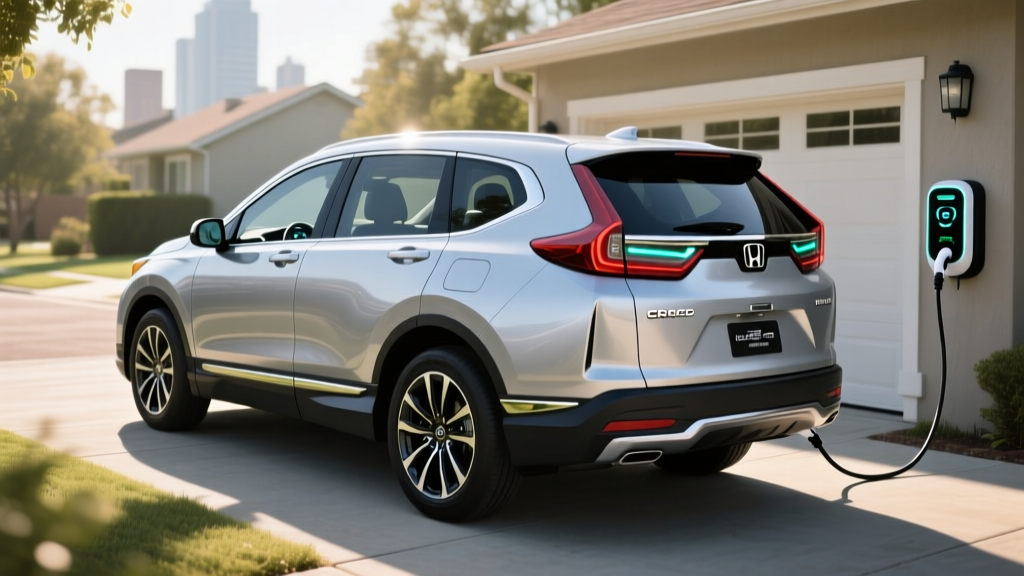
The compact hybrid SUV segment has no shortage of contenders, but the 2026 Honda CR-V Hybrid SUV continues to anchor itself as one of the most practical, fuel-efficient, and family-friendly options on the market. With a two-motor hybrid powertrain, standard all-wheel drive on most trims, and a cabin that punches above its class in cargo volume, Honda's hybrid workhorse targets buyers who want meaningful fuel savings without plugging in or changing their driving habits.
This guide covers everything a prospective buyer needs: exact EPA fuel economy figures, real-world MPG expectations, powertrain specs, trim-level pricing, battery warranty details, and whether any federal or state incentives apply. We also compare the CR-V Hybrid against its plug-in and full-EV alternatives so you can decide which electrified powertrain actually fits your life.
HEV vs. PHEV: Where the CR-V Hybrid Fits
Before digging into specs, it's essential to understand what the 2026 CR-V Hybrid is — and what it isn't. Honda sells the CR-V Hybrid as a conventional hybrid electric vehicle (HEV). That means it uses a gasoline engine paired with electric motors and a small battery pack that recharges through regenerative braking and engine power. You never plug it in. You simply fuel up at any gas station and drive.
This is fundamentally different from a plug-in hybrid electric vehicle (PHEV) like the Toyota RAV4 Prime or the Hyundai Tucson PHEV, which carries a larger battery (typically 15–20 kWh), offers 30–42 miles of electric-only range, and requires a home or public charger to unlock its full efficiency benefit.
HEV vs. PHEV at a Glance
| Feature | CR-V Hybrid (HEV) | Typical Compact PHEV |
|---|---|---|
| Plug-in required? | No | Yes, for EV range |
| Electric-only range | ~1 mi (low-speed) | 30–42 mi |
| Battery size | ~1.1 kWh | 15–20 kWh |
| Combined MPG (gas) | 37–40 MPG | 35–40 MPG (after EV range) |
| Federal tax credit (§30D) | Not eligible | Up to $7,500 (if eligible) |
| Price premium over gas | ~$1,500–$3,000 | ~$5,000–$9,000 |
The CR-V Hybrid's appeal is simplicity: no charger installation, no range planning, just better MPG.
Honda does not currently offer a CR-V PHEV in the United States for the 2026 model year. If plug-in electric range is a priority, you'll need to look at competitors like the RAV4 Prime, Tucson PHEV, or Sportage PHEV — or step up to a full battery-electric vehicle like the Hyundai Ioniq 5 or Tesla Model Y.
Fuel Economy: EPA Ratings and Real-World MPG
The headline number for any hybrid buyer is fuel economy, and the 2026 CR-V Hybrid delivers competitive figures across its trim lineup. Honda's two-motor hybrid system pairs a 2.0-liter Atkinson-cycle four-cylinder engine with dual electric motors for seamless torque delivery and strong low-speed efficiency.
| Trim | City MPG | Highway MPG | Combined MPG | Drivetrain |
|---|---|---|---|---|
| Sport Hybrid | 43 | 36 | 40 | FWD |
| Sport Hybrid | 40 | 34 | 37 | AWD |
| Sport-L Hybrid | 40 | 34 | 37 | AWD |
| Sport Touring Hybrid | 40 | 34 | 37 | AWD |
Source: EPA Fuel Economy
Real-World MPG: What to Actually Expect
Hybrids typically exceed their EPA city rating in stop-and-go traffic because regenerative braking recaptures energy that a gas car wastes as heat. In our experience and aggregated owner reports, CR-V Hybrid drivers regularly see 41–44 MPG in city driving during moderate temperatures.
Highway driving tells a different story. At sustained 70–80 mph speeds, the electric motor contributes less and the 2.0L engine carries most of the load. Expect 32–35 MPG on the highway with AWD trims — slightly below the EPA sticker. Cold weather (below 35°F) can reduce combined efficiency by 5–10% as the engine runs more frequently to generate cabin heat and maintain battery temperature.
- City / suburban: 38–44 MPG (often beats EPA)
- Highway (65–75 mph): 32–35 MPG
- Cold weather combined: 33–35 MPG
- Annual fuel cost at $3.40/gal & 15,000 mi: ~$1,380 (vs. ~$1,950 for a 26 MPG gas SUV)
Powertrain and Performance Specs
The 2026 CR-V Hybrid uses Honda's fourth-generation two-motor hybrid system, a setup that's proven itself across the Accord Hybrid and Civic lineup. The gasoline engine and electric motors work in concert — sometimes in series, sometimes in parallel — to optimize efficiency without the driver ever noticing the transitions.
| Specification | Detail |
|---|---|
| Engine | 2.0L Atkinson-cycle DOHC 4-cylinder |
| Engine horsepower | 145 hp @ 6,100 rpm |
| Electric motors | Dual-motor (drive + generator) |
| Combined system output | 204 hp / 247 lb-ft torque |
| Transmission | e-CVT (no traditional gears) |
| Hybrid battery | ~1.1 kWh lithium-ion |
| 0–60 mph | ~7.6 seconds (AWD) |
| Drivetrain | FWD (Sport) or Real Time AWD |
| Towing capacity | 1,000 lbs |
| Cargo volume (rear seats up) | 36.3 cu ft |
The 204 combined horsepower is competitive with the Toyota RAV4 Hybrid (219 hp) and a meaningful step up from the non-hybrid CR-V's 190 hp turbocharged output. The electric motors deliver instant torque from a stop, making the CR-V Hybrid feel noticeably quicker in city driving than its EPA numbers suggest. The e-CVT operates smoothly without the rubber-band sensation that older CVTs produced, though it won't satisfy enthusiasts who want stepped gear ratios.
Trim Levels and Pricing
Honda positions the hybrid powertrain across three trims, all wearing the "Sport" badge to differentiate them from the turbocharged gas models. Pricing below reflects 2026 MSRP including destination charges.
| Trim | MSRP (incl. destination) | Key Features |
|---|---|---|
| Sport Hybrid FWD | ~$36,395 | 18" wheels, 9" touchscreen, wireless CarPlay/Android Auto, Honda Sensing suite |
| Sport-L Hybrid AWD | ~$39,095 | Leather-trimmed seats, power liftgate, heated front seats, AWD standard |
| Sport Touring Hybrid AWD | ~$42,295 | Bose 12-speaker audio, wireless charging, heated steering wheel, panoramic roof, navigation |
Federal and State Tax Credit Eligibility
Because the 2026 Honda CR-V Hybrid is a conventional HEV — not a plug-in vehicle — it does not qualify for the federal §30D Clean Vehicle Credit. That credit, which offers up to $7,500 for new EVs and PHEVs, requires a minimum battery capacity of 7 kWh and plug-in charging capability. The CR-V Hybrid's ~1.1 kWh battery falls well short of that threshold.
The IRS §30D rules are clear: only plug-in electric vehicles meeting battery sourcing, MSRP caps ($80,000 for SUVs), and buyer income limits qualify. The CR-V Hybrid is excluded on the battery/plug-in requirement alone.
Some states may offer modest rebates for conventional hybrids through clean-air or energy-efficiency programs, but these are typically $250–$500 and vary by jurisdiction. Check your state energy office or department of environmental quality for current programs. Do not count on any significant incentive when budgeting for this vehicle.
Hybrid Battery Warranty and Longevity
Battery reliability is the single most common concern among first-time hybrid buyers. The good news: Honda's hybrid battery packs have an excellent track record, and the warranty coverage is robust.
2026 CR-V Hybrid Battery & Powertrain Warranty
- Hybrid battery (traction): 8 years / 100,000 miles (10 years / 150,000 miles in CARB states including CA, NY, MA, and others)
- Hybrid system components: 8 years / 100,000 miles (power control unit, electric motors, e-CVT)
- Powertrain warranty: 5 years / 60,000 miles (engine)
- Limited vehicle warranty: 3 years / 36,000 miles
How Long Will the Hybrid Battery Last?
Based on data from Honda's hybrid fleet — including the Accord Hybrid and Insight, which share similar architecture — the CR-V Hybrid's lithium-ion battery pack is designed to last the life of the vehicle under normal use. Honda engineers the battery with a conservative state-of-charge window (it never fully charges or fully depletes), which dramatically reduces degradation.
Owner reports from earlier-generation Honda hybrids suggest battery packs routinely exceed 150,000 miles before any meaningful capacity loss is detected. Some Insight and Accord Hybrid owners report original batteries at 200,000+ miles. The key degradation factor is sustained heat exposure; owners in Arizona or Texas may see slightly faster capacity loss than those in cooler climates.
Battery Replacement Cost
If the hybrid battery does fail outside of warranty, replacement costs for the CR-V Hybrid typically range from $2,000 to $3,500 including parts and labor at a Honda dealership. Independent hybrid specialists may offer refurbished packs for $1,200–$2,000. This is a fraction of the cost of replacing a full EV battery pack ($8,000–$20,000+) because the HEV battery is much smaller (~1.1 kWh vs. 60–100 kWh in a BEV).
For context, the IIHS has historically rated the CR-V highly for safety, and the hybrid variant carries the same structural protections. Combined with the 8–10 year battery warranty, long-term ownership risk is low.
CR-V Hybrid vs. PHEV vs. Full EV: Which Fits You?
Choosing between a conventional hybrid, a plug-in hybrid, and a full battery-electric vehicle depends on your driving patterns, home charging access, and budget. Here's a practical decision framework:
Choose the CR-V Hybrid (HEV) if:
- You don't have access to home or workplace charging
- You want better MPG without any behavior change
- Your budget is under $43,000 and you want AWD
- You take frequent long road trips and don't want to plan around chargers
- You want the lowest upfront cost among electrified SUVs
Choose a PHEV (RAV4 Prime, Tucson PHEV) if:
- You can install a Level 2 charger at home
- Your daily commute is under 35 miles round-trip (you'd rarely use gas)
- You want to drive mostly electric but need gas flexibility for road trips
- You qualify for the $7,500 federal tax credit and want to offset the higher purchase price
Choose a full EV (Ioniq 5, Model Y, EV6) if:
- You have reliable home Level 2 charging
- Your daily driving is under 250 miles and you're comfortable with DC fast charging on trips
- You want the lowest per-mile fuel cost (~$0.04–0.06/mi on home electricity vs. ~$0.10–0.12/mi in the hybrid)
- You want zero tailpipe emissions and minimal maintenance (no oil changes, no spark plugs)
The CR-V Hybrid occupies a sweet spot for the majority of SUV buyers: it delivers 30–40% better fuel economy than the gas CR-V without requiring a charger, a behavior change, or a significant price premium. If your home electrical panel can't support a 240V circuit, or if you live in an apartment without charging access, the HEV is the pragmatic choice.
Pros and Cons
Pros
- 40 MPG combined (FWD) — class-leading city efficiency
- 204 hp with instant electric torque feels quicker than specs suggest
- 36.3 cu ft cargo volume — among the most spacious in the segment
- No plug-in required; works with existing habits
- Strong 8–10 year hybrid battery warranty
- Honda Sensing ADAS suite standard on every trim
- Proven reliability of Honda's two-motor hybrid system
Cons
- AWD drops combined MPG to 37 — still good, but FWD is notably better
- No federal tax credit eligibility (HEV, not PHEV)
- 1,000-lb towing capacity limits utility for trailers or boats
- Highway MPG (34) trails some competitors like the RAV4 Hybrid (38 hwy AWD)
- Sport Touring trim pushes past $42K — approaching PHEV territory
- No plug-in variant available in the U.S. market
Frequently Asked Questions
How many MPG does the 2026 Honda CR-V Hybrid get?
The FWD Sport Hybrid is EPA-rated at 43 city / 36 highway / 40 combined MPG. AWD trims (Sport, Sport-L, Sport Touring) are rated at 40 city / 34 highway / 37 combined MPG. In real-world city driving, owners often report 41–44 MPG. Highway efficiency typically falls to 32–35 MPG at sustained speeds above 70 mph.
Does the CR-V Hybrid need to be plugged in?
No. The CR-V Hybrid is a conventional HEV. Its small lithium-ion battery recharges through regenerative braking and the gasoline engine. You fuel it at any gas station and never need a charger.
Is there a plug-in (PHEV) version of the CR-V?
Honda does not offer a CR-V PHEV in the United States for the 2026 model year. A plug-in variant exists in some international markets, but U.S. buyers seeking a plug-in Honda should look at the Accord PHEV (if available) or consider competitors like the Toyota RAV4 Prime or Hyundai Tucson PHEV.
Does the 2026 CR-V Hybrid qualify for a federal tax credit?
No. The federal §30D Clean Vehicle Credit requires a plug-in vehicle with at least 7 kWh of battery capacity. The CR-V Hybrid's ~1.1 kWh battery does not meet this threshold. Some states may offer minor rebates for conventional hybrids, but no significant federal incentive applies.
How long will the CR-V Hybrid battery last, and what does replacement cost?
Honda's hybrid batteries are engineered to last 150,000+ miles under normal conditions. The battery is covered by an 8-year/100,000-mile warranty (10 years/150,000 miles in CARB states). Out-of-warranty replacement runs approximately $2,000–$3,500 at a dealership — far less than a full EV battery replacement.
Is the CR-V Hybrid reliable?
Honda's two-motor hybrid system has been in production since 2014 across multiple models (Accord Hybrid, Insight, CR-V) with a strong reliability record. The e-CVT has no traditional friction clutches or bands to wear out. The NHTSA has historically given the CR-V strong crash-test ratings, and Honda Sensing (adaptive cruise, lane-keeping, automatic emergency braking) is standard on every trim.
How does the CR-V Hybrid compare to the RAV4 Hybrid?
The Toyota RAV4 Hybrid offers 41 MPG combined (AWD) and 219 hp, edging the CR-V Hybrid in both highway efficiency and peak power. The CR-V counters with more cargo space (36.3 vs. 37.6 cu ft is comparable), a more refined interior on upper trims, and a slightly lower starting price for the FWD hybrid. Both are excellent choices; the RAV4 Hybrid is the efficiency pick, while the CR-V Hybrid wins on interior quality and driving refinement.
What's the cost to drive the CR-V Hybrid vs. the gas CR-V?
At $3.40 per gallon and 15,000 miles per year, the gas CR-V (28 MPG combined, AWD) costs roughly $1,821 annually in fuel. The CR-V Hybrid AWD (37 MPG combined) costs about $1,378 — a savings of approximately $443 per year or $2,215 over five years. Against the FWD Hybrid at 40 MPG, savings climb to ~$546 per year. The hybrid premium of $1,500–$3,000 pays for itself in 3–5 years for most drivers.
Bottom Line: Who Should Buy the 2026 CR-V Hybrid?
The 2026 Honda CR-V Hybrid SUV is the right call for buyers who want meaningful fuel savings, proven reliability, and zero lifestyle compromise. If you can't charge at home, drive more than 300 miles between fill-ups regularly, or simply don't want to think about your powertrain, the HEV delivers 37–40 MPG with no plug, no app, and no learning curve.
Where it falls short is in tax-credit eligibility and peak efficiency — a PHEV with a $7,500 credit and 35 miles of electric range can pencil out cheaper for apartment dwellers who gain workplace charging, and a full EV will always win on per-mile operating cost. But for the vast middle of the SUV market — families, commuters, road-trippers without home charging — the CR-V Hybrid remains one of the most rational, efficient, and dependable vehicles you can buy in 2026.