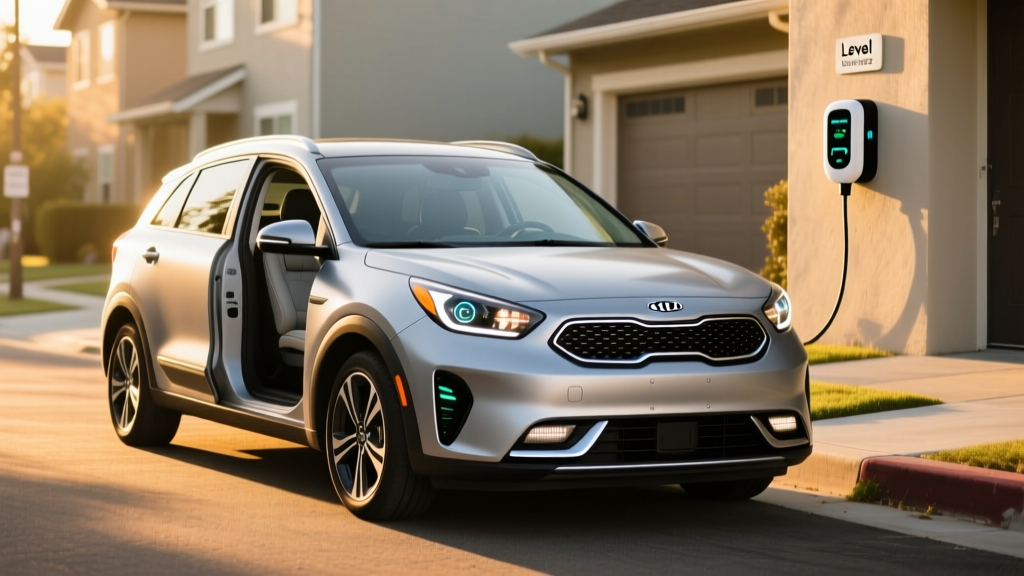
The 2021 Kia Niro Hybrid occupies a specific niche that fewer vehicles fill every year: a dedicated hybrid crossover that never needs to be plugged in, delivers genuine 50 MPG in daily driving, and costs well under $30,000 on the used market. With Kia transitioning the Niro to its second generation in 2023 and offering it exclusively as an EV and PHEV in some markets, the 2021 model year represents the last widely available iteration of the conventional HEV (hybrid electric vehicle) Niro. For buyers who want hybrid efficiency without charging infrastructure, it remains a compelling option in 2026.
This guide breaks down the 2021 Kia Niro Hybrid's powertrain, real-world fuel economy, battery longevity, and how it stacks up against the PHEV variant and full-electric alternatives.
HEV vs PHEV: Which 2021 Niro Are You Looking At?
Kia sold two electrified Niro variants for the 2021 model year, and confusing them is the most common mistake shoppers make on used listings.
| Attribute | 2021 Niro Hybrid (HEV) | 2021 Niro Plug-In Hybrid (PHEV) |
|---|---|---|
| Plug-in Required? | No — charges via engine and regen | Yes — plugs into Level 1 or Level 2 |
| EPA Combined MPG (gas) | 49–50 MPG | 46 MPG (gas-only mode) |
| EPA MPGe (electric mode) | N/A | 105 MPGe |
| Electric-Only Range | None | 26 miles |
| Battery Capacity | 1.56 kWh (lithium-ion polymer) | 8.9 kWh (lithium-ion polymer) |
| Combined Horsepower | 139 hp | 161 hp |
| 0–60 mph | ~9.7 seconds | ~8.7 seconds |
| Cargo Volume | 22.7 cu ft (rear seats up) | 19.4 cu ft (rear seats up) |
| Federal Tax Credit (2026 rules) | Not eligible (§30D is BEV/PHEV only) | Not eligible on used purchase; original buyers may have claimed up to $4,543 |
The HEV is the simpler proposition: drive it like any gas car and let the hybrid system handle energy recovery. The PHEV rewards owners who can charge at home or work with 26 miles of electric-only commuting before the gas engine kicks in. If you cannot plug in regularly, the PHEV's smaller cargo area and higher used-market price work against you.
Fuel Economy: EPA Ratings vs Real-World MPG
The 2021 Kia Niro Hybrid's headline number is 50 MPG combined (EPA), but that figure varies by trim due to wheel size and weight. Here's the full breakdown from fueleconomy.gov:
| Trim | City MPG | Highway MPG | Combined MPG |
|---|---|---|---|
| FE (base, 16" wheels) | 53 | 48 | 50 |
| LX / LXS | 51 | 46 | 49 |
| EX / Touring (18" wheels) | 46 | 40 | 43 |
Hybrids consistently outperform their EPA city ratings in stop-and-go traffic because regenerative braking recovers energy that a gas car wastes as heat. In mixed suburban driving, expect 48–52 MPG from the FE and LX trims. Sustained highway driving at 75+ mph drops efficiency to 38–42 MPG due to aerodynamic drag — the Niro's advantage is urban, not interstate. In cold weather (below 30°F), expect a 5–10% reduction as the engine runs more frequently to heat the cabin.
The Touring trim's 43 MPG combined is a meaningful penalty. Those 18-inch alloy wheels add unsprung weight and rolling resistance. If maximum fuel economy is the goal, the FE or LX trim is the clear choice.
Powertrain and Performance Specs
| Specification | 2021 Niro Hybrid (HEV) |
|---|---|
| Engine | 1.6L 4-cylinder GDI (104 hp, 109 lb-ft) |
| Electric Motor | 32 kW permanent-magnet synchronous (43 hp, 125 lb-ft) |
| Combined System Output | 139 hp / 195 lb-ft |
| Transmission | 6-speed dual-clutch automatic (DCT) |
| Drivetrain | Front-wheel drive |
| 0–60 mph | ~9.7 seconds |
| Top Speed | ~107 mph |
| Curb Weight | 3,135–3,274 lbs (varies by trim) |
| Fuel Tank | 11.9 gallons |
| Total Driving Range | ~580–595 miles (EPA) |
The 6-speed DCT is a deliberate engineering choice that sets the Niro apart from the Toyota Prius and Honda Insight, which use continuously variable transmissions (CVTs). The result is more natural-feeling acceleration without the "rubber band" drone of a CVT under hard throttle. The trade-off is slightly less seamless low-speed operation — you may notice faint shift sensations in stop-and-go traffic that a CVT would mask.
Performance is adequate, not quick. The 9.7-second 0–60 time is competitive with the Prius (~10.5 seconds) but well behind turbocharged gas crossovers. The Niro Hybrid is tuned for efficiency, and the powertrain delivers its best when driven with moderate throttle inputs that keep the system in electric-assist mode as long as possible.
Battery Longevity, Warranty, and Replacement Cost
Hybrid battery anxiety is the number-one concern for used hybrid buyers, and it's worth addressing with data rather than speculation.
- Hybrid Battery: 10 years / 100,000 miles (original owner, states with CARB emissions rules may extend to 15 years/150,000 miles)
- Hybrid System Components: 10 years / 100,000 miles (inverter, motor, controller)
- Transferability: Kia's 10-year powertrain warranty drops to 5 years / 60,000 miles upon resale to a second owner in most states
The 1.56 kWh lithium-ion polymer battery in the HEV Niro is small and conservatively managed. Unlike a full EV battery that cycles between 10% and 90% state of charge daily, the Niro's hybrid battery operates in a narrow window — typically between 40% and 70% SoC — which dramatically reduces degradation. Kia's hybrid batteries in the Niro and Optima Hybrid have shown very low failure rates through the first 100,000 miles based on owner community data and warranty claim frequency.
Replacement cost if out of warranty: A new OEM hybrid battery pack for the Niro HEV runs approximately $2,500–$3,500 including labor at a Kia dealer. Independent hybrid specialists can often source refurbished packs for $1,500–$2,200. This is far less than a full EV battery replacement and comparable to a major engine repair on a conventional gas car.
For a 2021 model purchased in 2026, the original factory battery warranty has likely transferred to 5 years / 60,000 miles from the original in-service date. A 2021 Niro with 45,000 miles would still carry roughly one year of factory hybrid battery coverage. Verify this with a Kia dealer using the VIN before purchase.
2021 Niro Hybrid vs PHEV vs Full EV: Which Fits You?
- You cannot install a home charger or lack reliable workplace charging
- You want maximum fuel economy with zero behavior change
- Your budget is under $20,000 on the used market
- You frequently take road trips exceeding 300 miles
- You can charge at home (Level 1 overnight is sufficient for 26 miles)
- Your daily commute is under 25 miles round-trip
- You want electric-mode commuting with gas-engine flexibility for longer trips
- You don't mind sacrificing 3.3 cu ft of cargo space for the larger battery
- You have reliable home Level 2 charging
- Your daily driving is under 200 miles
- You want to eliminate oil changes, transmission fluid, and engine maintenance
- You qualify for the §30D federal tax credit on a new purchase (up to $7,500 with income and sourcing requirements)
The 2021 Niro HEV makes the most sense as a no-compromise efficiency play. It asks nothing of you except to fill it with regular unleaded. The PHEV rewards plug-in discipline. A full EV demands charging infrastructure but eliminates the most maintenance and offers the lowest per-mile fuel cost.
Pricing and Tax Credit Eligibility in 2026
The 2021 Kia Niro Hybrid is no longer sold new. On the used market in early 2026, expect these price ranges:
- LX / LXS (35,000–55,000 miles): $17,000–$20,500
- EX (30,000–50,000 miles): $19,000–$22,500
- Touring / Touring SE (25,000–45,000 miles): $20,500–$24,000
Federal tax credit status: The §25E used clean vehicle credit offers up to $4,000 (30% of sale price, capped at $4,000) for qualified used EVs and PHEVs purchased from a dealer. However, the conventional Niro HEV does not qualify — only the PHEV variant is eligible, and only if the sale price is $25,000 or less, buyer income is under $75,000 (single) / $150,000 (joint), and the vehicle is purchased from a licensed dealer. The original MSRP cap does not apply to used credits, but the vehicle must be at least two model years old and the buyer cannot be the original owner.
State incentives vary widely. Some states (California, Colorado, Oregon) offer additional rebates for used hybrids or PHEVs — check your state's energy office or DMV for current programs.
Reliability and Ownership Costs
The 2021 Niro Hybrid benefits from a mature powertrain that Kia has used across multiple models since 2017. Key reliability notes:
- NHTSA Rating: The 2021 Niro received a 5-star overall safety rating from NHTSA
- IIHS Rating: Top Safety Pick (Good ratings in all crashworthiness tests; Acceptable headlight rating on some trims)
- Common Issues: No widespread powertrain failures reported through 2025 model-year data. Some owners note the 12V auxiliary battery can drain if the vehicle sits unused for 3+ weeks — standard for modern hybrids
- Maintenance: Oil changes every 7,500 miles (full synthetic 0W-20), brake pads last 80,000+ miles thanks to regen braking, no transmission fluid service interval under normal use
Insurance costs are moderate — expect $1,200–$1,600 annually depending on your profile, roughly on par with a Toyota Corolla Hybrid and lower than most EVs due to the lower vehicle value.
- 50 MPG combined (FE trim) is among the best of any crossover
- No plug-in charging required
- 580+ mile total range eliminates refueling stops on road trips
- 6-speed DCT feels more natural than a CVT
- Strong standard safety tech (forward collision avoidance, lane keeping, blind-spot monitoring)
- Used pricing well under $25,000 for most trims
- 9.7-second 0–60 is slow by modern standards
- Highway MPG drops to 38–42 at 75+ mph
- Touring trim's 18" wheels sacrifice 7 MPG combined vs FE
- Cargo space (22.7 cu ft) trails rivals like the Toyota RAV4 Hybrid
- No all-wheel-drive option
- Transferred warranty drops to 5yr/60k for second owners
Frequently Asked Questions
How many MPG does the 2021 Kia Niro Hybrid get?
The FE trim achieves 53 city / 48 highway / 50 combined MPG (EPA). The LX and LXS trims rate at 51/46/49. The Touring trim with 18-inch wheels drops to 46/40/43. Real-world city driving often exceeds EPA estimates; highway driving at high speeds falls short.
Can the 2021 Niro Hybrid be plugged in to charge?
No. The conventional Niro Hybrid (HEV) charges its 1.56 kWh battery exclusively through regenerative braking and the gasoline engine. There is no plug port. Only the Niro Plug-In Hybrid (PHEV) variant accepts external charging via a J1772 connector.
Is the 2021 Kia Niro Hybrid reliable?
Yes. The powertrain has been in production since 2017 with no systemic failure patterns. The 5-star NHTSA safety rating and IIHS Top Safety Pick designation add confidence. The hybrid battery is expected to last 150,000+ miles with normal use, and replacement cost ($2,500–$3,500) is manageable compared to major gas-car repairs.
Does the 2021 Niro Hybrid qualify for any tax credit?
The conventional HEV does not qualify for the federal §30D new vehicle credit or the §25E used vehicle credit — those programs apply only to plug-in vehicles (PHEVs and BEVs). The Niro PHEV may qualify for the §25E used credit (up to $4,000) if purchased from a dealer for $25,000 or less, subject to buyer income limits. Consult a tax professional for eligibility.
How long will the hybrid battery last?
Kia's lithium-ion polymer hybrid batteries are designed to last the life of the vehicle under normal use. The narrow state-of-charge operating window (roughly 40–70%) minimizes degradation. Most Niro hybrid batteries show minimal capacity loss through 100,000 miles. The original 10-year/100,000-mile warranty transfers to 5 years/60,000 miles for second owners.
Should I get the Niro Hybrid or the Niro PHEV?
Choose the HEV if you cannot charge at home and want the lowest purchase price with maximum range flexibility. Choose the PHEV if you can plug in nightly and your daily commute is under 26 miles — you'll drive on electricity most days and only use gas for longer trips. The PHEV costs $2,000–$4,000 more on the used market and sacrifices 3.3 cu ft of cargo space.