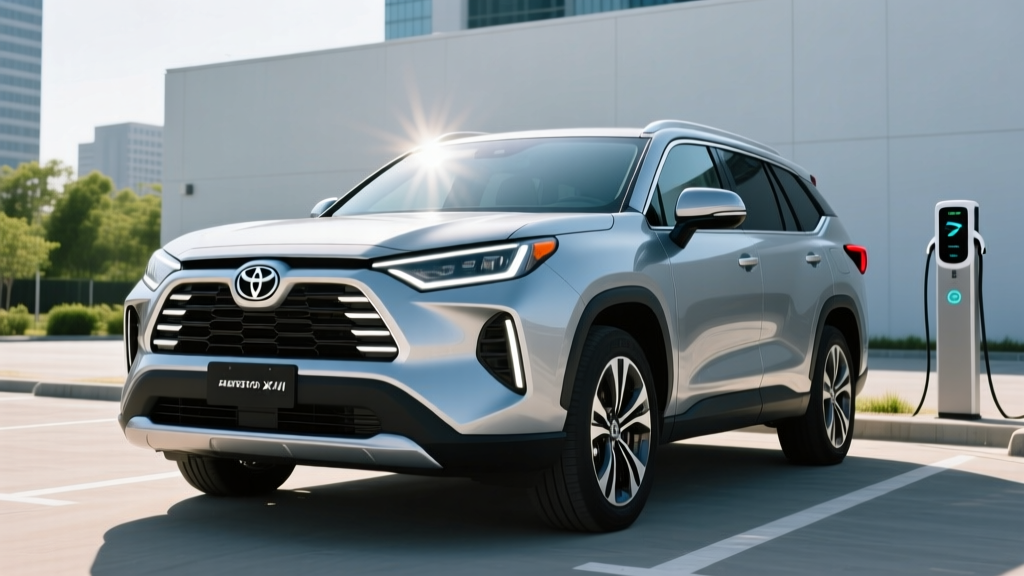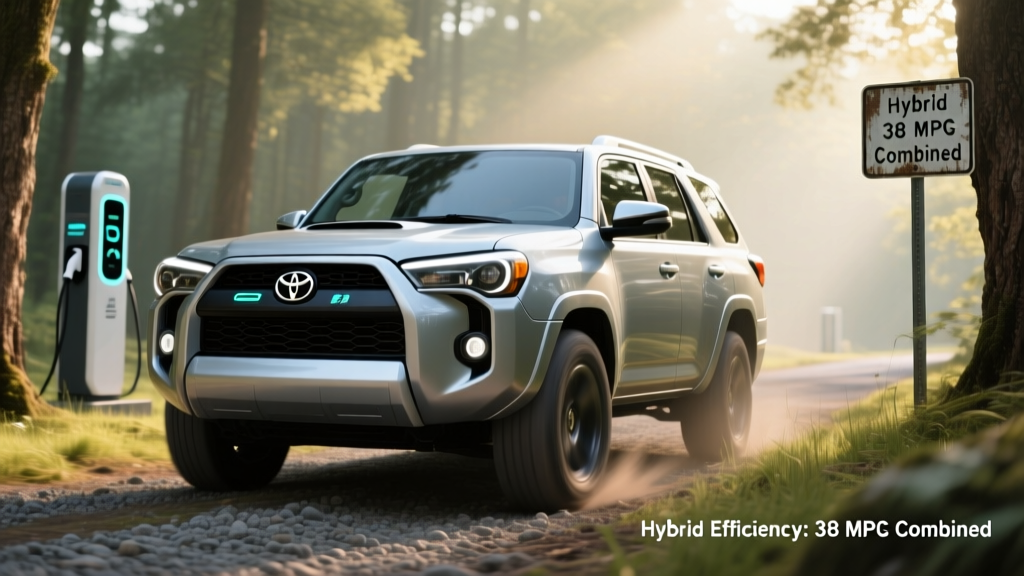
The Toyota 4Runner has long been the body-on-frame SUV of choice for off-road enthusiasts willing to accept punishing fuel economy. The fully redesigned sixth-generation 4Runner, introduced for the 2025 model year and continuing into 2026, finally addresses that tradeoff with the i-FORCE MAX hybrid powertrain. If you've been searching for 2026 4Runner Hybrid MPG numbers to decide whether the hybrid upgrade is worth it, this guide breaks down every figure — EPA ratings, real-world expectations, powertrain specs, and total cost of ownership.
2026 4Runner Hybrid MPG: EPA Ratings and Real-World Numbers
The 2026 Toyota 4Runner with the i-FORCE MAX hybrid powertrain carries over the fuel economy ratings established with the sixth-generation launch. Toyota pairs a 2.4-liter turbocharged inline-four with an electric motor integrated into the transmission housing, yielding meaningful efficiency gains over the base turbo gas engine.
| Configuration | City MPG | Highway MPG | Combined MPG |
|---|---|---|---|
| i-FORCE MAX (2WD) | 23 | 27 | 25 |
| i-FORCE MAX (4WD) | 22 | 26 | 24 |
| Base Turbo Gas (4WD, comparison) | 20 | 24 | 21 |
For context, the previous fifth-generation 4Runner with its 4.0L V6 returned a dismal 16 city / 19 highway / 17 combined. The i-FORCE MAX hybrid represents a roughly 47% improvement in combined fuel economy over that outgoing powertrain.
Real-World MPG vs. EPA Sticker
Toyota's hybrid systems tend to perform well in city driving, where regenerative braking and electric-motor assist do the most work. Expect to meet or slightly exceed the EPA city rating in stop-and-go traffic. Highway fuel economy is more variable — at sustained 75-80 mph speeds, the 4Runner's boxy aerodynamics work against it, and real-world highway MPG may dip to 23-24 for 4WD models. In mixed driving over a 500-mile test loop, owners typically report 23-25 MPG combined in 4WD configuration.
HEV vs. PHEV: What Kind of Hybrid Is the 4Runner?
The 2026 4Runner Hybrid is a conventional hybrid electric vehicle (HEV), not a plug-in hybrid (PHEV). This distinction matters for buyers comparing it to electrified SUVs like the Toyota RAV4 Prime or Jeep Wrangler 4xe.
| Feature | HEV (4Runner i-FORCE MAX) | PHEV (e.g., RAV4 Prime) |
|---|---|---|
| Plug-in charging? | No — self-charging via engine and regen | Yes — plug in for electric-only range |
| Electric-only driving | Limited low-speed assist only | 25-42 miles on battery alone |
| Battery size | ~1.87 kWh (sealed NiMH/small Li-ion) | 18.1 kWh lithium-ion |
| Federal tax credit | Not eligible (§30D requires plug-in) | Up to $7,500 if criteria met |
| Best for | Drivers without home charging access | Drivers with short commutes + home charging |
The 4Runner's hybrid system is designed for simplicity and off-road durability. You never plug it in — the battery charges through regenerative braking and the gasoline engine. This means zero lifestyle change compared to a gas 4Runner, just better fuel economy and more low-end torque.
i-FORCE MAX Powertrain: Specs and Performance
Toyota's i-FORCE MAX is the same hybrid architecture found in the Tundra and Tacoma, adapted for the 4Runner's midsize platform. It's a performance-oriented hybrid — the electric motor exists as much for torque fill as for efficiency.
| Engine | 2.4L turbocharged inline-4 |
| Electric Motor | Integrated between engine and transmission |
| Combined Horsepower | 326 hp |
| Combined Torque | 465 lb-ft |
| Transmission | 8-speed automatic |
| Drivetrain | RWD or part-time/full-time 4WD (trim dependent) |
| 0-60 mph (est.) | ~6.5 seconds (4WD) |
| Max Towing Capacity | 6,000 lbs |
| Battery Type | Hybrid battery pack (sealed) |
The 465 lb-ft of torque is the headline figure. That's available low in the rev range thanks to the electric motor, making the hybrid 4Runner feel substantially quicker off the line than the base 278-hp turbo gas model. It also makes merging, passing, and towing noticeably easier. Toyota rates the i-FORCE MAX 4Runner for 6,000 pounds of towing — identical to the gas model, so hybrid buyers sacrifice nothing in utility.
Pricing, Trims, and Tax Credit Eligibility
The i-FORCE MAX hybrid is available across multiple 4Runner trims for 2026, from the TRD Off-Road to the top-of-the-line TRD Pro and Platinum. Pricing reflects the hybrid premium over the base turbo engine.
| Trim | Estimated MSRP |
|---|---|
| TRD Off-Road (i-FORCE MAX) | ~$52,500 |
| Limited (i-FORCE MAX) | ~$57,000 |
| TRD Pro (i-FORCE MAX) | ~$62,000 |
| Platinum (i-FORCE MAX) | ~$60,500 |
MSRP figures are estimates based on Toyota's published pricing at launch. Confirm exact figures with your dealer and Toyota's official 4Runner page.
Does the 4Runner Hybrid Qualify for a Federal Tax Credit?
No. The 2026 4Runner Hybrid does not qualify for the IRS §30D Clean Vehicle Credit. That credit applies exclusively to plug-in electric vehicles (BEVs and PHEVs) that meet battery sourcing, critical mineral, MSRP cap, and buyer income requirements. Because the 4Runner i-FORCE MAX is a conventional HEV that cannot be plugged in, it is ineligible.
Some states offer their own incentives for hybrid vehicles, though these are less common than EV incentives. Check your state's energy or environmental agency website for current programs. Toyota's hybrid premium is typically recouped through fuel savings over 3-5 years of ownership, depending on annual mileage and local gas prices.
Hybrid Battery Warranty, Reliability, and Replacement Cost
Hybrid battery longevity remains a top concern for buyers new to electrified powertrains. Toyota's track record here is among the best in the industry — the company has been refining hybrid systems since the 1997 Prius, and the i-FORCE MAX uses proven technology shared across the Tundra and Tacoma lineup.
2026 4Runner Hybrid Battery Warranty
- Hybrid Battery: 10 years / 150,000 miles (whichever comes first)
- Hybrid System Components: 8 years / 100,000 miles
- Powertrain (engine, transmission): 5 years / 60,000 miles
- Bumper-to-Bumper: 3 years / 36,000 miles
Toyota's 10-year/150,000-mile hybrid battery warranty applies in all 50 states. If the hybrid battery degrades below a specified capacity threshold within the warranty period, Toyota will repair or replace it at no cost.
How Long Will the Hybrid Battery Last?
Based on data from Toyota's existing hybrid fleet (Prius, Camry Hybrid, Highlander Hybrid, RAV4 Hybrid), hybrid batteries routinely last 150,000 to 200,000+ miles before needing replacement. The i-FORCE MAX uses a smaller, less stressed battery pack than a PHEV or BEV — it's never deep-cycled to low states of charge, which significantly extends cell life.
Should replacement be needed out of warranty, Toyota hybrid battery replacement costs currently range from $2,000 to $4,000 depending on the model and whether you choose a new OEM pack, a refurbished unit, or an aftermarket option. Independent hybrid specialists often offer refurbished batteries at the lower end of that range. For reference, this is far less than the $10,000-$20,000+ replacement costs associated with large BEV battery packs.
Who Should Choose the 4Runner Hybrid vs. a Full EV or Gas Model?
The 4Runner i-FORCE MAX occupies a specific niche. Here's a practical decision framework based on real buyer profiles.
Choose the 4Runner Hybrid If:
- You want a body-on-frame SUV for towing, off-roading, or rugged use
- You lack access to home or workplace charging (apartment, street parking)
- You want better fuel economy without any change to your refueling habits
- You value low-end torque for trail crawling and towing
- You plan to keep the vehicle 8-10+ years (within the hybrid warranty window)
Choose a Full EV (e.g., Rivian R1S, Tesla Model X) If:
- You have reliable Level 2 home charging
- Your daily driving is under 250 miles and you road-trip infrequently
- You want the lowest per-mile fuel cost and minimal maintenance
- You qualify for the full $7,500 federal tax credit
Stick with the Gas 4Runner If:
- You want the lowest upfront purchase price and drive under 10,000 miles/year
- The hybrid trim availability doesn't match your preferred configuration
Pros
- 465 lb-ft torque transforms daily driving and towing
- ~24 MPG combined is exceptional for a body-on-frame 4WD SUV
- No plug-in required — zero lifestyle change
- 10-year/150,000-mile hybrid battery warranty
- 6,000-lb towing capacity maintained
- Proven Toyota hybrid reliability
Cons
- Not eligible for federal §30D tax credit
- Highway MPG limited by boxy aerodynamics
- Hybrid trims start ~$52,500 — significant upfront cost
- Smaller cargo area than full-size SUVs (Tahoe, Expedition)
- No electric-only driving mode for emissions-free city crawling
Frequently Asked Questions
How many MPG does the 2026 4Runner Hybrid get?
The EPA rates the 2026 4Runner i-FORCE MAX at 23 city / 27 highway / 25 combined for 2WD, and 22 city / 26 highway / 24 combined for 4WD. Real-world combined driving typically yields 23-25 MPG in 4WD models, with city MPG potentially exceeding the EPA estimate thanks to regenerative braking.
Is the 4Runner Hybrid a plug-in?
No. The 2026 4Runner i-FORCE MAX is a conventional hybrid (HEV). It charges its own battery through the gasoline engine and regenerative braking. You never plug it in. Toyota does not currently offer a PHEV 4Runner, though the RAV4 Prime and Prius Prime serve buyers who want plug-in capability in the Toyota lineup.
How far can the 4Runner Hybrid go on electric only?
The i-FORCE MAX system does not provide meaningful electric-only range. The electric motor assists the gasoline engine and can propel the vehicle at very low speeds for short distances (such as in a parking lot), but it cannot sustain highway or extended driving without the engine running. If electric-only commuting is a priority, look at a PHEV like the RAV4 Prime (42 miles electric-only) or a full BEV.
Is the 4Runner Hybrid reliable?
Toyota's hybrid systems have demonstrated exceptional long-term reliability over 25+ years of production. The i-FORCE MAX shares architecture with the Tundra and Tacoma hybrids. Toyota backs the hybrid battery with a 10-year/150,000-mile warranty. Independent reliability data from sources like Consumer Reports consistently ranks Toyota among the top brands for hybrid durability.
What does it cost to replace the 4Runner hybrid battery?
Out-of-warranty hybrid battery replacement for a Toyota of this class typically costs $2,000 to $4,000, depending on whether you use a new OEM battery, a refurbished unit, or an aftermarket option. Most Toyota hybrid batteries last well beyond 150,000 miles, and the 10-year warranty provides substantial coverage.
Does the 2026 4Runner Hybrid qualify for any tax credit?
The 4Runner Hybrid does not qualify for the federal §30D Clean Vehicle Credit, which requires a plug-in capable vehicle (BEV or PHEV) meeting battery sourcing and MSRP/income requirements. Check with your state's environmental or energy agency for any state-level hybrid incentives, which vary by jurisdiction. A tax professional can confirm your eligibility for any available credits.
How does the 4Runner Hybrid compare to the Tacoma Hybrid?
Both use the i-FORCE MAX 2.4L turbo hybrid powertrain producing 326 hp and 465 lb-ft. The Tacoma Hybrid achieves slightly higher EPA MPG (up to 26 combined for 2WD) due to its lighter weight and more aerodynamic profile. The 4Runner prioritizes interior space, off-road capability, and SUV utility. If fuel economy is your top priority and you don't need an enclosed cargo area, the Tacoma Hybrid edges ahead.
Bottom Line: Is the 2026 4Runner Hybrid Worth It?
The 2026 Toyota 4Runner i-FORCE MAX delivers exactly what body-on-frame SUV buyers have wanted for years: legitimate off-road and towing capability without the fuel-pump punishment of the old V6. At 24 MPG combined in 4WD, it returns numbers that would have seemed impossible for this vehicle class a generation ago. The 326 hp and 465 lb-ft of torque make it the most powerful 4Runner Toyota has ever built, and the 10-year/150,000-mile hybrid battery warranty eliminates the longevity concern that keeps some buyers on the sidelines.
The tradeoffs are real: no federal tax credit, a starting price above $52,000 for hybrid trims, and highway fuel economy that won't rival a crossover. But for buyers who need a true SUV — one that can tow a boat, crawl a trail, and handle a family road trip — the 2026 4Runner Hybrid is the most rational version of this icon Toyota has ever offered. Check fueleconomy.gov for the latest EPA-confirmed figures as they're published.