Quick Verdict: The Sonata Hybrid Limited Still Makes Sense in 2026
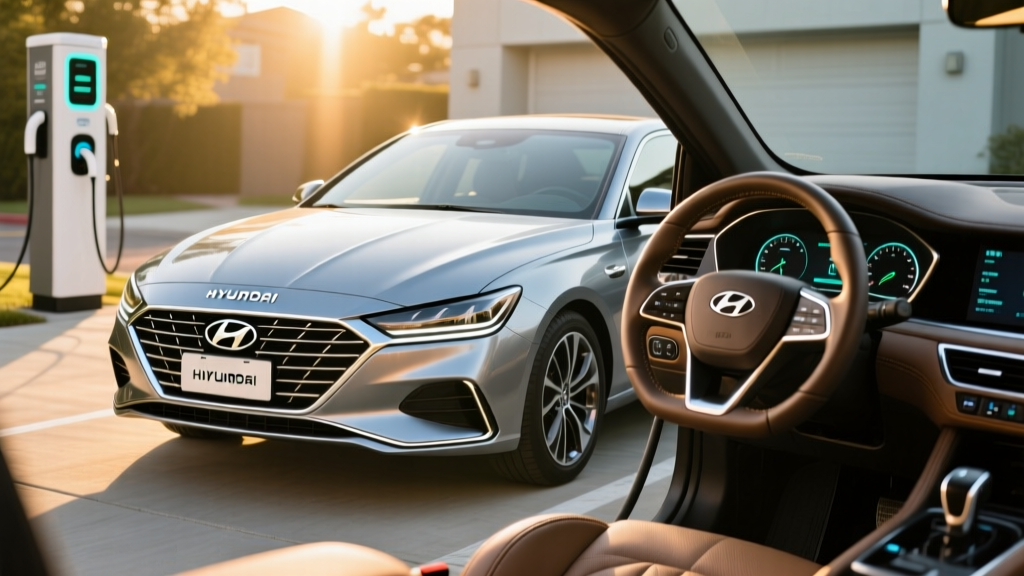
If you're shopping the used or certified-pre-owned market for a midsize sedan that sips fuel without asking you to plug in, the 2023 Hyundai Sonata Hybrid Limited remains one of the strongest picks. With an EPA-estimated 52 MPG combined, a comprehensive tech suite, and Hyundai's class-leading hybrid battery warranty, it bridges the gap between conventional gas sedans and full battery-electric vehicles — without the charging infrastructure anxiety.
This guide breaks down everything you need to know about the 2023 Sonata Hybrid Limited from a 2026 ownership perspective: real-world fuel economy, powertrain specs, battery longevity, tax credit eligibility, and whether a conventional hybrid (HEV), plug-in hybrid (PHEV), or full EV better suits your driving pattern.
HEV vs PHEV vs EV: Where Does the Sonata Hybrid Fit?
Before diving into specs, it's essential to distinguish the three electrified powertrain types. The 2023 Sonata Hybrid is a conventional hybrid (HEV) — it has no plug, no electric-only driving range to speak of, and it charges its small battery entirely through regenerative braking and the gasoline engine. Hyundai did offer a Sonata PHEV in earlier generations, but the 2023 model year is HEV only in the U.S. market.
| Feature | HEV (Sonata Hybrid) | PHEV (e.g., Tucson PHEV) | BEV (e.g., Ioniq 6) |
|---|---|---|---|
| Plug-in charging | No | Yes (Level 1/2) | Yes (Level 1/2/DC) |
| Electric-only range | ~1 mi at low speed | 25–33 mi typical | 250–360+ mi (EPA) |
| Gasoline engine | Yes (primary) | Yes (backup + combined) | None |
| Fuel needed | Yes | Yes + electricity | Electricity only |
| Federal tax credit (§30D) | Not eligible | Up to $7,500* | Up to $7,500* |
| Typical starting MSRP (new) | ~$28,000–$36,000 | ~$37,000–$48,000 | ~$38,000–$55,000 |
*§30D credit eligibility depends on MSRP caps, buyer income limits, battery component sourcing, and critical mineral requirements. Always verify current rules at IRS.gov.
Fuel Economy: EPA Numbers vs Real-World MPG
The headline number for the 2023 Sonata Hybrid Limited is impressive, but real-world results depend heavily on your driving mix.
| Driving Condition | EPA Estimate | Real-World Expectation |
|---|---|---|
| City | 50 MPG | 48–54 MPG (hybrids excel in stop-and-go) |
| Highway | 54 MPG | 46–51 MPG (aero drag, sustained speed) |
| Combined | 52 MPG | 47–52 MPG (varies by terrain, climate, driving style) |
Per fueleconomy.gov, the 2023 Sonata Hybrid Limited achieves 50 city / 54 highway / 52 combined. That highway figure is notable — many hybrids lose efficiency on the highway because the electric motor contributes less at sustained high speeds. Hyundai's 6-speed automatic transmission (rather than a CVT) helps the engine operate more efficiently at cruising speeds.
Real-world caveat: Owners reporting on fuel-tracking platforms consistently log 47–52 MPG combined in moderate climates. In extreme cold (below 20°F), expect a 5–10% drop as the engine runs more frequently for cabin heat and battery warm-up. In heavy city traffic during mild weather, some drivers exceed the EPA city estimate — a rare trait among hybrids, since regenerative braking recovers more energy in stop-and-go conditions.
Powertrain Specs: What's Under the Hood
| Specification | 2023 Sonata Hybrid Limited |
|---|---|
| Engine | 2.0L inline-4 GDI |
| Engine output | 150 hp / 139 lb-ft torque |
| Electric motor | 39 kW (52 hp) permanent-magnet synchronous |
| Combined system output | 192 hp |
| Transmission | 6-speed automatic (torque converter) |
| Drivetrain | Front-wheel drive |
| Hybrid battery | 1.62 kWh lithium-ion (nominal) |
| 0–60 mph | ~7.8 seconds (est.) |
| Curb weight | ~3,490 lbs |
| Fuel tank | 13.2 gallons |
| Total range (est.) | ~685 miles (at combined EPA) |
The 2.0L Smartstream engine paired with Hyundai's electric motor delivers smooth, linear acceleration. The 6-speed automatic is a deliberate choice over a CVT — it provides more natural shift feel and avoids the "rubber-band" drone common in Toyota and Honda hybrid systems. At 192 combined horsepower, the Sonata Hybrid Limited has adequate passing power for highway merging, though it's not a performance sedan. The 1.62 kWh battery is small by EV standards, but for a conventional hybrid it's sufficient to enable engine-off coasting, low-speed electric creep, and robust regenerative braking.
Limited Trim: What You Get for the Price
The Limited sits at the top of the 2023 Sonata Hybrid lineup (above the Blue and SEL trims). Original MSRP was approximately $36,250 including destination. Key Limited-exclusive features include:
- Panoramic sunroof with power sunshade
- Leather-trimmed seats with ventilated front seats
- 12.3-inch digital instrument cluster
- 10.25-inch touchscreen navigation with wireless Apple CarPlay/Android Auto
- Bose 12-speaker premium audio system
- Hyundai Digital Key (NFC-based smartphone key)
- Highway Driving Assist (HDA) — adaptive cruise + lane centering
- Remote Smart Parking Assist
- Solar roof panel (supplements 12V battery, adds ~2 miles of range per day in ideal sun)
- 18-inch alloy wheels
2026 used-market pricing: As of early 2026, certified pre-owned 2023 Sonata Hybrid Limited models typically list between $24,000 and $29,000 depending on mileage, condition, and region. Private-party values trend $2,000–$3,000 lower. Given the original MSRP, depreciation has been moderate — hybrids tend to hold value well as fuel prices fluctuate.
Tax credit note: The 2023 Sonata Hybrid (HEV) does not qualify for the federal §30D Clean Vehicle Credit. That credit applies only to plug-in hybrids (PHEVs) and battery-electric vehicles (BEVs) meeting battery sourcing and MSRP requirements. There is no federal tax credit for conventional hybrids. Some states may offer rebates for high-efficiency vehicles — check your state energy office for local programs.
Battery Warranty, Reliability, and Replacement Cost
Hyundai Hybrid Battery Warranty
| Hybrid battery coverage | 10 years / 100,000 miles (original owner) |
| Hybrid battery coverage (subsequent owners) | 10 years / 100,000 miles (transfers on 2023 models) |
| Hybrid system components | 10 years / 100,000 miles |
| Capacity retention threshold | Below ~60–70% of original capacity (dealer-determined) |
| New vehicle warranty | 5 years / 60,000 miles |
| Powertrain warranty | 10 years / 100,000 miles |
Hyundai's hybrid battery warranty is one of the most generous in the industry. The 10-year/100,000-mile coverage on the high-voltage lithium-ion battery pack and hybrid system components (inverter, motor, controller) significantly outpaces the typical 8-year/100,000-mile coverage from Toyota and Honda.
Reliability data: Hyundai's hybrid system has proven durable. The Sonata Hybrid's parallel hybrid architecture (where both the engine and motor can drive the wheels independently or together) is mechanically simpler than some competing systems. There are no widespread reports of premature hybrid battery failure in the 2020–2023 generation. The IIHS awarded the 2023 Sonata its Top Safety Pick+ rating when equipped with specific headlights, reflecting strong crashworthiness.
Battery replacement cost (out of warranty): If the hybrid battery fails outside the warranty period, expect a dealer replacement cost between $2,500 and $4,000 including parts and labor. Independent hybrid specialists can sometimes source refurbished packs for $1,500–$2,500. Given the 1.62 kWh capacity — far smaller than a full EV's 60–100 kWh pack — replacement costs are manageable compared to BEV battery swaps that can exceed $10,000.
Who Should Choose the Sonata Hybrid Limited?
Decision Framework: Is This the Right Electrified Vehicle for You?
Choose the 2023 Sonata Hybrid Limited if:
- You drive 15,000+ miles per year and want maximum fuel savings without plugging in
- You live in an apartment or lack home charging access (no plug needed)
- You take frequent long road trips and don't want to plan around DC fast chargers
- You want a loaded midsize sedan under $30,000 on the used market
- You value a conventional automatic transmission feel over CVT drone
Consider a PHEV instead if:
- Your daily commute is under 30 miles and you can charge at home
- You want to drive mostly on electricity with gas as a backup
- You want to qualify for the §30D federal tax credit (up to $7,500, subject to eligibility)
Consider a full EV (BEV) instead if:
- You have reliable Level 2 home charging
- Your daily driving is under 250 miles and you rarely tow
- You want zero tailpipe emissions and minimal maintenance (no oil changes, no spark plugs)
- You want the lowest per-mile energy cost (~$0.04–$0.06/mile on home electricity vs ~$0.10–$0.12/mile for a 52 MPG hybrid at $3.50/gal)
Real-World Ownership Costs: 5-Year Projection
Assuming 15,000 miles per year, $3.50/gallon gasoline, and the EPA combined 52 MPG:
| Cost Category | Sonata Hybrid Limited | Comparable Gas Sedan (30 MPG) |
|---|---|---|
| Annual fuel cost | ~$1,010 | ~$1,750 |
| 5-year fuel cost | ~$5,050 | ~$8,750 |
| 5-year fuel savings vs gas | ~$3,700 saved | |
| Oil changes (5 years) | ~$250 (fewer needed) | ~$400 |
| Insurance (avg annual) | ~$1,400–$1,700 | ~$1,300–$1,600 |
The Sonata Hybrid's fuel savings over a conventional gas sedan are meaningful but not dramatic — roughly $740 per year at current gas prices. The breakeven on a used-market premium (if you pay $2,000 more for the hybrid vs a gas Sonata) is about 2.5–3 years. Over a 10-year ownership horizon, the hybrid saves approximately $7,400 in fuel alone, easily justifying the initial investment.
Pros and Cons
Pros
- 52 MPG combined — top-tier for a midsize sedan
- 10-year/100,000-mile hybrid battery warranty (transfers to second owner)
- Limited trim is loaded: Bose audio, ventilated seats, panoramic roof, HDA
- Solar roof panel is a unique efficiency bonus
- 6-speed automatic avoids CVT drone
- Strong IIHS Top Safety Pick+ crash ratings
- ~685-mile total range — fewer fill-ups on road trips
Cons
- No plug-in option; cannot drive on electric-only for meaningful distances
- No federal tax credit eligibility (HEV)
- Rear visibility slightly compromised by sloping roofline
- 192 hp is adequate, not brisk — 0-60 in ~7.8 seconds
- Infotainment can be sluggish compared to newer 2025+ systems
- Solar panel adds minimal range (~2 mi/day in peak sun)
Frequently Asked Questions
How many MPG does the 2023 Hyundai Sonata Hybrid Limited get?
The EPA rates it at 50 city / 54 highway / 52 combined. Real-world owners typically see 47–52 MPG combined depending on climate, terrain, and driving style. City driving often exceeds the EPA estimate thanks to regenerative braking.
Does the 2023 Sonata Hybrid need to be plugged in?
No. The Sonata Hybrid is a conventional HEV — it charges its small 1.62 kWh battery through regenerative braking and the gasoline engine. You fuel it like any other car at a gas station. There is no plug, no charging cable, and no electric-only range beyond brief low-speed creep.
Does the 2023 Sonata Hybrid qualify for any tax credit?
No. The federal §30D Clean Vehicle Credit applies only to plug-in hybrids (PHEVs) and battery-electric vehicles (BEVs). Conventional hybrids like the Sonata Hybrid do not qualify. Check your state energy office for any local high-efficiency vehicle rebates, but there is no federal incentive for this powertrain type.
How long will the Sonata Hybrid battery last?
Hyundai covers the hybrid battery for 10 years or 100,000 miles. Based on industry data, modern lithium-ion hybrid batteries typically last 12–15 years or 150,000+ miles before significant degradation. The small 1.62 kWh pack undergoes shallow charge cycles (rarely dropping below 40% or above 80% state of charge), which greatly extends cycle life. Out-of-warranty replacement runs $2,500–$4,000 at a dealer.
Hybrid vs PHEV vs EV — which should I buy?
If you lack home charging access, drive long distances frequently, or want the lowest purchase price, the Sonata Hybrid (HEV) is ideal. If you can charge at home and commute under 30 miles daily, a PHEV gives you electric-only commuting with gas backup. If you have Level 2 home charging and drive under 250 miles daily, a full EV offers the lowest operating cost and zero tailpipe emissions — but requires charging infrastructure planning.
Is the Sonata Hybrid Limited reliable?
Yes. Hyundai's parallel hybrid system is well-proven, and the 2020–2023 Sonata Hybrid generation has no widespread failure patterns. The IIHS awarded Top Safety Pick+ status. Hyundai's 10-year/100,000-mile powertrain and hybrid battery warranty provides additional peace of mind, especially on the used market.