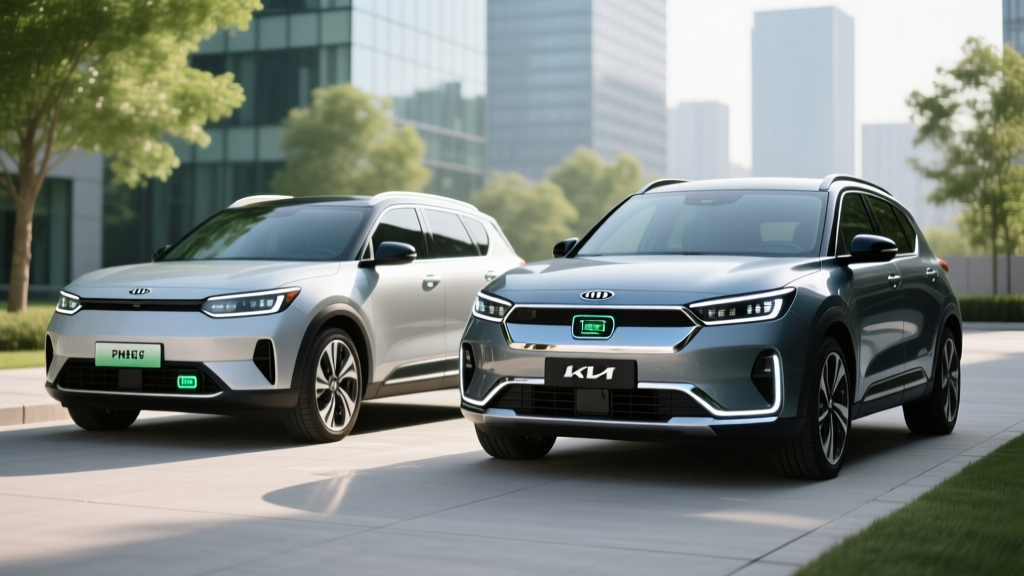
If you are shopping for a compact crossover that sips fuel without demanding a lifestyle change, the Kia Niro sits at a crossroads worth examining closely. The Niro is offered as a conventional hybrid (HEV) that never needs plugging in, and as a plug-in hybrid (PHEV) that delivers a meaningful electric-only commute buffer before the gas engine wakes up. With the 2026 model year now on dealer lots, buyers are weighing whether incremental updates justify the price difference over the outgoing 2025 — and whether the HEV or PHEV version fits their daily driving pattern.
This guide breaks down the 2025 vs 2026 Kia Niro Hybrid lineup with exact EPA numbers, real-world efficiency expectations, battery and warranty details, and the tax-credit math that can shift a purchase decision by thousands of dollars.
HEV vs PHEV: What the Niro Actually Offers
Before comparing model years, it is essential to understand the two distinct powertrains Kia sells under the Niro badge. Confusing them is the most common mistake buyers make in this segment.
Conventional Hybrid (Niro HEV)
- No plug required. The battery recharges through regenerative braking and the gasoline engine.
- Small battery: ~1.56 kWh lithium-ion — enough to assist acceleration and enable low-speed electric creeping, not sustained EV driving.
- Best for: Drivers without reliable home or workplace charging who want maximum fuel economy with zero behavior change.
Plug-In Hybrid (Niro PHEV)
- Plugs in to charge. Uses a standard J1772 connector for Level 1 (120V) or Level 2 (240V) AC charging.
- Larger battery: 11.1 kWh usable capacity — enough for roughly 33 miles of electric-only driving before the hybrid system takes over.
- No DC fast charging. The Niro PHEV accepts only AC charging; a full charge on Level 2 takes approximately 2 hours 45 minutes.
- Best for: Drivers with home charging and a commute under ~35 miles who want EV-like daily driving with gas-engine backup for road trips.
Neither version offers DC fast charging capability. The PHEV's relatively small battery makes that unnecessary — Level 2 tops it up well within an overnight window or a workday parking session.
EPA Fuel Economy and Electric-Only Range
The numbers that matter most to Niro buyers are fuel economy and, for the PHEV, how far it travels before burning a drop of gasoline. Here is the breakdown by powertrain and model year, sourced from fueleconomy.gov and Kia's published specifications.
| Model / Trim | Powertrain | City MPG | Highway MPG | Combined MPG | EV Range (PHEV) | Combined MPGe (PHEV) |
|---|---|---|---|---|---|---|
| 2025 Niro HEV (LX/S/EX) | Hybrid | 53 | 54 | 53 | — | — |
| 2025 Niro HEV (SX Touring) | Hybrid | 49 | 47 | 48 | — | — |
| 2025 Niro PHEV (all trims) | Plug-In Hybrid | 49 (hybrid mode) | 47 (hybrid mode) | 48 (hybrid mode) | 33 mi | 108 MPGe |
| 2026 Niro HEV (LX/S/EX) | Hybrid | 53 | 54 | 53 | — | — |
| 2026 Niro HEV (SX Touring) | Hybrid | 49 | 47 | 48 | — | — |
| 2026 Niro PHEV (all trims) | Plug-In Hybrid | 49 (hybrid mode) | 47 (hybrid mode) | 48 (hybrid mode) | 33 mi | 108 MPGe |
Real-world MPG note: The Niro HEV's EPA city rating of 53 MPG is one of the cases where real-world city driving can actually exceed the sticker. Hybrids recapture braking energy in stop-and-go traffic, and owners regularly report 55–58 MPG on urban commutes. Highway driving is a different story: at sustained 70–80 mph speeds, expect 44–48 MPG as aerodynamic drag dominates and the electric motor contributes less. The Touring trim's larger 18-inch wheels and heavier equipment reduce efficiency by roughly 5 MPG combined.
PHEV real-world electric range: The 33-mile EPA electric-only rating holds up well in mild weather (60–80°F). In cold weather below freezing, expect that range to drop to approximately 24–28 miles due to battery chemistry limitations and cabin heating demand. In summer with air conditioning running, 29–31 miles is typical.
Powertrain Specs: What Moves the Niro
| Specification | Niro HEV | Niro PHEV |
|---|---|---|
| Engine | 1.6L GDI 4-cylinder | 1.6L GDI 4-cylinder |
| Engine Output | 104 hp / 111 lb-ft | 104 hp / 111 lb-ft |
| Electric Motor | 43 hp (32 kW) | 83 hp (62 kW) |
| Combined System Output | 139 hp / 195 lb-ft | 180 hp / 195 lb-ft |
| Transmission | 6-speed DCT | 6-speed DCT |
| 0–60 mph (est.) | ~9.5 sec | ~7.6 sec |
| Battery Capacity | 1.56 kWh (Li-ion) | 11.1 kWh (Li-ion) |
| Drivetrain | FWD | FWD |
| Max AC Charge Rate (PHEV) | — | ~3.3 kW (Level 2) |
| Charge Time 0–100% (Level 2) | — | ~2 hr 45 min |
The PHEV's significantly more powerful electric motor (83 hp vs 43 hp) gives it a noticeably quicker 0–60 time and a more responsive feel around town, where the electric motor does most of the work. On the highway, both versions rely more heavily on the 1.6L engine, which is adequate but not spirited. The 6-speed dual-clutch transmission is a deliberate choice by Kia — it avoids the rubber-band feel of the CVTs used in the Toyota Prius and Honda Accord Hybrid, though it can occasionally hesitate at low-speed junctions.
2025 vs 2026: What Actually Changed
The second-generation Niro (introduced for the 2023 model year) carries over into 2026 with minimal mechanical changes. The powertrain, battery capacity, and EPA ratings remain identical between 2025 and 2026 model years. The differences are primarily in packaging and pricing:
- Trim consolidation: For 2026, Kia has streamlined the trim structure, dropping the base LX on the PHEV and making the S trim the entry point. This raises the effective starting price but adds standard features (heated front seats, smart power liftgate) that were optional on 2025.
- Color and interior updates: New exterior paint options and revised upholstery materials for 2026, but no dimensional or structural changes.
- Infotainment: The 2026 model receives a standard wireless phone charger across more trims and updated navigation mapping. The 10.25-inch dual-screen setup remains.
- Price increase: Expect a $400–$700 increase per trim level from 2025 to 2026, consistent with Kia's broader pricing trajectory.
If you are deciding between a leftover 2025 and a new 2026 on the same dealer lot, the 2025 is the value play — you get an identical powertrain and nearly identical feature set at a lower MSRP. The 2026 makes sense if the specific trim and color combination you want is only available in the new model year, or if the residual-value benefit of a newer model year matters for your lease or resale timeline.
Pricing and Tax Credit Eligibility
| Trim | 2025 MSRP (HEV) | 2026 MSRP (HEV) | 2025 MSRP (PHEV) | 2026 MSRP (PHEV) |
|---|---|---|---|---|
| LX | $26,995 | — | $34,395 | — |
| S | $28,395 | $28,895 | $35,795 | $36,295 |
| EX | $30,095 | $30,595 | — | — |
| SX / SX Touring | $32,495 | $32,995 | $39,295 | $39,795 |
Prices shown are base MSRP before destination charges (~$1,375). Actual dealer pricing may vary.
Federal Tax Credit: §30D Rules
PHEV federal credit: The Niro PHEV may qualify for a partial or full federal tax credit under IRS §30D, but eligibility depends on several factors that change periodically. As of the current tax year, the credit is up to $7,500, split between a critical-minerals component ($3,750) and a battery-components component ($3,750). The Niro PHEV's battery sourcing has historically qualified for one or both halves, but Kia's supply-chain adjustments can shift this. The credit is now available as a point-of-sale transfer, meaning the dealer reduces the purchase price at the time of sale rather than waiting for a tax refund.
Key restrictions:
- Buyer AGI must not exceed $150,000 (single) / $300,000 (joint) / $225,000 (head of household)
- Vehicle MSRP must not exceed $80,000 for SUVs (Niro qualifies)
- Battery components and critical minerals must meet phased-in domestic-content thresholds
HEV federal credit: The conventional Niro Hybrid does not qualify for the §30D federal tax credit. That credit is reserved for plug-in vehicles with a minimum battery capacity of 7 kWh. The HEV's 1.56 kWh battery is far below the threshold.
Always verify current eligibility on IRS.gov or through your tax professional before relying on the credit in your purchase math.
State incentives: Several states offer additional rebates for PHEVs. California's CVRP, Colorado's state credit, and New York's Drive Clean Rebate have historically included the Niro PHEV, though amounts and eligibility change frequently. Check your state energy office or DMV for current programs.
Battery Longevity, Warranty, and Replacement Cost
Battery durability is the top concern for hybrid buyers, and it deserves a direct answer with numbers.
Kia Hybrid Battery Warranty
- Coverage: 10 years / 100,000 miles (whichever comes first)
- Capacity threshold: Kia warrants the hybrid battery against failure and excessive capacity loss. If the battery drops below approximately 70% of original capacity within the warranty period, Kia will repair or replace it.
- States with CARB rules: In California and states adopting CARB emissions standards, hybrid battery warranty may extend to 10 years / 150,000 miles under PZEV provisions.
Real-World Battery Lifespan
The Niro's hybrid battery is a proven lithium-ion pack that operates within a conservative state-of-charge window — it never fully charges or fully depletes, which dramatically extends cycle life. Based on fleet data from the first-generation Niro (2017–2022), most hybrid batteries retain above 85% capacity at 150,000 miles. Full battery failure within the warranty period is rare.
Out-of-Warranty Replacement Cost
If the hybrid battery requires replacement after the warranty expires:
- HEV battery replacement: $2,500–$4,000 (parts and labor) — the small 1.56 kWh pack is relatively inexpensive.
- PHEV battery replacement: $5,500–$8,500 (parts and labor) — the larger 11.1 kWh pack carries a higher parts cost.
- Refurbished and third-party replacement options are increasingly available at 30–50% lower cost as the first-generation Niro ages out of warranty.
For context, the Niro's hybrid battery is far less expensive to replace than a full EV battery (which can run $12,000–$22,000). The smaller pack size and simpler integration keep costs manageable.
Real-World Ownership: What to Expect
Beyond the spec sheet, here is what living with a Niro Hybrid or PHEV actually looks like day to day:
- HEV fuel cost: At 53 MPG combined and $3.40/gallon gasoline, you will spend roughly $640/year on fuel for 10,000 miles of driving. That is approximately 6.4 cents per mile.
- PHEV fuel + electricity cost: If your daily commute is under 33 miles and you charge at home every night, you could burn fewer than 15 gallons of gasoline per year for commuting. At $0.14/kWh home electricity, your annual energy cost drops to approximately $280–$400 depending on how often the engine engages.
- Cargo space: 22.8 cu ft behind the rear seats; 63.7 cu ft with seats folded. The PHEV loses a small amount of under-floor cargo space to the larger battery, but the difference is negligible in daily use.
- Ride quality: The Niro is tuned for comfort, not sportiness. Road noise is noticeable at highway speeds, and the suspension transmits sharp bumps more than rivals like the Toyota Prius or Hyundai Ioniq Hybrid.
- Driver assistance: All trims include Kia's DriveWise suite — forward collision-avoidance assist, lane-keeping assist, blind-spot monitoring, and rear cross-traffic alert. This is SAE Level 1 assistance; the driver remains fully responsible at all times.
Pros
- Class-leading 53 MPG combined (HEV non-Touring)
- 33-mile EV range covers most commutes (PHEV)
- 10-year/100,000-mile hybrid battery warranty
- Practical crossover cargo space (up to 63.7 cu ft)
- PHEV may qualify for up to $7,500 federal credit
- No range anxiety — gas backup for any trip
Cons
- No DC fast charging on PHEV
- Touring trim drops efficiency by ~5 MPG
- Modest 139 hp (HEV) — not a quick vehicle
- Road noise and ride firmness at highway speed
- No AWD option on any trim
- HEV version ineligible for federal tax credit
Who Should Buy the Niro Hybrid vs a Full EV or Gas Car
Choose the Niro HEV if:
- You do not have access to home or workplace charging
- You want fuel savings with zero change to your fueling habits
- Your budget is under $33,000 and you want a new crossover
- You drive a mix of city and highway and want consistent 48–55 MPG
Choose the Niro PHEV if:
- You can install or access Level 2 charging at home or work
- Your daily commute is under 35 miles round-trip
- You want EV-like daily driving but need gas flexibility for road trips
- You qualify for the federal §30D credit, which can bring the effective price close to the HEV
Choose a full EV (like the Kia Niro EV or Hyundai Ioniq 5) if:
- You have reliable home charging and your daily driving is under 200 miles
- You want to eliminate gasoline entirely and minimize maintenance (no oil changes, fewer moving parts)
- You are willing to plan longer road trips around DC fast-charging stops
Stick with a gas-only vehicle if:
- You drive very few miles per year (under 5,000) and fuel savings will not offset a hybrid premium
- You regularly tow or haul heavy loads (the Niro is not rated for towing)
Frequently Asked Questions
How many MPG does the Kia Niro Hybrid get?
The 2025 and 2026 Niro HEV (LX, S, EX trims) are EPA-rated at 53 city / 54 highway / 53 combined MPG. The SX Touring trim drops to 49 city / 47 highway / 48 combined due to larger wheels and additional weight. In real-world city driving, many owners report exceeding the EPA city rating by 2–5 MPG thanks to regenerative braking.
How far can the Niro PHEV go on electric only?
The EPA rates the Niro PHEV at 33 miles of electric-only range. In mild weather, expect 30–33 miles. In freezing temperatures, that drops to approximately 24–28 miles due to battery chemistry limitations and cabin heating load. Once the battery depletes, the PHEV operates as a conventional hybrid at 48 MPG combined.
Does the Niro Hybrid qualify for a tax credit?
The conventional Niro HEV does not qualify for the federal §30D clean vehicle credit — it is only available for plug-in vehicles. The Niro PHEV may qualify for up to $7,500 depending on battery sourcing requirements, buyer income limits, and MSRP caps. The credit can now be transferred to the dealer as a point-of-sale discount. Always confirm current eligibility at IRS.gov or with a tax professional.
Is the Kia Niro Hybrid reliable, and what does battery replacement cost?
The Niro has a strong reliability track record across both generations. The hybrid battery is covered by Kia's 10-year/100,000-mile warranty, and real-world data shows most packs retain above 85% capacity at 150,000 miles. Out-of-warranty replacement costs approximately $2,500–$4,000 for the HEV and $5,500–$8,500 for the PHEV.
Should I buy the 2025 or 2026 Niro?
The powertrain, battery, and EPA ratings are identical between model years. The 2026 brings minor trim restructuring, new colors, and small feature additions at a $400–$700 price increase per trim. If you can find a leftover 2025 at a discount, it represents the better value. Choose the 2026 if you want the latest features or if your preferred trim-color combination is only available in the new model year.
Can the Niro PHEV fast-charge at a DC station?
No. The Niro PHEV supports only AC charging — Level 1 (120V, ~1.4 kW) and Level 2 (240V, ~3.3 kW). A full Level 2 charge takes approximately 2 hours 45 minutes. DC fast charging is not available on any Niro PHEV trim. For DC fast-charging capability, consider the fully electric Niro EV or a different vehicle.
Does the Niro come with all-wheel drive?
No. Both the HEV and PHEV versions of the Niro are front-wheel drive only across all trims. If AWD is a priority, consider the Toyota RAV4 Hybrid or the Hyundai Tucson Hybrid, both of which offer AWD powertrains at a modest MPG trade-off.