Quick Verdict: A Luxury PHEV That Actually Makes Sense
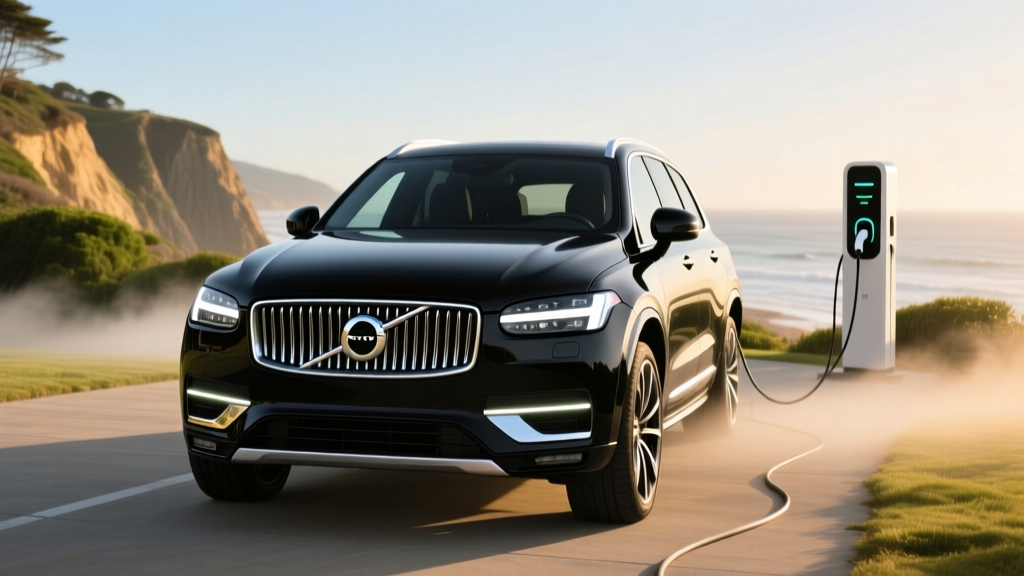
The 2025 Volvo XC90 plug-in hybrid (badged as the XC90 Recharge) occupies a narrow but compelling lane in the luxury SUV market. It offers 32 miles of EPA-rated electric-only driving for daily commutes, a combined 455 horsepower from its turbocharged engine and electric motor, and the three-row practicality that full-electric luxury SUVs still struggle to deliver at this price point. If you can charge at home and your weekday driving stays under 30 miles, the XC90 Recharge effectively operates as an EV Monday through Friday — then transforms into a capable gas-electric hybrid for weekend road trips without range anxiety.
But at a starting MSRP of $73,100, the math only works if you actually plug it in. Drive it like a conventional hybrid without charging, and you're hauling 5,000+ pounds of SUV with worse fuel economy than a non-plug-in alternative. This guide breaks down exactly what the XC90 Recharge delivers, what it costs to own, and whether a PHEV, full EV, or conventional hybrid fits your life.
HEV vs PHEV: What the XC90 Recharge Actually Is
Volvo offers the XC90 in two electrified forms, and confusing them is a common buyer mistake:
XC90 Mild Hybrid (B5/B6) — Conventional HEV
- Small 48V battery assists the gas engine
- Cannot plug in — charges via regenerative braking only
- No electric-only driving capability
- EPA: 21 city / 27 highway / 23 combined MPG (B5 FWD)
- Lower starting price (~$57,000)
XC90 Recharge (T8) — Plug-In Hybrid PHEV
- 18.6 kWh lithium-ion battery pack
- Plugs in via Level 1 or Level 2 charging
- 32 miles EPA electric-only range
- EPA: 55 MPGe combined (electric + gas) / 27 MPG gas-only
- 455 combined horsepower, 523 lb-ft torque
- Higher starting price (~$73,100)
This article focuses on the XC90 Recharge PHEV. The mild-hybrid B5/B6 models are conventional hybrids that never plug in and offer no electric-only range. If you see "XC90 hybrid" in marketing, verify whether it's the Recharge (PHEV) or the B-series (mild HEV).
Range, MPG, and Real-World Efficiency
The XC90 Recharge's efficiency story depends entirely on your charging habits. Here's the EPA data from fueleconomy.gov:
| Metric | EPA Rating | Real-World Expectation |
|---|---|---|
| Electric-only range | 32 miles | 26–30 mi (highway/cold weather) |
| MPGe (combined, electric + gas) | 55 MPGe | 45–55 MPGe with regular charging |
| Gas-only MPG (combined) | 27 MPG | 23–25 MPG (highway-heavy driving) |
| Gas-only city MPG | 26 MPG | 24–27 MPG (regen helps in stop-and-go) |
| Gas-only highway MPG | 27 MPG | 23–26 MPG (heavy SUV at 75+ mph) |
| Total combined range | ~430 miles | 380–420 mi depending on conditions |
Who sees the best real-world MPG? Owners who charge nightly at home and drive under 30 miles daily may go weeks without visiting a gas station. In that scenario, you'll approach or exceed the 55 MPGe combined figure. Owners who rarely plug in will see 23–27 MPG — respectable for a 5,000-pound luxury SUV but not dramatically better than the mild-hybrid B5.
Powertrain and Performance Specs
| Specification | 2025 XC90 Recharge (T8 AWD) |
|---|---|
| Engine | 2.0L turbocharged + supercharged 4-cylinder |
| Electric motor | Rear-axle permanent-magnet synchronous motor (143 hp / 228 lb-ft) |
| Combined system output | 455 hp / 523 lb-ft torque |
| Battery capacity | 18.6 kWh (lithium-ion, NMC chemistry) |
| Usable battery capacity | ~14.9 kWh |
| Transmission | 8-speed automatic (engine) / single-speed (motor) |
| Drivetrain | eAWD (engine drives front, motor drives rear) |
| 0–60 mph | 5.0 seconds |
| Curb weight | ~5,100 lbs |
| Towing capacity | 5,000 lbs (with factory tow package) |
| Cargo volume (behind 3rd row) | 15.8 cu ft |
| Cargo volume (2nd row folded) | 41.8 cu ft |
The T8 powertrain is one of the most powerful in the luxury midsize SUV segment. The rear-axle electric motor provides instant torque for confident merging and passing, while the turbocharged-and-supercharged four-cylinder eliminates the turbo lag common in large-displacement engines. The eAWD system doesn't use a mechanical connection between front and rear axles — the engine drives the front wheels, the motor drives the rear, and the car's computer balances torque distribution in real time. This setup is effective in rain and light snow but isn't designed for serious off-road use.
Charging: Speeds, Times, and Home Setup
The XC90 Recharge uses a standard J1772 connector for AC charging and does not support DC fast charging. This is typical for PHEVs — the battery is small enough that Level 2 charging fully replenishes it in a practical timeframe.
| Charging Level | Power (kW) | Full Charge Time (0–100%) | Where You'll Find It |
|---|---|---|---|
| Level 1 (120V household outlet) | ~1.4 kW | ~10–12 hours | Any standard outlet; overnight backup |
| Level 2 (240V home/public) | 3.7 kW (vehicle-limited) | ~4–5 hours | Home wallbox, workplace, public Level 2 stations |
| DC Fast Charging | Not supported | N/A | N/A |
Key charging detail: The XC90 Recharge's onboard charger is limited to 3.7 kW. Even if you plug into a 7.2 kW or 11.5 kW Level 2 station, the car will only accept 3.7 kW. This means a full charge takes roughly 4–5 hours regardless of the station's capacity. For most owners, this isn't a problem — plug in when you get home, and the battery is full by morning. But it does mean workplace charging or midday top-ups need a few hours to be meaningful.
Home charging setup cost: Most XC90 Recharge owners install a 240V Level 2 home charger. Expect $500–$800 for a quality Level 2 EVSE (ChargePoint Home Flex, Wallbox Pulsar Plus, or similar) plus $500–$2,000 for electrician installation depending on your panel's proximity to the garage and whether a panel upgrade is needed. Volvo also includes a portable charging cable that works on 120V (Level 1), which is sufficient for overnight charging if your daily electric driving is under 20 miles.
Pricing, Trims, and Tax Credit Eligibility
The 2025 XC90 Recharge lineup starts at $73,100 (Core trim) and climbs to approximately $83,000+ for the Ultra trim with premium packages. Here's the approximate trim breakdown:
- Core: $73,100 — Google built-in, panoramic roof, 20" wheels, pilot assist
- Plus: $76,600 — adds Harman Kardon audio, 360° camera, heated rear seats
- Ultra: $80,100 — adds Bowers & Wilkins audio, air suspension, head-up display
- MSRP cap for SUVs: $80,000 — XC90 Recharge Core and Plus qualify; Ultra may exceed cap depending on options
- Buyer income cap: $150,000 single / $225,000 head of household / $300,000 joint (modified AGI)
- Battery sourcing: critical minerals and battery components must meet phased-in sourcing requirements — Volvo's supply chain compliance varies by production batch
- Credit amount: up to $7,500, but partial credit ($3,750) if only one of the two sourcing requirements is met
- Point-of-sale transfer: eligible buyers can transfer the credit to the dealer at purchase for an immediate price reduction
- Always confirm eligibility with your tax professional before purchase — rules and sourcing compliance change
The XC90 Recharge's tax credit situation is nuanced. While the vehicle's MSRP falls under the $80,000 SUV cap in lower trims, the critical-mineral and battery-component sourcing requirements have tightened significantly since 2024. Some production batches may qualify for the full $7,500, others for $3,750, and some may not qualify at all depending on when and where the battery cells were manufactured. Ask the dealer for the specific vehicle's credit eligibility before signing, and cross-reference with the IRS's updated eligible vehicle list.
Battery Warranty, Reliability, and Replacement Costs
- High-voltage battery: 8 years / 100,000 miles (whichever comes first)
- Capacity retention threshold: warranty covers failure to maintain at least 70% of original capacity during the warranty period
- Hybrid system components (motor, inverter, charger): 8 years / 100,000 miles
- Conventional vehicle warranty: 4 years / 50,000 miles bumper-to-bumper
Reliability outlook: Volvo's T8 PHEV powertrain has been in production since 2016 (with the enlarged 18.6 kWh battery arriving for the 2023 model year). The system is well-developed, and major battery failures within the warranty period have been uncommon based on owner reports and industry data from sources like Consumer Reports. However, Volvo as a brand has scored mid-pack to below-average in recent reliability surveys, primarily due to infotainment software glitches and minor electrical issues rather than powertrain problems.
Battery replacement cost: If the high-voltage battery requires replacement outside of warranty, expect a cost in the range of $8,000–$14,000 including parts and labor. This is a significant expense, but PHEV batteries are smaller and less costly to replace than full EV battery packs. The 18.6 kWh pack in the XC90 Recharge is also less stressed than a full EV battery — it operates in a narrower state-of-charge window and benefits from the vehicle's thermal management system, which supports longevity.
Realistic battery lifespan: Modern NMC lithium-ion batteries in PHEV applications typically retain 80–90% of original capacity after 100,000 miles and 8–10 years of use, assuming normal charging patterns. Avoiding repeated deep discharges to 0% and minimizing prolonged exposure to extreme heat will help preserve capacity. Volvo's 70% capacity threshold for warranty coverage is standard for the industry but lower than some competitors (Toyota covers battery capacity down to 60% on some models for 10 years/150,000 miles).
XC90 Recharge vs Full EV vs Gas — Which Fits You?
- You can install a Level 2 charger at home and your daily commute is under 30 miles
- You need three rows but aren't ready to commit to a full EV for long road trips
- You want electric daily driving with the security of a gas engine for 400+ mile trips
- You tow occasionally (5,000-lb capacity) and want a luxury badge
- You have reliable home charging AND access to public DC fast charging for road trips
- Your daily driving exceeds 32 miles and you want zero gas use
- You want lower per-mile fuel costs and minimal maintenance long-term
- You're comfortable planning charging stops on longer trips
- You cannot charge at home (apartment, no garage, no outlet access)
- Your daily driving is unpredictable and often exceeds 40+ miles
- You want a lower purchase price and don't want to manage plug-in habits
- You still want mild fuel savings and stop-start refinement without PHEV complexity
The PHEV's value proposition collapses without home charging. If you're relying solely on public Level 2 stations, the 4–5 hour charge time and 32-mile range make it impractical to charge frequently enough to justify the price premium over the mild hybrid. The XC90 Recharge is designed for owners with a garage or driveway outlet who treat it as an EV on weekdays and a hybrid on weekends.
Pros and Cons
Pros
- 32-mile electric range covers most daily commutes without gas
- 455 hp provides effortless acceleration for a three-row SUV
- eAWD system is effective in rain and snow without mechanical complexity
- Google built-in infotainment with native Google Maps and Assistant
- Luxury interior with available Bowers & Wilkins audio and air suspension
- 5,000-lb towing capacity exceeds most EV SUVs in this class
- No range anxiety — gas engine provides 430+ total miles of range
Cons
- $73,100+ starting price is steep; tax credit eligibility is uncertain
- 3.7 kW onboard charger limits Level 2 charging speed
- No DC fast charging capability
- Third row is tight for adults on longer trips
- Mid-pack brand reliability ratings (software/electrical, not powertrain)
- Cargo space behind third row (15.8 cu ft) is modest for the class
- Gas-only MPG (27 combined) isn't dramatically better than non-hybrid rivals
Frequently Asked Questions
How many MPG does the 2025 Volvo XC90 plug-in hybrid get?
The EPA rates the XC90 Recharge at 55 MPGe combined when using both electric and gas power. Once the battery is depleted, it operates as a conventional hybrid rated at 27 MPG combined (26 city / 27 highway). Real-world gas-only MPG typically falls between 23–27 MPG depending on driving conditions, with highway-heavy trips pulling the figure toward the lower end.
How far can the XC90 Recharge drive on electric power alone?
The EPA rates the XC90 Recharge at 32 miles of electric-only range. In real-world conditions, expect 26–30 miles depending on temperature, speed, and terrain. Cold weather (below 40°F) and sustained highway speeds above 65 mph will reduce range to roughly 22–26 miles. The gasoline engine automatically starts when the battery is depleted — there's no manual switching required.
Does the 2025 XC90 Recharge qualify for the federal EV tax credit?
It may qualify for up to $7,500 under the IRS §30D clean vehicle credit, but eligibility depends on the specific vehicle's battery sourcing compliance and your income level. The SUV MSRP cap is $80,000, which the Core and Plus trims meet, but heavily optioned Ultra trims may exceed it. Battery sourcing requirements have tightened significantly — confirm eligibility for your specific VIN with the dealer and your tax professional before purchasing. Check the current list at fueleconomy.gov.
Is the Volvo XC90 plug-in hybrid reliable? What about battery replacement cost?
The T8 PHEV powertrain has been in production since 2016 and is generally reliable, with most reported issues relating to infotainment software rather than the hybrid system. The high-voltage battery is warrantied for 8 years/100,000 miles with a 70% capacity retention guarantee. Out-of-warranty battery replacement costs are estimated at $8,000–$14,000. Most PHEV batteries retain 80–90% capacity after 100,000 miles with normal use.
Can the XC90 Recharge charge at Tesla Superchargers or DC fast chargers?
No. The XC90 Recharge only supports AC charging (Level 1 at 120V and Level 2 at 240V) through a J1772 connector. It cannot use DC fast chargers of any type, including Tesla Superchargers, Electrify America, or EVgo stations. This is standard for PHEVs — the 18.6 kWh battery is small enough that Level 2 charging (4–5 hours for a full charge) is sufficient for daily use.
How does the XC90 Recharge compare to the Volvo EX90?
The EX90 is Volvo's all-electric three-row SUV, starting around $76,600 with an estimated 300+ mile range. It offers more interior space, lower per-mile fuel costs, and DC fast charging — but requires commitment to charging infrastructure for road trips. The XC90 Recharge is the better choice if you need three rows today but lack reliable access to DC fast charging on your typical road-trip routes, or if you want the flexibility of gas for towing and remote travel.
What happens if I never plug the XC90 Recharge in?
The vehicle operates perfectly fine as a conventional hybrid, with the gas engine and regenerative braking managing the small battery automatically. You'll see approximately 27 MPG combined — similar to a non-plug-in luxury SUV. However, you'll miss the entire value proposition of the PHEV: the 32 miles of electric driving, the lower operating costs, and the reduced emissions. If you can't or won't plug in, the XC90 mild hybrid (B5/B6) is a more cost-effective choice at a lower starting price.