The Toyota Prius Prime has quietly become one of the most practical plug-in hybrids on the market. Redesigned for the 2023 model year and carried forward into 2025, it pairs a 2.0-liter four-cylinder engine with a more powerful electric motor and a larger 13.6 kWh battery pack than its predecessor. The result: 44 miles of EPA-rated electric-only driving, 220 combined horsepower, and styling that finally shed the Prius's dowdy reputation. In this 2025 Toyota Prius Plug-In Hybrid review, we break down the real-world efficiency, charging logistics, pricing, and ownership economics so you can decide whether the Prime fits your garage — or whether a conventional Prius HEV or a full battery-electric vehicle makes more sense.
HEV vs PHEV: Which Prius Are You Actually Buying?
Toyota sells two distinct Prius models, and confusing them is the most common mistake shoppers make. Here is the fundamental split:
Conventional Prius (HEV)
- Battery: 1.0 kWh lithium-ion — recharges via regenerative braking and the engine
- Plug-in required? No. You never plug it in; it operates like a traditional gas car.
- Electric-only driving: Less than 1 mile at very low speeds
- EPA fuel economy: 57 city / 56 highway / 57 combined MPG
- Starting MSRP: ~$28,350
Prius Prime (PHEV)
- Battery: 13.6 kWh lithium-ion — plug in to charge via Level 1 or Level 2
- Plug-in required? Optional. It runs as a hybrid once the battery depletes, but you unlock the efficiency gains by charging.
- Electric-only driving: 44 miles EPA-rated (SE trim), 40 miles (XSE/XSE Premium)
- EPA fuel economy (charge-sustaining): 52 city / 48 highway / 50 combined MPG after battery depletes; 127 MPGe when factoring in electric operation
- Starting MSRP: ~$33,475
If you cannot charge at home or at work, the conventional Prius HEV is the smarter buy — you will pay a $5,000+ premium for the Prime's battery and never use its core advantage. If you can plug in nightly, the Prime's 44-mile electric range covers most daily commutes without burning a drop of gasoline.
Electric-Only Range, MPGe, and Real-World MPG
| Metric | Prius Prime SE | Prius Prime XSE / XSE Premium |
|---|---|---|
| EPA Electric-Only Range | 44 miles | 40 miles |
| EPA MPGe (electric + gas) | 127 MPGe | 114 MPGe |
| EPA MPG (gas-only, depleted) | 52 city / 48 hwy / 50 combined | 50 city / 47 hwy / 48 combined |
| Total Combined Range | ~440 miles | ~420 miles |
| Usable Battery Capacity | ~10.9 kWh usable (13.6 kWh gross) | |
Real-world range note: In mixed suburban driving at 35–55 mph with mild temperatures, owners commonly report 42–48 electric miles on the SE trim — roughly matching or slightly exceeding the EPA figure. On the highway at 70+ mph, expect electric range to drop to approximately 32–36 miles. In cold weather (below 30°F), battery chemistry and cabin heating demands can reduce electric-only range by 20–30%, yielding roughly 30–35 miles. These are normal PHEV behaviors, not defects.
Once the battery depletes, the Prime operates as a conventional hybrid. According to fueleconomy.gov, the SE trim achieves 50 MPG combined in gas-only mode. In real-world city driving, regenerative braking frequently pushes observed fuel economy into the low-to-mid 50s — a characteristic of Toyota's Hybrid Synergy Drive system that recaptures energy aggressively in stop-and-go traffic. Highway cruising at 75 mph typically yields 44–48 MPG observed.
Powertrain Specs: 220 HP Changes the Prius Story
| Specification | 2025 Prius Prime |
|---|---|
| Engine | 2.0L inline-4 Atkinson-cycle |
| Engine Output | 150 hp / 139 lb-ft torque |
| Electric Motor Output | 161 hp / 149 lb-ft torque |
| Net Combined Horsepower | 220 hp |
| 0–60 mph (manufacturer est.) | ~6.6 seconds |
| Drivetrain | Front-wheel drive (eCVT) |
| Battery Chemistry | Lithium-ion (NMC-type) |
| Gross / Usable Battery | 13.6 kWh / ~10.9 kWh |
| Towing Capacity | Not rated for towing |
The previous-generation Prius Prime made 121 horsepower and felt sluggish in highway merging situations. The 2025 model's 220 combined hp transforms the car. It is genuinely quick off the line in EV mode, where the electric motor's instant torque delivers brisk acceleration without engine noise. The eCVT transmission avoids the rubber-band effect of older Toyota hybrids, and the lower, wider chassis tuning makes it surprisingly composed in corners. For a car optimized for efficiency, it no longer feels like a compromise on the driving dynamics front.
Charging: Level 1, Level 2, and the DC Fast-Charging Gap
| Charging Level | Power (kW) | Time to Full (0–100%) | Connector |
|---|---|---|---|
| Level 1 (120V household outlet) | ~1.4 kW | ~11 hours | Standard J1772 |
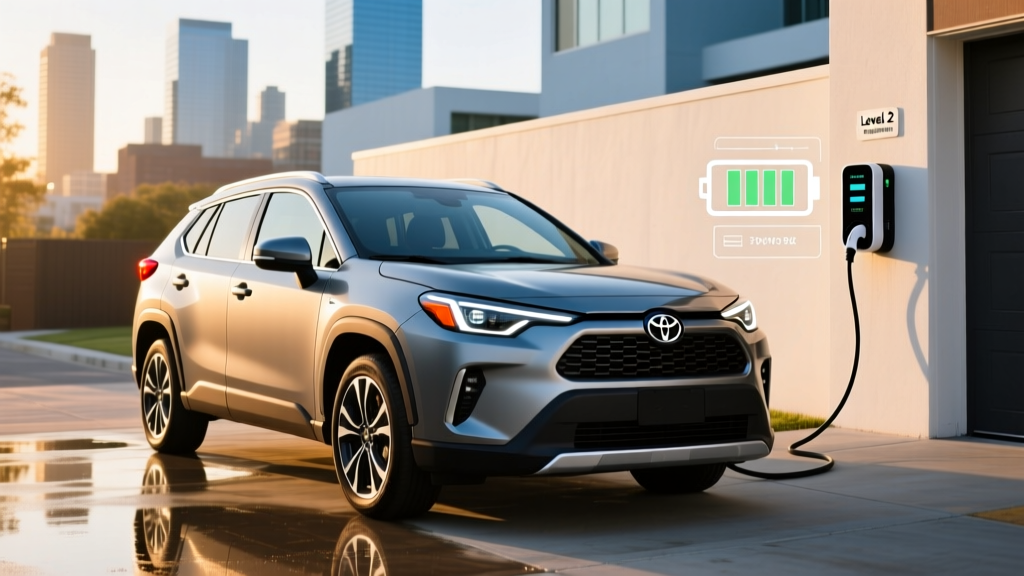
| Level 2 (240V home/public) | ~3.3 kW (onboard charger limit) | ~4 hours | J1772 |
| DC Fast Charging | Not supported | N/A | |
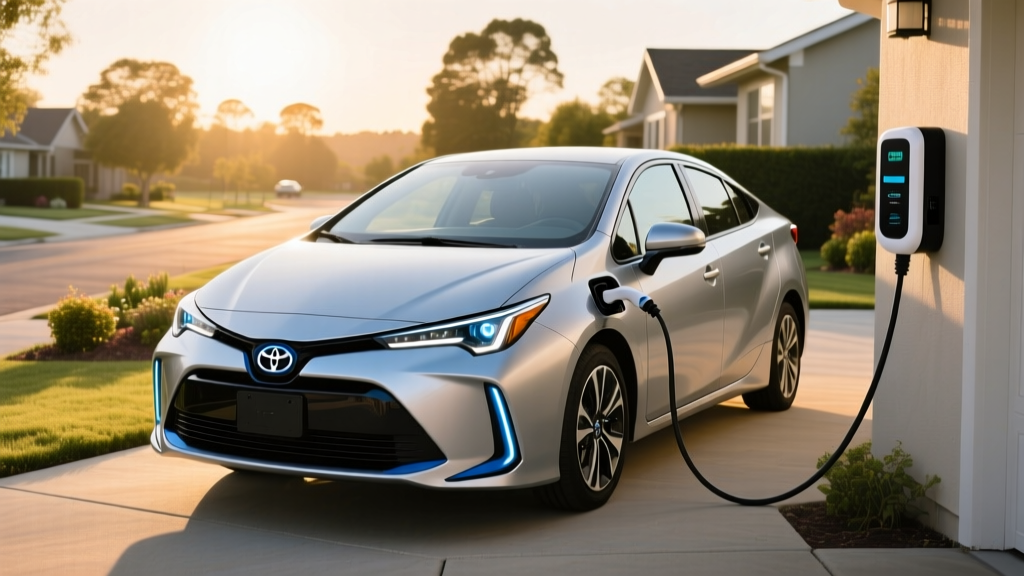
The Prius Prime's 3.3 kW onboard charger is its most debated specification. It means that even on a 48-amp Level 2 home charger capable of delivering 11.5 kW, the Prime will only accept 3.3 kW. For a 13.6 kWh battery, this is adequate — a full charge takes roughly four hours on Level 2, which covers overnight or workday charging easily. However, it also means the Prime cannot use DC fast chargers at all. There is no CCS or NACS port on this vehicle.
Practical charging cost: At the US average residential electricity rate of ~$0.16/kWh, a full charge costs approximately $1.75–$2.20 (accounting for charging losses), yielding a per-mile electric cost of roughly $0.04–$0.05. Compare that to gasoline at $3.40/gallon and 50 MPG, which costs ~$0.068 per mile. The electric savings are meaningful but modest compared to a full EV with a larger battery — the Prime's advantage is flexibility, not maximum cost savings.
Battery & Powertrain Warranty Coverage
- Hybrid Battery: 10 years / 150,000 miles (whichever comes first)
- Hybrid System Components: 8 years / 100,000 miles
- Basic New Vehicle: 3 years / 36,000 miles
- Powertrain: 5 years / 60,000 miles
Toyota covers the high-voltage battery for a decade, which addresses the top concern among hybrid and PHEV buyers. Out-of-warranty battery replacement currently runs approximately $3,500–$5,500 including labor at a Toyota dealer, though third-party refurbishment options are emerging at lower cost.
Pricing, Trims, and Federal Tax Credit Eligibility
The 2025 Toyota Prius Prime comes in three trims:
- SE: ~$33,475 MSRP — 44-mile EV range, 17-inch wheels, Toyota Safety Sense 3.0
- XSE: ~$36,775 MSRP — 40-mile EV range, 19-inch wheels, SofTex seats, larger touchscreen
- XSE Premium: ~$40,170 MSRP — adds panoramic roof, premium audio, heated/ventilated front seats
Does the 2025 Prius Prime Qualify for the Federal Tax Credit?
Under IRS §30D rules, the Prius Prime is eligible for up to $7,500 in federal tax credits — but with significant caveats that buyers must verify before purchase. According to IRS.gov clean vehicle credit guidelines, eligibility depends on:
- MSRP cap: The vehicle must have an MSRP at or below $55,000 (sedan limit). All Prius Prime trims qualify.
- Buyer income cap: Modified adjusted gross income must not exceed $150,000 (single), $225,000 (head of household), or $300,000 (joint filers).
- Battery sourcing requirements: Critical minerals and battery components must meet phased-in thresholds. For 2025, the critical-minerals requirement demands increasing percentages sourced from the US or free-trade-agreement countries, and battery components must not be sourced from a "foreign entity of concern." These requirements tighten annually.
- Point-of-sale transfer: Buyers can transfer the credit to the dealer at purchase, reducing the out-of-pocket price directly — even if they have no tax liability, provided they meet income requirements.
Important: Battery sourcing compliance changes frequently as supply chains shift. Always verify the specific VIN's eligibility on fueleconomy.gov or with your dealer before finalizing a purchase. The credit amount may be $0, $3,750, or $7,500 depending on current sourcing compliance. Consult a tax professional for your specific situation.
Prius Prime vs Full EV vs Gas Car: Which Fits You?
Choose the Prius Prime (PHEV) if:
- You can charge at home (Level 1 or 2) and your daily commute is under 40 miles
- You take regular road trips and do not want to plan around charging infrastructure
- You want electric daily driving without range anxiety on longer drives
- You live in a single-car household and need one vehicle for all use cases
Choose the Conventional Prius (HEV) if:
- You cannot charge at home or at work (apartment, street parking)
- You want maximum fuel efficiency with zero behavior change
- You want the lowest purchase price in the Prius lineup
Choose a Full EV (e.g., Tesla Model 3, Hyundai Ioniq 6) if:
- You can install a Level 2 home charger and want the lowest per-mile operating cost
- Your daily driving is predictable and within 250–350 miles
- You want zero tailpipe emissions and minimal maintenance (no oil changes, no engine)
- You are ready to plan road-trip charging stops
Reliability Track Record and Long-Term Ownership
Toyota's hybrid powertrain is among the most proven in the automotive industry. The Prius nameplate has accumulated over two decades of real-world data, and the Hybrid Synergy Drive system has demonstrated exceptional longevity. Fleet data from taxi and rideshare operators — who commonly push Prius models past 300,000 miles — shows that the high-voltage battery often lasts 150,000–200,000 miles before capacity drops below the 70% threshold where Toyota's warranty would intervene.
The 2025 Prius Prime's larger battery and more powerful motor are newer to the lineup (introduced with the 2023 redesign), so ultra-long-term data specific to this generation is still accumulating. However, the underlying architecture shares components with Toyota's broader hybrid fleet, and early reliability indicators from IIHS and owner surveys are positive. The Prius Prime earned IIHS Top Safety Pick+ status when equipped with specific headlights.
Maintenance costs are low: there is no timing belt to replace, regenerative braking extends pad life significantly (many owners report 80,000+ miles on original brake pads), and the eCVT has no conventional transmission fluid to change on a short interval. Annual maintenance typically costs $200–$400 for oil changes, tire rotations, and cabin filter replacement.
Pros and Cons at a Glance
Pros
- 44-mile EV range covers most daily commutes gasoline-free
- 220 hp delivers genuinely quick, confident acceleration
- 50+ MPG in gas-only mode once battery depletes
- 10-year / 150,000-mile hybrid battery warranty
- Attractive redesign — no longer looks like an eco-appliance
- Standard Toyota Safety Sense 3.0 (adaptive cruise, lane-keep, automatic emergency braking)
- Potential $7,500 federal tax credit (verify VIN eligibility)
Cons
- 3.3 kW onboard charger limits Level 2 speed; no DC fast charging
- ~$5,000 price premium over conventional Prius HEV
- Cargo space reduced vs. HEV (battery under rear seat): ~20.3 cu ft behind rear seats
- EV range drops to ~30–35 miles in freezing weather
- XSE's 19-inch wheels reduce EV range by 4 miles and ride quality noticeably
- Rear-seat headroom is tight for passengers over 6 feet (sloping roofline)
- Tax credit eligibility is not guaranteed — sourcing rules shift
Frequently Asked Questions
How many MPG does the 2025 Prius Prime get?
After the battery depletes, the Prius Prime SE achieves an EPA-rated 52 city / 48 highway / 50 combined MPG. In real-world city driving, many owners observe 52–56 MPG thanks to aggressive regenerative braking. Highway driving at 75 mph typically yields 44–48 MPG observed.
How far can the Prius Prime go on electric only?
The EPA rates the SE trim at 44 miles electric-only and the XSE/XSE Premium at 40 miles (due to larger, heavier wheels). Real-world results range from ~32 miles at highway speed to ~48 miles in mild-weather suburban driving. Cold weather reduces this to approximately 30–35 miles.
Does the 2025 Prius Prime qualify for a tax credit?
It may qualify for up to $7,500 under the IRS §30D clean vehicle credit, subject to buyer income limits, MSRP caps (all trims qualify), and battery sourcing requirements that change periodically. Always verify your specific VIN on fueleconomy.gov and consult a tax professional before purchase. The credit can be transferred to the dealer at point of sale.
Is the Prius Prime reliable, and what does a battery replacement cost?
Toyota's hybrid system has one of the strongest long-term reliability records in the industry. The high-voltage battery is warrantied for 10 years / 150,000 miles. Out-of-warranty replacement costs approximately $3,500–$5,500 at a dealer, though third-party refurbished options may be available for less. Most Prius batteries last 150,000–200,000+ miles based on fleet data.
Can I charge the Prius Prime on a regular household outlet?
Yes. Level 1 charging on a standard 120V outlet delivers a full charge in approximately 11 hours. For most owners who drive 30–40 miles daily and plug in overnight, Level 1 is sufficient. A 240V Level 2 charger reduces the time to about 4 hours.
What is the difference between the Prius and the Prius Prime?
The standard Prius is a conventional hybrid (HEV) — it never plugs in and gets 57 MPG combined. The Prius Prime is a plug-in hybrid (PHEV) with a larger 13.6 kWh battery, 44 miles of electric-only range, and 50 MPG combined once the battery depletes. The Prime costs ~$5,000 more but can eliminate gasoline use for short daily commutes if you charge regularly.
Does the Prius Prime support DC fast charging?
No. The Prius Prime does not have a DC fast-charging port. It charges exclusively via its J1772 port at up to 3.3 kW on Level 1 or Level 2 AC power. For a 13.6 kWh battery, this is practical for overnight and workday top-ups, but you cannot use highway DC fast chargers.