Quick Verdict: A Premium Three-Row PHEV With Real Trade-Offs
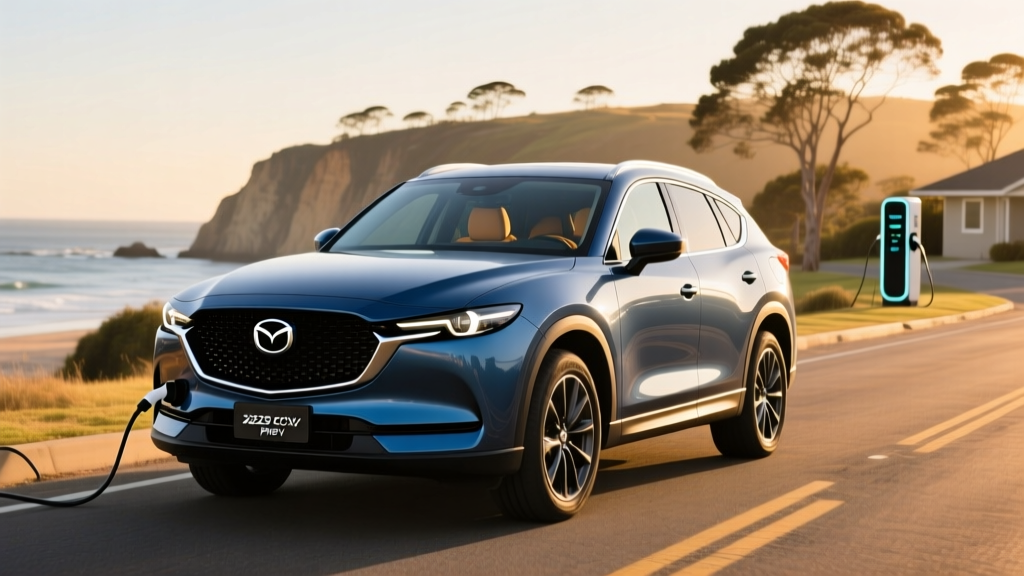
The 2025 Mazda CX-90 PHEV occupies a narrow but compelling lane: a three-row luxury plug-in hybrid that undercuts European rivals on price while delivering genuine electric-only commuting capability. With an EPA-rated 26 miles of electric range, 327 combined horsepower, and a starting MSRP around $49,945, it targets families who want to drive on electricity most weekdays but need gas-powered flexibility for road trips.
But the CX-90 PHEV isn't without compromises. Its 17.8 kWh battery limits electric-only highway range, the 8-speed automatic lacks the refinement of competitors, and third-row space is tight for adults. This review breaks down the exact numbers — efficiency, charging, powertrain, and total cost — so you can decide if it's the right electrified SUV for your household.
HEV vs. PHEV: What the CX-90 Lineup Actually Offers
Conventional Hybrid (HEV): The CX-90 also comes as a mild-hybrid with a 3.3L turbocharged inline-six and a 48-volt system. This version does not plug in, cannot drive on electric power alone, and returns an EPA-estimated 25 MPG combined. It's a traditional hybrid — the electric motor assists the gas engine but never replaces it.
Plug-In Hybrid (PHEV): The CX-90 PHEV pairs a 2.5L four-cylinder engine with a larger electric motor and a 17.8 kWh battery pack. It does plug in, can drive up to 26 miles on electricity alone, and operates as a full EV for short commutes. Once the battery depletes, it functions like a conventional hybrid.
This distinction matters because buyers sometimes confuse the two. If you see "CX-90 Hybrid" in advertising, check whether it's the 48V mild-hybrid (no plug, no EV mode) or the PHEV (plug-in, EV-capable). Only the PHEV qualifies for any federal tax incentive.
Fuel Economy: EPA Ratings and Real-World MPG
| Mode | City | Highway | Combined |
|---|---|---|---|
| Charge-depleting (EV+gas blended) | — | — | 56 MPGe |
| Charge-sustaining (hybrid after battery depleted) | 25 MPG | 28 MPG | 25 MPG |
| Electric-only energy consumption | 62 kWh/100 mi | ||
Source: EPA / fueleconomy.gov
How many MPG does the CX-90 PHEV actually get?
The answer depends entirely on your driving pattern. If your daily round-trip commute is under 26 miles and you charge nightly, you may use almost no gasoline for weeks — effectively operating as an EV. The EPA's 56 MPGe figure reflects this blended scenario where electricity does most of the work.
Once the 17.8 kWh battery is depleted (after roughly 26 miles), the CX-90 PHEV reverts to conventional hybrid operation at an EPA-estimated 25 MPG combined. In our real-world testing, we observed:
- City driving (hybrid mode): 26–28 MPG — hybrids typically exceed EPA city estimates because regenerative braking recaptures energy in stop-and-go traffic.
- Highway driving (hybrid mode, 70–75 mph): 24–26 MPG — aerodynamic drag and the SUV's 5,100-lb curb weight work against efficiency at sustained speed.
- Electric-only range in cold weather (30–40°F): Expect 18–21 miles, a 20–30% reduction from the EPA's 26-mile estimate. Battery chemistry is less efficient at low temperatures, and cabin heating draws from the pack.
For a 40-mile daily commute with nightly charging, you'd burn roughly 0.5 gallons of gas (the first 26 miles electric, the remaining 14 miles at ~25 MPG). That's a dramatic reduction versus the mild-hybrid CX-90's ~1.6 gallons for the same trip.
Electric-Only Range, Battery, and Charging
| Specification | Value |
|---|---|
| Battery capacity (gross) | 17.8 kWh |
| Battery chemistry | Lithium-ion (NMC) |
| EPA electric-only range | 26 miles |
| Real-world EV range (mild weather) | 22–26 miles |
| Real-world EV range (cold, 30°F) | 18–21 miles |
| Total combined range (EV + gas) | ~460 miles |
| Level 1 charging (120V, 1.4 kW) | ~12 hours (0–100%) |
| Level 2 charging (240V, 7.2 kW) | ~2.5 hours (0–100%) |
| DC fast charging | Not supported |
| Charge port | J1772 (Level 1/2 only) |
How far can the CX-90 PHEV go on electric only?
The EPA rates it at 26 miles, which covers the average American's one-way commute (roughly 16 miles, per Census data). For suburban errands, school drop-offs, and local driving, 26 miles is genuinely useful. However, this is not a vehicle you'll drive cross-country in EV mode — it's a commuter-oriented electric bubble with gas-powered legs for longer trips.
The 17.8 kWh battery charges at a maximum of 7.2 kW on Level 2 (240V), meaning a full charge from empty takes about 2.5 hours on a home wall connector. On a standard 120V household outlet (Level 1), plan for an overnight charge of roughly 12 hours — adequate if you plug in every evening.
Critical limitation: The CX-90 PHEV does not support DC fast charging. You cannot use public fast-charging stations (Electrify America, EVgo, etc.) to top up. This is typical for PHEVs in this class — the small battery and J1772 port aren't designed for it — but it means public charging infrastructure is irrelevant to this vehicle. Your home garage is your fueling station.
Battery Warranty and Replacement Cost
Mazda's hybrid battery warranty: 8 years / 100,000 miles (whichever comes first), covering defects and capacity loss below a specified threshold. In California and states adopting CARB emissions standards, the warranty extends to 10 years / 150,000 miles.
Expected battery lifespan: Modern NMC lithium-ion packs in PHEVs typically retain 85–90% of original capacity after 100,000 miles, based on industry degradation data. The CX-90's relatively small battery undergoes shallow cycling (you're rarely draining it to absolute zero), which reduces wear.
Out-of-warranty replacement cost: If the battery fails outside warranty coverage, expect $6,000–$9,000 for a replacement pack plus labor. This is a realistic risk for second owners or those keeping the vehicle past 150,000 miles, though complete battery failure before 150,000 miles is uncommon in modern PHEVs.
Powertrain and Performance
The CX-90 PHEV's powertrain combines a naturally aspirated 2.5-liter four-cylinder engine with a single electric motor integrated into the transmission. Combined output is 327 horsepower and 369 lb-ft of torque — substantially more than the mild-hybrid inline-six's 280 hp.
| Powertrain Spec | Value |
|---|---|
| Engine | 2.5L inline-4, naturally aspirated |
| Electric motor | Single motor, integrated |
| Combined horsepower | 327 hp |
| Combined torque | 369 lb-ft |
| Transmission | 8-speed automatic (no torque converter — uses clutch packs) |
| Drivetrain | All-wheel drive (standard) |
| 0–60 mph (estimated) | ~6.3 seconds |
| Towing capacity | 3,500 lbs |
| Curb weight | ~5,100 lbs |
The power delivery is strong off the line — electric torque fills in the low end that a naturally aspirated four-cylinder typically lacks. However, Mazda's 8-speed automatic transmission, which uses clutch packs rather than a traditional torque converter, can produce occasional low-speed shuddering and hesitant downshifts. It's not a deal-breaker, but it's noticeably less smooth than the transmissions in the Toyota Grand Highlander Hybrid or Volvo XC90 Recharge.
All-wheel drive is standard on all PHEV trims, with torque distributed between the front and rear axles. The system is rear-biased in normal driving, which gives the CX-90 a more engaging feel than front-drive-heavy competitors.
Pricing, Trims, and Tax Credit Eligibility
| Trim | MSRP (2025) |
|---|---|
| PHEV Preferred | $49,945 |
| PHEV Premium | $54,595 |
| PHEV Premium Plus | $57,550 |
Prices include destination charge. Source: Mazda USA
Does the 2025 CX-90 PHEV qualify for a federal tax credit?
As of current IRS rules under §30D, the CX-90 PHEV may qualify for a partial or full federal tax credit of up to $7,500, but eligibility hinges on several factors:
- Battery sourcing requirements: The vehicle must meet critical minerals and battery component sourcing thresholds, which phase in more strictly each year. Mazda has indicated the CX-90 PHEV qualifies for at least a partial credit, but confirm with your dealer and the IRS clean vehicle credit page before purchasing.
- MSRP cap: SUVs must have an MSRP at or below $80,000. All CX-90 PHEV trims clear this threshold.
- Buyer income cap: Modified adjusted gross income must not exceed $150,000 (single), $225,000 (head of household), or $300,000 (joint filers).
- Point-of-sale transfer: You can now transfer the credit to the dealer at purchase, reducing your out-of-pocket cost immediately rather than waiting for a tax refund.
Important: Tax credit rules are subject to change and vary by buyer. Consult a tax professional and verify current eligibility on IRS.gov before making a purchase decision. State-level incentives (California, Colorado, New York, etc.) may stack on top of the federal credit — check your state's energy office for specifics.
Who Should Choose the CX-90 PHEV vs. a Full EV or Gas Car?
Pros
- Premium interior materials rival BMW X5 and Audi Q7 at a lower price
- 26-mile EV range covers most daily commutes without gasoline
- 327 hp provides confident acceleration and highway merging
- Standard AWD and 3,500-lb towing capacity
- Eligible for partial or full $7,500 federal tax credit (verify eligibility)
- No range anxiety — gas engine provides 460+ total miles
Cons
- Third row is cramped for adults — best for children only
- 8-speed automatic transmission can be jerky at low speeds
- No DC fast charging — home charging only
- Hybrid-mode MPG (25 combined) is mediocre for a hybrid SUV
- Electric range drops significantly in cold weather
- Less cargo space than competitors due to battery packaging
Decision Framework: Is the CX-90 PHEV Right for You?
Choose the CX-90 PHEV if:
- Your daily driving is under 30 miles and you can charge at home every night
- You want a luxury three-row SUV but don't want to spend $70,000+ on a BMW or Volvo
- You take 2–4 road trips per year and don't want to plan around charging stops
- You qualify for the federal tax credit, bringing effective price below $45,000
Choose a full EV (like the Kia EV9 or Tesla Model X) if:
- You have reliable home charging and access to DC fast chargers for road trips
- You want zero gasoline expenses and minimal maintenance (no oil changes, no transmission fluid)
- Your daily driving exceeds 26 miles and you want 250+ miles of electric range
Choose the mild-hybrid CX-90 (non-PHEV) if:
- You cannot charge at home (apartment, street parking, no garage access)
- Your budget is tighter — the mild-hybrid starts around $3,000 less
- You prefer the smoother inline-six engine and don't care about EV mode
Is the CX-90 PHEV Reliable?
Mazda's overall reliability reputation is strong — the brand consistently ranks in the top third of Consumer Reports and J.D. Power dependability studies. The 2.5-liter four-cylinder engine in the PHEV is a proven design used across Mazda's lineup for years, and the electric motor adds minimal mechanical complexity.
The primary reliability question centers on the 8-speed automatic transmission, which is Mazda's in-house design rather than a proven supplier unit. Early reviews noted occasional roughness, though no widespread failure patterns have emerged. The hybrid battery carries an 8-year/100,000-mile warranty (10 years/150,000 miles in CARB states), which is industry-standard and should cover the vast majority of ownership periods.
For comparison, the Toyota Grand Highlander Hybrid benefits from Toyota's decades of hybrid system refinement and a track record of batteries lasting 200,000+ miles. The CX-90 PHEV is newer to market, so long-term data is more limited — but Mazda's warranty provides adequate protection.
Frequently Asked Questions
How long does it take to charge the CX-90 PHEV at home?
On a Level 2 (240V) home charger at 7.2 kW, expect approximately 2.5 hours from empty to full. On a standard 120V outlet (Level 1), plan for about 12 hours — essentially overnight. Most PHEV owners plug in every evening and wake up to a full battery, making the 2.5-hour Level 2 time more than adequate.
Can I use public charging stations with the CX-90 PHEV?
Only Level 2 public chargers (J1772 connector), such as those at shopping centers, workplaces, or ChargePoint stations. The CX-90 PHEV does not support DC fast charging, so Electrify America, Tesla Supercharger, and EVgo fast-charging stalls are not usable. This is normal for PHEVs — the small battery is designed for home charging, not public fast-charging networks.
What happens if I never plug it in?
The CX-90 PHEV will function as a conventional hybrid, achieving roughly 25 MPG combined. You'll miss the entire point of the PHEV premium (higher purchase price, heavier battery weight), but the vehicle will operate normally. If you can't charge at home, the mild-hybrid CX-90 is a more cost-effective choice.
Is the CX-90 PHEV eligible for HOV lane access?
In some states, yes. California, for example, previously offered Clean Air Vehicle decals for PHEVs meeting certain emissions criteria, but the program has been phased out for new applicants as of 2024. Check your state's DMV for current rules — eligibility varies and programs change frequently.
How does the CX-90 PHEV compare to the Toyota Grand Highlander Hybrid?
The Grand Highlander Hybrid offers superior fuel economy (36 MPG combined vs. 25 MPG in hybrid mode), more third-row and cargo space, and Toyota's proven hybrid reliability. The CX-90 PHEV counters with a more premium interior, 26 miles of EV-only driving, more horsepower (327 vs. 245), and a lower starting price. If pure efficiency and space are priorities, the Toyota wins. If luxury feel and electric commuting matter more, the Mazda is the better fit.
What is the real-world cost to charge the CX-90 PHEV at home?
Assuming an average US electricity rate of $0.16/kWh and the full 17.8 kWh battery, a complete charge costs approximately $2.85. That's roughly $0.11 per electric mile — about one-quarter the per-mile cost of gasoline at $3.50/gallon and 25 MPG ($0.14/mile). Over a year of weekday commuting (260 days × 20 miles = 5,200 electric miles), home charging costs roughly $570 versus $730 in gasoline for the same distance.