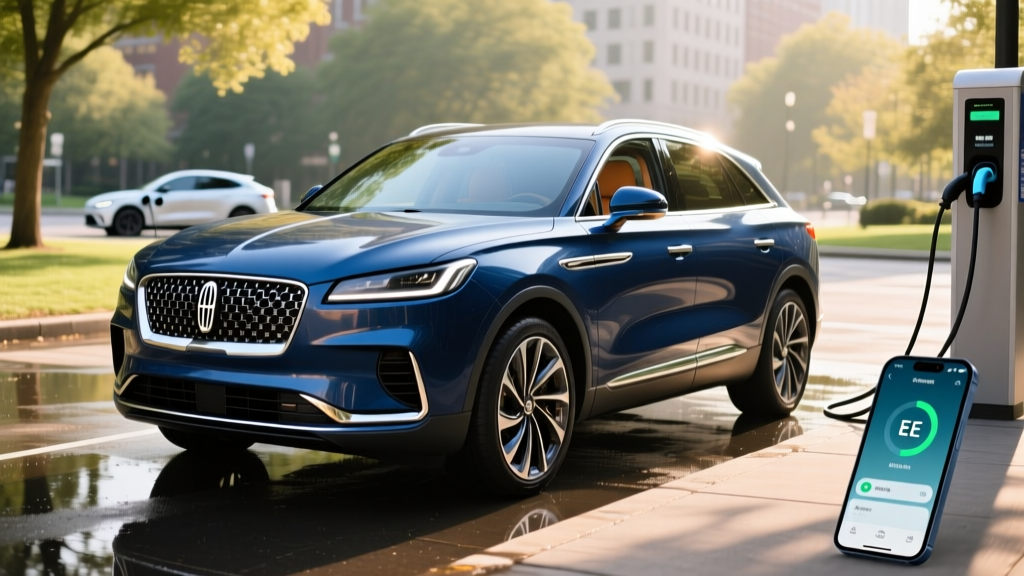
The 2025 Lincoln Nautilus is offered exclusively as a conventional hybrid — there is no plug-in hybrid (PHEV) or fully electric variant in the lineup. Lincoln made the hybrid powertrain standard across every trim, a move that positions this midsize luxury SUV against competitors still charging a premium for electrification. For buyers who want improved fuel economy without altering their fueling habits, the Nautilus hybrid removes the complexity of plug-in ownership while delivering meaningful efficiency gains over a gas-only alternative.
Below, we break down the EPA fuel economy, real-world MPG expectations, powertrain specs, pricing, tax-credit eligibility, and long-term battery reliability so you can decide whether the 2025 Lincoln Nautilus hybrid fits your garage.
HEV vs. PHEV: What the 2025 Nautilus Actually Is
A common point of confusion in luxury SUV shopping is whether "hybrid" means you need to plug in. The 2025 Lincoln Nautilus is a conventional hybrid (HEV). It uses a small battery pack charged entirely through regenerative braking and the gasoline engine — you never plug it in. There is no electric-only driving mode of any meaningful distance, and no charge port on the exterior.
| Feature | HEV (2025 Nautilus) | PHEV (e.g., Lincoln Corsair Grand Touring) |
|---|---|---|
| Plug-in charging required? | No | Yes |
| Electric-only range | None (motor assists engine) | Typically 20–30 miles |
| Battery size | ~1.1 kWh (buffer) | 14–18 kWh usable |
| Federal tax credit (§30D) | Not eligible | May qualify (subject to sourcing/income rules) |
| Fueling habit change | None — gas station only | Home Level 2 recommended |
If you are cross-shopping the Nautilus and hoping for a plug-in version similar to the Lincoln Corsair Grand Touring PHEV, Lincoln does not currently offer one in the Nautilus lineup. The Nautilus hybrid is strictly a self-charging system.
EPA Fuel Economy: 2025 Lincoln Nautilus Hybrid MPG
The 2025 Lincoln Nautilus hybrid pairs a 2.0-liter turbocharged inline-four with an electric motor integrated into the power-split transmission. According to fueleconomy.gov, the EPA rates the Nautilus hybrid at:
| Metric | EPA Rating |
|---|---|
| City MPG | 23 MPG |
| Highway MPG | 26 MPG |
| Combined MPG | 24 MPG |
| Annual fuel cost (est.) | ~$2,850 (15,000 mi/yr, $3.80/gal premium) |
These figures apply to all three trims (Premiere, Reserve, and Black Label) since the powertrain is identical across the range. The Nautilus requires premium unleaded fuel (91 octane recommended), which affects the per-mile cost calculation.
Real-World MPG vs. EPA Sticker: What Owners Actually See
Hybrid powertrains tend to outperform their EPA city estimates in stop-and-go traffic, where regenerative braking recaptures energy most effectively. However, the Nautilus is a heavy vehicle — curb weight exceeds 4,700 lbs — and its turbocharged engine limits the efficiency gains typical of naturally aspirated hybrid systems.
- City-heavy commuting: 24–27 MPG — hybrid system recovers braking energy, often beating the 23 MPG EPA city figure by 1–4 MPG
- Highway cruising (70–80 mph): 22–24 MPG — aerodynamic drag and premium-fuel engine reduce the hybrid advantage at sustained speed
- Cold weather (below 32°F): 19–22 MPG — engine runs more frequently for cabin heat, reducing electric-motor assist time
- Mixed driving (annual average): 23–25 MPG — closely tracking the 24 MPG combined EPA rating
The Nautilus hybrid's real-world advantage over a comparable gas-only midsize luxury SUV (which would typically return 19–21 MPG combined) is roughly 3–5 MPG. Over 15,000 miles per year, that translates to approximately 50–75 fewer gallons consumed annually — a savings of roughly $200–$285 per year at current premium fuel prices.
Powertrain and Performance Specs
The 2025 Nautilus hybrid uses Ford's fourth-generation hybrid system, adapted for Lincoln's luxury tuning. The setup prioritizes smoothness and low-end torque over outright performance.
| Specification | 2025 Lincoln Nautilus Hybrid |
|---|---|
| Engine | 2.0L turbocharged I-4 |
| Engine output | 245 hp / 275 lb-ft torque |
| Electric motor | Integrated into power-split transaxle |
| Combined system output | ~300 hp (est.) |
| Transmission | eCVT (power-split device) |
| Drivetrain | AWD standard (all trims) |
| 0–60 mph | ~6.5 seconds (est.) |
| Towing capacity | Not rated for towing |
| Fuel requirement | Premium unleaded (91 octane) |
AWD is standard on every 2025 Nautilus trim. Unlike some competitors that offer FWD as a base to inflate MPG numbers, Lincoln's AWD-only approach means the 24 MPG combined figure is what every buyer gets — no asterisk for a lower trim.
Pricing by Trim and Tax-Credit Eligibility
The 2025 Lincoln Nautilus hybrid starts at approximately $53,495 for the Premiere trim (including destination charge), with the Reserve climbing to around $61,495 and the Black Label reaching $75,495. These are manufacturer-suggested retail prices; dealer markups or discounts may apply.
| Trim | MSRP (incl. destination) |
|---|---|
| Premiere | ~$53,495 |
| Reserve | ~$61,495 |
| Black Label | ~$75,495 |
The 2025 Lincoln Nautilus hybrid is a conventional HEV, not a plug-in vehicle. Under IRS §30D rules, only plug-in electric vehicles (BEVs and PHEVs with sufficient battery capacity) qualify for the federal clean vehicle credit. The Nautilus hybrid does not qualify for the $7,500 credit, nor does it qualify for the $4,000 used-EV credit. Some states offer hybrid-specific rebates or HOV-lane access — check your state's energy office for current programs.
Battery Warranty, Reliability, and Replacement Cost
Hybrid battery longevity is the most common concern among first-time hybrid buyers. The 2025 Nautilus uses a relatively small lithium-ion hybrid battery (approximately 1.1 kWh of usable capacity) that operates within a narrow state-of-charge window — typically between 40% and 60%. This shallow-cycling strategy dramatically reduces degradation compared to the deep cycles a full EV battery endures.
- Hybrid battery: 8 years / 100,000 miles (federal emissions warranty mandate; 10 years / 150,000 miles in CARB states including CA, NY, MA, and others)
- Powertrain (engine, transmission, motor): 6 years / 70,000 miles
- Bumper-to-bumper: 4 years / 50,000 miles
Ford and Lincoln's hybrid systems have accumulated significant real-world mileage data through the Escape Hybrid, Maverick Hybrid, and F-150 PowerBoost programs. Failure rates for the hybrid battery pack in these systems have been low. If replacement is needed out of warranty, a Lincoln dealer replacement for the Nautilus hybrid battery is estimated at $3,000–$5,000 (parts and labor) based on comparable Ford/Lincoln hybrid battery pricing — far less than the $10,000–$20,000+ replacement cost for a full EV traction battery.
For reliability ratings, consult NHTSA for safety data and owner forums for long-term drivetrain feedback as the model accumulates mileage.
Nautilus Hybrid vs. EV vs. Gas: Which Should You Choose?
The Nautilus hybrid occupies a specific position in the electrification spectrum. Here is a practical decision framework:
- You cannot install a home Level 2 charger (apartment, street parking, condo restrictions)
- You want better fuel economy than a gas SUV without any change to your fueling routine
- You take frequent long road trips and don't want to plan around DC fast-charging stops
- You live in an area with limited public charging infrastructure
- You want Lincoln's luxury interior and tech (48-inch panoramic display, BlueCruise) in a midsize SUV
Choose a Plug-In Hybrid (PHEV) Instead If:
- You can charge at home and your daily commute is under 30 miles round-trip
- You want electric-only driving for most weekday errands with gas-engine backup for road trips
- You want to qualify for the §30D federal tax credit (up to $7,500 for eligible PHEVs)
Choose a Full EV Instead If:
- You have reliable home Level 2 charging and want the lowest per-mile "fuel" cost
- You want to eliminate oil changes, spark plugs, and transmission fluid entirely
- You want the strongest tax-credit eligibility and lowest total cost of ownership over 5+ years
Pros and Cons of the 2025 Lincoln Nautilus Hybrid
- No plug-in charging needed — gas-and-go convenience
- AWD standard on all trims
- ~3–5 MPG improvement over a gas-only equivalent
- Strong hybrid battery warranty (8 yr/100k mi; 10 yr/150k mi in CARB states)
- Class-leading 48-inch panoramic display screen
- BlueCruise hands-free highway driving available
- Refined, quiet cabin with premium materials
- No PHEV or EV variant available
- Not eligible for federal §30D tax credit
- Premium fuel required (increases per-mile cost)
- 24 MPG combined is modest for a hybrid — weight and turbo limit gains
- Not rated for towing
- Starting MSRP above $53,000 is steep for the segment
- No DC fast-charging capability (not applicable to HEV, but limits future-proofing)
Frequently Asked Questions
How many MPG does the 2025 Lincoln Nautilus hybrid get?
The EPA rates the 2025 Nautilus hybrid at 23 city / 26 highway / 24 combined MPG. In real-world city-heavy driving, owners typically see 24–27 MPG thanks to regenerative braking. Highway-heavy driving tends to return 22–24 MPG. Cold weather can drop combined figures to 19–22 MPG.
Is there a plug-in hybrid (PHEV) version of the 2025 Nautilus?
No. The 2025 Lincoln Nautilus is offered only as a conventional hybrid (HEV). There is no plug-in variant with electric-only range. If you want a Lincoln PHEV, the Corsair Grand Touring offers approximately 27 miles of electric-only range, though it is a smaller compact SUV.
Does the 2025 Nautilus hybrid qualify for a federal tax credit?
No. Under IRS §30D, only plug-in electric vehicles (BEVs and qualifying PHEVs) are eligible for the federal clean vehicle credit. The Nautilus hybrid is a conventional HEV and does not qualify. Check your state energy office for any state-level hybrid incentives.
How long will the Nautilus hybrid battery last, and what does replacement cost?
The hybrid battery is covered by an 8-year/100,000-mile warranty (10 years/150,000 miles in CARB states). Because the battery operates in a shallow charge window (roughly 40–60% SoC), degradation is minimal. Ford/Lincoln hybrid batteries in other models have shown low failure rates over 100,000+ miles. Out-of-warranty replacement is estimated at $3,000–$5,000 — significantly less than a full EV battery replacement.
Is the Nautilus hybrid better than a gas-only SUV for fuel costs?
Yes, but the savings are modest. At 24 MPG combined vs. approximately 20 MPG for a comparable gas-only luxury SUV, you save roughly 50–75 gallons per year over 15,000 miles. At $3.80/gallon premium, that is $200–$285 annually. The hybrid's value proposition is as much about reduced emissions and smoother low-speed driving as it is about fuel-cost payback.
Can the 2025 Nautilus hybrid tow?
Lincoln does not rate the 2025 Nautilus hybrid for towing. If towing capacity is a priority, consider a body-on-frame SUV or a different midsize platform rated for trailer loads.