The Blazer Electrification Story: HEV, PHEV, or Full EV?
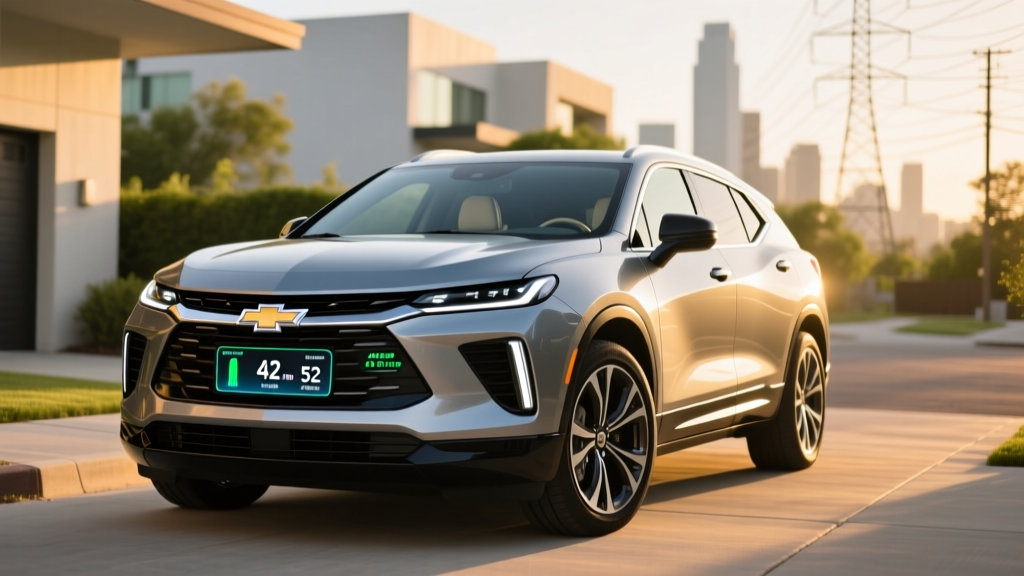
If you've been searching for a hybrid Blazer, here's the reality check you need before visiting a dealership: Chevrolet does not currently offer the Blazer as a conventional hybrid (HEV) or a plug-in hybrid (PHEV) for the 2026 model year. The Blazer nameplate has gone fully electric with the Chevy Blazer EV, a battery-electric SUV built on GM's Ultium platform.
The gas-only Chevy Blazer was discontinued after the 2025 model year as GM consolidated its midsize SUV lineup around electrification. That leaves buyers who want a Chevy midsize SUV with some form of electrification looking squarely at the Blazer EV — or cross-shopping PHEV alternatives from competing brands.
This guide breaks down exactly what the 2026 Blazer EV delivers in efficiency, range, and pricing, explains why a hybrid or PHEV version doesn't exist, and helps you decide whether the all-electric Blazer fits your needs — or whether a competitor's plug-in hybrid is a better match.
- HEV (Hybrid Electric Vehicle): Gas engine + small electric motor. Charges itself via regenerative braking. No plug. Think Toyota RAV4 Hybrid.
- PHEV (Plug-In Hybrid): Larger battery you can plug in. Typically 25–45 miles electric-only, then operates as a hybrid. Think Toyota RAV4 Prime.
- BEV (Battery Electric Vehicle): No gas engine at all. 100% electric. The 2026 Chevy Blazer EV falls here.
2026 Chevy Blazer EV: Efficiency and Range by Trim
Since there's no hybrid Blazer to report MPG for, the relevant efficiency metric for the Blazer EV is MPGe (miles per gallon equivalent) and kWh per 100 miles. MPGe converts electrical energy consumption into a gasoline-equivalent figure so you can compare operating costs across vehicle types.
| Trim | Drivetrain | Battery (kWh usable) | EPA Range | Combined MPGe | kWh/100 mi |
|---|---|---|---|---|---|
| LT (FWD) | FWD | ~85 kWh (NMC) | 324 mi | 89 MPGe | 38 |
| RS (AWD) | AWD | ~102 kWh (NMC) | 279 mi | 84 MPGe | 40 |
| SS (AWD Performance) | AWD | ~102 kWh (NMC) | 266 mi | 79 MPGe | 43 |
Source: EPA fueleconomy.gov
The EPA sticker says 324 miles for the FWD LT, but real-world results vary. Expect approximately 270–290 miles on highway road trips at 70–75 mph, and significantly less — roughly 220–250 miles — in sub-freezing winter conditions where battery heating and cabin climate draw extra energy. The AWD RS and SS trims, with their heavier curb weight and dual-motor setups, will see similar proportional reductions from their EPA figures.
Charging the Blazer EV: Speeds, Connectors, and Times
One advantage the Blazer EV holds over many competitors is DC fast-charging capability. Here's what the numbers look like across charging levels:
| Level | Power | Rate (mi/hr added) | 10–80% Time |
|---|---|---|---|
| Level 1 (120V household) | ~1.4 kW | ~3–4 mi/hr | Not practical |
| Level 2 (240V home/public) | 11.5 kW (onboard max) | ~30–34 mi/hr | ~9–10 hours (full) |
| DC Fast Charge | Up to 190 kW peak | ~650+ mi/hr (peak) | ~30 min (10–80%) |
The Blazer EV uses the NACS (North American Charging Standard) connector natively for 2026, meaning direct access to Tesla Supercharger stations via GM's agreement with Tesla — no adapter needed. This is a significant practical advantage over CCS-only vehicles, as the Supercharger network remains the most reliable public DC fast-charging infrastructure in the U.S.
Keep in mind that the 190 kW peak rate is not sustained across the entire session. Like all EVs, the Blazer's charge curve tapers significantly above 80% SoC to protect battery longevity. A 10–80% session at a 350 kW-capable charger will take roughly 30 minutes, but topping from 80–100% can add another 20–25 minutes.
Powertrain, Performance, and What You're Giving Up vs. a Hybrid
The 2026 Blazer EV is offered with three distinct powertrain configurations:
| Trim | Motors | Horsepower | Torque (lb-ft) | 0–60 mph |
|---|---|---|---|---|
| LT (FWD) | Single rear motor | ~220 hp | ~236 | ~7.5 sec |
| RS (AWD) | Dual motor | ~293 hp | ~355 | ~6.0 sec |
| SS (AWD) | Dual motor (performance) | ~557 hp | ~648 | ~3.4 sec |
Source: Chevrolet.com Blazer EV Configurator
Here's where the hybrid-vs-EV tradeoff becomes clear. A conventional hybrid like the Toyota RAV4 Hybrid delivers ~40 MPG combined with zero lifestyle change — you refuel at gas stations as usual. A PHEV like the RAV4 Prime gives you ~42 miles of electric-only commuting, then seamless gas operation for road trips. The Blazer EV eliminates gasoline entirely, which means lower per-mile energy costs but requires charging planning for longer trips.
Pricing, Tax Credits, and Total Cost
The 2026 Blazer EV starts at approximately $44,600 MSRP for the LT FWD trim, rising to roughly $52,000 for the RS AWD and $62,000+ for the SS performance model. Destination charges add approximately $1,395.
Federal Tax Credit Eligibility (§30D)
The Blazer EV is assembled in Ramos Arizpe, Mexico, which historically has affected its eligibility for the full $7,500 federal tax credit under the IRS §30D clean vehicle credit. The credit has strict requirements:
- Final assembly in North America: Mexico qualifies under USMCA.
- MSRP cap: SUVs must be under $80,000 — all Blazer EV trims qualify.
- Buyer income cap: AGI must not exceed $150,000 (single) / $300,000 (joint).
- Battery sourcing requirements: Critical minerals and battery component thresholds phase up annually. For 2026, the requirements are stringent, and partial credit ($3,750) vs. full credit ($7,500) depends on whether both sourcing criteria are met.
- Point-of-sale transfer: Eligible buyers can transfer the credit to the dealer at purchase, reducing the purchase price directly.
Check the latest eligibility status on fueleconomy.gov's tax credit lookup before purchasing, as sourcing compliance can shift with model-year production changes.
GM covers the Blazer EV's Ultium battery pack with an 8-year / 100,000-mile warranty, guaranteeing the battery will retain at least 70% of its original capacity during that period. Ultium packs use NMC (nickel manganese cobalt) chemistry. If out-of-warranty replacement were ever needed, current industry estimates for a pack of this size range from $12,000 to $18,000 including labor — though real-world Ultium degradation data so far suggests significant capacity retention well beyond the warranty window under normal use.
Hybrid Blazer vs. the Competition: PHEV Alternatives
Since there's no hybrid or PHEV Blazer, buyers wanting plug-in flexibility in a similarly sized SUV should consider these alternatives:
| Vehicle | Type | EPA Range / MPG | Electric-Only (mi) | Starting MSRP | Tax Credit |
|---|---|---|---|---|---|
| Chevy Blazer EV (RS AWD) | BEV | 279 mi / 84 MPGe | N/A (all-electric) | ~$52,000 | Up to $7,500* |
| Toyota RAV4 Prime | PHEV | 94 MPGe / 38 MPG gas | 42 mi | ~$44,500 | Up to $7,500* |
| Hyundai Tucson PHEV | PHEV | 80 MPGe / 35 MPG gas | 33 mi | ~$39,500 | Up to $7,500* |
| Ford Escape PHEV | PHEV | 105 MPGe / 40 MPG gas | 37 mi | ~$40,500 | Up to $7,500* |
*Tax credit eligibility subject to IRS §30D requirements including income caps, MSRP caps, and battery-sourcing rules. Verify at IRS.gov.
Who Should Buy the Blazer EV vs. a PHEV?
- You have reliable home Level 2 charging
- Your daily driving is under 200 miles
- You want zero gas station visits and lower per-mile fuel cost
- You value instant torque and a quiet, smooth powertrain
- You're ready for the Supercharger network on road trips
- You lack home charging access (apartment, street parking)
- You regularly drive 300+ miles in areas with sparse chargers
- You want electric commuting but gas flexibility for road trips
- You're not ready to plan trips around charging stops
- You live in an extreme-cold climate where EV range drops 25–35%
Will Chevy Ever Build a Plug-In Hybrid Blazer?
As of early 2026, GM has not announced a PHEV version of the Blazer. The company's strategy has been to leapfrog plug-in hybrids in favor of full battery-electric vehicles on the Ultium platform. GM CEO Mary Barra has consistently stated the company's goal is an all-electric future by 2035, with PHEVs viewed as a transitional technology that GM largely skipped in the U.S. market.
That said, if GM's EV sales trajectory or regulatory environment shifts, a range-extended EREV (extended-range electric vehicle) variant — essentially a battery-electric drivetrain with a small gas generator — isn't impossible for future model years. But for 2026, the Blazer is all-electric only.
Frequently Asked Questions
How many MPG does the hybrid Blazer get?
There is no conventional hybrid Blazer for 2026. The Chevy Blazer EV is a fully electric SUV rated at 79–89 MPGe combined depending on trim, which translates to roughly 38–43 kWh per 100 miles of driving. In terms of energy cost, this works out to approximately 3–4 cents per mile at the national average residential electricity rate of ~$0.17/kWh, compared to roughly 12–14 cents per mile for a 25 MPG gas SUV at $3.40/gallon.
How far can the Blazer go on electric power?
Since it's a full EV, the Blazer EV runs on electric power 100% of the time. EPA-rated range spans 266 miles (SS AWD) to 324 miles (LT FWD). Real-world highway range will be approximately 10–15% lower, and cold-weather range can drop 20–35% depending on temperature and whether the vehicle is preconditioned.
Is the Blazer EV reliable, and what does battery replacement cost?
The Blazer EV had a rocky launch in 2024 with software-related issues that prompted a temporary sales stop and multiple OTA (over-the-air) updates. By the 2026 model year, most early software bugs have been addressed through iterative fixes. The Ultium battery pack carries an 8-year/100,000-mile warranty with a 70% capacity retention guarantee. Out-of-warranty replacement estimates for a pack this size currently range from $12,000–$18,000, though widespread replacements have not been necessary based on current degradation data.
Does the Blazer EV qualify for any tax credit?
The Blazer EV may qualify for up to $7,500 under the federal §30D clean vehicle credit, depending on battery-sourcing compliance for the specific production batch, your income level (AGI under $150K single / $300K joint), and the vehicle's MSRP (under $80K for SUVs — all trims qualify). The credit can be transferred to the dealer at point of sale as a purchase-price reduction. Always verify current eligibility on the IRS clean vehicle credit page before buying, as sourcing requirements tighten annually.
Can I charge the Blazer EV at Tesla Superchargers?
Yes. The 2026 Blazer EV comes equipped with a native NACS charge port, giving it direct access to Tesla's Supercharger network without an adapter. This is one of the Blazer EV's strongest practical advantages, as Superchargers consistently lead public charging networks in reliability and uptime.