Quick Verdict: A Premium City Hybrid That Sips Fuel
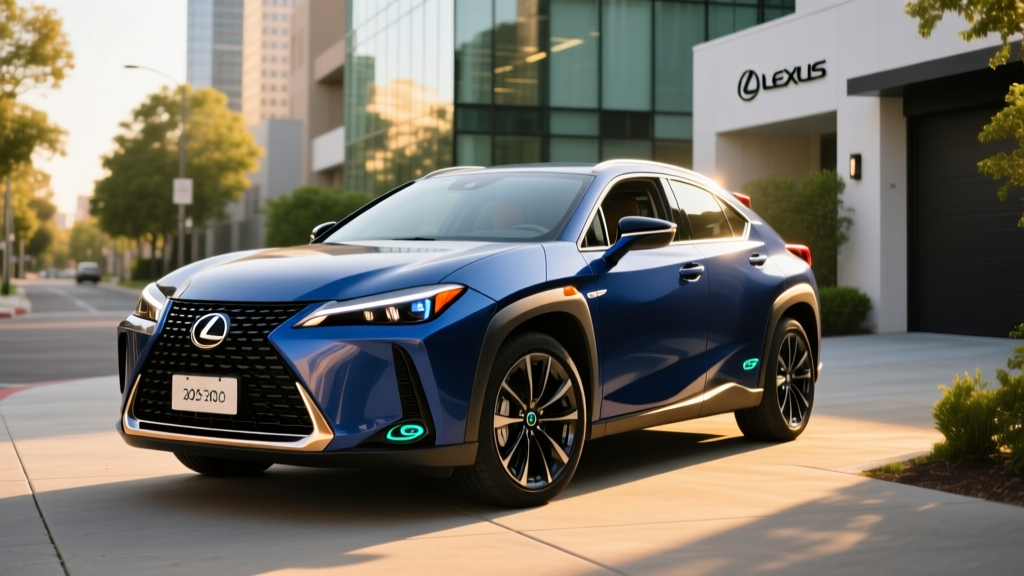
The 2025 Lexus UX 300h hybrid occupies a specific niche: a luxury subcompact crossover optimized for urban commuters who want premium refinement without ever plugging in. With an EPA-estimated 42 MPG combined, a proven fourth-generation Toyota hybrid powertrain, and Lexus build quality, it's one of the most fuel-efficient luxury vehicles on the market. But it's also a conventional hybrid (HEV), not a plug-in — meaning no electric-only range, no home charging, and no federal EV tax credit. For the right buyer, that's actually an advantage.
This review breaks down the exact numbers that matter: real-world MPG behavior, powertrain specs, battery longevity data, ownership costs, and how the UX 300h stacks up against plug-in hybrids and full EVs in 2026.
HEV vs PHEV vs EV: Where the UX 300h Fits
Conventional Hybrid (HEV) — This is the UX 300h. The gasoline engine and electric motor work together seamlessly. A small battery (1.4 kWh usable) recharges through regenerative braking and the engine. You never plug it in. You just fill up with gas and drive. The electric motor assists at low speeds and during acceleration, dramatically improving city MPG.
Plug-In Hybrid (PHEV) — The UX 300h is NOT this. PHEVs like the Toyota RAV4 Prime carry larger batteries (typically 15-20 kWh) that you charge at home or at public stations, delivering 25-42 miles of electric-only driving before the gas engine kicks in. They qualify for partial or full federal tax credits under IRS §30D if they meet battery-sourcing and income requirements.
Battery Electric Vehicle (BEV) — No gas engine at all. Vehicles like the Tesla Model Y or Hyundai Ioniq 5 run entirely on electricity stored in a large battery pack (60-100+ kWh). They require regular charging but have zero tailpipe emissions and the lowest per-mile energy cost.
The UX 300h is strictly an HEV. If you're looking for electric-only driving or plug-in capability, you'll need to look at PHEV alternatives (such as the Lexus NX 450h+, which offers 37 miles of electric range) or a full BEV.
Fuel Economy: EPA Numbers and Real-World MPG
The 2025 Lexus UX 300h carries identical EPA ratings across all trims (Base, Premium, F SPORT Handling) thanks to the shared powertrain and standard all-wheel drive:
| Metric | EPA Estimate | Real-World Expectation |
|---|---|---|
| City MPG | 43 MPG | 44–48 MPG (hybrids often beat EPA in stop-and-go) |
| Highway MPG | 41 MPG | 37–40 MPG (hybrid advantage shrinks at sustained speed) |
| Combined MPG | 42 MPG | 40–44 MPG depending on driving mix |
| Fuel Tank Capacity | 10.6 gallons | ~420–450 miles per tank |
| Annual Fuel Cost (EPA est.) | ~$1,350 | Varies by local gas prices and mileage |
Why hybrids often exceed EPA city ratings: The UX 300h's electric motor handles low-speed crawling and stop-and-go traffic almost entirely on electric power, with the 2.0-liter engine shutting off frequently. In real-world city testing, owners routinely report 44-48 MPG on urban commutes. Highway driving is a different story — at 70+ mph, the engine does most of the work, and aerodynamic drag reduces efficiency. Expect 37-40 MPG on sustained highway trips, per data from fueleconomy.gov.
Cold-weather note: In temperatures below 30°F, expect a 5-10% MPG reduction as the engine runs more frequently to provide cabin heat and maintain battery temperature. This is far less severe than the 20-40% range loss EVs experience in cold weather, but it's measurable.
Powertrain Specs: What Moves the UX 300h
| Specification | 2025 Lexus UX 300h |
|---|---|
| Engine | 2.0L 4-cylinder Atkinson-cycle |
| Engine Horsepower | 150 hp |
| Electric Motor (front) | Permanent-magnet synchronous |
| Electric Motor (rear, AWD) | Independent rear motor |
| Combined Net Horsepower | 196 hp |
| Hybrid Battery | ~1.4 kWh lithium-ion (not plug-in) |
| Transmission | eCVT (electronically controlled) |
| Drivetrain | Electronic AWD (eAWD) standard |
| 0-60 mph | 7.9 seconds (manufacturer estimate) |
| Towing Capacity | Not rated for towing |
The UX 300h uses Toyota's latest fourth-generation hybrid system, which is lighter and more responsive than the third-gen setup found in older Prius models. The Atkinson-cycle engine prioritizes efficiency over peak power, while the electric motors fill in torque instantly from a stop — making the UX 300h feel quicker in city driving than the 196 hp figure suggests.
The eAWD system uses a separate rear electric motor that engages only when additional traction is needed (acceleration from stop, slippery surfaces, cornering). There's no mechanical driveshaft to the rear wheels, reducing weight and parasitic loss. This system is seamless in rain and light snow but is not designed for off-road use.
Pricing, Trims, and Tax Credit Eligibility
The 2025 Lexus UX 300h starts at a competitive price point for a luxury hybrid crossover:
| Trim | Base MSRP | Notable Features |
|---|---|---|
| UX 300h Base | $37,390 | 18" wheels, 8" touchscreen, Lexus Safety System+ 3.0, heated seats |
| UX 300h Premium | $40,490 | Sunroof, power-adjustable passenger seat, auto-dimming mirrors |
| UX 300h F SPORT Handling | $44,890 | Adaptive suspension, 19" wheels, sport seats, unique styling |
Destination charge of $1,195 applies to all trims. Prices per Lexus.com.
Federal Tax Credit: The UX 300h does NOT qualify for the IRS §30D Clean Vehicle Credit. The §30D credit ($3,750-$7,500) applies only to plug-in electric vehicles (PHEVs and BEVs) with batteries of at least 7 kWh that meet critical-mineral and battery-component sourcing requirements. The UX 300h's ~1.4 kWh hybrid battery falls far below this threshold. It is classified as a conventional hybrid, not a plug-in vehicle.
State incentives: Some states offer modest rebates or HOV lane access for conventional hybrids, but these vary widely and change frequently. Check your state's energy or DMV website for current programs.
While the lack of a federal tax credit is a disadvantage compared to PHEVs and BEVs, the UX 300h's lower starting price (many PHEVs and BEVs start above $42,000) and zero charging infrastructure cost narrow the gap considerably for buyers who don't have access to home charging.
Hybrid Battery Longevity, Warranty, and Replacement Cost
Hybrid Battery Warranty: Lexus covers the UX 300h's hybrid battery for 10 years or 150,000 miles (whichever comes first) in all 50 states. This is among the best hybrid battery warranties in the industry and has been standard across Toyota/Lexus hybrids since the 2020 model year.
Powertrain Warranty: The engine, eCVT transmission, and hybrid control systems are covered for 6 years / 70,000 miles.
Basic Warranty: 4 years / 50,000 miles bumper-to-bumper.
How long do Toyota/Lexus hybrid batteries actually last? Real-world data from millions of Toyota and Lexus hybrids on the road (including Prius, Camry Hybrid, RX Hybrid, and ES Hybrid) shows that the vast majority of hybrid batteries last the full life of the vehicle. Failure rates before 150,000 miles are extremely low — well under 5% based on extended warranty claim data. The UX 300h's battery is small (1.4 kWh) and operates within a narrow state-of-charge window (roughly 40-80%), which is the least stressful operating condition for lithium-ion cells.
Battery replacement cost: If the hybrid battery does need replacement out of warranty, expect to pay approximately $2,500-$4,000 for a refurbished or new replacement battery pack installed at a Lexus dealer. Third-party hybrid battery specialists often offer replacements for $1,500-$2,500. This is dramatically less than BEV battery replacements ($8,000-$20,000+) because the UX 300h's hybrid battery is small and modular — individual cells can sometimes be replaced rather than the entire pack.
Reliability: Lexus consistently ranks at or near the top of J.D. Power and Consumer Reports reliability surveys. The fourth-generation Toyota hybrid system has been in production since 2019 and is one of the most thoroughly proven powertrains in the automotive industry. The UX 300h carries no significant reliability concerns based on current data.
Who Should Buy the UX 300h — and Who Shouldn't
Choose the UX 300h If:
- You want luxury-crossover refinement with 40+ MPG and zero lifestyle change
- You lack access to home or workplace charging (apartment dwellers, street parkers)
- Your driving is predominantly urban or suburban (where the hybrid system shines)
- You want AWD for rain and light snow without an MPG penalty
- You plan to own the vehicle 8-10+ years and value proven reliability
- You want a subcompact crossover size for easy city parking
Look Elsewhere If:
- You want electric-only driving or plug-in capability (consider the Lexus NX 450h+ PHEV or a BEV)
- You need cargo space — the UX 300h offers only 21.7 cu ft behind the rear seats
- You frequently drive long highway trips (the hybrid advantage diminishes above 65 mph)
- You want to qualify for the $3,750-$7,500 federal tax credit (only PHEVs/BEVs qualify)
- You need towing capability (the UX 300h is not rated for towing)
- You prioritize acceleration — the 7.9-second 0-60 is adequate but not sporty
UX 300h vs Alternatives: PHEV, EV, and Gas Comparisons
| Metric | 2025 Lexus UX 300h (HEV) | Lexus NX 450h+ (PHEV) | Tesla Model Y LR (BEV) | BMW X1 xDrive28i (Gas) |
|---|---|---|---|---|
| Powertrain | 2.0L hybrid | 2.5L PHEV | Dual-motor BEV | 2.0L turbo |
| Combined Efficiency | 42 MPG | 84 MPGe (37 mi electric) / 36 MPG gas | 122 MPGe | |
| Electric-Only Range | None | 37 miles | 310 miles (EPA) | |
| Combined HP | 196 hp | 304 hp | 384 hp | |
| 0-60 mph | 7.9 sec | 6.0 sec | 4.8 sec | |
| Base MSRP | $37,390 | $60,090 | $46,630 | |
| Federal Tax Credit | $0 | Up to $3,750* | $0 (phased out) | |
| Requires Charging? | No | Optional (for EV range) | Yes | |
| Cargo Volume | 21.7 cu ft | 24.7 cu ft | 30.2 cu ft |
*NX 450h+ credit eligibility depends on battery-sourcing compliance and buyer income limits under current IRS §30D rules. Verify at irs.gov.
The UX 300h's advantage is clear: lowest purchase price, zero charging hassle, and excellent city MPG. The NX 450h+ offers dramatically more power and 37 miles of electric commuting but costs $23,000 more. The Model Y is faster, roomier, and cheaper to fuel if you can charge at home, but requires a charging setup and carries range considerations on road trips. The gas BMW X1 is more engaging to drive but costs significantly more to fuel annually.
Ownership Costs: 5-Year Projection
| Cost Category (5 yr / 75,000 mi) | UX 300h (HEV) | Gas Crossover Avg (25 MPG) |
|---|---|---|
| Fuel | ~$6,750 (at $3.80/gal) | ~$11,400 (at $3.80/gal) |
| Maintenance | ~$2,200 | ~$3,500 |
| Insurance (avg) | ~$7,500 | ~$7,000 |
| Depreciation (est.) | ~$16,000 | ~$14,000 |
| Total 5-Year Cost | ~$32,450 | ~$35,900 |
The UX 300h saves roughly $3,450 over five years compared to a typical 25 MPG gas crossover, primarily through fuel savings (~$4,650 less in fuel) and lower maintenance (no transmission fluid changes, less brake wear thanks to regenerative braking). Insurance premiums are slightly higher than non-luxury hybrids but competitive within the luxury subcompact segment.
Maintenance advantages of the hybrid system include: regenerative braking that extends pad life to 60,000-80,000+ miles, no traditional starter motor or alternator to fail, and the Atkinson-cycle engine's lower thermal stress contributing to long engine life.
Frequently Asked Questions
How many MPG does the 2025 Lexus UX 300h hybrid get?
The EPA rates the UX 300h at 43 city / 41 highway / 42 combined MPG. In real-world city driving, owners commonly achieve 44-48 MPG. Highway driving typically yields 37-40 MPG at speeds above 70 mph.
Does the UX 300h need to be plugged in?
No. The UX 300h is a conventional hybrid (HEV), not a plug-in hybrid. Its small battery recharges automatically through regenerative braking and the gasoline engine. You simply refuel at any gas station.
Does the 2025 UX 300h qualify for any federal tax credit?
No. The federal §30D Clean Vehicle Credit applies only to plug-in vehicles (PHEVs and BEVs) with batteries of at least 7 kWh. The UX 300h's ~1.4 kWh hybrid battery does not qualify. Some states may offer minor hybrid incentives — check your state's energy office for details.
How long will the hybrid battery last, and what does replacement cost?
Lexus covers the hybrid battery for 10 years / 150,000 miles. Based on decades of Toyota/Lexus hybrid data, the vast majority of hybrid batteries outlast 150,000 miles without issue. If replacement is ever needed out of warranty, expect $2,500-$4,000 at a dealer or $1,500-$2,500 from a third-party specialist — far less than a full EV battery replacement.
Is the UX 300h reliable?
Yes. Lexus ranks at or near the top of all major reliability surveys (J.D. Power, Consumer Reports). The fourth-generation Toyota hybrid system has been in production since 2019 and is among the most proven powertrains available. There are no known systemic issues with the UX 300h.
How does the UX 300h compare to a full EV for daily commuting?
For city commuting, the UX 300h delivers 42+ MPG with no charging hassle, no range anxiety, and no need for home electrical upgrades. A full EV like the Tesla Model Y offers lower per-mile energy costs (~$0.04/mile vs ~$0.09/mile for the UX 300h) and zero tailpipe emissions, but requires reliable access to home or workplace charging and involves a higher purchase price. If you can charge at home and want the lowest operating cost, a BEV wins. If charging access is uncertain, the UX 300h is the pragmatic luxury choice.
Does the UX 300h have all-wheel drive?
Yes. All 2025 UX 300h trims come standard with electronic AWD (eAWD), which uses an independent rear electric motor to provide traction when needed. There is no mechanical driveshaft, so the system adds minimal weight and doesn't reduce fuel economy.
What's the cargo space like?
The UX 300h offers 21.7 cubic feet behind the rear seats, which is modest for the subcompact crossover class (the BMW X1 provides 27.1 cu ft, the Tesla Model Y offers 30.2 cu ft). If cargo capacity is a priority, the UX 300h's compact footprint comes with a trade-off.