Quick Verdict: The Family Hauler That Plugs In
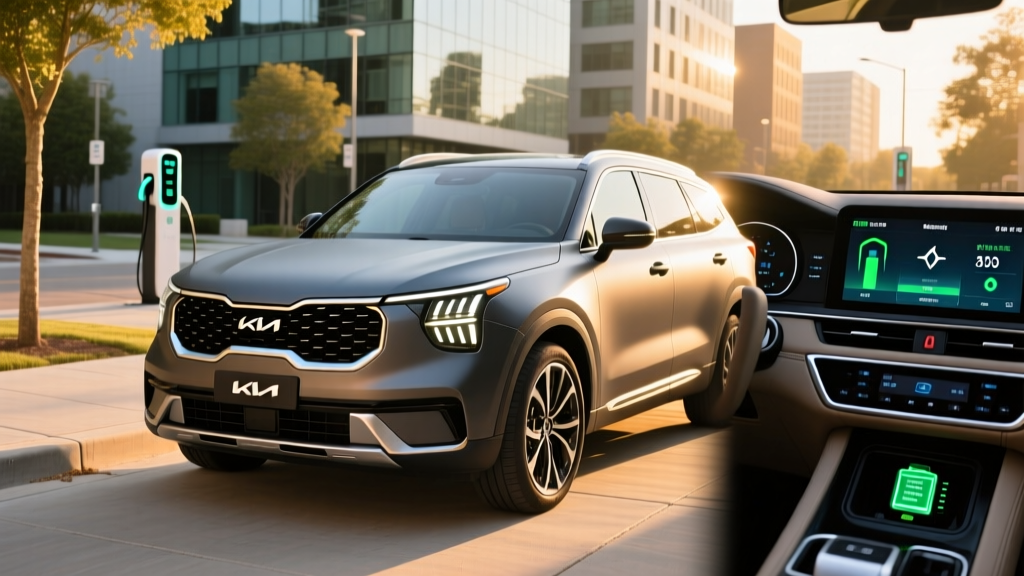
The 2025 Kia Sorento PHEV occupies a narrow but valuable lane: a three-row plug-in hybrid SUV that can handle most weekday commutes on electricity alone, then burn gas on road trips without range anxiety. With an EPA-estimated 32 miles of electric-only range and 34 MPG combined once the battery depletes, it rewards drivers who can charge at home while eliminating the commitment of a full battery-electric vehicle.
But the Sorento PHEV isn't for everyone. Its 13.7 kWh battery means Level 2 charging takes roughly 3.5 hours, and it lacks DC fast charging entirely. If your commute exceeds 30 miles round-trip or you lack home charging access, the conventional Sorento Hybrid or a full EV may serve you better. Here's the full breakdown of what this powertrain actually delivers in the real world.
HEV vs PHEV: Which Sorento Powertrain Fits You?
Kia sells the Sorento with three distinct powertrains. Understanding the difference between the conventional hybrid (HEV) and plug-in hybrid (PHEV) is essential before comparing specs.
Sorento Hybrid (HEV)
- No plug-in charging required — the battery recharges via regenerative braking and the engine
- EPA 37 MPG combined (FWD)
- Lower starting price (~$38,390)
- No federal tax credit eligibility
- Best for: drivers without home charging access who want better fuel economy
Sorento Plug-In Hybrid (PHEV)
- 13.7 kWh battery you plug in to charge (Level 1 or Level 2)
- EPA 32 miles electric-only, then 34 MPG combined
- Higher starting price (~$50,290) but potential tax credit
- Best for: drivers with home charging and short-to-moderate commutes
The conventional HEV never needs a plug — its small 1.49 kWh battery recovers energy from braking and the gasoline engine. The PHEV's much larger 13.7 kWh pack stores enough energy for meaningful electric-only driving, but only if you actually plug it in. A PHEV you never charge is just a heavier, more expensive hybrid.
Fuel Economy and Electric-Only Range: EPA vs Real World
| Metric | EPA Estimate | Real-World Expectation |
|---|---|---|
| Electric-Only Range | 32 miles | 26–30 mi (highway/cold); 32–35 mi (city/mild weather) |
| MPGe (Electric + Gas) | 79 MPGe | Varies with charging frequency |
| MPG (Gas Only, Battery Depleted) | 34 combined (33 city / 34 hwy) | 30–33 combined highway; 35–38 city |
| Total Combined Range | ~440 miles | ~380–420 mi depending on conditions |
The 32-mile electric range is the headline number, but real-world results depend heavily on conditions. In mild city driving with frequent regenerative braking, some owners report stretching past 34 miles. Highway driving at 70+ mph, cold temperatures below freezing, and cabin heating all erode that figure — expect 25–28 miles in winter or on sustained freeway segments.
Once the battery depletes, the 1.6-liter turbocharged engine and electric motor work together as a conventional hybrid. The 34 MPG combined EPA rating is solid for a 4,300-pound three-row SUV. In city driving, hybrids often exceed their EPA numbers because regenerative braking recovers more energy in stop-and-go traffic. Highway driving flips this — expect 30–33 MPG at sustained speeds.
For context on how the EPA calculates these figures, see fueleconomy.gov's Sorento PHEV listing.
Powertrain, Charging, and Battery Specs
| Specification | 2025 Kia Sorento PHEV |
|---|---|
| Powertrain | 1.6L turbo-4 + electric motor (6-speed auto, AWD standard) |
| Combined Horsepower | 261 hp |
| Combined Torque | 258 lb-ft |
| Battery Capacity | 13.7 kWh (lithium-ion polymer) |
| Level 1 Charging (120V) | ~11 hours (0–100%) |
| Level 2 Charging (240V, 3.3 kW onboard) | ~3 hours 25 min (0–100%) |
| DC Fast Charging | Not supported |
| 0–60 mph | ~8.4 seconds |
| Drivetrain | AWD standard (electric motor powers rear axle) |
The Sorento PHEV uses a 3.3 kW onboard charger, which limits Level 2 charging speed. This is a deliberate engineering choice — Kia prioritized cabin space and cost over faster AC charging. For a 13.7 kWh battery, 3.3 kW means a full charge takes about 3.5 hours on a Level 2 home charger. Overnight charging on a standard 120V outlet (Level 1) works but requires roughly 11 hours for a full replenishment — feasible if you arrive home by early evening.
The absence of DC fast charging is a notable limitation. You cannot pull up to a public fast charger and add range in 20 minutes. For PHEV owners who charge at home nightly, this rarely matters. But if you're relying on public infrastructure or taking multi-day road trips where you'd want to top up the battery, you'll operate exclusively in hybrid mode once the initial 32 miles deplete.
The powertrain itself is refined. The 261 combined horsepower (178 from the engine, 97 from the electric motor) provides confident highway merging and passing. The six-speed automatic transmission avoids the droning sensation common in CVT-equipped hybrids. All-wheel drive is standard across all PHEV trims, with the rear axle powered primarily by the electric motor at low speeds.
Pricing, Trims, and Federal Tax Credit Eligibility
The 2025 Sorento PHEV starts at approximately $50,290 (including destination) for the EX trim, with the SX Prestige topping out around $54,790. That's a substantial premium over the Sorento HEV (starting ~$38,390) and the gas-only Sorento (~$31,990).
The critical question for buyers is whether the federal plug-in vehicle tax credit under IRS §30D offsets that premium. Here's where it gets nuanced:
- Base credit amount: The Sorento PHEV's 13.7 kWh battery qualifies it for the federal plug-in credit structure (minimum 7 kWh required)
- MSRP cap: SUVs must have an MSRP at or below $80,000 — the Sorento PHEV clears this easily
- Buyer income cap: Modified AGI must not exceed $150,000 (single), $225,000 (head of household), or $300,000 (joint filing)
- Critical minerals & battery sourcing: As of 2025, the credit is split into two halves ($3,750 each) based on critical mineral sourcing and battery component manufacturing requirements. Vehicles assembled in South Korea with Korean-sourced battery components may face reduced or zero credit depending on current-year sourcing rules
- Point-of-sale transfer: Eligible buyers can transfer the credit to the dealer at purchase, reducing the out-of-pocket price immediately
Because the Sorento PHEV is manufactured in South Korea (not North America), and battery sourcing requirements tighten annually under the Inflation Reduction Act, the actual credit amount varies. Some model years have qualified for partial or full credit; others have not. Always verify current eligibility on the IRS qualified vehicles list before purchasing. A tax professional can confirm your personal eligibility.
Reliability, Battery Warranty, and Long-Term Costs
Kia PHEV Battery & Powertrain Warranty
- Hybrid/EV Battery: 10 years / 100,000 miles (whichever comes first)
- Powertrain: 10 years / 100,000 miles
- Basic Vehicle: 5 years / 60,000 miles
- Battery capacity retention: Kia warrants the battery against defect; significant capacity loss below ~70% typically triggers a warranty claim
Kia's 10-year/100,000-mile hybrid battery warranty is among the best in the industry, matching Hyundai and exceeding Toyota's 8-year/100,000-mile coverage for hybrid batteries. The lithium-ion polymer pack in the Sorento PHEV is engineered for daily cycling — charging and discharging within a managed state-of-charge window that avoids the extreme highs and lows that accelerate degradation.
In practice, PHEV batteries degrade more slowly than full EV batteries because they're smaller, cycled less deeply, and the vehicle's thermal management keeps them in an optimal temperature range. Most PHEV owners report minimal range loss over the first 5–7 years. If the battery does fail outside warranty, replacement costs for a Sorento-class PHEV battery typically range from $4,000 to $7,000 including labor — a figure worth budgeting for if you plan to own the vehicle past the 10-year mark.
Kia's overall reliability ratings have been mixed in recent years. The Sorento specifically has drawn some complaints about electrical gremlins and infotainment issues in earlier model years. The 2025 refresh addressed many of these with updated software and revised components, but long-term data is still accumulating. Check NHTSA's complaint database for the latest owner reports.
Who Should Buy the Sorento PHEV (and Who Shouldn't)
Pros
- 32-mile electric range covers most commutes without gas
- Standard AWD with 261 hp — capable in snow and rain
- Three-row seating (rare in PHEVs at this price)
- 10-year/100,000-mile battery warranty
- No range anxiety on road trips — gas engine takes over seamlessly
Cons
- No DC fast charging — public charging impractical
- 3.3 kW onboard charger limits Level 2 speed
- $50,000+ starting price; tax credit uncertain due to sourcing rules
- Third row is tight for adults (best for children)
- Real-world electric range drops to ~25 mi in cold weather
Choose the Sorento PHEV if: You have home charging (Level 2 preferred), your daily round-trip commute is under 30 miles, you need three rows for family hauling, and you want the option of gas-free weekday driving without committing to a full EV. The math works best when you charge nightly and rarely exceed the electric range on weekdays.
Choose the Sorento HEV (conventional hybrid) if: You lack reliable home charging access, your commute regularly exceeds 35 miles, or you want to save $10,000+ upfront. The HEV's 37 MPG combined is excellent, and you'll never need to think about plugging in.
Choose a full EV (e.g., Kia EV9, Hyundai Ioniq 5) if: You want zero gasoline costs, have home charging, and your longest regular trips fall within the EV's range (or you're comfortable with DC fast charging on road trips). Full EVs have lower per-mile energy costs and fewer moving parts, but require a bigger upfront investment and charging infrastructure.
Frequently Asked Questions
How many MPG does the 2025 Kia Sorento PHEV get?
The EPA rates the Sorento PHEV at 34 MPG combined (33 city / 34 highway) once the battery is depleted. In electric mode, it achieves 79 MPGe. Real-world gas-only MPG typically ranges from 30–33 on the highway and 35–38 in the city, where regenerative braking recovers more energy.
How far can the Sorento PHEV go on electric only?
The EPA estimates 32 miles of electric-only range. In real-world conditions, expect 26–30 miles in cold weather or highway driving, and up to 35 miles in mild city conditions with frequent stops. Total combined range (electric + gas) is approximately 440 miles.
Does the Sorento PHEV qualify for the federal tax credit?
Eligibility depends on current-year IRS §30D rules, particularly battery sourcing and critical mineral requirements that tighten annually. Because the Sorento is assembled in South Korea, the credit amount varies by model year. Check the IRS qualified vehicles list and consult a tax professional for your specific situation. Buyer income caps ($150K single / $300K joint) and the $80K SUV MSRP cap also apply.
Is the Sorento PHEV reliable, and what does battery replacement cost?
Kia covers the PHEV battery for 10 years / 100,000 miles. PHEV batteries generally degrade slowly due to shallow daily cycling. If replacement is needed out of warranty, expect $4,000–$7,000. Overall vehicle reliability has improved with the 2025 refresh, though earlier Sorento model years drew electrical complaints.
Do I need a Level 2 home charger for the Sorento PHEV?
A Level 2 (240V) charger is strongly recommended. At 3.3 kW, a full charge takes ~3.5 hours on Level 2 versus ~11 hours on a standard 120V outlet. Most PHEV owners find Level 2 essential for daily use — it ensures a full battery every morning. Installation typically costs $500–$1,500 depending on your electrical panel's capacity and proximity to the charging location.
Hybrid vs PHEV vs EV — which is right for me?
Choose a conventional hybrid (HEV) if you can't charge at home and want simple fuel savings. Choose a PHEV like the Sorento if you have home charging, a short commute, and want electric driving without range anxiety. Choose a full EV if you want the lowest per-mile cost, have reliable charging access, and are comfortable planning road-trip charging stops.