Quick Verdict: The GX Goes Hybrid Without Losing Its Edge
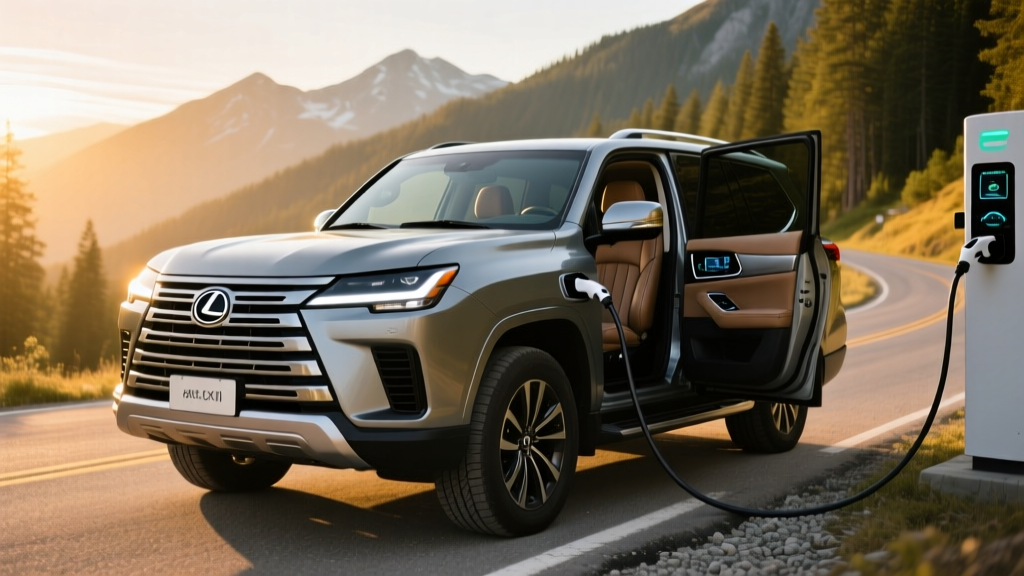
The 2026 Lexus GX Hybrid — officially badged the GX 550h — pairs a twin-turbo V6 with Toyota's i-FORCE MAX hybrid system to deliver serious towing capability alongside meaningful fuel-economy gains over the standard GX 550. This is a conventional hybrid (HEV), not a plug-in: you never plug it in, and the small battery recharges through regenerative braking and the engine. For luxury-SUV buyers who want three-row space, body-on-frame durability, and better MPG without changing their fueling habits, the GX 550h occupies a narrow but compelling niche.
Below, we dissect the EPA numbers, the real-world efficiency you can actually expect, the hybrid powertrain architecture, warranty coverage, and how the GX 550h stacks up against plug-in hybrids and full EVs in this segment.
| Spec | Value |
|---|---|
| Powertrain | 3.4L Twin-Turbo V6 + Electric Motor (i-FORCE MAX) |
| Combined Horsepower | 326 hp |
| Combined Torque | 465 lb-ft |
| Transmission | 8-speed automatic |
| EPA MPG (City / Hwy / Combined) | 23 / 24 / 23 mpg |
| Drivetrain | Full-time 4WD |
| Towing Capacity | Up to 8,000 lbs |
| Seating | 6 or 7 passengers |
| Starting MSRP | ~$70,000 (estimated, trim dependent) |
| Federal Tax Credit | Not eligible (§30D requires plug-in) |
| Hybrid Battery Warranty | 10 years / 150,000 miles |
HEV vs PHEV: What the GX 550h Actually Is
A common source of confusion in the hybrid market is the difference between a conventional hybrid (HEV) and a plug-in hybrid (PHEV). The 2026 Lexus GX 550h is an HEV. Here is what that means in practice:
| Feature | Conventional Hybrid (HEV) | Plug-In Hybrid (PHEV) |
|---|---|---|
| Plug in to charge? | No — charges via regen & engine | Yes — has a charge port |
| Electric-only range | None (motor assists engine only) | Typically 20–50 miles |
| Battery size | ~1–2 kWh | ~15–30 kWh |
| Fuel economy boost | Moderate (2–6 mpg over gas) | Large on short trips (electric); moderate on long trips |
| Federal tax credit (§30D) | Not eligible | Up to $7,500 if eligible |
| Example | Lexus GX 550h | Toyota RAV4 Prime, Jeep Wrangler 4xe |
The GX 550h's hybrid battery is small — roughly 1.87 kWh of nickel-metal hydride (NiMH) capacity — and serves as a torque-fill buffer, not a standalone propulsion source. You cannot drive on electric power alone for any meaningful distance. The motor smooths out turbo lag and recovers energy under braking, but the V6 is always the primary mover. If you want electric-only commuting, this is not the vehicle for you; you would need a PHEV or a BEV.
Fuel Economy: EPA Numbers and Real-World MPG
| Driving Condition | EPA Estimate | Real-World Expectation |
|---|---|---|
| City | 23 mpg | 22–25 mpg (hybrids often match or beat EPA in stop-and-go) |
| Highway | 24 mpg | 21–23 mpg (heavy body-on-frame aero drag at 70+ mph) |
| Combined | 23 mpg | 21–24 mpg depending on driving mix |
For context, the non-hybrid GX 550 (same twin-turbo V6, no electric motor assist) rates at 15 city / 21 highway / 17 combined according to fueleconomy.gov. That makes the hybrid's 23 combined mpg a ~35% improvement — substantial for a 5,000+ lb body-on-frame SUV.
Where the Hybrid System Actually Saves Fuel
The i-FORCE MAX system is most effective in three scenarios:
- Stop-and-go traffic: The electric motor handles initial acceleration from a stop, reducing the fuel the V6 burns during the least-efficient part of driving. This is why city MPG is competitive with highway MPG — unusual for a vehicle this heavy.
- Low-speed maneuvering: Parking lots and driveways can be handled on electric assist, trimming idle fuel consumption.
- Deceleration: Regenerative braking recovers kinetic energy that would otherwise be wasted as heat, topping up the small battery for the next acceleration event.
On the highway at sustained speed, the hybrid advantage narrows. Aerodynamic drag dominates, and the added weight of the hybrid system (~150 lbs) slightly offsets the motor's efficiency contribution. Expect highway numbers to sit at or just below the EPA sticker.
Cold-Weather and Towing Impact
In sub-freezing temperatures, expect a 5–10% reduction in fuel economy. Cold engine oil, cabin heating demand, and reduced battery efficiency all contribute. When towing near the 8,000-lb maximum, fuel economy drops significantly — plan on 12–15 mpg depending on trailer weight and terrain. This is typical for the class and comparable to the non-hybrid GX under load.
Powertrain Deep Dive: i-FORCE MAX Explained
The GX 550h uses Toyota's i-FORCE MAX hybrid architecture, which places an electric motor between the engine and the transmission (a "P2" hybrid layout). This differs from Toyota's familiar power-split system found in the Prius and RAV4 Hybrid. Here is the component breakdown:
- Engine: 3.4-liter twin-turbocharged V6, producing approximately 298 hp on its own
- Electric motor: ~48 hp (36 kW), integrated into the bell housing
- Combined output: 326 hp / 465 lb-ft of torque
- Transmission: Direct-shift 8-speed automatic (not a CVT)
- Battery: ~1.87 kWh NiMH, located under the rear seat area
The key engineering choice here is the use of a traditional geared automatic rather than a CVT. This gives the GX 550h a more direct, responsive feel under acceleration and is better suited to towing. The 465 lb-ft of torque arrives low in the rev range thanks to electric motor fill, effectively eliminating the turbo lag that the non-hybrid GX 550 can exhibit from a standstill.
0–60 mph and Drivability
Lexus has not published an official 0–60 mph time for the GX 550h, but based on the powertrain output and vehicle weight (~5,400 lbs), expect a time in the mid-7-second range. That is not sports-SUV territory, but it is adequate for highway merging and passing. More importantly, the torque curve is flat and broad, which is what matters when you are pulling a boat up a grade.
Pricing, Trims, and Tax Credit Reality
The 2026 Lexus GX 550h is expected to be offered across multiple trim levels, with pricing starting in the low $70,000s for a base hybrid and climbing past $85,000 for fully loaded Overtrail or Luxury trims. Lexus typically positions the hybrid as a premium option over the standard GX 550, adding roughly $2,000–$4,000 to the sticker depending on trim.
Federal Tax Credit Eligibility
The GX 550h does not qualify for the federal §30D Clean Vehicle Credit. The IRS requires a vehicle to have a battery capacity of at least 7 kWh and the ability to be recharged from an external power source (i.e., it must be a PHEV or BEV). The GX 550h's ~1.87 kWh NiMH battery and lack of a charge port make it ineligible.
This is a meaningful consideration for buyers cross-shopping against PHEVs like the Jeep Grand Cherokee 4xe (which can qualify for up to $3,750–$7,500 depending on sourcing compliance and buyer income). However, the trade-off is that PHEVs require plug-in access to realize their efficiency advantage, whereas the GX 550h works with your existing gas-station routine.
State and Local Incentives
Some states offer rebates or HOV-lane access for conventional hybrids, though these programs are increasingly focused on PHEVs and BEVs. Check your state's energy or DMV website for current programs — incentive amounts and eligibility vary by jurisdiction and change frequently.
Reliability, Battery Warranty, and Replacement Cost
Hybrid Battery Warranty
Coverage: 10 years or 150,000 miles (whichever comes first)
What is covered: Defects and capacity loss below a defined threshold in the hybrid battery pack and related hybrid-system components (inverter, motor, control unit).
Transferable: Yes — the warranty follows the vehicle, not the original owner, which supports resale value.
How Long Will the Hybrid Battery Last?
Toyota and Lexus have built millions of hybrid vehicles since the 2000 Prius, and their NiMH battery packs have a well-documented track record. Real-world data from high-mileage Toyota hybrids routinely shows 150,000–200,000+ miles on the original hybrid battery before any significant degradation. The i-FORCE MAX system in the GX 550h uses a relatively small battery that is never deeply cycled (it stays in a narrow state-of-charge window), which reduces wear compared to PHEV or BEV batteries.
Battery Replacement Cost
If the hybrid battery does fail outside of warranty, replacement cost for a Lexus/Toyota NiMH hybrid pack typically ranges from $2,000 to $4,000 for the battery module, plus labor. This is significantly less than a BEV traction battery replacement ($10,000–$20,000+) because the pack is small and uses mature NiMH chemistry. Independent hybrid specialists can often refurbish or replace individual modules for less than a full dealer replacement.
Overall Reliability Outlook
Lexus consistently ranks at or near the top of J.D. Power and Consumer Reports reliability surveys. The GX's body-on-frame platform (shared with the Land Cruiser 300 Series) is engineered for longevity, and the hybrid system adds relatively few failure points — the electric motor is essentially maintenance-free, and the 8-speed automatic is a proven design. The primary long-term maintenance items remain conventional: fluid changes, brake wear (though regen braking extends pad life), and suspension components.
Who Should Choose the GX 550h vs a PHEV or Full EV?
Choose the Lexus GX 550h (HEV) if:
- You want better fuel economy without changing your fueling routine (no plug, no apps, no charging stations)
- You need body-on-frame capability: 8,000-lb towing, serious off-road chops, high ground clearance
- You regularly drive in areas with limited charging infrastructure (rural, remote, or road-trip-heavy)
- You want three-row seating in a luxury package with strong projected reliability and resale value
- Your daily commute involves stop-and-go traffic where the hybrid system delivers the most benefit
Choose a PHEV (e.g., Grand Cherokee 4xe) if:
- You can charge at home and want 25–30 miles of electric-only commuting
- You want to qualify for a partial or full federal tax credit (subject to §30D eligibility)
- You drive short distances most days but still want gas flexibility for long trips
Choose a Full EV (e.g., Rivian R1S, Tesla Model X) if:
- You have reliable home Level 2 charging and want the lowest per-mile energy cost
- You do not need to tow more than ~5,000–7,700 lbs (EV towing range loss is significant)
- You want maximum acceleration, quiet operation, and zero tailpipe emissions
- You want to qualify for the full $7,500 federal tax credit (subject to income, MSRP caps, and battery sourcing rules)
Pros and Cons
Pros
- ~35% fuel economy improvement over the non-hybrid GX 550 (23 vs 17 combined mpg)
- No plug-in required — zero change to fueling habits
- 465 lb-ft of torque with minimal turbo lag, strong towing performance
- 10-year / 150,000-mile hybrid battery warranty
- Lexus reliability reputation and strong projected resale value
- 8-speed automatic (no CVT drone) with natural driving feel
Cons
- No federal tax credit eligibility (HEV, not a PHEV)
- High starting price (~$70K+), with loaded trims exceeding $85K
- No electric-only driving mode — the V6 is always running
- Highway MPG advantage is modest due to vehicle weight and aerodynamics
- Fuel economy drops sharply when towing (12–15 mpg)
- Hybrid trim availability may be limited at launch, with dealer markups possible
Frequently Asked Questions
How many MPG does the 2026 Lexus GX Hybrid get?
The EPA rates the GX 550h at 23 city / 24 highway / 23 combined mpg. In real-world driving, expect 21–25 mpg depending on your driving mix. City driving with frequent stops tends to produce results at or slightly above the EPA estimate, while sustained highway driving at 75+ mph may dip to 21–22 mpg.
Can the GX 550h drive on electric power only?
Not for any meaningful distance. The hybrid system's electric motor assists the gasoline engine and recovers energy during braking, but the ~1.87 kWh battery is too small to propel the vehicle independently beyond very low-speed maneuvering. This is normal for conventional hybrids (HEVs) — if electric-only driving is a priority, you need a PHEV or BEV.
Is the Lexus GX Hybrid reliable?
Based on Toyota/Lexus's extensive hybrid production history (over 20 million hybrid vehicles sold globally) and the brand's consistent top rankings in reliability surveys, the GX 550h projects as one of the most reliable vehicles in its luxury-SUV class. The NiMH hybrid battery is a mature technology with a well-established longevity record, and the 10-year / 150,000-mile hybrid warranty provides substantial coverage.
What does it cost to replace the hybrid battery?
Out-of-warranty replacement for a Lexus NiMH hybrid battery typically costs $2,000–$4,000 for the battery module plus labor. This is far less than a BEV battery replacement. However, based on historical data, most Toyota/Lexus hybrid batteries last 150,000–200,000+ miles, and many outlast the vehicle itself.
Does the 2026 Lexus GX Hybrid qualify for a tax credit?
No. The federal §30D Clean Vehicle Credit requires a vehicle to be a plug-in electric vehicle (PHEV or BEV) with a battery capacity of at least 7 kWh. The GX 550h is a conventional hybrid with a ~1.87 kWh battery and no charge port, making it ineligible. Some states may offer minor incentives for hybrids, but these vary by jurisdiction — check your state's official energy or DMV site for current programs.
How does the GX 550h compare to the non-hybrid GX 550?
The hybrid gains approximately 6 combined mpg (23 vs 17), eliminates most turbo lag through electric torque fill, and adds roughly $2,000–$4,000 to the price. The trade-off is a small weight increase (~150 lbs) and no tax credit. For most buyers who plan to keep the vehicle 5+ years, the fuel savings (roughly $500–$800/year at current gas prices and 15,000 miles/year) offset the price premium within the ownership period.
Is the GX 550h good for towing?
Yes. The GX 550h maintains the same 8,000-lb maximum towing capacity as the non-hybrid model (when properly equipped). The electric motor's instant torque actually improves low-speed trailer maneuvering and initial pull-away from a stop. Expect fuel economy to drop to 12–15 mpg while towing, which is typical for body-on-frame SUVs in this class.