Quick Verdict: A Proven Hybrid Workhorse at a Bargain Price
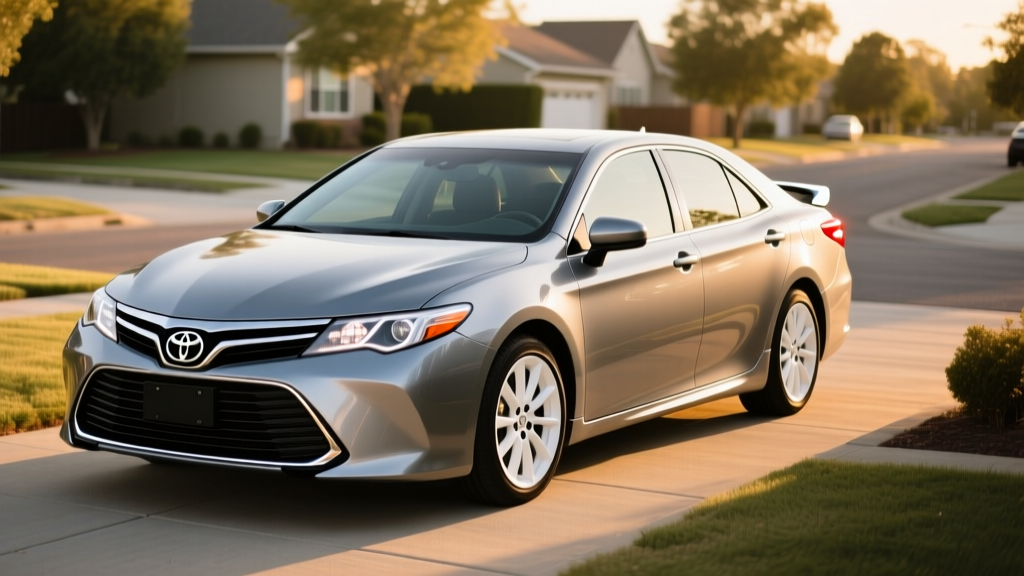
The 2013 Toyota Camry Hybrid XLE occupies a specific niche in 2026's used-car market: a midsize sedan that delivers genuine fuel savings without requiring any change to your driving habits. Unlike a plug-in hybrid (PHEV) or a full battery-electric vehicle (BEV), this conventional hybrid (HEV) never needs to be plugged in. It refuels at any gas station, regenerates its own battery through braking and engine operation, and returns an EPA-estimated 40 MPG combined — a figure that still impresses against newer rivals.
With used examples now trading between $7,000 and $12,000 depending on mileage and condition, the 2013 Camry Hybrid XLE appeals to budget-conscious commuters, rideshare drivers, and anyone seeking low running costs without range anxiety or charging infrastructure concerns. But at 13 years old, the hybrid battery is the elephant in the room. This review covers exactly what to expect from MPG to battery replacement cost.
EPA Fuel Economy and Real-World MPG
The 2013 Camry Hybrid carries EPA ratings that remain competitive with many 2026 models:
| Metric | EPA Estimate |
|---|---|
| City | 40 MPG |
| Highway | 38 MPG |
| Combined | 40 MPG |
| Fuel Tank Capacity | 17.0 gallons |
| Total Range | ~680 miles |
Source: fueleconomy.gov
Toyota's Hybrid Synergy Drive system excels in stop-and-go city driving, where regenerative braking recaptures energy and the electric motor handles low-speed propulsion. Many owners report 42–46 MPG in city commuting, exceeding the EPA city estimate. Highway driving at sustained 70–80 MPH tends to return 35–38 MPG, slightly below the EPA highway figure, as the gasoline engine carries more of the load and aerodynamic drag increases. In cold weather (below 30°F), expect a 5–10% reduction as the engine runs more frequently to provide cabin heat and maintain battery temperature.
Hybrid Powertrain: Engine, Motor, and Combined Output
The 2013 Camry Hybrid pairs a 2.5-liter Atkinson-cycle four-cylinder engine with a permanent-magnet electric motor through Toyota's eCVT (electronically controlled continuously variable transmission). This is a series-parallel full hybrid system — the car can operate on electric power alone at low speeds, on the gasoline engine alone at cruising speeds, or on both simultaneously for acceleration.
| Component | Specification |
|---|---|
| Gasoline Engine | 2.5L Atkinson-cycle I4, 156 HP / 156 lb-ft |
| Electric Motor | 105 kW (141 HP) |
| Net Combined System Power | 200 HP |
| Transmission | eCVT (planetary gearset, no fixed gears) |
| 0–60 MPH | ~7.6 seconds |
| Drivetrain | Front-wheel drive |
Net system horsepower is 200 HP — not the arithmetic sum of engine and motor, because peak outputs occur at different RPM points. The result is smooth, adequate acceleration for highway merging and city driving. The eCVT eliminates shift shock entirely, though some drivers note a droning quality under hard acceleration as the engine holds a fixed RPM while the transmission adjusts ratio.
HEV vs. PHEV vs. BEV: Which Powertrain Fits You?
The 2013 Camry Hybrid is a conventional hybrid (HEV). It cannot be plugged in and has no electric-only driving range beyond roughly one mile at very low speeds. This is a fundamentally different architecture from a plug-in hybrid (PHEV) like the Toyota Prius Prime or a full battery-electric vehicle (BEV) like the Tesla Model 3.
Conventional Hybrid (HEV)
- No plug-in required
- Gas station refueling only
- Small battery (~1.6 kWh)
- Electric assist at low speeds
- Best for: no home charging access
Plug-in Hybrid (PHEV)
- Plugs in for 25–45 mi electric range
- Gas engine for longer trips
- Medium battery (8–18 kWh)
- Qualifies for partial tax credits
- Best for: home charging + road trips
Full EV (BEV)
- Plugs in for 250–400 mi range
- No gasoline engine
- Large battery (60–100+ kWh)
- Eligible for up to $7,500 federal credit
- Best for: home charging + lower fuel cost
Choose the 2013 Camry Hybrid if: You lack access to home or workplace charging, want maximum simplicity, and prioritize low upfront cost. A used HEV at $8,000–$10,000 delivers fuel savings with zero infrastructure requirements.
Choose a PHEV or BEV instead if: You can install a Level 2 home charger and want to eliminate or dramatically reduce gasoline consumption. A new PHEV or BEV will cost more upfront but may qualify for federal tax credits under IRS §30D rules.
Hybrid Battery: Lifespan, Degradation, and Replacement Cost
The 2013 Camry Hybrid uses a nickel-metal hydride (NiMH) traction battery pack rated at approximately 1.6 kWh. This is a mature, proven chemistry that Toyota has used across millions of hybrids since the original Prius. Unlike the lithium-ion packs in modern EVs, NiMH batteries degrade more gradually and are less sensitive to charge-state extremes.
When new, Toyota covered the 2013 Camry Hybrid battery under a 8-year/100,000-mile warranty (extended to 10 years/150,000 miles in California and states adopting CARB emissions standards). As of 2026, the original factory warranty has expired on all 2013 examples. However, real-world data from fleet operators, taxi services, and high-mileage owners shows these NiMH packs routinely lasting 150,000–200,000+ miles before significant capacity loss. Many first-generation Prius taxis surpassed 300,000 miles on the original pack.
When replacement is necessary, costs have come down significantly:
- New OEM Toyota battery: $2,500–$3,500 installed at a dealership
- Remanufactured battery: $1,200–$2,000 installed at an independent hybrid specialist
- Individual module replacement: $300–$600 if only one or two of the 34 NiMH modules have failed — a viable option offered by many hybrid repair shops
A failing hybrid battery typically triggers a "Check Hybrid System" warning light and a noticeable drop in fuel economy as the system defaults to gasoline-only operation. A pre-purchase scan with an OBD-II reader capable of reading hybrid battery health (such as Toyota's Techstream or aftermarket tools like Dr. Prius) can assess remaining capacity before purchase.
XLE Trim Features and What You Get
The XLE was the top-tier trim for the 2013 Camry Hybrid, positioned above the LE. Key XLE-specific equipment includes:
- Leather-trimmed seats with heated front seats
- Auto-dimming rearview mirror with HomeLink
- Dual-zone automatic climate control
- Smart Key system with push-button start
- 17-inch alloy wheels
- Backup camera (standard on XLE, optional on LE)
- Blind Spot Monitor with Rear Cross-Traffic Alert (optional on XLE)
- Toyota's Entune audio system with 6.1-inch touchscreen
From a 2026 perspective, the infotainment system feels dated — no Apple CarPlay, no Android Auto, no built-in navigation unless the optional Navigation package was spec'd. Bluetooth audio streaming and hands-free phone are standard. The cabin materials and ride quality remain comfortable for the class, and the XLE's sound insulation is noticeably better than the LE.
2026 Ownership Costs: Insurance, Maintenance, and Fuel
Running a 2013 Camry Hybrid XLE in 2026 is inexpensive by modern standards:
| Category | Estimated Annual Cost |
|---|---|
| Insurance (national average, good driver) | $1,100–$1,500 |
| Fuel (15,000 mi/yr, 40 MPG, $3.40/gal avg) | ~$1,275 |
| Routine maintenance (oil, tires, brakes) | $400–$700 |
| Registration and taxes | $100–$300 (varies by state) |
| Total estimated annual cost | $2,875–$3,775 |
Fuel costs are the standout. At 40 MPG combined and 15,000 miles per year, you'll burn approximately 375 gallons — roughly $1,275 at a national average of $3.40/gallon. A comparable non-hybrid 2013 Camry (2.5L I4, EPA 28 MPG combined) would consume ~536 gallons, or about $1,822. That's a $547 annual fuel savings from the hybrid system.
Brake wear is notably low on Toyota hybrids thanks to regenerative braking handling most deceleration. Many owners report original brake pads lasting 80,000–100,000 miles. Oil changes follow the standard 10,000-mile interval with 0W-20 synthetic.
Federal and State Tax Credit Eligibility
The 2013 Camry Hybrid does not qualify for the current federal §30D New Clean Vehicle Credit — that credit applies only to new vehicles meeting battery sourcing, MSRP cap, and buyer income requirements. As a used vehicle, it also does not qualify for the federal Used Clean Vehicle Credit (§25E), which is limited to used BEVs and PHEVs with a battery capacity of at least 7 kWh. The Camry Hybrid's 1.6 kWh NiMH pack falls well below that threshold, and conventional HEVs are excluded regardless.
No state currently offers incentives for purchasing a used conventional hybrid. Your cost is simply the purchase price plus registration — no credits, no rebates, but also no charging equipment to install.
Pros and Cons at a Glance
Pros
- 40 MPG combined — still competitive in 2026
- No plug-in charging required
- Proven, reliable NiMH battery with long lifespan
- Low purchase price ($7K–$12K used)
- Comfortable XLE interior with good features
- Low brake wear from regenerative braking
- 680-mile total range per tank
Cons
- Dated infotainment — no CarPlay or Android Auto
- Battery warranty has expired on all examples
- Not eligible for any federal or state tax credits
- eCVT drone under hard acceleration
- Moderate 0–60 time (7.6 sec)
- No electric-only driving capability
- Safety tech limited vs. modern standards
Frequently Asked Questions
How many MPG does the 2013 Camry Hybrid XLE get?
The EPA rates it at 40 MPG city, 38 MPG highway, and 40 MPG combined. Real-world city driving often exceeds the EPA estimate, returning 42–46 MPG in stop-and-go traffic. Highway cruising at 75+ MPH typically yields 35–38 MPG. Cold weather reduces efficiency by 5–10%.
Does the 2013 Camry Hybrid need to be plugged in?
No. This is a conventional hybrid (HEV), not a plug-in hybrid (PHEV). The battery charges itself through regenerative braking and the gasoline engine. You refuel only at gas stations.
How long does the hybrid battery last, and what does replacement cost?
Toyota's NiMH hybrid batteries commonly last 150,000–200,000+ miles. A new OEM replacement costs $2,500–$3,500 installed; remanufactured packs run $1,200–$2,000. Individual module repair can cost as little as $300–$600. The original 8-year/100,000-mile warranty has expired on all 2013 examples.
Is the 2013 Camry Hybrid reliable?
Toyota's hybrid system is among the most reliable powertrains ever produced. The eCVT has no clutch packs, belts, or friction bands to wear — it's a planetary gearset with no traditional failure points. The main risk at this age is hybrid battery degradation, which is predictable and repairable. IIHS rated the 2013 Camry a Top Safety Pick with Good ratings in all crashworthiness tests.
Should I buy a used Camry Hybrid or a new EV?
It depends on your budget and charging access. A used 2013 Camry Hybrid at $8,000–$10,000 is ideal if you lack home charging, need a low-cost commuter, or want zero lifestyle change. A new EV (starting around $28,000–$35,000 after potential tax credits) offers dramatically lower fuel and maintenance costs but requires charging infrastructure. If you can charge at home and drive under 250 miles daily, a modern BEV will save more money long-term — but the upfront cost is 3–4x higher.
What should I check before buying a used 2013 Camry Hybrid?
Prioritize a hybrid battery health check using an OBD-II scanner capable of reading battery State of Health (SoH). Look for "Check Hybrid System" warning lights in the vehicle history. Verify maintenance records, particularly oil change intervals. Test-drive in EV mode at low speed to confirm the electric motor engages smoothly. Check for corrosion on the battery cooling fan vent (located near the rear seat) — a blocked vent accelerates battery degradation.