Quick Verdict: The Efficiency Benchmark Under $30,000
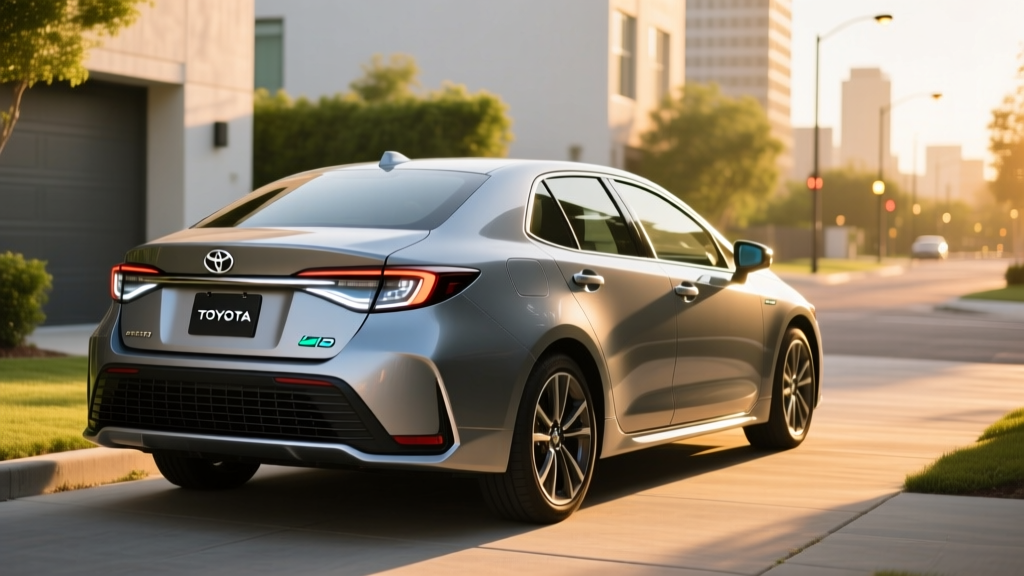
The 2025 Toyota Corolla Hybrid remains one of the most fuel-efficient compact sedans available without a plug. With an EPA-estimated 53 MPG combined on the LE trim and available electronic all-wheel drive, it occupies a narrow lane: buyers who want maximum fuel savings without changing their fueling habits. No charging cables, no range anxiety, no behavioral adjustments — just a 1.8-liter four-cylinder paired with Toyota's fifth-generation hybrid system.
For 2025, Toyota carries over the powertrain introduced with the last refresh: a 138-horsepower combined output (up from the previous generation's 121 hp), front or all-wheel drive, and a lithium-ion hybrid battery that's smaller and lighter than the nickel-metal-hydride pack it replaced. Pricing starts at $23,500 for the LE FWD and tops out near $28,400 for the XLE AWD.
| Specification | LE FWD | LE AWD | XLE AWD |
|---|---|---|---|
| EPA Combined MPG | 53 | 50 | 50 |
| EPA City MPG | 53 | 51 | 50 |
| EPA Highway MPG | 46 | 44 | 43 |
| Combined Horsepower | 138 hp (engine + motors) | ||
| Engine | 1.8L 4-cylinder Atkinson-cycle | ||
| Drivetrain | FWD | Electronic AWD | Electronic AWD |
| Hybrid Battery | Lithium-ion (sealed, not user-serviceable) | ||
| 0-60 mph | ~9.2 seconds (est.) | ||
| Cargo Volume | 13.1 cu ft | ||
| Starting MSRP | $23,500 | $24,900 | $28,400 |
| Federal Tax Credit | Not eligible (§30D applies to PHEVs/BEVs only) | ||
HEV vs PHEV: Where the Corolla Hybrid Fits
The Corolla Hybrid is a conventional hybrid electric vehicle (HEV). It has no plug, no electric-only driving range beyond a mile or two at low speed, and no external charging capability. The hybrid battery recharges exclusively through regenerative braking and the gasoline engine. If you're comparing it to a plug-in hybrid (PHEV) like the Toyota Prius Prime, the distinction matters:
| Feature | HEV (Corolla Hybrid) | PHEV (e.g., Prius Prime) | BEV (e.g., Model 3) |
|---|---|---|---|
| Plug-in Charging | No | Yes | Yes |
| Electric-Only Range | ~1 mi at low speed | 44 mi (EPA) | 272-363 mi (EPA) |
| Gasoline Engine | Yes (primary) | Yes (backup) | No |
| Federal Tax Credit (§30D) | No | Up to $7,500* | Up to $7,500* |
| Home Charging Needed | No | Recommended | Essential |
| Behavior Change Required | None | Moderate | Significant |
*§30D credit eligibility depends on MSRP caps ($55,000 sedans), buyer income limits ($150K single / $300K joint), battery sourcing, and critical-mineral requirements. Verify at irs.gov before purchasing.
The Corolla Hybrid makes sense if you cannot install a home charger, live in an apartment, or simply don't want to think about charging. You drive it exactly like any gasoline car — the hybrid system works invisibly in the background.
Fuel Economy: EPA Numbers vs Real-World MPG
The headline number is 53 MPG combined for the LE FWD, but hybrid fuel economy behaves differently than gasoline-only cars depending on driving conditions. Here's what the EPA publishes and what you should actually expect:
| Trim / Drivetrain | EPA City | EPA Highway | EPA Combined | Real-World Expectation |
|---|---|---|---|---|
| LE FWD | 53 | 46 | 53 | 48-55 city; 40-46 highway |
| LE AWD | 51 | 44 | 50 | 46-53 city; 38-44 highway |
| XLE AWD | 50 | 43 | 50 | 45-52 city; 37-43 highway |
Why Hybrids Excel in City Driving
Toyota's hybrid system uses regenerative braking to recapture kinetic energy that a conventional car wastes as heat. In stop-and-go traffic, the electric motor handles low-speed propulsion while the gasoline engine shuts off at stops. This is why the Corolla Hybrid's city MPG equals or exceeds its highway figure — the opposite of a gas-only car. Owners who drive primarily in urban and suburban conditions frequently report exceeding the EPA combined estimate, with some logging 55-58 MPG in warm-weather city driving.
Where MPG Drops
Highway driving at sustained 75+ mph speeds reduces the hybrid advantage. The gasoline engine runs continuously at highway speeds, and the added weight of the hybrid system (roughly 150 lbs over the gas Corolla) becomes a liability rather than an asset. Expect highway fuel economy in the low-to-mid 40s on long trips. Cold weather (below 35°F) also reduces efficiency by 10-15% as the engine runs longer to warm the cabin and the battery's charge-acceptance rate drops.
Powertrain: 138 Horsepower, Fifth-Gen Hybrid System
The 2025 Corolla Hybrid uses Toyota's fifth-generation hybrid synergy drive, which pairs a 1.8-liter Atkinson-cycle four-cylinder engine with two motor-generators and a planetary gearset acting as a continuously variable transmission. Combined system output is 138 horsepower — a meaningful jump from the fourth-gen system's 121 hp.
The Atkinson-cycle engine sacrifices low-end torque for thermal efficiency (approximately 40%), which is why acceleration feels leisurely. The 0-60 mph time of roughly 9.2 seconds places it behind the Honda Civic Hybrid (~7.2 seconds) and the Hyundai Elantra Hybrid (~8.4 seconds). This is a car optimized for efficiency, not passing maneuvers.
The available electronic AWD adds a rear-mounted electric motor (40 hp) that engages the rear axle during acceleration and low-traction conditions. Unlike mechanical AWD, there's no driveshaft — the rear motor activates only when needed, minimizing the efficiency penalty. The AWD system adds about 130 lbs and costs roughly 3 MPG combined versus FWD.
Pricing, Trims, and Tax Credit Eligibility
The 2025 Corolla Hybrid is offered in three trims:
- LE FWD: $23,500 — 8-inch touchscreen, wireless Apple CarPlay/Android Auto, Toyota Safety Sense 3.0, 16-inch steel wheels
- LE AWD: $24,900 — Same equipment with electronic all-wheel drive
- XLE AWD: $28,400 — SofTex seats, heated front seats, 7-inch digital gauge cluster, 16-inch alloy wheels, Smart Key, wireless charging pad
Does the Corolla Hybrid Qualify for a Federal Tax Credit?
No. The federal §30D clean vehicle credit applies only to battery electric vehicles (BEVs) and plug-in hybrid electric vehicles (PHEVs) that meet battery-capacity thresholds. Conventional hybrids like the Corolla Hybrid do not qualify. Some states and utilities offer rebates for hybrid purchases — check your state energy office or utility provider — but there is no federal incentive for this vehicle.
Battery Warranty, Reliability, and Replacement Cost
Hybrid battery longevity is consistently the top concern among first-time hybrid buyers. Toyota addresses this with one of the strongest warranties in the segment:
| Hybrid Battery Warranty | 10 years / 150,000 miles (whichever comes first) |
| Hybrid System Components Warranty | 8 years / 100,000 miles |
| Basic Vehicle Warranty | 3 years / 36,000 miles |
| Powertrain Warranty | 5 years / 60,000 miles |
| Estimated Battery Replacement Cost | $2,000 – $3,500 (dealer); $1,200 – $2,000 (independent) |
| Typical Hybrid Battery Lifespan | 150,000 – 200,000+ miles based on fleet data |
Toyota's hybrid batteries have an extensive reliability track record spanning two decades. The Prius taxi fleet data and Consumer Reports reliability surveys consistently show hybrid battery failures are rare before 150,000 miles. The lithium-ion pack in the 2025 Corolla Hybrid is smaller (~1.3 kWh) than earlier NiMH packs and operates within a narrower state-of-charge window (roughly 40-80%), which reduces degradation stress.
If the battery does fail out of warranty, independent hybrid specialists can replace individual modules for significantly less than a full dealer replacement. The $2,000-$3,500 dealer cost is high relative to the vehicle price, but the failure rate within the first 15 years is low enough that this should not deter most buyers.
Corolla Hybrid vs Prius vs Civic Hybrid: Which Should You Buy?
The Corolla Hybrid doesn't exist in a vacuum. Its closest competitors include Toyota's own Prius and the Honda Civic Hybrid:
| Attribute | Corolla Hybrid LE FWD | Prius LE FWD | Civic Hybrid Sport |
|---|---|---|---|
| EPA Combined MPG | 53 | 57 | 49 |
| Combined Horsepower | 138 | 194 | 200 |
| 0-60 mph | ~9.2s | ~7.0s | ~7.2s |
| Starting MSRP | $23,500 | $28,350 | $29,850 |
| Cargo Volume | 13.1 cu ft | 23.8 cu ft (hatchback) | 14.8 cu ft |
| AWD Available | Yes | Yes | No |
The Prius delivers 4 more MPG combined and dramatically more power and cargo space — but costs nearly $5,000 more. The Civic Hybrid offers 62 more horsepower and a more engaging drive but trails on fuel economy and starts $6,350 higher. The Corolla Hybrid wins on price and simplicity: it's the least expensive way to achieve 50+ MPG in a new car.
Who Should Buy the 2025 Corolla Hybrid
Choose the Corolla Hybrid If:
- You want maximum MPG under $25,000
- You cannot install a home charger (apartment, no garage)
- Your commute is primarily city and suburban stop-and-go
- You want Toyota's hybrid reliability track record
- You need AWD for snow without a crossover's fuel penalty
- You don't want to change any driving or fueling habits
Look Elsewhere If:
- You want quick acceleration (Civic Hybrid, Prius are faster)
- You need hatchback cargo space (Prius, Corolla Hatchback)
- You want electric-only driving for short commutes (consider a PHEV)
- You want federal tax credit eligibility (PHEV/BEV only)
- Highway driving dominates your mileage (hybrid advantage shrinks)
Frequently Asked Questions
How many MPG does the 2025 Corolla Hybrid actually get?
The EPA rates the LE FWD at 53 city / 46 highway / 53 combined. In real-world city driving, many owners report 50-55 MPG. Highway driving at 75 mph typically yields 40-44 MPG. Cold weather and aggressive driving reduce these figures by 10-15%.
Does the Corolla Hybrid need to be plugged in?
No. The Corolla Hybrid is a conventional hybrid (HEV) — it charges its battery through regenerative braking and the gasoline engine. You never plug it in. If you want a Toyota hybrid you can plug in, look at the Prius Prime (PHEV).
How long will the hybrid battery last?
Toyota warranties the hybrid battery for 10 years / 150,000 miles. Fleet data and owner reports suggest most hybrid batteries last 150,000-200,000+ miles. Replacement costs $2,000-$3,500 at a dealer if it fails out of warranty.
Is the Corolla Hybrid AWD system good in snow?
The electronic AWD uses a rear electric motor that engages during acceleration and low-traction conditions. It's effective for light snow and wet roads but isn't a substitute for a dedicated AWD crossover in deep snow. Combined with winter tires, it handles typical winter commutes well.
How does the Corolla Hybrid compare to a full electric vehicle?
A BEV like the Tesla Model 3 or Hyundai Ioniq 6 offers far lower per-mile fueling costs (~$0.04/mile vs ~$0.07/mile for the Corolla Hybrid) and zero tailpipe emissions. But a BEV requires home charging access, costs more upfront, and involves range planning on road trips. The Corolla Hybrid is the pragmatic choice if you can't charge at home or want zero lifestyle changes.
Does the 2025 Corolla Hybrid qualify for any tax credit?
No federal tax credit applies to conventional hybrids under current IRS §30D rules. Only PHEVs and BEVs qualify. Check your state and utility for possible local hybrid incentives.