Quick Verdict: A 17-Year-Old Hybrid That Still Delivers
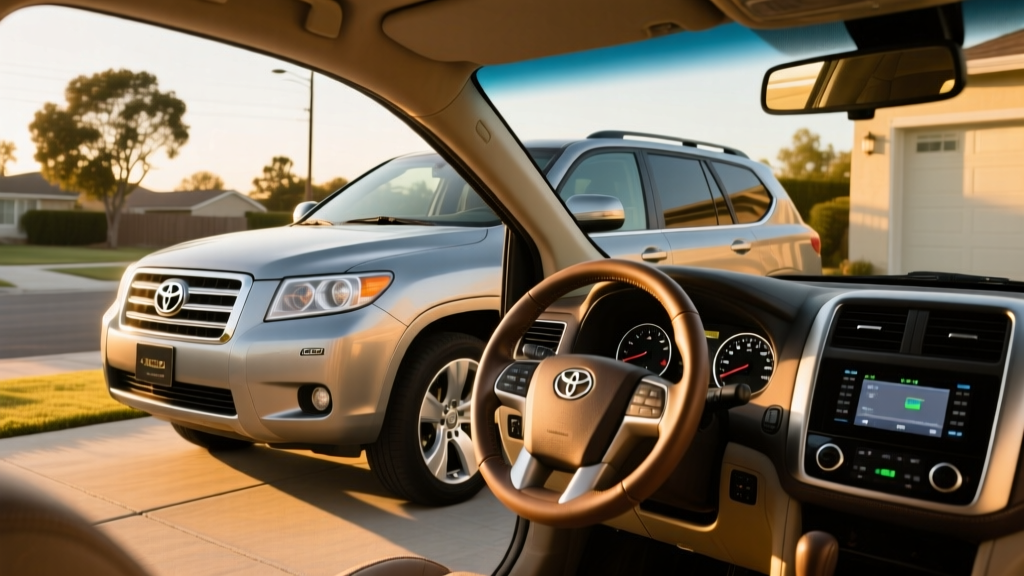
The 2009 Toyota Highlander Hybrid 4WD occupies a specific niche in 2026: it's one of the most affordable entry points into a three-row hybrid SUV on the used market. With an EPA-rated 26 MPG combined, Toyota's proven Hybrid Synergy Drive system, and standard electronic four-wheel drive, it remains a practical family hauler for buyers who want hybrid efficiency without a new-car payment. But at 17 years old, battery condition, maintenance history, and the absence of modern safety tech demand careful evaluation before you hand over cash.
This guide breaks down the real-world fuel economy, powertrain specs, battery longevity expectations, replacement costs, and whether this generation Highlander Hybrid still makes financial sense versus a newer hybrid, a plug-in hybrid, or a full battery-electric vehicle.
2009 Toyota Highlander Hybrid 4WD: Core Specifications
| Specification | Value |
|---|---|
| Powertrain | 3.3L V6 (3MZ-FE) + 2 electric motors (Hybrid Synergy Drive) |
| Combined Horsepower | 270 hp (net system output) |
| Engine Output | 208 hp @ 5,600 rpm / 212 lb-ft torque |
| Front Electric Motor | 123 kW (165 hp) |
| Rear Electric Motor | 50 kW (67 hp) — powers rear axle for 4WD |
| Transmission | eCVT (electronically controlled continuously variable) |
| Drivetrain | Electronic on-demand 4WD (AWD-i style) |
| Hybrid Battery | NiMH (nickel-metal hydride), ~6.5 kWh total / ~1.5 kWh usable |
| EPA Fuel Economy | 26 city / 26 highway / 26 combined MPG |
| Fuel Tank Capacity | 17.2 gallons |
| Total Driving Range | ~447 miles (EPA estimate) |
| 0–60 mph | ~7.8 seconds (est.) |
| Curb Weight | ~4,595 lbs |
| Seating | 7 passengers (3 rows) |
| Cargo Volume (behind 3rd row) | 10.5 cu ft |
| Cargo Volume (max) | 95.4 cu ft |
| Towing Capacity | 3,500 lbs |
| Original MSRP (Base) | ~$34,700 (2009) |
| 2026 Used Market Price | $5,500–$9,500 (depending on mileage/condition) |
How Many MPG Does the 2009 Highlander Hybrid Actually Get?
The EPA rates the 2009 Toyota Highlander Hybrid 4WD at 26 MPG city, 26 highway, and 26 combined. That flat rating across all three cycles is unusual and reflects the hybrid system's strength in stop-and-go traffic, where regenerative braking recaptures energy that a conventional vehicle wastes as heat.
| Driving Cycle | EPA Rating | Real-World Expectation |
|---|---|---|
| City | 26 MPG | 27–29 MPG (hybrid advantage in traffic) |
| Highway (70 mph cruise) | 26 MPG | 23–25 MPG (aero drag, less regen benefit) |
| Combined | 26 MPG | 24–27 MPG (varies by driving mix) |
| Cold Weather (below 32°F) | — | 21–24 MPG (engine runs more for cabin heat) |
Real-world context: Owner reports on fueleconomy.gov's My MPG tracker cluster around 24–27 MPG combined for drivers who mix city and highway driving. City-dominant drivers often exceed the EPA rating — a hallmark of Toyota's Hybrid Synergy Drive system, which uses the electric motor heavily at low speeds. Highway-dominant drivers should expect 23–25 MPG, as the 3.3L V6 carries a 4,595-lb SUV at sustained speed with less regenerative benefit.
Compared to the non-hybrid 2009 Highlander V6 4WD (rated at 19 city / 25 highway / 21 combined by the EPA), the hybrid delivers roughly 24% better combined fuel economy. That translates to approximately 100 fewer gallons per year at 15,000 miles — a savings of roughly $300–$400 annually at 2026 fuel prices.
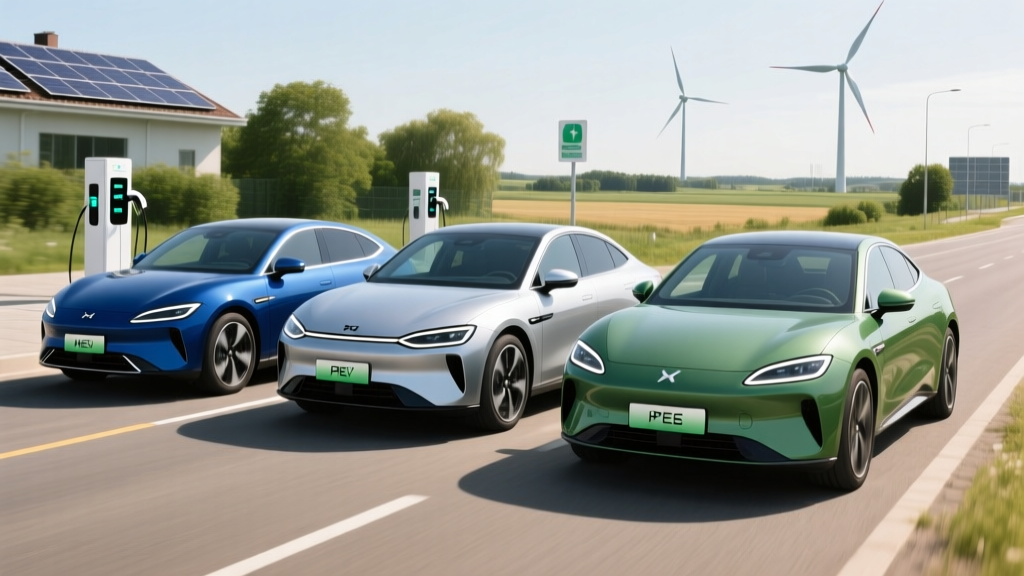
Hybrid (HEV) vs Plug-In Hybrid (PHEV) vs Full EV: What Are You Buying?
The 2009 Highlander Hybrid is a conventional hybrid electric vehicle (HEV). This distinction matters for buyers cross-shopping newer electrified options:
| Feature | 2009 Highlander Hybrid (HEV) | Modern PHEV (e.g., 2026 RAV4 Prime) | Full BEV (e.g., 2026 Ioniq 5) |
|---|---|---|---|
| Plug-in charging required? | No — self-charging via regen + engine | Yes — plug in for electric-only miles | Yes — plug in for all driving |
| Electric-only range | ~1 mile at low speed (not meaningful) | 35–42 miles | 250–310 miles (full range) |
| Total range | ~447 miles | ~550+ miles (EV + gas) | 250–310 miles |
| Fuel/energy cost per mile | ~$0.12 (gas) | ~$0.04 (electric) / ~$0.12 (gas) | ~$0.04–$0.06 (electric) |
| Home charging needed? | No | Recommended (Level 2) | Essential (Level 2) |
| Federal tax credit (§30D) | Not eligible | Up to $7,500 (if eligible) | Up to $7,500 (if eligible) |
| Maintenance | Engine + hybrid system | Engine + hybrid + larger battery | Minimal (no engine) |
Key takeaway: The 2009 Highlander Hybrid never needs to be plugged in. Its small NiMH battery charges entirely through regenerative braking and the gasoline engine. There is no electric-only driving mode of practical value — the electric motors assist the gas engine and enable low-speed creep, but the V6 is running the vast majority of the time. This makes it ideal for buyers who lack access to home or workplace charging but still want better fuel economy than a conventional V6 SUV.
Hybrid Battery Longevity, Warranty, and Replacement Cost
This is the single biggest concern for any used-hybrid buyer. The 2009 Highlander Hybrid uses a nickel-metal hydride (NiMH) traction battery pack — a proven, durable chemistry that Toyota has used in millions of hybrids since the late 1990s.
Original warranty: 8 years / 100,000 miles (10 years / 150,000 miles in CARB states including CA, NY, MA, and others)
Warranty status in 2026: Expired for all 2009 models regardless of mileage
Expected battery lifespan: 150,000–200,000+ miles with normal use; many units exceed 200,000 miles
Degradation pattern: NiMH batteries lose capacity gradually; you'll notice reduced electric-assist and slightly lower MPG before total failure
Real-world reliability data: The 3.3L V6 (3MZ-FE) and the Hybrid Synergy Drive system in this generation are among Toyota's most reliable powertrains. The eCVT transmission has no conventional gears, belts, or clutch packs to wear — it uses planetary gearsets and electric motor-generators, which are extremely durable. The main wear item is the hybrid battery itself.
Battery replacement costs in 2026:
| Option | Cost Range | Notes |
|---|---|---|
| New OEM Toyota battery | $2,500–$3,500 (parts + labor) | Best longevity; available through Toyota dealers |
| Refurbished/reconditioned battery | $1,200–$2,000 (parts + labor) | Replaced weak cells; 1–3 year warranty typical |
| Used salvage battery | $500–$1,000 (parts + labor) | Unknown remaining life; gamble |
| Individual cell/module replacement | $300–$800 (parts + labor) | Only viable if 1–2 modules are weak; requires a hybrid-savvy shop |
Pro tip for buyers: Before purchasing, have the hybrid battery's state of health (SoH) evaluated using an OBD-II scanner with hybrid-specific software (such as Techstream or Dr. Prius). This test reveals the voltage delta between individual battery modules — a delta above 0.3V under load suggests degraded cells that will need attention within 1–2 years. Budget $1,500–$3,000 for a potential battery replacement within your first few years of ownership unless the previous owner has documentation of a recent replacement.
Powertrain and Driving Experience
The 2009 Highlander Hybrid's powertrain combines a 3.3-liter V6 engine with two electric motor-generators through Toyota's eCVT. The system produces 270 net horsepower — a meaningful bump over the non-hybrid V6's 230 hp. The result is confident highway merging and adequate passing power even when fully loaded.
The electronic 4WD system (often called AWD-i in later Toyota nomenclature) uses the rear-mounted 50 kW electric motor to power the rear wheels on demand. There is no mechanical driveshaft connecting the front and rear axles. The rear motor engages automatically during acceleration, on slippery surfaces, or when the system detects front-wheel slip. It's a light-duty AWD system suited for rain, snow, and gravel — not off-road use.
Driving character: The eCVT delivers smooth, stepless acceleration with no shift shock. Under hard acceleration, engine RPM rises and holds steady (the "rubber-band" effect common to all CVTs), but the V6's torque and electric motor assist make it less objectionable than in smaller four-cylinder hybrids. Ride quality is comfortable and compliant, with body roll typical of a tall, family-oriented crossover.
What's missing by 2026 standards: No adaptive cruise control, no lane-keeping assist, no automatic emergency braking, no blind-spot monitoring. The 2009 Highlander predates Toyota Safety Sense by several years. You get standard stability control, antilock brakes, and a full complement of airbags (including side curtains for all three rows), but active driver-assistance features are absent. For SAE automation context, this vehicle is SAE Level 0 — no driving automation whatsoever.
Tax Credits, Incentives, and Total Ownership Cost
Federal tax credit: The 2009 Toyota Highlander Hybrid does not qualify for the current IRS §30D Clean Vehicle Credit. That credit applies only to new qualifying plug-in electric vehicles (BEVs and PHEVs) with sufficient battery capacity. Conventional hybrids like this one — which cannot be plugged in — have never qualified for §30D.
The 2009 Highlander Hybrid originally qualified for a federal tax credit of up to $2,200 under the older Energy Policy Act hybrid credit, but that credit phased out for Toyota after the company reached its 60,000-vehicle cap in 2007. By model year 2009, no federal hybrid credit was available.
State incentives: A few states offer used-EV or used-hybrid rebates (e.g., California's Clean Fuel Reward historically included hybrids, but most current state programs target plug-in vehicles). Check your state's energy or environmental agency for current programs.
Estimated 5-year ownership cost (2026 purchase):
| Category | Estimated 5-Year Cost | Notes |
|---|---|---|
| Purchase price | $5,500–$9,500 | Varies by mileage, condition, battery SoH |
| Fuel (15,000 mi/yr, 26 MPG, $3.40/gal) | $9,808 | ~$1,962/year |
| Insurance | $4,500–$6,500 | ~$900–$1,300/year; older vehicle, lower premiums |
| Maintenance & repairs | $3,000–$5,500 | Higher than new; includes potential hybrid battery replacement |
| Potential battery replacement | $0–$3,000 | Budget for this if SoH is unknown |
| Total estimated 5-year cost | $22,808–$34,308 | Including purchase, fuel, insurance, maintenance |
Who Should Buy the 2009 Highlander Hybrid — and Who Shouldn't
- You need three rows and AWD on a sub-$10,000 budget
- You can't charge at home (no plug-in needed)
- You want proven Toyota hybrid reliability with massive parts availability
- Your commute is city-heavy (where this hybrid beats its EPA rating)
- You want lower fuel costs than a conventional V6 SUV without EV range concerns
- You want modern safety tech (AEB, lane-keep, blind-spot monitoring)
- You want electric-only driving or plug-in capability
- You're unwilling to budget $1,500–$3,000 for a potential hybrid battery replacement
- You want a federal tax credit (look at new PHEVs or BEVs instead)
- You tow more than 3,500 lbs regularly
Consider a newer alternative if your budget allows: A 2018–2022 Toyota Highlander Hybrid (3.5L V6, 306 hp, EPA 29–35 combined depending on year) offers substantially better fuel economy, Toyota Safety Sense, and likely years of remaining battery warranty — but at $18,000–$30,000 on the used market. A 2026 Toyota Grand Highlander Hybrid starts around $44,000 new with EPA 36 combined and full warranty coverage.
Buying Checklist: What to Inspect Before You Buy
At 17 years old, condition varies enormously between individual vehicles. Here's what to prioritize:
- Hybrid battery state of health: Request a Techstream or Dr. Prius battery health report. Voltage delta between modules should be under 0.3V under load.
- Inverter coolant pump: The 2006–2010 Highlander Hybrid had a known issue with the inverter coolant pump failing, which can damage the hybrid inverter (a $2,000+ repair). Check for service records confirming pump replacement.
- Brake actuator: Toyota's regenerative brake system uses an electronic brake actuator that can fail expensively ($1,200–$2,000 replacement). Test for smooth, consistent braking with no warning lights.
- Timing belt: The 3.3L V6 uses a timing belt (not a chain). If it hasn't been replaced within the last 90,000 miles or 7 years, budget $600–$900 for immediate replacement.
- Transmission (eCVT) fluid: Toyota recommends inspection but not scheduled replacement. If there's no record of a drain-and-fill, budget $150–$250 for a fluid service.
- Rust: Inspect the undercarriage, rear subframe, and rocker panels if the vehicle was driven in snow-belt states.
Frequently Asked Questions
How many MPG does the 2009 Toyota Highlander Hybrid 4WD get?
The EPA rates it at 26 MPG city, 26 highway, and 26 combined. In real-world driving, city-dominant drivers often achieve 27–29 MPG thanks to regenerative braking, while highway-dominant driving typically yields 23–25 MPG. Cold weather can reduce efficiency to 21–24 MPG as the engine runs more frequently for cabin heating.
Does the 2009 Highlander Hybrid need to be plugged in?
No. This is a conventional hybrid (HEV), not a plug-in hybrid (PHEV). The battery charges entirely through regenerative braking and the gasoline engine. You simply fill it with gas and drive — no charging cable, no plug, no home charger installation needed.
How far can it drive on electric power alone?
Effectively zero meaningful electric-only range. The electric motors can propel the vehicle at very low speeds (under ~25 mph) for brief distances — roughly a mile or less on a full charge in ideal conditions — but the V6 engine starts almost immediately under any meaningful acceleration or load. This is normal for Toyota hybrids of this era; the electric system is designed to assist the engine and recapture braking energy, not to provide standalone electric driving.
Is the 2009 Toyota Highlander Hybrid reliable?
Yes, with caveats. The 3.3L V6 engine, eCVT transmission, and hybrid system are among Toyota's most durable powertrains, with many examples exceeding 200,000 miles. The primary reliability concern is the aging NiMH hybrid battery, which is now beyond its original warranty on all 2009 models. The inverter coolant pump and brake actuator are known weak points that may have already been addressed or may need attention. Overall, it's one of the more reliable 17-year-old vehicles you can buy — but "reliable for its age" still means budgeting for age-related maintenance.
What does it cost to replace the hybrid battery?
A new OEM Toyota replacement battery costs approximately $2,500–$3,500 including labor at a dealer. Refurbished aftermarket batteries run $1,200–$2,000 installed. Individual module replacement (if only a few cells are weak) can cost as little as $300–$800. Given the vehicle's $5,500–$9,500 used-market value, a battery replacement represents a significant percentage of the vehicle's worth — factor this into your purchase negotiation.
Does the 2009 Highlander Hybrid qualify for any tax credit in 2026?
No. The federal §30D Clean Vehicle Credit applies only to new qualifying plug-in electric vehicles (BEVs and PHEVs). Conventional hybrids that cannot be plugged in are not eligible. The older hybrid tax credit that once applied to Toyota hybrids phased out for Toyota in 2007. Some states may offer small used-vehicle incentives — check your state's environmental or energy agency for current programs.
Hybrid vs PHEV vs EV — which should I choose?
Choose a conventional hybrid (HEV) like this Highlander if you can't charge at home, want zero behavior change from a gas car, and prioritize low purchase price. Choose a PHEV (like a RAV4 Prime or Highlander Hybrid plug-in, available in newer model years) if you have home charging and want 30–40 miles of daily electric driving with a gas engine for longer trips. Choose a full BEV (like a Kia EV9 or Tesla Model X) if you want the lowest per-mile energy cost, minimal maintenance, have reliable charging access, and are comfortable with 250–310 miles of range. The 2009 Highlander Hybrid is the budget-conscious, no-plug-required option — it trades lower upfront cost for higher fuel and maintenance expenses versus newer electrified alternatives.
Sources: EPA fuel economy data via fueleconomy.gov; IRS Clean Vehicle Credit rules via irs.gov; NHTSA safety and recall data via nhtsa.gov.