Quick Verdict: A Practical PHEV for Families Not Ready to Go Full Electric
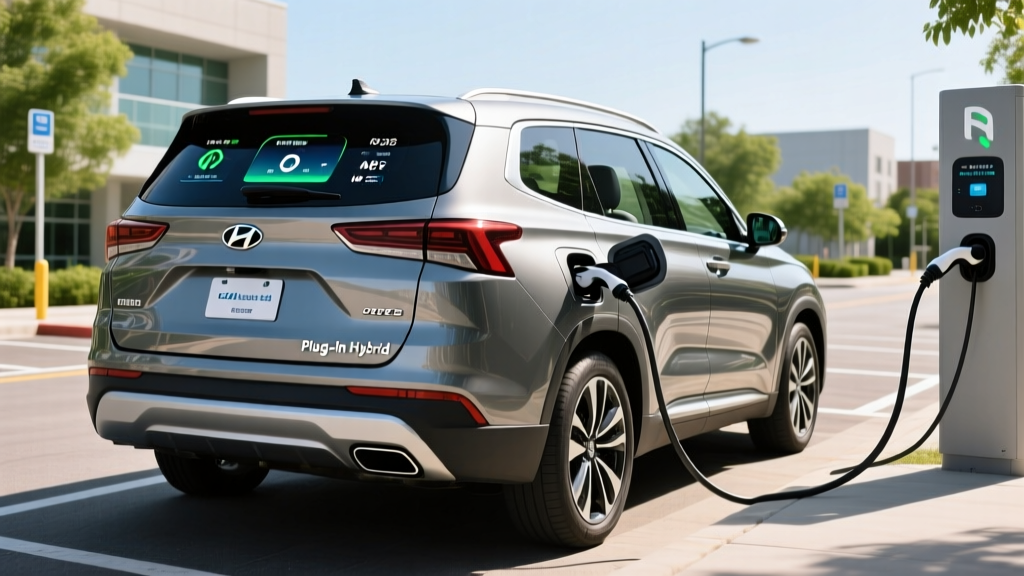
The 2022 Hyundai Santa Fe Plug-In Hybrid occupies a specific niche: buyers who want electric commuting capability without surrendering the gas-engine safety net for road trips. With 31 miles of EPA-rated electric-only range, 33 MPG combined once the battery depletes, and 261 combined horsepower, it delivers a compelling middle ground. However, its small 12.4 kWh battery, slow Level 2 charging, and lack of DC fast charging mean it rewards owners who can charge at home every night. If you can't plug in regularly, the conventional Santa Fe Hybrid is the smarter buy.
Now several years into its lifecycle on the used market, the 2022 Santa Fe PHEV presents an interesting value proposition — especially if you can capture the used clean vehicle credit under current IRS §25E rules. Let's break down exactly what this powertrain delivers in the real world.
HEV vs PHEV: What's the Difference in the Santa Fe Lineup?
Hyundai sold the 2022 Santa Fe in three powertrain configurations, and confusing them at the dealership is easy. Here's the critical distinction:
| Attribute | Santa Fe Hybrid (HEV) | Santa Fe Plug-In Hybrid (PHEV) | Santa Fe (Gas) |
|---|---|---|---|
| Plugs in? | No — self-charging via regen & engine | Yes — 12.4 kWh battery charges via outlet | No |
| Electric-only driving | Very short distances at low speed | 31 miles EPA (up to ~75 mph) | None |
| Combined output | 226 hp | 261 hp | 191 hp (2.5T: 281 hp) |
| EPA combined fuel economy | 34 MPG | 33 MPG (gas) / 76 MPGe (electric+gas) | 26 MPG (2.5T AWD) |
| Battery size | 1.49 kWh | 12.4 kWh | N/A (12V only) |
| Drivetrain | AWD standard | AWD standard (HTRAC) | FWD or AWD |
The bottom line: The HEV never plugs in and recovers energy through regenerative braking and the gasoline engine. The PHEV has a much larger battery that you charge from a wall outlet or charging station, enabling genuine zero-tailpipe-emission commuting. If you never plug the PHEV in, you're simply carrying 400+ pounds of dead battery weight and getting slightly worse fuel economy than the HEV.
Electric Range, MPGe, and Fuel Economy — The Numbers That Matter
The EPA rates the 2022 Santa Fe Plug-In Hybrid at 31 miles of electric-only range and 76 MPGe (miles per gallon equivalent) when operating in combined electric-gas mode. Once the battery depletes, the 1.6-liter turbocharged engine and electric motor deliver 33 MPG combined.
| Metric | EPA Rating | Real-World Expectation |
|---|---|---|
| Electric-only range | 31 miles | 25–29 mi (highway/cold); 30–33 mi (city, mild weather) |
| MPGe (combined EV+gas) | 76 MPGe | Varies heavily with charging frequency |
| Gas-only city | 33 MPG | 33–36 MPG (regen helps in stop-and-go) |
| Gas-only highway | 32 MPG | 29–31 MPG (sustained 70+ mph) |
| Gas-only combined | 33 MPG | 31–34 MPG |
| Total range (full tank + full battery) | ~440 miles | ~400–430 miles |
How many MPG does this hybrid get? In charge-sustaining (gas-only) mode, expect 31–34 MPG combined depending on your driving mix. That's competitive with the conventional HEV's 34 MPG, though the PHEV's extra weight from the larger battery creates a slight penalty. The real efficiency win comes from daily electric commuting — if your round-trip commute is under 30 miles and you charge nightly, you may visit a gas station once a month.
Powertrain Specs: 261 HP and Standard AWD
| Specification | 2022 Santa Fe Plug-In Hybrid |
|---|---|
| Engine | 1.6L turbocharged 4-cylinder (Smartstream G1.6 T-GDi) |
| Engine output | 178 hp / 195 lb-ft torque |
| Electric motor | 66.9 kW (90 hp) permanent-magnet synchronous |
| Combined system output | 261 hp / 258 lb-ft torque |
| Transmission | 6-speed automatic (no CVT) |
| Drivetrain | HTRAC AWD (standard) |
| 0–60 mph | ~7.6 seconds (est.) |
| Towing capacity | 2,000 lbs |
| Battery capacity | 12.4 kWh (gross) / ~9.8 kWh usable |
| Battery chemistry | NMC (nickel manganese cobalt) lithium-ion |
| Curb weight | ~4,435 lbs |
| Cargo volume (behind 2nd row) | 36.4 cu ft |
| Cargo volume (max) | 72.1 cu ft |
The 261-hp combined output makes the PHEV the most powerful non-performance Santa Fe variant (short of the discontinued 2.5T gas model's 281 hp). The 6-speed automatic is a welcome choice over the CVTs found in many competitors — it delivers predictable, linear acceleration without the rubber-band effect. The electric motor fills in torque at low RPM before the turbo spools, giving confident merging and passing power.
Charging: Level 1, Level 2, and the DC Fast-Charging Limitation
The 2022 Santa Fe PHEV charges via a J1772 connector (standard for all non-Tesla PHEVs in North America). Here's what to expect at each charging level:
| Charging Level | Power (kW) | Time to Full (0–100%) | Notes |
|---|---|---|---|
| Level 1 (120V household outlet) | ~1.4 kW | ~9–10 hours | Trickle charge; adequate for overnight if parked 10+ hrs |
| Level 2 (240V home/public) | ~3.3 kW (onboard charger limit) | ~3–3.5 hours | Onboard charger capped at 3.3 kW — won't accept more |
| DC Fast Charge | N/A | N/A | No DC fast charging capability |
Critical ownership note: The onboard charger is limited to 3.3 kW. Even if you plug into a 7.2 kW or 11.5 kW Level 2 station, the Santa Fe PHEV will only draw 3.3 kW. This means a full charge takes over 3 hours — fine for overnight home charging, but impractical for mid-day top-ups on road trips. There is no DC fast charging port. For road trips, the vehicle simply operates in hybrid mode using gasoline, which is the intended design for PHEVs in this class.
For home charging, a standard 120V outlet (Level 1) can replenish the battery overnight if you drive less than 25 miles per day. For faster and more reliable daily charging, a 240V Level 2 home station is recommended — even at 3.3 kW, you'll wake up to a full battery every morning with a ~3-hour charge window.
How Far Can It Go on Electric Only?
The EPA rates the 2022 Santa Fe PHEV at 31 miles of all-electric range. In practice, the 12.4 kWh gross battery (approximately 9.8 kWh usable to protect longevity) delivers:
- City commuting (30–45 mph, mild weather): 30–33 miles — regen braking extends range in stop-and-go traffic
- Mixed driving (50–65 mph): 27–30 miles
- Highway (70+ mph sustained): 23–26 miles — aerodynamic drag and no regen benefit reduce range
- Cold weather (below 32°F, cabin heat on): 22–27 miles — the heat pump mitigates losses but can't eliminate them
For a commuter with a sub-30-mile round trip and nightly home charging, the Santa Fe PHEV can operate as a de facto EV for daily driving, with the gasoline engine providing unlimited range for weekend trips. This is the PHEV's core value proposition — and it works best when your daily mileage aligns with the battery's capacity.
Pricing, Tax Credits, and Total Ownership Cost
The 2022 Santa Fe Plug-In Hybrid was offered in two trims at launch:
| Trim | Original MSRP | Key Features |
|---|---|---|
| SEL Convenience | $42,275 | Leather seats, 10.25" nav, Harman Kardon audio, Highway Driving Assist, panoramic sunroof |
| Limited | $47,025 | Nappa leather, ventilated front seats, head-up display, 360° camera, remote smart parking assist |
Tax credit eligibility — important nuances:
- New vehicle credit (§30D): The 2022 Santa Fe PHEV qualified for a partial federal credit (up to $6,587 based on battery capacity) when purchased new, subject to Hyundai's manufacturer cap status at the time. This credit is no longer available for new purchases of this model year.
- Used vehicle credit (§25E): Under current IRS used clean vehicle credit rules, buying a used 2022 Santa Fe PHEV from a licensed dealer may qualify you for up to $4,000 or 30% of the sale price (whichever is less), provided: the sale price is $25,000 or below, your modified adjusted gross income falls within limits ($75K single / $150K married filing jointly), and the vehicle has at least two prior model years since original sale.
- State incentives: Several states offer additional PHEV rebates (e.g., California's CVRP, Colorado's state credit). Check your state's current programs — amounts and eligibility vary by jurisdiction and change frequently.
Always verify current tax credit eligibility with a tax professional and consult the latest IRS guidance before making purchase decisions based on incentive assumptions.
Reliability and Battery Warranty: What Owners Should Know
Is this hybrid reliable? Hyundai's 1.6L turbo Smartstream engine has a solid track record since its introduction, and the PHEV powertrain shares its core architecture with the Kia Sorento PHEV and Tucson PHEV — all of which have shown average-to-above-average reliability in owner surveys. The 6-speed automatic transmission is a proven unit without the complexity of newer dual-clutch or CVT designs.
Battery replacement cost: If the high-voltage battery fails outside warranty coverage, expect a replacement cost in the range of $5,000–$8,000 (parts and labor), based on current Hyundai PHEV battery pricing. However, NMC lithium-ion batteries in Hyundai/Kia PHEVs have shown minimal degradation in real-world use — most owners report less than 5–8% capacity loss over the first 5 years. The battery's thermal management system (liquid cooling) helps preserve longevity compared to passively cooled packs.
The conventional hybrid (HEV) variant uses a much smaller 1.49 kWh battery, which carries the same 10-year/100,000-mile warranty but costs significantly less to replace ($1,500–$3,000) if ever needed.
Hybrid vs PHEV vs Full EV — Which Fits Your Life?
Choose the Santa Fe PHEV if:
- Your daily round-trip commute is under 30 miles and you can charge at home nightly
- You want electric driving for errands but need 400+ mile road-trip range without planning charging stops
- You live in a cold climate where EV range loss is a concern
- You're a one-vehicle household and can't risk charging-desert scenarios on rural trips
Choose the Santa Fe HEV (conventional hybrid) if:
- You cannot charge at home or work (apartment, street parking, no outlet access)
- Your daily mileage regularly exceeds 35 miles (the PHEV advantage disappears)
- You want lower upfront cost and don't want to deal with plug-in logistics
Choose a full BEV (e.g., Hyundai Ioniq 5, Tesla Model Y) if:
- You have reliable Level 2 home charging and your daily driving is under 250 miles
- You want to eliminate oil changes, spark plugs, and transmission maintenance entirely
- You're eligible for the full $7,500 federal EV tax credit on a new purchase
- You want lower per-mile "fuel" costs (electricity at $0.12/kWh ≈ $3.50/gallon equivalent)
The PHEV is a bridge technology — and that's not a criticism. For households that need maximum flexibility with minimum lifestyle change, it removes the two biggest EV barriers: range anxiety and charging infrastructure dependence. The trade-off is maintaining two systems (gasoline engine + electric powertrain), which means oil changes, spark plugs, and air filters alongside battery management.
Pros and Cons
Pros
- 31 miles electric range covers most commutes
- 261 hp provides confident acceleration
- Standard HTRAC AWD for all-weather confidence
- 6-speed automatic (no CVT drone)
- 10-year/100,000-mile battery warranty
- Heat pump preserves EV range in cold weather
- Spacious 5-passenger SUV with 36.4 cu ft cargo
- Good IIHS safety ratings
Cons
- 3.3 kW onboard charger limits Level 2 speed
- No DC fast charging capability
- 31-mile EV range is shorter than newer PHEVs (Tucson PHEV: 33 mi; RAV4 Prime: 42 mi)
- Heavy curb weight (4,435 lbs) affects handling
- High original MSRP; used credit may be hard to qualify for
- No frunk — engine bay fully occupied
- Gas-only MPG (33 combined) barely beats the cheaper HEV (34 combined)
Frequently Asked Questions
How many MPG does the 2022 Hyundai Santa Fe Plug-In Hybrid get?
The EPA rates it at 33 MPG combined (33 city / 32 highway) when running on gasoline after the battery is depleted. In real-world driving, owners typically see 31–36 MPG combined depending on the city/highway mix. The regenerative braking system recovers more energy in stop-and-go traffic, so city MPG often slightly exceeds highway MPG.
How far can the Santa Fe PHEV go on electric only?
The EPA rates it at 31 miles of all-electric range. Real-world results range from about 23 miles (cold-weather highway driving) to 33 miles (mild-weather city commuting). For most owners with a sub-30-mile commute and nightly charging, the electric range covers daily driving entirely.
Does the 2022 Santa Fe PHEV qualify for a tax credit?
When purchased new, it qualified for a partial federal credit (up to $6,587). For used purchases in 2026, the IRS §25E used clean vehicle credit may provide up to $4,000, provided the sale price is $25,000 or less, your income falls within the caps ($75K single / $150K married filing jointly), and you buy from a licensed dealer. Consult a tax professional and verify eligibility on IRS.gov before relying on this credit.
Is the Santa Fe Plug-In Hybrid reliable, and what does a battery replacement cost?
The PHEV powertrain has shown average-to-above-average reliability based on owner data and Hyundai's track record with the Smartstream 1.6T engine. The high-voltage battery is warrantied for 10 years/100,000 miles. Out-of-warranty battery replacement runs approximately $5,000–$8,000, though significant degradation is uncommon in the first 5–8 years of ownership.
Can the Santa Fe PHEV use DC fast chargers?
No. The 2022 Santa Fe PHEV has only a J1772 AC charging port and a 3.3 kW onboard charger. It cannot accept DC fast charging. Full charges take approximately 3–3.5 hours on Level 2 or 9–10 hours on a standard 120V outlet. On road trips, simply drive in hybrid mode using gasoline.
Should I buy the PHEV or the regular Santa Fe Hybrid?
Buy the PHEV only if you can charge at home nightly and your daily driving is under ~30 miles. Without regular plug-in charging, the PHEV's 33 MPG gas-only economy doesn't justify its higher price and extra weight over the HEV's 34 MPG. If charging access is uncertain, the HEV delivers similar efficiency with lower cost and zero plug-in hassle.
How does the Santa Fe PHEV compare to the Toyota RAV4 Prime?
The RAV4 Prime offers 42 miles of electric range (vs. 31), 302 combined hp (vs. 261), and a 6.6 kW onboard charger (vs. 3.3 kW). However, the RAV4 Prime has historically been difficult to find at MSRP due to high demand and limited allocation. If you can find a RAV4 Prime at a fair price, it's the stronger PHEV on paper. The Santa Fe PHEV is often more available and may offer better dealer pricing in the used market.