Quick Verdict: The 2025 BMW X5 PHEV in One Paragraph
The 2025 BMW X5 xDrive50e is a luxury plug-in hybrid (PHEV) that pairs a turbocharged inline-six with an electric motor for 483 combined horsepower and an EPA-estimated 38 miles of electric-only driving. Starting at $68,100, it targets buyers who want daily electric commuting without sacrificing the 300+ mile total range or towing capability of a midsize SUV. It does not qualify for the full $7,500 federal §30D tax credit due to battery sourcing rules, but state incentives and BMW's own offers may offset cost. For shoppers cross-referencing the 2025 BMW X5 PHEV against a full BEV or conventional hybrid, this guide breaks down every spec that matters.
HEV vs PHEV: What the X5 xDrive50e Actually Is
Before diving into specs, it's worth clarifying the distinction between conventional hybrids and plug-in hybrids — a common source of confusion in the X5 lineup.
| Feature | Conventional Hybrid (HEV) | Plug-In Hybrid (PHEV) |
|---|---|---|
| Plug in to charge? | No — regenerates via braking/engine | Yes — has a charge port for Level 1/2 |
| Electric-only range | 1–2 miles at low speed | 20–50+ miles at full highway speed |
| Battery size | 1–2 kWh | 15–30+ kWh usable |
| Federal tax credit | None | Up to $7,500 (sourcing-dependent) |
| Example | Toyota Highlander Hybrid | 2025 BMW X5 xDrive50e |
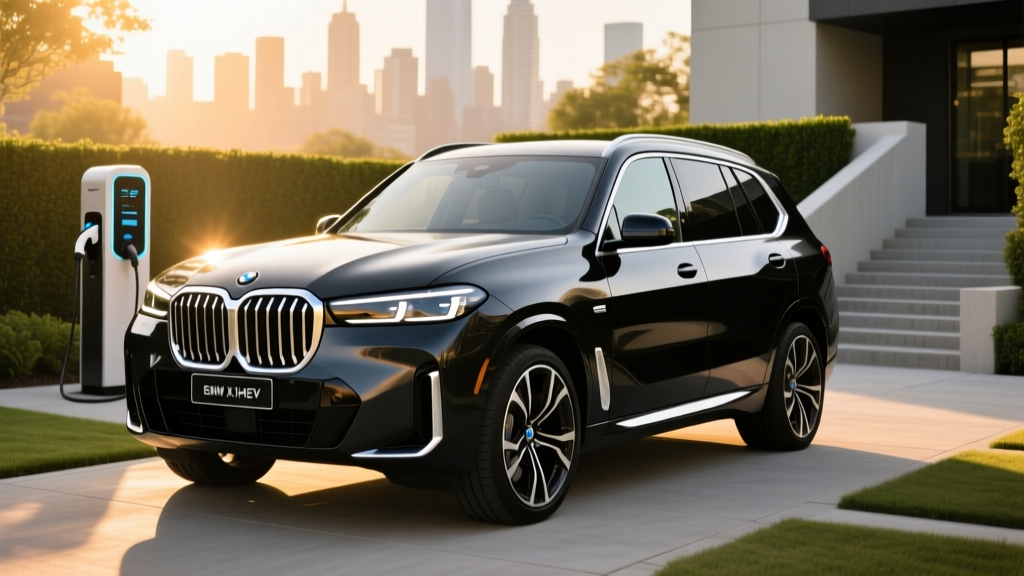
The X5 xDrive50e is firmly a PHEV. It has a charge port, a large traction battery, and the ability to drive on electricity alone for a meaningful distance. BMW previously offered the xDrive45e (2021–2023 model years) with a smaller battery and 31 miles of range; the xDrive50e replaces it with substantially more electric capability and power.
Powertrain Specs: 483 HP from Inline-Six + Electric Motor
| Specification | 2025 BMW X5 xDrive50e |
|---|---|
| Engine | 3.0L turbocharged inline-6 (312 hp, 330 lb-ft) |
| Electric motor | Integrated in 8-speed transmission (184 hp) |
| Combined system output | 483 hp / 516 lb-ft torque |
| 0–60 mph | 4.6 seconds (BMW estimate) |
| Drivetrain | xDrive AWD |
| Transmission | 8-speed automatic (ZF) |
| Max towing capacity | 5,000 lbs (with factory hitch) |
| Drive modes | Hybrid, Electric, Sport |
The inline-six is BMW's B58 engine — widely regarded as one of the most reliable modern turbocharged sixes. The electric motor is sandwiched inside the transmission housing, meaning there's no compromise to the AWD system: all four wheels receive torque in both hybrid and electric modes. In Electric mode, the X5 xDrive50e operates as a rear-wheel-drive EV (the motor acts on the transmission output shaft, and xDrive can engage the front axle when the engine fires).
Electric Range, Battery, and Charging
| Metric | Value |
|---|---|
| Battery (gross / usable) | 25.7 kWh gross / ~22.0 kWh usable |
| Chemistry | NMC (nickel manganese cobalt) |
| EPA electric-only range | 38 miles |
| Real-world electric range (est.) | 30–35 mi (highway/cold); 36–40 mi (city/mild) |
| Total combined range (gas + electric) | ~440 miles |
| Onboard charger (AC) | 7.4 kW |
| Level 2 charge time (0–100%) | ~3.25 hours |
| DC fast charging | Not supported |
| Charge port | J1772 (Level 2 AC only) |
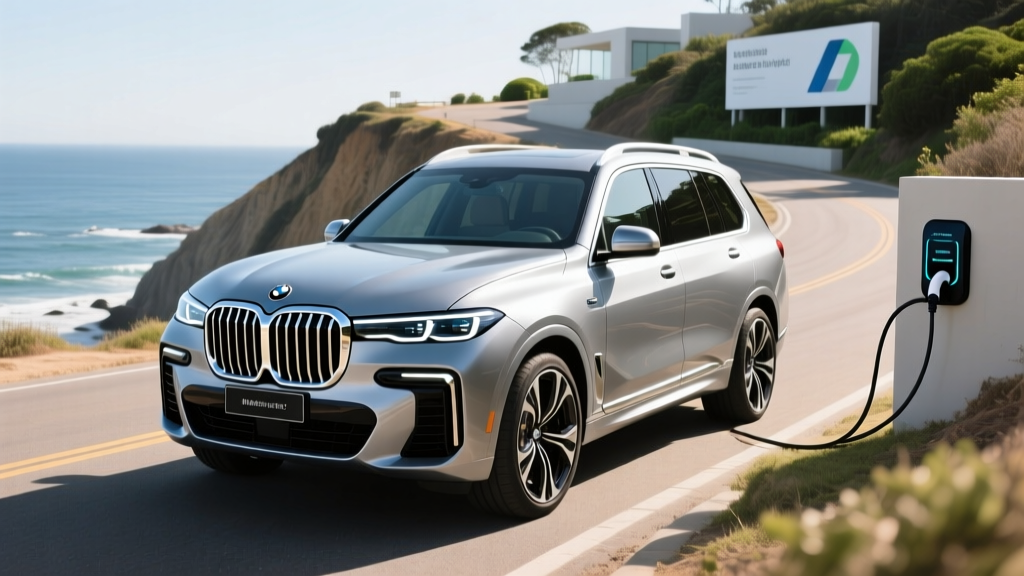
One critical limitation: the X5 xDrive50e does not support DC fast charging. This is typical for PHEVs — the battery is small enough that Level 2 AC charging replenishes it fully overnight. If you have access to a 240V outlet (Level 2), the 7.4 kW onboard charger will fill the battery from empty in about 3 hours and 15 minutes. On a standard 120V household outlet (Level 1, ~1.4 kW), expect roughly 16 hours for a full charge — feasible if you plug in every evening.
Fuel Economy: EPA MPG and Real-World Expectations
| Driving Mode | EPA City | EPA Highway | EPA Combined |
|---|---|---|---|
| Charge-depleting (electric + gas) | 50 MPGe combined | ||
| Charge-sustaining (hybrid mode, battery depleted) | ~24 MPG | ~27 MPG | ~25 MPG |
PHEV fuel economy is measured in two ways, and both matter:
- MPGe (miles per gallon equivalent): The EPA rates the X5 xDrive50e at 50 MPGe when factoring in electric-only driving. This number is most relevant if your daily commute falls within the 38-mile electric range and you charge nightly.
- Gas-only MPG (charge-sustaining): Once the battery is depleted, the X5 operates as a conventional hybrid. Expect roughly 25 MPG combined — competitive for a 5,300-lb luxury SUV with an inline-six, but not class-leading. The Toyota Highlander Hybrid achieves 35 MPG combined as a non-plug-in comparison point.
Real-world MPG note: If you charge daily and commute under 38 miles, you may use almost zero gasoline for weeks. On long road trips where the battery depletes in the first 38 miles, you'll see 24–27 MPG for the remaining journey. This is the PHEV trade-off: exceptional efficiency for short electric commutes, but merely average MPG on extended highway trips.
Pricing, Trims, and Federal Tax Credit Eligibility
| Trim | Base MSRP | Destination | Total Starting Price |
|---|---|---|---|
| X5 xDrive50e (PHEV) | $66,800 | $1,175 | $67,975 |
| X5 xDrive50e w/ Premium Package | ~$70,500 | $1,175 | ~$71,675 |
| X5 M60i (non-PHEV V8) | $89,600 | $1,175 | $90,775 |
- MSRP cap: SUVs must be under $80,000 — the X5 xDrive50e qualifies at base MSRP ✓
- Buyer income cap: $150K single / $225K HOH / $300K joint filers ✓ (if you qualify)
- Battery sourcing / critical minerals: As of 2025, the X5 xDrive50e's battery components and critical minerals do NOT fully meet domestic-content thresholds under the latest IRS guidance. This means the vehicle may receive $0 to $3,750 of the potential $7,500 credit — not the full amount. Always verify current eligibility on IRS.gov and confirm with your tax professional before purchase.
- Point-of-sale transfer: If eligible, you can transfer the credit to the dealer at purchase to reduce your out-of-pocket cost immediately.
Beyond the federal credit, check your state's EV incentive programs. States like California, Colorado, and New York offer additional rebates or tax credits for PHEVs with 20+ miles of electric range. These vary by jurisdiction and change frequently — consult your state's energy office or the Alternative Fuels Data Center for current programs.
Battery Warranty, Reliability, and Replacement Cost
- High-voltage battery: 8 years / 80,000 miles (whichever comes first)
- Capacity retention guarantee: BMW warrants the battery will retain at least 70% of original capacity during the warranty period
- Powertrain warranty: 4 years / 50,000 miles (BMW's standard new-vehicle coverage)
Reliability: BMW's B58 inline-six has proven to be one of the automaker's most dependable engines in recent years, with fewer timing-chain and oil-consumption issues that plagued older BMW sixes. The ZF 8-speed transmission is industry-standard and widely used across the luxury segment. The electric motor, being integrated into the transmission, has fewer moving parts than a standalone motor and is generally low-risk.
Battery degradation: BMW's NMC battery chemistry in the xDrive50e is managed by an active thermal system (liquid cooling/heating). Based on data from the previous-generation xDrive45e and comparable BMW PHEVs, expect approximately 5–10% capacity loss over the first 5 years of typical use. The 70% retention threshold in the warranty is conservative — most BMW PHEV batteries retain well above 80% capacity at the 8-year mark.
Replacement cost: If the high-voltage battery requires replacement out of warranty, expect a cost in the range of $8,000–$14,000 including parts and labor at a BMW dealership. This is comparable to other luxury PHEV battery replacements. Third-party hybrid battery repair shops can sometimes replace individual cell modules for $2,000–$5,000, though this is still an emerging service for newer BMW PHEV platforms.
Who Should Buy the 2025 BMW X5 PHEV — And Who Shouldn't
Choose the X5 xDrive50e PHEV if:
- Your daily commute is under 35 miles round-trip and you can charge at home overnight
- You want a luxury midsize SUV with genuine towing capability (5,000 lbs)
- You take road trips regularly and don't want to plan around DC fast chargers
- You want the performance of a 483-hp inline-six without the fuel cost of the V8 M60i
- You live in a state with HOV lane access for PHEVs (check local rules)
Choose a full BEV (like the BMW iX or Tesla Model X) if:
- You have reliable home charging and your daily driving is under 250 miles
- You want zero tailpipe emissions and minimal drivetrain maintenance
- You want access to DC fast charging for road trips (200+ kW capability)
- You want the full $7,500 federal tax credit (eligibility varies by model and sourcing)
Choose a conventional hybrid (HEV) or gas X5 if:
- You cannot install a Level 2 charger at home (apartment, street parking)
- You want a lower purchase price — the gas X5 sDrive40i starts ~$3,500 less
- You rarely drive less than 40 miles in a day (the electric range won't benefit you)
- 38 miles of electric range covers most commutes
- 483 hp from a refined inline-six — smooth and quick (4.6s 0–60)
- No range anxiety: 440+ total miles with gas engine
- Quiet, comfortable ride with adaptive suspension available
- Strong towing capacity for a PHEV (5,000 lbs)
- iDrive 8.5 infotainment is responsive and well-organized
- No DC fast charging — Level 2 only
- Partial or no federal tax credit due to battery sourcing rules
- ~25 MPG on gas-only highway driving is average, not exceptional
- Cargo space slightly reduced vs gas X5 (battery under floor)
- Starting price near $68K climbs quickly with packages
- Regen braking feel could be smoother in Electric mode
Frequently Asked Questions
How many MPG does the 2025 BMW X5 PHEV get?
The EPA rates the X5 xDrive50e at 50 MPGe combined (factoring in electric driving). Once the battery is depleted and the vehicle operates in hybrid mode, expect approximately 24 city / 27 highway / 25 combined MPG. According to fueleconomy.gov, this places it mid-pack among luxury PHEV SUVs.
How far can the 2025 BMW X5 xDrive50e go on electric only?
The EPA estimates 38 miles of electric-only range. In real-world conditions, plan for 30–35 miles in cold weather or highway driving, and up to 38–40 miles in mild city commuting. The vehicle will automatically switch to hybrid mode when the battery depletes.
Does the 2025 BMW X5 PHEV qualify for a federal tax credit?
Possibly, but likely not the full $7,500. Under current IRS §30D rules, the X5 xDrive50e meets the MSRP cap (under $80,000 for SUVs) but its battery components and critical minerals may not fully satisfy domestic-sourcing requirements. This could result in a partial credit of $3,750 or $0 depending on the latest IRS determinations. Always verify on IRS.gov before purchasing, and consult a tax professional.
Is the BMW X5 PHEV reliable, and what does battery replacement cost?
The B58 inline-six and ZF transmission are well-regarded for reliability. BMW's high-voltage battery is warranted for 8 years/80,000 miles with a 70% capacity retention guarantee. Out-of-warranty battery replacement is estimated at $8,000–$14,000 at a dealership, with potential savings through third-party hybrid repair shops. Based on historical data from BMW's previous PHEV models, significant battery degradation within the warranty period is uncommon.
Can I charge the BMW X5 PHEV at home?
Yes. The X5 xDrive50e charges via a J1772 port at up to 7.4 kW on Level 2 (240V). A full charge takes approximately 3.25 hours on a Level 2 home charger, or about 16 hours on a standard 120V outlet. Most owners will find Level 2 charging more than sufficient since the battery is small and charges overnight. Note: this PHEV does not support DC fast charging.
Hybrid vs PHEV vs EV — which powertrain fits me?
If you can charge at home and your daily driving is under 35 miles, the PHEV gives you near-EV daily running costs with the flexibility of a gas engine for road trips. If you charge reliably and drive under 250 miles daily, a full BEV (like the BMW iX) offers lower maintenance and zero tailpipe emissions. If you can't charge at home, a conventional hybrid (HEV) or the gas X5 sDrive40i avoids the PHEV price premium you'd never utilize.
How does the X5 xDrive50e compare to the previous xDrive45e?
The xDrive50e (2024–present) replaces the xDrive45e (2021–2023) with a larger battery (25.7 kWh vs 24.0 kWh gross), more electric range (38 vs 31 miles EPA), higher combined output (483 hp vs 389 hp), and faster 0–60 acceleration (4.6s vs 5.3s). The upgrade is substantial and addresses the main criticisms of the 45e.
Sources: EPA fuel economy data via fueleconomy.gov, BMW USA official specifications, IRS Clean Vehicle Credit guidance. All pricing and specifications reflect 2025 model year information available at time of publication. Tax credit eligibility is subject to change — verify current rules before purchase.